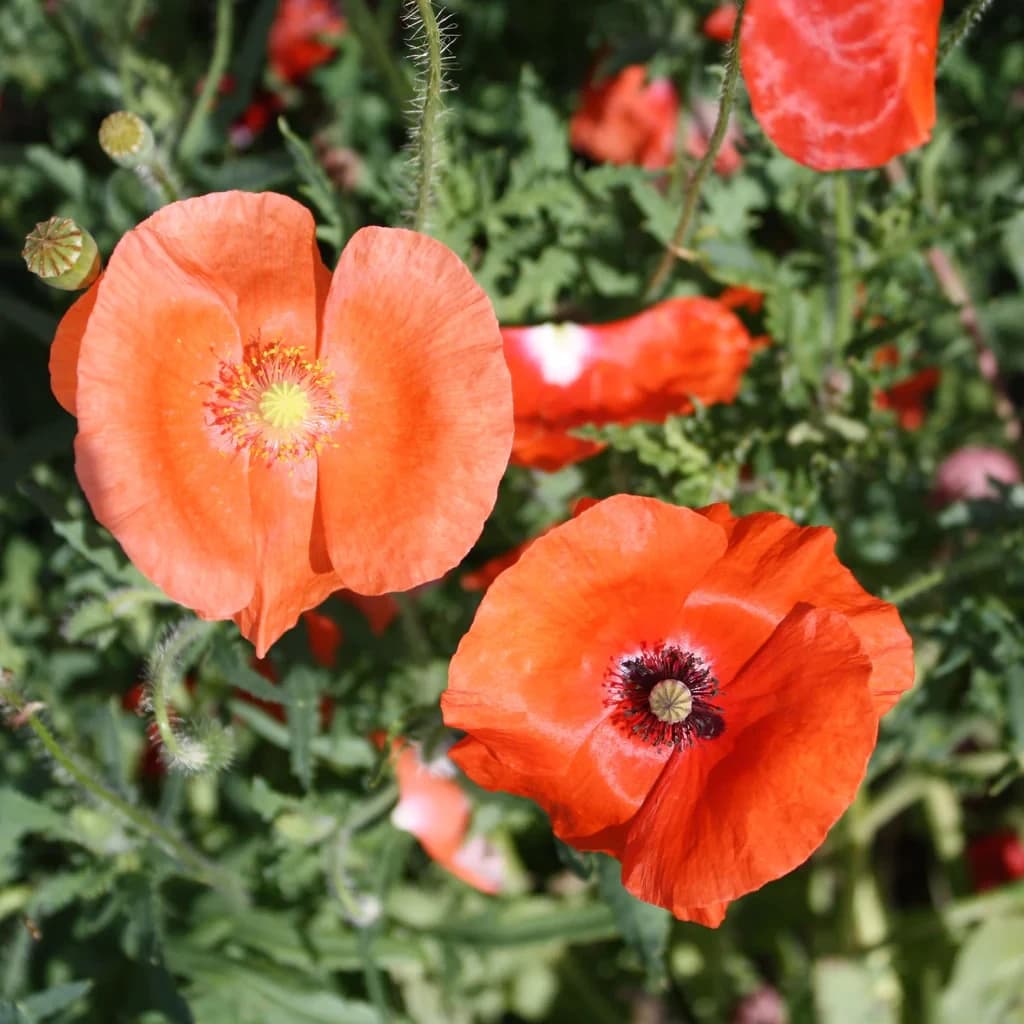
Corn Poppy Mix
Corn Poppy Mix seeds produce one of the most beloved annual wildflowers in the garden — Papaver rhoeas — bearing silky, tissue-thin blooms in a sweeping range of red, pink, rose, and white. These are the classic field poppies of meadows and cottage gardens, each flower nodding on slender, hairy stems before opening to reveal delicately crinkled petals surrounding a dark central eye. The mix delivers a naturalistic, painterly display that looks equally at home in a cutting garden or scattered through a wildflower border.
Growing Guide
Corn poppies are cool-season annuals that perform best when direct-sown into the garden, as they dislike transplanting. Sow seeds in early spring as soon as the soil can be worked — a light frost won't harm germinating seedlings. In mild climates, an autumn sowing produces especially robust, early-blooming plants. Seeds require light to germinate: press them gently onto the soil surface or cover with no more than 1–2 mm of fine soil. Days to bloom: 60–90 days from sowing, depending on conditions.
Sun: Full sun (minimum 6 hours daily). Spacing: Thin seedlings to 15–20 cm (6–8 inches) apart once they reach 5 cm tall — thinning is essential for strong stems and good air circulation. Soil: Well-drained, average to poor soil is ideal; overly rich soil encourages leafy growth at the expense of flowers. Water regularly during establishment, then reduce — established plants are reasonably drought tolerant. Difficulty level: easy, suitable for first-time gardeners and experienced growers alike.
Harvest & Use
For cut flowers, harvest stems when the buds are just beginning to show colour but before the petals unfurl. Sear the cut ends in boiling water for 10–15 seconds immediately after cutting, then transfer to cool water — this extends vase life considerably. Blooms typically last 4–6 days in a vase. Deadhead spent flowers regularly to prolong the flowering season, which runs from late spring through early summer. If you allow some blooms to go to seed, the ornamental pepper-pot seedheads are attractive in dried arrangements and will self-sow reliably, naturalising over time.
The tiny seeds are also edible — the culinary poppy seed used in baking and cooking comes from a related species, but Papaver rhoeas seeds carry a similarly mild, nutty flavour and can be used in the same way. The petals are edible and make a delicate garnish for salads and desserts.
A generous sowing each spring, perhaps staggered two weeks apart, keeps blooms coming in steady succession through the early summer months.
You May Also Like

Corn Poppy Mix