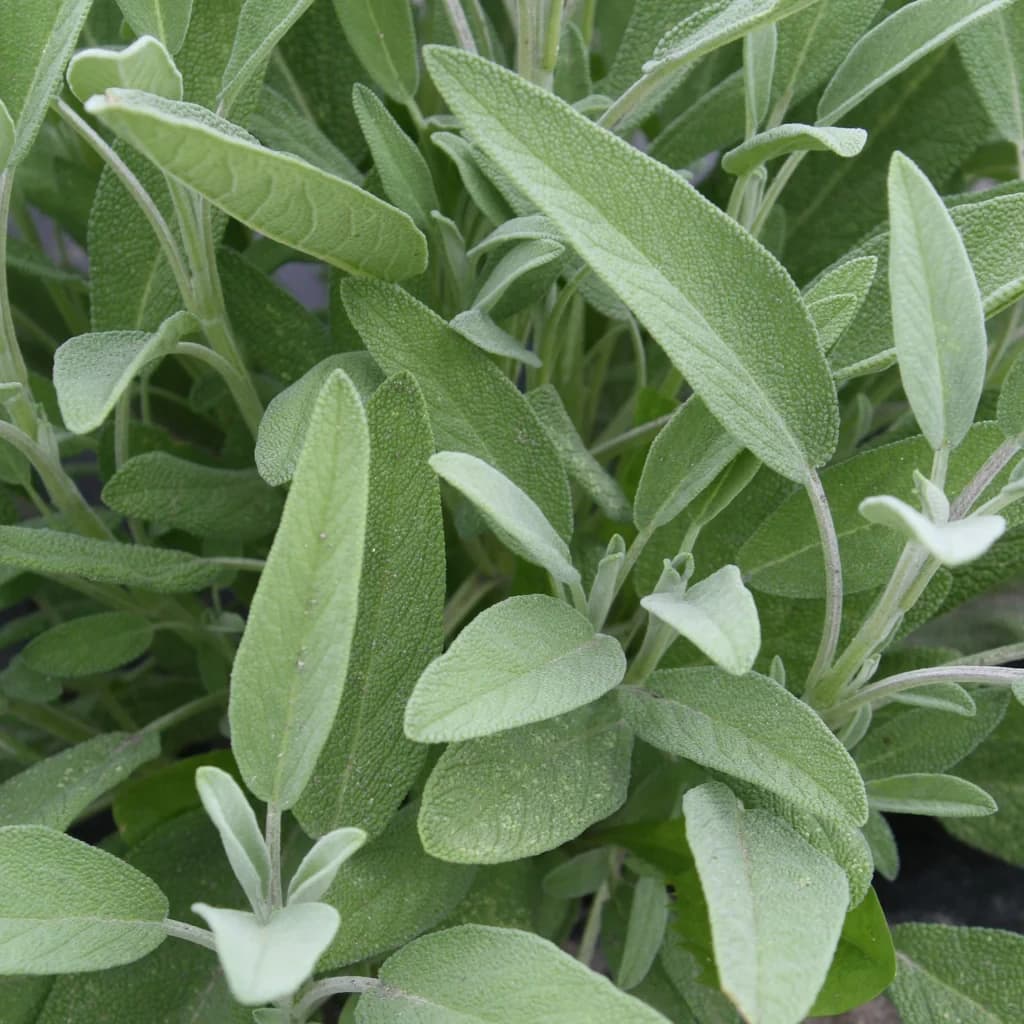
Common Sage
Common Sage seeds produce the classic culinary herb (Salvia officinalis) prized for centuries in kitchens and apothecaries alike. Broad, pebbly-textured leaves in a distinctive soft grey-green carry a warm, earthy, slightly peppery fragrance that intensifies on drying. Plants mature into handsome, semi-woody shrubs reaching 18–24 inches tall, and in late spring they erupt with slender spikes of violet-blue flowers that attract bees and beneficial insects — making sage as ornamental as it is useful.
Growing Guide
Sage is a perennial herb in most temperate climates (hardy to Zone 5), though it is commonly grown as an annual where winters are harsh. Start seeds indoors 6–8 weeks before the last frost, pressing them lightly into the surface of well-draining seed-starting mix — seeds need light to germinate. Germination takes 10–21 days at 65–70°F (18–21°C). Transplant outdoors after all frost risk has passed, spacing plants 18–24 inches apart in a position with full sun (at least 6 hours daily). Sage demands well-drained, slightly alkaline to neutral soil (pH 6.0–7.0) and tolerates dry spells remarkably well once established — consistently wet roots are its one weakness. Direct sowing outdoors in late spring is also reliable once soil temperatures reach 60°F. First-year plants can be lightly harvested; from year two onward, yields are generous. Cut plants back by one-third in early spring to encourage fresh, bushy growth and prevent legginess.
Harvest & Use
Begin harvesting individual leaves or small stem tips once plants are well established, typically 75–85 days from transplant. Harvest in the morning after dew has dried, picking from the outer growth to keep plants tidy. Fresh sage leaves deliver a bold, slightly piney, camphor-touched flavour that softens beautifully with cooking. It is the essential herb in pork and poultry stuffings, classic brown butter sauces, bean soups, and fresh pasta dishes. The leaves also complement roasted root vegetables, aged cheeses, and herb breads with quiet authority. For drying, cut whole stems just before flowering, bundle loosely, and hang in a warm, airy spot — dried sage retains its flavour exceptionally well for up to 12 months when stored in an airtight container away from direct light. Leaves can also be frozen whole or fried briefly in olive oil for a crisp garnish.
A single planting of Common Sage repays the small effort many times over, delivering harvests across multiple seasons with minimal fuss.
You May Also Like

Common Sage