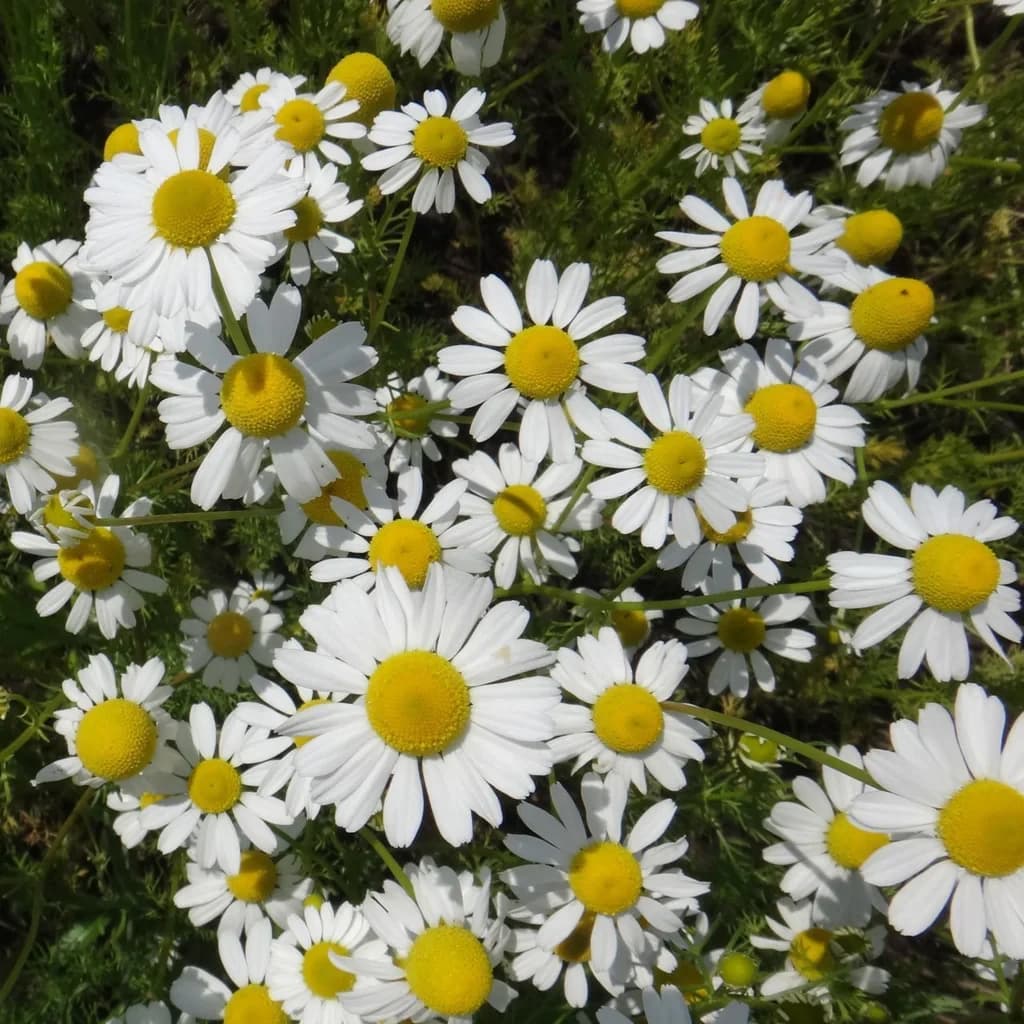
German Chamomile
German Chamomile seeds (Matricaria chamomilla) produce one of the most beloved medicinal herbs in the home garden — a delicate, feathery-leaved annual that grows quickly into clouds of small, daisy-like flowers with bright white petals surrounding a raised, hollow golden-yellow centre. That domed centre is the key distinguishing feature separating German Chamomile from its Roman cousin, and it signals peak potency for harvest. The flowers carry a warm, apple-like fragrance that intensifies as they dry, making this variety a cornerstone of herbal teas, natural skincare, and kitchen apothecaries.
Growing Guide
German Chamomile is a cool-season annual that thrives with minimal fuss, making it well-suited to gardeners of all experience levels. Direct sow seeds onto the soil surface in early spring or autumn — these tiny seeds require light to germinate and should not be buried. Press them gently into prepared soil and keep consistently moist until seedlings emerge in 7 to 14 days. Thin or transplant seedlings to 20 to 25 cm (8 to 10 inches) apart to allow good air circulation and bushy growth.
Plants prefer full sun to light partial shade and well-drained, moderately fertile soil. Avoid overly rich or heavily amended beds — lean soil actually encourages more prolific flowering. German Chamomile grows quickly, reaching 45 to 60 cm (18 to 24 inches) tall and beginning to flower in 60 to 65 days from sowing. It self-seeds readily, so established plants will naturalise over time in a dedicated herb bed or wildflower border.
Harvest & Use
Harvest flowers when the white petals begin to reflex — bending slightly backward from the yellow centre — which signals peak essential oil content and the best flavour for drying. Pick on dry mornings after any dew has lifted. A single planting produces successive flushes over several weeks, especially when harvested regularly to prevent setting seed.
Dry flowers in a single layer in a warm, well-ventilated spot away from direct light, then store in an airtight glass jar for up to 12 months. Herbal tea is the most classic use: one to two teaspoons of dried flowers steeped for five minutes delivers a gentle, apple-honey flavour with naturally calming properties. Beyond tea, the dried flowers infuse beautifully into honeys, bath products, and herbal oils. Fresh flowers can be scattered over salads for a subtle floral note.
A patch of German Chamomile earns its place in any garden — productive, fragrant, and useful from the first flush of flower to the last jar of dried blooms on the shelf.
You May Also Like


German Chamomile