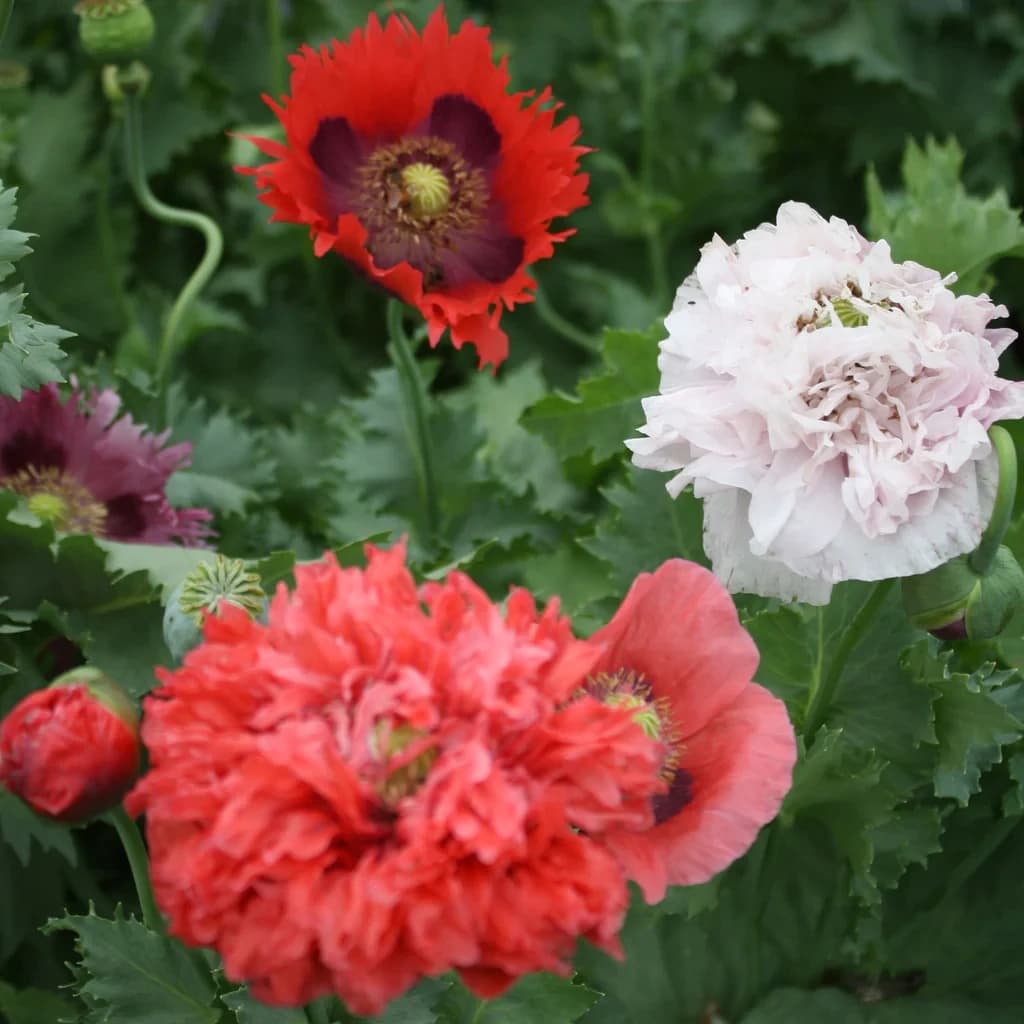
Poppy Mix
Poppy Mix seeds produce a cheerful blend of ornamental Papaver poppies in soft whites, vivid reds, and delicate pinks, each flower featuring a distinctive colored base that creates a striking contrast at the center of every bloom. Both fringed (laciniatum-type) and smooth single-petalled forms appear throughout the mix, giving beds and borders a layered, cottage-garden texture that no single variety can replicate alone. Blooms range from silky-smooth cups to ruffled, peony-like doubles — a genuinely diverse display from one packet of seed.
Growing Guide
Poppies in this mix typically reach bloom in 60 to 90 days from direct sowing, depending on conditions. They perform best in full sun (6 or more hours daily) and prefer a well-drained, moderately fertile soil — overly rich soil encourages leafy growth at the expense of flowers. Sow seeds directly where they are to grow, as poppies resent root disturbance. Direct sow in early spring, pressing seeds lightly onto the soil surface without covering — they need light to germinate. In mild climates, an autumn sowing will overwinter and produce earlier spring blooms.
Thin seedlings to 15 to 23 cm (6 to 9 inches) apart once they reach a few centimetres tall. Germination takes 10 to 14 days in soil temperatures of 10–18°C (50–65°F). These are cool-season annuals that bolt and decline in high summer heat, so timing your sow for spring or autumn is key. Difficulty level: easy — among the most beginner-friendly flowers in the garden.
Harvest & Use
For cut flowers, harvest stems when buds are just beginning to crack open and show colour. Sear stem ends immediately in boiling water for 10 seconds, then place in deep, cool water — this extends vase life significantly. Fully open blooms are short-lived as cuts but make a beautiful impression in loose, informal arrangements.
Left on the plant, spent blooms develop into ornamental seed pods that are highly valued in dried floral arrangements and wreaths. Allow pods to mature fully on the stem, then cut and hang upside down in a warm, dry spot. The dried pods retain their elegant shape for months. Seeds from mature pods are also edible — the small blue-grey poppy seeds carry a mild, nutty flavour well suited to baking: breads, muffins, and pastries all benefit from their subtle crunch.
To encourage a longer flowering season, deadhead spent blooms regularly or let some go to seed for natural self-seeding — established plants will often return year after year without any extra effort on your part.
You May Also Like
Poppy Mix