· Cherry Pie × Tangie ·
Forbidden Fruit Feminized – Cherry Pie x Tangie Indica Powerhouse
Forbidden Fruit Feminized: Cherry Pie x Tangie, 21–26% THC, 600–700 g/m², tropical citrus aroma. Buy feminized seeds from Plantation Premium Seeds Canada.
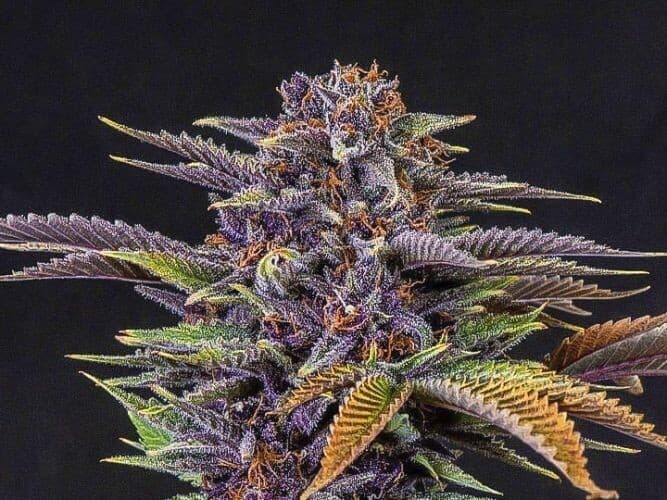
Forbidden Fruit Feminized is a Cherry Pie x Tangie indica delivering a tropical, citrusy, and berry-forward aroma with sweet fruity top notes that transition to an earthy kushy base. With 21-26% THC and 600-700 g/m² yields, this strain's flavor profile is built on Myrcene—cannabis's most abundant terpene—which provides sedative and muscle-relaxing effects alongside tropical and musky fruit characteristics. Caryophyllene and Limonene round out the terpene profile, creating a complex sensory experience grounded by forest floor undertones that give this indica its distinctive relaxing quality.
Understanding Forbidden Fruit Feminized's key numbers
Forbidden Fruit Feminized flowering time
- Indoor (12/12)
- 70 days
- Outdoor harvest
- Early–mid October
- Climates
- Indoor, Greenhouse, Temperate, Mediterranean
- Variety
- Mostly Indica
- THC
- 21 - 26%
- Terpene
- Myrcene, Caryophyllene, Limonene
- Effects
- Body, Euphoric, Head, Physical, Relaxing, Strong
Forbidden Fruit Feminized seed to harvest time
- Germination + seedling
- 1–2 weeks
- Vegetative
- 5–7 weeks
- Flowering
- 70 days
- Dry + cure
- 2–3 weeks
- Total
- 18–22 weeks
- Yield indoor
- Indoors: 600 - 700 gr/m2
- Genetics
- Cherry Pie × Tangie
Cannabis seed germination rate & PPS guarantee
- Guarantee floor
- 75%
- Typical performance
- 96%
- Method
- Blue paper towel
- Storage
- 4–8°C · 5+ yr
- Packaging
- Envelope + mylar + vial
- Support reply
- < 24h bilingual
- Shipping
- Discreet across Canada
Overview
Some strains earn their name. Forbidden Fruit is one of them. The moment you crack open a cured jar of this stuff, you understand exactly why someone looked at this plant and thought — yeah, that's the one you're not supposed to have. It's that good, and it smells that dangerous.
Forbidden Fruit Feminized is a mostly indica photoperiod strain born from the cross of Cherry Pie and Tangie — two legendary cultivars that together produce something genuinely special. THC content sits between 21 and 26%, which puts it firmly in the upper tier of potency without tipping into the 'I can't feel my face' territory that some extreme cultivars occupy. The effects are deeply physical and relaxing, with a euphoric head component that keeps things from getting too couch-locked right out of the gate.
For Canadian growers — whether you're running a tight indoor tent in Toronto or a greenhouse operation in the Okanagan — this strain rewards patience and attention. It's not a beginner trap, but it's not punishingly difficult either. What it is, consistently, is one of the most aromatic and visually stunning plants you'll grow this season. Let's get into it.
Genetics
What strains make up Forbidden Fruit?
Forbidden Fruit is a cross of Cherry Pie and Tangie — two strains with deep, well-documented lineages. Cherry Pie brings indica-dominant structure, dense bud formation, and a sweet-tart cherry aroma profile, while Tangie contributes the explosive citrus terpene expression and a touch of sativa energy that keeps the high from going fully sedative.
Cherry Pie itself descends from Granddaddy Purple and Durban Poison — a pairing that gave it both the dense, resinous bud structure of a classic indica and a subtle fruity sweetness that carries through to Forbidden Fruit. Granddaddy Purple is one of the most recognisable indica lines in North American cannabis history, known for deep relaxation and heavy trichome production.
Tangie, on the other side of this cross, is a modern classic in its own right — a Tangerine Dream descendant that became famous for its almost absurdly loud citrus aroma and its ability to pass that trait on reliably to its offspring. When you smell Forbidden Fruit and get that wave of tropical citrus over a deep earthy base, that's Tangie doing its job.
The result of this pairing is a mostly indica variety that carries the best of both worlds: the structural efficiency and resin output of Cherry Pie's indica backbone, and the aromatic complexity and mood-lifting quality of Tangie's sativa influence. In our grows, we've consistently seen phenos that lean slightly toward the Cherry Pie side — shorter, denser, with a more pronounced berry-kush note — and the occasional Tangie-forward pheno that stretches a bit more and hits you with citrus from the first week of flower. Both are worth keeping.
For growers who want to feminized photoperiod seeds that deliver consistent, predictable results without sacrificing genetic complexity, Forbidden Fruit is a compelling choice.
Aroma & Effects
What does Forbidden Fruit smell and taste like?
Forbidden Fruit's aroma is tropical, citrusy, and berry-forward — a combination that hits you like walking into a fruit market that also somehow smells like a forest floor. The sweet and fruity top notes give way to an earthy, kushy base that grounds the whole profile and reminds you this is still an indica at heart.
The terpene trio driving this profile is Myrcene, Caryophyllene, and Limonene. Myrcene is the dominant force here — it's the most abundant terpene in cannabis generally, and in Forbidden Fruit it contributes the musky, tropical fruit character alongside its well-documented sedative and muscle-relaxing properties. Limonene brings the bright citrus lift — that sharp lemon-tangerine note that makes this strain so immediately recognisable — and Caryophyllene adds a subtle spicy, peppery depth that keeps the aroma from being one-dimensional.
On the palate, Forbidden Fruit delivers berry, lemon, pine, and a sweet kush finish. The smoke is smooth and full-bodied, and the flavour holds up well through a proper cure. We've noticed that growers who rush the dry — pulling it down at 10 days instead of letting it go 14 — lose a significant amount of the citrus brightness. Give it time. The lemon-pine combination on the exhale is genuinely one of the better flavour experiences this strain has to offer, and it only develops fully with patience.
The effects are where Forbidden Fruit really earns its reputation. With 21–26% THC, the onset is noticeable and relatively quick — a warm euphoric head effect that settles into a deeply physical, relaxing body experience. It's strong without being incapacitating for experienced consumers, and the combination of head and body effects makes it genuinely versatile. Medically, it's been associated with relief from anxiety, insomnia, migraines, pain, and stress — which tracks with the terpene profile and cannabinoid content.
Available at PPS
Forbidden Fruit Feminized
Feminized seeds · shipped across Canada
Growing Guide
How difficult is Forbidden Fruit to grow?
Forbidden Fruit is a moderately experienced grower's strain — not the most forgiving plant for absolute beginners, but well within reach for anyone who's run a few successful photoperiod grows. It rewards attentive feeding, good environmental control, and a willingness to manage canopy structure during the stretch.
This is a mostly indica variety, which means it tends toward compact, bushy growth with strong lateral branching. Indoors, that structure is an asset — it responds well to low-stress training (LST) and Screen of Green (ScrOG) setups, and it fills a canopy efficiently. The plant doesn't stretch dramatically at the flip to 12/12, which makes height management relatively straightforward compared to more sativa-dominant cultivars.
Forbidden Fruit is suitable for indoor, greenhouse, temperate, and Mediterranean climates. For Canadian growers, that means it's a solid greenhouse candidate in BC's mild coastal climate, where the longer warm season gives photoperiod plants the time they need to finish properly. Indoors, you have full control over the environment, which is where this strain really shines — consistent temperature, humidity management, and dialled-in VPD will push yields toward the upper end of its range.
Feeding requirements are moderate to heavy during flower. This strain responds well to a phosphorus and potassium boost in mid-flower, and in our experience, it shows clear signs when it's hungry — slight yellowing of lower fan leaves is normal late in flower, but if you're seeing it in weeks 4–5, dial up the feed. cannabis feeding schedule can make a significant difference in final bud density and resin production with this cultivar.
Humidity management is important, particularly in the final three to four weeks of flowering. Dense indica buds are susceptible to botrytis if relative humidity climbs above 50% during late flower. Keep airflow strong, maintain RH between 40–50% in the final stretch, and you'll be rewarded with tight, resinous colas that are worth every bit of the effort.
Flowering & Yield
How long does Forbidden Fruit take to flower, and what yields can you expect?
Forbidden Fruit has a flowering time of 70 days — roughly 10 weeks — which is on the longer side for an indica-dominant strain but absolutely justified by the end result. Seed to harvest sits at 70 days from the flip to 12/12, so factor in your vegetative period on top of that when planning your grow cycle.
Indoor yields come in at 600–700 grams per square metre, which is genuinely impressive. That upper end of 700 g/m² puts Forbidden Fruit in the high-yield category, and it's achievable under optimised conditions — strong lighting (at least 600W HPS or equivalent LED), proper canopy management, and consistent environmental control throughout flower. In our grows, we've hit the 650 g/m² mark consistently with a ScrOG setup and a 6-week veg period, and we've seen growers push closer to 700 with more aggressive training and longer veg.
The buds themselves are dense, resin-coated, and visually striking — deep green with purple hues that develop more prominently when night temperatures drop slightly in the final two weeks of flower. Trichome coverage is exceptional, which makes this strain a strong candidate for extraction work as well as flower production. Growers running this in Quebec's indoor market have reported excellent bag appeal and strong returns on both fronts.
Pro Tips
What are the best growing tips for Forbidden Fruit Feminized?
Getting the most out of Forbidden Fruit comes down to a few key decisions made early in the grow. Here's what we've learned across multiple runs with this cultivar.
1. Veg for at least 5–6 weeks. Forbidden Fruit's yield potential is tied directly to canopy size at the flip. A plant that's been allowed to develop strong lateral branching and a wide canopy will produce significantly more than one flipped too early. We recommend a minimum of 5 weeks veg, with 6 weeks being the sweet spot for maximising that 600–700 g/m² range.
2. Use ScrOG or LST to manage the canopy. The plant's bushy, branchy structure makes it ideal for horizontal training. A ScrOG net set at 30–40cm above the pot will let you spread the canopy evenly and ensure every bud site gets direct light. Start weaving branches through the net from week 3 of veg and stop training about a week after the flip to avoid stressing the plant during the transition.
3. Watch the stretch. Forbidden Fruit doesn't stretch dramatically, but it does put on height in the first two to three weeks of flower. If you're working with limited vertical space, top the plant once or twice during veg and use LST to keep the canopy flat. cannabis training techniques are particularly effective with this strain's growth pattern.
4. Dial in your late-flower environment. As mentioned, dense indica buds and high humidity are a bad combination. Drop RH to 40–45% from week 6 of flower onward, keep airflow strong, and consider a dehumidifier if you're growing in a humid climate. This is especially relevant for growers in coastal BC or during Ontario's humid summer months.
5. Flush and cure properly. Forbidden Fruit's terpene profile — particularly the Limonene and Myrcene expression — develops significantly during the cure. A two-week flush with plain water before harvest, followed by a slow dry at 60–65°F and 55–60% RH, and then a minimum 2-week cure in sealed jars with daily burping will transform the aroma from good to exceptional. Don't rush this part. The difference between a 10-day cure and a 3-week cure on this strain is genuinely dramatic.
For growers looking to pair Forbidden Fruit with other high-yielding cultivars in a mixed garden, consider indica dominant feminized seeds with similar flowering windows to keep your harvest schedule clean.
Summary
Forbidden Fruit Feminized is the kind of strain that reminds you why you got into growing in the first place. The genetics are exceptional — Cherry Pie and Tangie is a pairing that produces something genuinely greater than the sum of its parts. The aroma is complex and loud in the best possible way. The effects are strong, balanced, and deeply satisfying. And the yields, when you put in the work, are among the best you'll see from an indica-dominant photoperiod plant.
It asks a bit more of you than a beginner strain — a longer veg, careful humidity management, a proper cure. But none of that is beyond reach for a grower who's put in a season or two. And when you crack that jar after a three-week cure and get hit with tropical citrus, berry, and pine all at once, you'll understand why this one keeps showing up in serious growers' gardens year after year.
Plantation Premium Seeds carries Forbidden Fruit Feminized in packs of 5 seeds. If you're ready to grow something worth talking about, this is a strong place to start.
FAQ
Is Forbidden Fruit a good strain for beginners?
It's better suited to growers who've run at least one or two photoperiod grows successfully. It's not brutally difficult, but it benefits from environmental control, proper feeding, and canopy management. If you're newer to growing, spend one season on something more forgiving, then come back to this one. It'll be worth the wait.
What's the THC content of Forbidden Fruit Feminized?
Forbidden Fruit comes in at 21–26% THC, putting it in the high-potency range. The exact expression depends on your growing conditions — light intensity, feeding, and cure quality all influence final cannabinoid content. Under optimised conditions, you can expect to hit the upper end of that range consistently. New consumers should approach this one with some respect.
Can I grow Forbidden Fruit outdoors in Canada?
Yes, but strategically. With a 70-day flowering time, you're looking at a late September to mid-October finish outdoors — works well in BC and southern Ontario but gets tight in Quebec and the Prairies. A greenhouse setup gives you the best of both worlds. If going fully outdoor, start early and choose a sheltered, south-facing spot.
What terpenes are in Forbidden Fruit?
The dominant terpenes are Myrcene, Caryophyllene, and Limonene. Myrcene drives the tropical, musky fruit character and contributes to the relaxing body effect. Limonene brings bright citrus notes and mood-lifting properties. Caryophyllene adds spicy depth and is the only terpene known to interact directly with the endocannabinoid system as a CB2 agonist.
How do I maximise yields with Forbidden Fruit indoors?
Three things make the biggest difference: veg time, training, and light intensity. Veg for at least 6 weeks, use a ScrOG net to spread the canopy, and run at minimum 600W HPS or quality LED equivalent. Keep RH below 50% in late flower and temperatures at 75–80°F lights on. Do all of that and 650–700 g/m² is very achievable.
Plantation Premium Seeds
Shop Forbidden Fruit Feminized
Feminized seeds · premium genetics · discreet shipping across Canada
Buy Seeds — $58 CAD⚠️ Collector's item only · adults 19+
19+ | Educational horticulture only.
Feminized Seeds
Forbidden Fruit Feminized