Rodents and Cannabis: Practical Guide to Protect Your Plants from Mice, Rats, and Voles
Mice, rats, and voles attack cannabis plants and seeds. Identify the damage and protect your crop in Quebec.
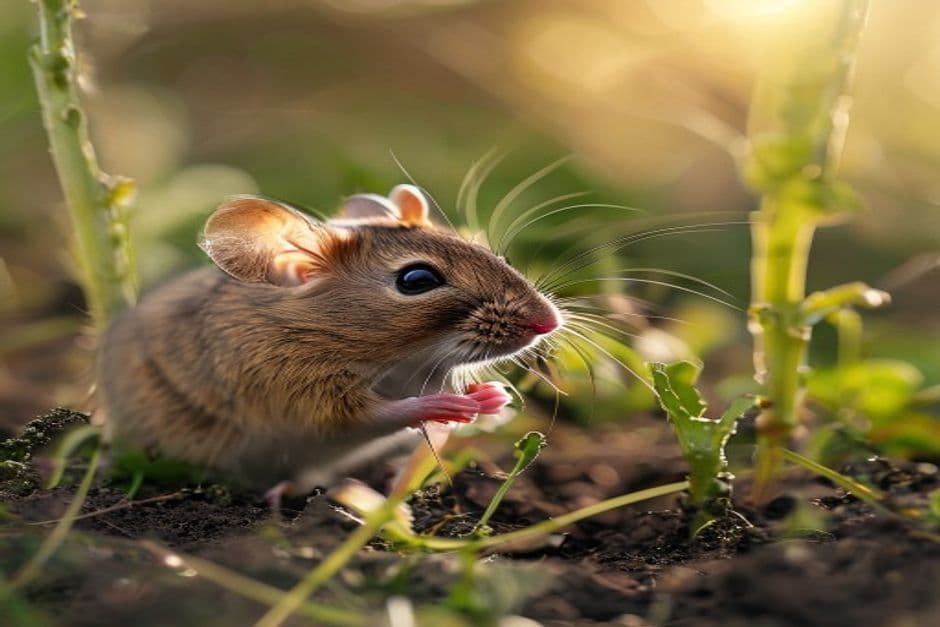
Rodents cut stems cleanly at the base or dig underground tunnels to reach the roots. A fine-mesh cage around young plants remains the most reliable protection, complemented by natural repellents.
Key takeaways
- A stem cut cleanly at the base signals a rodent, unlike the slimy damage left by slugs.
- A fine-mesh cage, buried into the soil, remains the most reliable physical protection for young plants.
- Voles attack through the roots via underground tunnels, invisible until the plant wilts.
- In Canada, anticoagulant rodenticides like bromadiolone are banned for domestic use — their bioaccumulation also kills natural predators.
- A single hawk can consume up to 1,000 rodents per season — encouraging birds of prey remains a sustainable strategy.
- Which rodents attack cannabis in Quebec?
- How do you identify rodent damage?
- What are the 7 methods to protect your plants?
- FAQ — Rodents and cannabis
Rodents (mice, rats, voles) remain an underrated pest in outdoor cannabis growing. Discreet and nocturnal, they can cause significant losses before the real problem is even identified.
Which rodents attack cannabis in Quebec?
Three distinct rodents threaten outdoor crops, each with its own attack pattern and activity period.
**Deer mouse (Peromyscus maniculatus)** The most common in Quebec gardens and fields, it eats germinated seeds and young shoots, and gnaws stems at the base — causing the plant's death by cutting off sap flow.
**Meadow vole (Microtus pennsylvanicus)** This rodent lives in underground tunnels and attacks the roots directly. Its activity peaks under the snow, from October to April, but it remains present all summer, leaving tunnels 3 to 4 cm in diameter in the soil.
**Norway rat (Rattus norvegicus)** Rarer in rural areas, it becomes more common in urban and suburban settings. It targets larger plants and directly attacks flowering buds.
How do you identify rodent damage?
The signatures differ clearly depending on whether you're dealing with surface damage or an underground root attack.
Surface damage (mice, rats)
- Seeds eaten at the germination stage — holes in the potting mix, with no plant emerging.
- Young stems cut cleanly, 1 to 5 cm from the ground.
- Lower leaves gnawed in an arc shape.
- Oval droppings, 5 to 8 mm for mice, 12 to 18 mm for rats.
- A plant wilting for no apparent reason, collapsing easily when lifted.
- Tunnels visible on the surface, under grass or mulch.
- Roots cut cleanly, underground.
What are the 7 methods to protect your plants?
Combining an effective physical barrier with complementary preventive measures gives the most reliable protection against these discreet pests.
- Fine-mesh protective cage — the most effective method. Surround each young plant with a cylinder of fine mesh, no more than 6 mm openings, at least 45 cm tall above the ground. Bury it 5 to 10 cm into the soil to also block digging from below.
- Gravel or volcanic rock mulch. Rodents generally avoid digging in hard substrates. Cover the soil around your plants with about 5 cm of gravel or volcanic rock — effective against both voles and mice.
- Natural repellents — mint and garlic. The strong scent of peppermint and garlic repels rodents. Grow peppermint in pots rather than in the ground, where it would become invasive, and place minced garlic cloves around your plants; renew these scent baits every 7 to 10 days.
- Ultrasonic repellents — limited effectiveness. Ultrasonic emitters disturb rodents, but their effectiveness drops after a few weeks as animals adapt. Use only as a supplement to other methods.
- Live traps — without killing the animal. A live trap lets you capture the rodent to release it far from your crop. Use sunflower seeds or peanut butter as bait, check the trap morning and evening, and release the animal more than 500 m away — a more humane method, safe for pets and birds of prey.
- Encourage natural predators. Installing a perch for birds of prey (hawks, kestrels, owls) attracts formidable allies — a single hawk can consume up to 1,000 rodents per season. Leaving habitat at the garden's edge for foxes and weasels also reinforces this natural protection.
- Buried fencing for larger areas. For a larger productive garden, install a fine-mesh fence buried 30 cm deep around the entire perimeter of the crop.
FAQ
How do you protect cannabis plants from rodents?
The physical barrier is by far the most reliable: surround each young plant with a cylinder of fine mesh, openings no larger than 6 mm, at least 45 cm tall, buried 5 to 10 cm into the soil to block digging from below. Add a gravel mulch, which rodents avoid crossing, and scent repellents (peppermint in pots, minced garlic) refreshed every 7 to 10 days.
How do you know if rodents or slugs are attacking my plants?
Look at the cut and check for traces. A stem severed cleanly at the base, almost surgically, means a rodent — which also leaves oval droppings, 5 to 8 mm for mice, 12 to 18 mm for rats. Gnawed leaf edges with a shiny silvery trail mean slugs. The mucus settles it: rodents never leave any.
My plant is wilting for no visible reason — could it be a vole?
That's a classic scenario. Voles attack roots from underground tunnels, so nothing shows on the surface until the plant wilts. The test is simple: pull gently on the plant — if it lifts with almost no resistance, the roots have been severed. Then look for tunnels 3 to 4 cm across under the grass or mulch.
Should you use rat poison around a cannabis crop?
No, never. Anticoagulant rodenticides like bromadiolone and brodifacoum are bioaccumulative, and consumer-class products are banned for domestic use in Canada. An owl or fox that eats a poisoned rodent accumulates the poison in turn — so you end up killing the very predators that were controlling the population. Use mechanical or live traps instead.
How does a live trap work for rodents?
Bait it with sunflower seeds, peanut butter, a piece of apple, or even a few cat kibbles. Check the trap morning and evening — an animal should never sit in it for hours — and release it more than 500 m from the crop, or it will come back. It's the most humane method, and completely safe for pets and birds of prey.
Are natural predators really effective against rodents?
Remarkably so. A single hawk consumes up to 1,000 rodents per season, and foxes and badgers take out several thousand per year. Install a raptor perch or an owl box, and leave live hedges or fallow strips at the garden's edge: those are the refuges these allies need to settle in for good.
When are rodents most active in Quebec?
Two peaks per season: spring, in May-June, when they go after seeds and young seedlings, and fall, in September-October, as they stock up before winter. The vole is the exception — its activity peaks under the snow, from October to April, sheltered from predators.
Can rodents reach my plants in a greenhouse?
Yes, if the base of the structure isn't perfectly sealed. A mouse squeezes through an opening of barely 6 mm — about the thickness of a pencil. Inspect the ground-level perimeter, seal the joints, and close off any access underneath the structure.
Does cannabis naturally repel rodents?
No — that's a persistent myth. Rodents aren't repelled by cannabis and may take a direct interest in it, especially in seeds not yet harvested and tender young shoots. No strain protects itself: the physical barrier remains essential.
19+ | Educational horticulture only.