Slugs and Snails on Cannabis: Practical Guide to Protect Your Plants from Nighttime Feeders
Slugs and snails on cannabis: identify nighttime damage and eliminate these pests with biological solutions in Quebec.
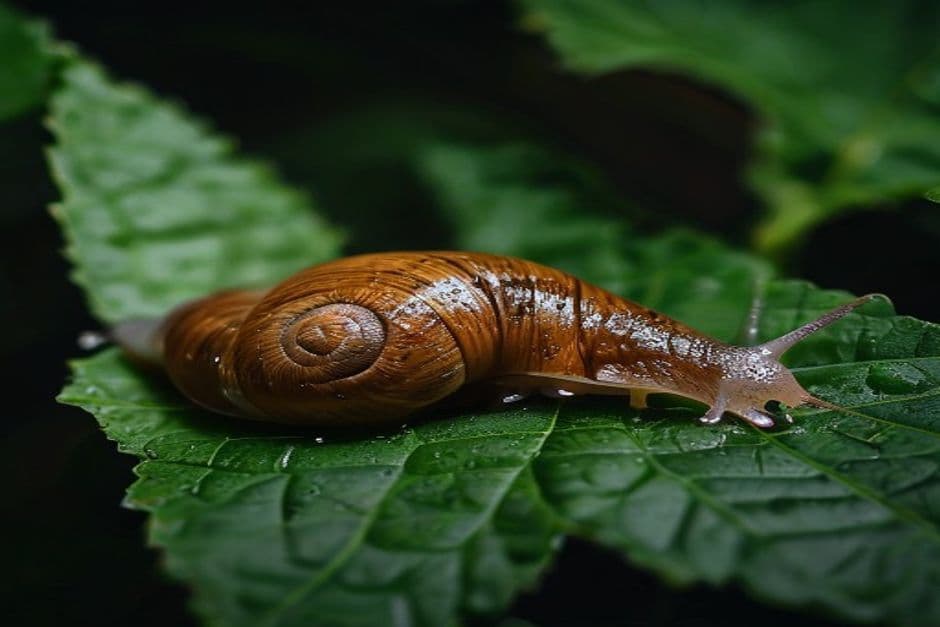
Slugs leave a silvery mucus trail and can devour a young plant in a single night. Combine nighttime hand-picking, diatomaceous earth, and iron phosphate baits to protect your plants.
Key takeaways
- A shiny silvery mucus trail on the substrate or leaves is the most reliable sign of a slug attack.
- A single large slug can devour an entire seedling in one night — the risk is highest on young plants.
- Quebec's rainy spring (May–June) represents the highest risk period.
- Diatomaceous earth loses effectiveness once wet — it must be reapplied after every rain.
- Iron phosphate baits remain the safest option, though their toxicity to pets isn't entirely zero.
- How do you identify slugs and snails?
- What damage do they cause on cannabis?
- What are the 6 methods to eliminate slugs and snails?
- FAQ — Slugs and snails on cannabis
These mollusks are the garden's night guardians — invisible by day, devastating under cover of darkness and moisture. And in Quebec, a rainy spring is particularly favorable to them.
How do you identify slugs and snails?
Slugs (no shell) Their elongated, slimy body measures 2 to 15 cm, with variable coloring — gray, brown, black, or orange. They stay active at night and during rainy or overcast days.
Snails (with shell) Their behavior stays similar to slugs. In Quebec, the garden snail (Cornu aspersum) remains the most common species.
Telltale sign A shiny, silvery mucus trail on the substrate, pots, or leaves, combined with irregular damage along leaf edges and a complete absence of the animal during daylight hours.
What damage do they cause on cannabis?
The level of risk varies enormously depending on your plant's growth stage — seedlings and cuttings represent by far the most critical situation.
Seedlings and cuttings — critical risk A single large slug can devour an entire plant in one night. The crown, the base of the stem, remains particularly vulnerable at this stage.
Vegetative-stage plants Damage shows up as defoliation in entire leaf sections. The open wounds this creates increase the risk of fungal rot.
Flowering Slugs can infiltrate directly into the buds, leaving mucus traces on the flowers — damage that directly compromises harvest quality.
What are the 6 methods to eliminate slugs and snails?
Combining a physical barrier with active intervention remains the most reliable approach against these nocturnal mollusks.
- Nighttime hand-picking. Go out with a flashlight between 10 p.m. and 2 a.m., and collect them in a container of salt water or soapy water. This method is more effective after rain or irrigation; repeat it 3 times a week during an infestation.
- Diatomaceous earth — a deterrent barrier. Slugs dislike crossing the dry powder and go around it, unless they're very hungry. Worth knowing: the widespread claim that its sharp particles tear the slug's skin isn't actually supported — it's a deterrent, not a lethal product, which is why it performs better alongside other methods than on its own. Sprinkle a 5-to-10-cm-wide ring around each plant, and reapply after every rain — it becomes ineffective once wet.
- Wood ash. Same principle as diatomaceous earth: slugs avoid powdery, alkaline surfaces. Create a ring of ash around your plants — a bonus that also lightly enriches the soil with potash.
- Iron phosphate — biological baits. Baits made from iron phosphate attract slugs and disrupt their calcium metabolism, causing them to stop feeding; trials show a mortality rate of 75 to 78% and a 78-to-90% reduction in foliage consumed (Jardinage PagesJaunes). Scatter the granules around your plants at dusk — the product is biodegradable and approved for organic farming. Its toxicity to pets stays low at recommended doses, but isn't entirely zero if ingested in large amounts; keep pets away from treated areas for a few hours. Also avoid metaldehyde-based baits, which are significantly more toxic to pets.
- Beer traps. Fermented beer attracts slugs, which drown in it. Bury a container up to ground level and fill it with beer; empty and refresh it every 2 days.
- ***Phasmarhabditis hermaphrodita* — anti-slug nematodes.** These nematodes parasitize and kill slugs directly in the soil. Apply them as a drench in moist soil above 5°C; they're available from Canadian biological suppliers.
FAQ
How do you get rid of slugs on cannabis plants?
Combine a barrier with active intervention. Sprinkle a 5-to-10 cm ring of diatomaceous earth around each plant, reapplied after every rain. Scatter iron phosphate baits at dusk — trials show 75 to 78% slug mortality and up to a 90% reduction in foliage eaten. Add nighttime hand-picking with a flashlight between 10 p.m. and 2 a.m., three times a week during an infestation.
How do you know if slugs are eating my cannabis plants?
The shiny silvery trail is the decisive sign: dried mucus on the substrate, pots, and leaves. Damage appears overnight, leaving irregular missing chunks along leaf edges, with no insect visible during the day. If there's no mucus trail, look at caterpillars or earwigs instead.
Can slugs kill my cannabis plants?
Yes, and that's the main risk on young plants: a single large slug devours an entire seedling in one night, attacking the crown at the stem base. On an adult plant the danger is indirect — open wounds become entry points for fungal disease.
When are slugs most active in Quebec?
The rainy spring, May and June, is the peak risk window — exactly when young plants are most vulnerable. Hot dry summer weather makes them far less active, though they return with late-summer rain. The first three weeks after transplanting demand the closest watch.
Is salt a good solution against slugs?
No, avoid it. Salt kills the slug but stays toxic to soil and plant roots, and it accumulates with every application. Diatomaceous earth, wood ash, and iron phosphate baits achieve the same result without damaging your growing medium.
Is diatomaceous earth effective against slugs?
It works as a deterrent — slugs avoid crossing the dry powder barrier unless they're very hungry — but only while it stays dry. Rain or irrigation destroys its effect and it must be reapplied. Note that the common claim that its sharp particles tear the slug's skin isn't actually supported; treat it as a barrier they dislike, not a lethal one, and pair it with baits.
Are iron phosphate baits dangerous for pets?
Far less so than metaldehyde, which should be avoided. Iron phosphate is biodegradable and approved for organic farming, and its toxicity stays low at recommended doses — though not entirely zero if a large amount is eaten. Keep pets off treated areas for a few hours. At heavy doses it can also affect earthworms, so stick to the label rate.
19+ | Educational horticulture only.