· Mendocino Purps × Skunk × Afghani ·
Grape Ape Feminized: The Purple Indica Legend with a True Grape-Jam Nose
Grape Ape Feminized seeds: deep purple buds, grape-jam aroma, 49–56 day flower, heavy indica body relaxation. Shop premium genetics at P.P.S.
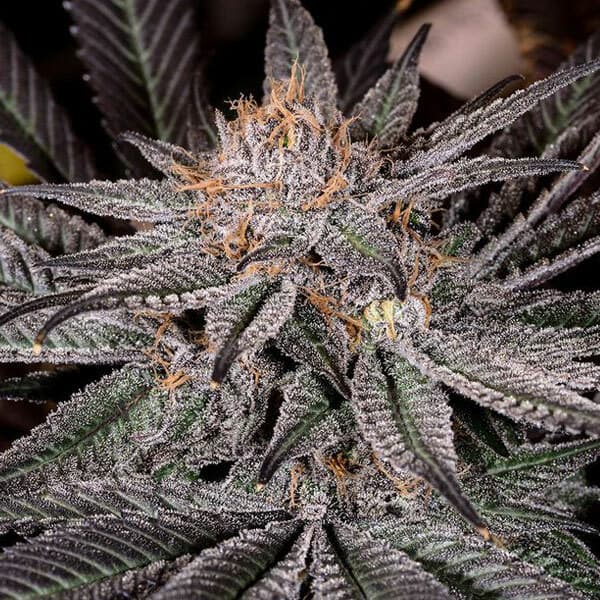
Grape Ape Feminized is a mostly-indica California classic with deep purple buds, a true grape-jam and skunk aroma, and a flowering cycle of just 49 to 56 days — quick for an indica of this stature. The genetics combine Afghani Indica, Mendocino Purps and Skunk 1, producing plants that test between 15 and 23 percent THC with myrcene leading a relaxing terpene profile of caryophyllene and pinene. Indoors, expect around 450 grams per square metre of dense, resin-heavy buds under solid light. Outdoors in Canada, mature plants can reach up to 800 grams per plant with a late October harvest, well-suited to coastal BC and southern Ontario climates. Effects lean firmly toward heavy body relaxation with a gentle, drifting cerebral side, making this a serious nighttime indica for managing tension, sleep and physical discomfort. Compact, bushy structure, forgiving genetics, beginner-friendly grow.
Understanding Grape Ape Feminized's key numbers
Grape Ape Feminized flowering time
- Indoor (12/12)
- 49-56 days
- Outdoor harvest
- Late October
- Climates
- Grows indoors, Grows outdoors
- Variety
- Mostly Indica
- THC
- 15-23%
- Terpene
- Myrcene
Grape Ape Feminized seed to harvest time
- Germination + seedling
- 1–2 weeks
- Vegetative
- 5–7 weeks
- Flowering
- 49-56 days
- Dry + cure
- 2–3 weeks
- Total
- 15–20 weeks
- Yield indoor
- 450 g/m²
- Yield outdoor
- 800 g/plant
Cannabis seed germination rate & PPS guarantee
- Guarantee floor
- 75%
- Typical performance
- 96%
- Method
- Blue paper towel
- Storage
- 4–8°C · 5+ yr
- Packaging
- Envelope + mylar + vial
- Support reply
- < 24h bilingual
- Shipping
- Discreet across Canada
Grape Ape Feminized is one of those names that doesn't need a long introduction. If you grew or smoked in the late 2000s and early 2010s, you remember the buds — dense, almost black-purple knuckles drenched in trichomes, smelling exactly like grape jam left out in the sun. It was the strain that made the rest of the world believe California cannabis could really taste like fruit, and two decades later it's still on the shortlist when people argue about the best purple indicas ever bred. It earned a High Times Cannabis Cup back in the day, and the genetics have held up across every wave of modern breeding since.
What makes Grape Ape special isn't just the colour or the nose — it's the fact that an indica this potent finishes in 49 to 56 days. That's quick by any measure, and unusually quick for a plant that lays down body weight like this one does. The lineage tells the story: Afghani Indica for the dense, resin-heavy structure and the deep sedative effect, Mendocino Purps for the rich colour and the grape-leaning terpene expression that gives the strain its name, and Skunk #1 for the vigour, the yield, and the unmistakable sweet-skunk undertone that grounds the whole profile. Three foundational genetics, layered carefully, with no wasted notes.
At Plantation Premium Seeds, we stock Grape Ape Feminized because it's a strain that earns its place in the catalogue. It's forgiving enough for a second or third grow, productive enough to justify the tent space, and the finished product is genuinely memorable — the kind of jar you open and the whole room turns around. If you're building a rotation that includes a serious nighttime indica with real character and a flowering window that suits the Canadian climate, this is the one to plant.
What strains make up Grape Ape Feminized?
Grape Ape comes from a three-way California cross: Afghani Indica, Mendocino Purps, and Skunk #1. Each parent contributes something specific, and the result is more than the sum of the parts.
The Afghani Indica side is the backbone. It brings the short, stocky, broad-leaf structure, the dense bud formation, and the heavy resin production that makes Grape Ape such a forgiving plant for hash and concentrate makers. Afghani genetics also account for the deeply sedative body effect — this is a strain rooted in the original Hindu Kush landrace tradition.
Mendocino Purps is the colour and the flavour. Bred in Northern California's Emerald Triangle, Mendo Purps is famous for expressing deep purple, almost violet calyxes in cool temperatures, and for a grape-leaning terpene profile that's unusual in the cannabis world. That's where the grape-jam nose comes from — not from any flavour additive, but from a genuine inheritance.
Skunk #1 rounds out the cross. It's one of the foundational hybrid strains in modern cannabis breeding, and its presence here means vigour, productive yields, and that familiar sweet-skunk undertone that anchors the grape and earth notes from the other two parents. Feminized seeds mean every plant in your pack has the potential to flower — no males to cull, no wasted space.
What does Grape Ape Feminized smell and taste like?
Grape Ape is one of the rare strains that actually smells like its name. Crack a jar of properly cured Grape Ape and the first thing that hits you is grape — sweet, jammy, almost like the concentrated fruit syrup you'd find in an old-school candy shop. Underneath that, you get the skunk: a low, sweet pungency that grounds the fruit and keeps it from feeling one-dimensional. Spicy and woody notes appear in the exhale, the kind of herbal complexity that develops fully during a slow cure.
The terpene profile explains the structure. Myrcene leads — that's the terpene responsible for the deep, fruity, almost mango-like sweetness and a big part of the body-heavy effect. Caryophyllene adds the spicy, peppery bite and may contribute to the strain's anti-inflammatory character. Pinene rounds out the profile with a faint coniferous brightness that keeps the smoke from feeling syrupy. Together they create a flavour that's instantly recognisable.
What effects does Grape Ape produce?
This is a serious nighttime indica. The body effects come on within minutes — a warm, heavy relaxation that sinks into the muscles and stays there. The cerebral side is gentle and pleasant rather than racing, more of a slow drift than a lift. Growers and consumers consistently describe Grape Ape as a couch-lock strain in the best sense: deeply calming, well-suited to evening use, and a favourite for managing tension, sleep difficulties, and chronic body discomfort.
Higher doses lean firmly toward sleep. Lower doses keep you functional but mellow. Either way, this isn't a strain for getting things done — it's a strain for putting things down.
Available at PPS
Grape Ape Feminized
Feminized seeds · shipped across Canada
How difficult is Grape Ape to grow?
Grape Ape Feminized is beginner-friendly. The Afghani structure gives you a short, bushy plant that handles environmental swings well, the Skunk genetics add vigour and forgiveness, and the 49 to 56 day flowering cycle means you're not waiting around forever for a finished product. If you've grown one or two crops successfully, you can grow this one.
Indoors, expect a compact plant — typically 70 to 110 cm in a five-gallon pot under solid light. The stretch in early flower is moderate, easily managed with a single topping at the fourth or fifth node and some light low-stress training. The wide-leaf indica structure can shade lower bud sites if you let the plant grow untrained, so a bit of canopy management goes a long way. A SCROG net is overkill for this strain but never hurts.
Outdoors in Canada, Grape Ape suits coastal BC and southern Ontario well. The compact size makes it discreet and easy to manage on a deck or in a sheltered garden. Harvest lands in late October, which is workable across most of the populated south of the country — earlier than many indicas thanks to the relatively fast flowering window.
The main thing to watch is humidity during late flower. Dense purple buds plus a wet October equals a real bud rot risk, so make sure your plants get airflow and consider a temporary rain shelter if your region tends to soak in the last few weeks before harvest.
How long does Grape Ape take to flower?
Grape Ape Feminized finishes in 49 to 56 days from the flip to 12/12. That's seven to eight weeks — fast for an indica with this kind of bud density and body weight. It's one of the strain's biggest practical advantages: you get all the productivity and potency of a heavy indica without the ten-week wait that many comparable strains demand.
Watch your trichomes rather than the calendar. In our experience with this cross, the buds look ready about five days before they actually are. Wait for a mix of cloudy and amber trichomes on the calyxes themselves, not just the sugar leaves, before you pull. That extra few days makes a real difference in the depth of the body effect.
What kind of yields can you expect from Grape Ape?
Indoor yields land around 450 grams per square metre under solid light and dialled-in conditions. The buds are dense and resin-heavy rather than puffy, so the number reflects real harvest weight, not airy volume. Outdoors, mature plants can produce up to 800 grams per plant in a full Canadian season, particularly when given room to spread and trained early. The combination of fast flowering, productive output, and resin-heavy structure makes Grape Ape one of the highest value-per-tent-square strains in our catalogue.
What are the best growing tips for Grape Ape Feminized?
A few specific practices will help you get the most out of this strain:
- Drop your nighttime temperatures in late flower. This is the trick to pulling out the deep purple colour. Grape Ape will go purple on its own at typical indoor temperatures, but if you drop your dark-cycle temperature to 15 to 18°C in the last two weeks of flower, the anthocyanin response intensifies dramatically. You'll get those almost-black calyxes the strain is famous for.
- Top early and once. This isn't a strain that benefits from aggressive training. One topping at the fourth or fifth node, followed by gentle LST to keep the canopy even, is usually all this plant needs. The natural bushy structure does most of the work for you.
- Feed moderately. The Afghani heritage means Grape Ape can be a bit sensitive to nutrient excess, particularly nitrogen in flower. Transition to a bloom-focused feed within the first week of flower and back off the EC if you see any clawing or dark green leaf tips. Less is more here.
- Manage humidity in late flower. Those dense purple buds are beautiful but susceptible to botrytis if humidity climbs. Keep your relative humidity below 50% from week five onward, and make sure you have airflow around the lower bud sites. A small oscillating fan pointed at the canopy makes a real difference.
- Cure slowly to bring out the grape. This is where the magic happens. Dry at 60 to 65°F and 55 to 60% relative humidity for about ten days, then jar and burp twice a day for the first two weeks. By week three of the cure, the grape-jam aroma is fully developed and the spicy, woody notes have softened into the background. Rush the cure and you'll get a fraction of the flavour.
At Plantation Premium Seeds, we picked Grape Ape for the catalogue because it delivers on the promise its name makes. Genuine grape flavour. Genuine purple colour. Genuine heavy-indica effect. If you want a serious nighttime indica with real character — purple buds, fruit-forward terpenes, and a finishing time that makes sense for the Canadian climate — this is the one.
Feminized Seeds
Grape Ape Feminized
FAQ
Is Grape Ape a good strain for beginners?
Yes. Grape Ape is one of the more forgiving indica-dominant strains in our catalogue. The Afghani structure gives you a short, bushy plant that handles environmental swings well, the Skunk #1 genetics add vigour, and the 49 to 56 day flowering cycle means mistakes don't compound for as long as they would with a slower strain. Top it once around the fourth node, keep humidity in check during late flower, and you'll have a successful crop on your first or second try.
How long does Grape Ape Feminized take to flower?
Grape Ape finishes in 49 to 56 days from the flip to 12/12 — about seven to eight weeks. That's quick for an indica of this stature, which is one of the strain's biggest practical advantages. You get a heavy, dense, productive indica without the ten-week wait that many comparable strains demand. Outdoors in Canada, harvest typically lands in late October.
What kind of yield can Grape Ape produce?
Indoors, expect around 450 grams per square metre under solid light and dialled-in conditions. The buds are dense and resin-heavy rather than airy, so the weight is real rather than visual. Outdoors, mature plants can produce up to 800 grams per plant in a full Canadian growing season when given room to spread and trained early. The value-per-tent-square ratio on this strain is genuinely strong.
Why does Grape Ape smell and taste like grape?
It's a genuine genetic inheritance, not a flavour additive. The Mendocino Purps parent in Grape Ape's lineage is famous for expressing a grape-leaning terpene profile, with myrcene leading and contributing that deep, jammy fruit sweetness. Caryophyllene adds spice, and the Skunk #1 side grounds it all with a sweet-skunk undertone. A slow cure is essential — the grape character only fully emerges after about three weeks in jars with daily burping.
Can I grow Grape Ape outdoors in Canada with a late October harvest?
Yes, in the right region. Coastal BC and southern Ontario both have late-October growing seasons that suit Grape Ape well, and the strain's compact, indica-leaning structure makes it discreet and easy to manage. The main risk is late-season humidity — those dense purple buds are susceptible to bud rot if October turns wet. Make sure your plants have airflow and consider a rain shelter for the final two weeks if your region tends to soak before harvest.
What terpenes are dominant in Grape Ape?
Myrcene leads the profile, which is responsible for the deep, jammy, fruit-forward sweetness and a big part of the heavy body effect Grape Ape is known for. Caryophyllene comes next, adding the spicy, peppery bite and possibly contributing to the strain's anti-inflammatory character. Pinene rounds out the profile with a faint coniferous brightness that keeps the smoke from feeling syrupy. Together they create a terpene signature that's instantly recognisable on the nose.
Plantation Premium Seeds
Shop Grape Ape Feminized
Feminized seeds · premium genetics · discreet shipping across Canada
Buy Seeds — $65 CAD⚠️ Collector's item only · adults 19+
19+ | Educational horticulture only.
Feminized Seeds
Grape Ape Feminized