History, Trends & Community
Cannabis Culture & 420
The History of Cannabis in Canada: From Prohibition to Legalization 2018
Complete history of cannabis in Canada: 1606 hemp arrival, 1923 prohibition by Emily Murphy, Le Dain Commission 1972, medical 2001, recreational 2018. Where we go next.
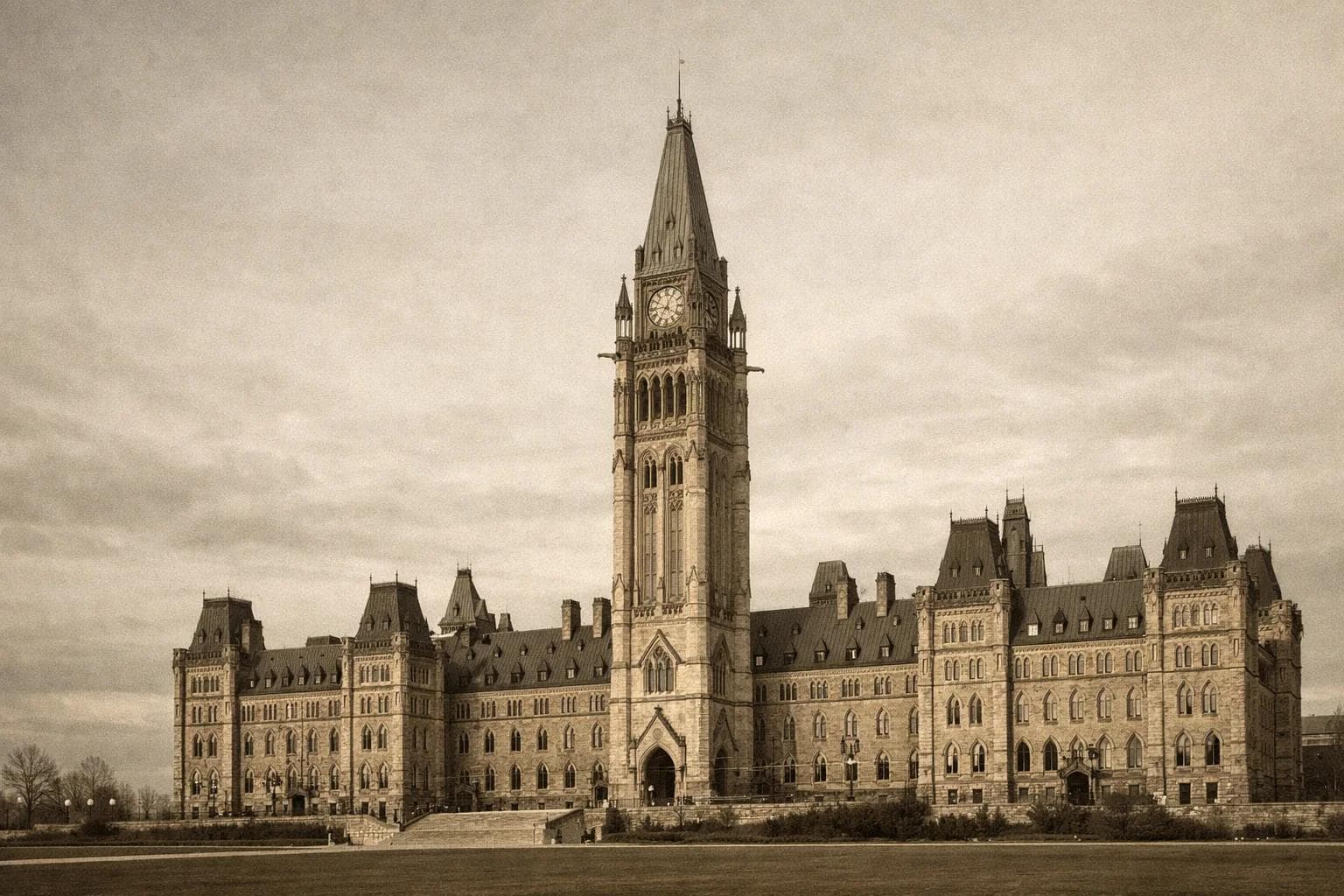
Cannabis in Canada has a 400-year story that runs from the hemp Louis Hébert planted in Quebec in 1606, through the 1923 prohibition driven by Emily Murphy's The Black Candle, the Le Dain Commission of 1969-1973 that recommended decriminalization, medical access in 2001 after the Terry Parker ruling, and federal recreational legalization on October 17, 2018 under Justin Trudeau's Cannabis Act. No country with a federal system has legalized as broadly.
TL;DR. Cannabis arrived in Canada in 1606 as colonial hemp. It was banned in 1923 with no debate, recommended for decriminalization by the Le Dain Commission in 1972, made medically legal in 2001 after the Terry Parker court ruling, and fully legalized for adult recreational use on October 17, 2018 under the federal Cannabis Act. Canada was the first G7 country to legalize nationwide. The market is now worth $5.6 billion a year.
Most Canadians know cannabis became legal in October 2018. Fewer know the plant was being cultivated for industrial hemp in New France before the Plains of Abraham, prohibited almost by accident during the broader 1920s panic over racialized "vice," then quietly recommended for decriminalization by a federal commission in 1972 that nobody in power was ready to listen to. The story between those bookends — colonial hemp, Edwardian alarm, Trudeau-era ambivalence, ACMPR patients winning in court, and finally a federal government deciding to do what most western democracies still won't — is the real history. It's the one that explains why Canada legalized first, why the rules look the way they do, and why the next decade of policy is still being written. Cannabis sits in a unique place in Canadian law: federally controlled, provincially distributed, municipally retailed, and rooted in four centuries of agricultural and legal history.
When did cannabis first arrive in what would become Canada?
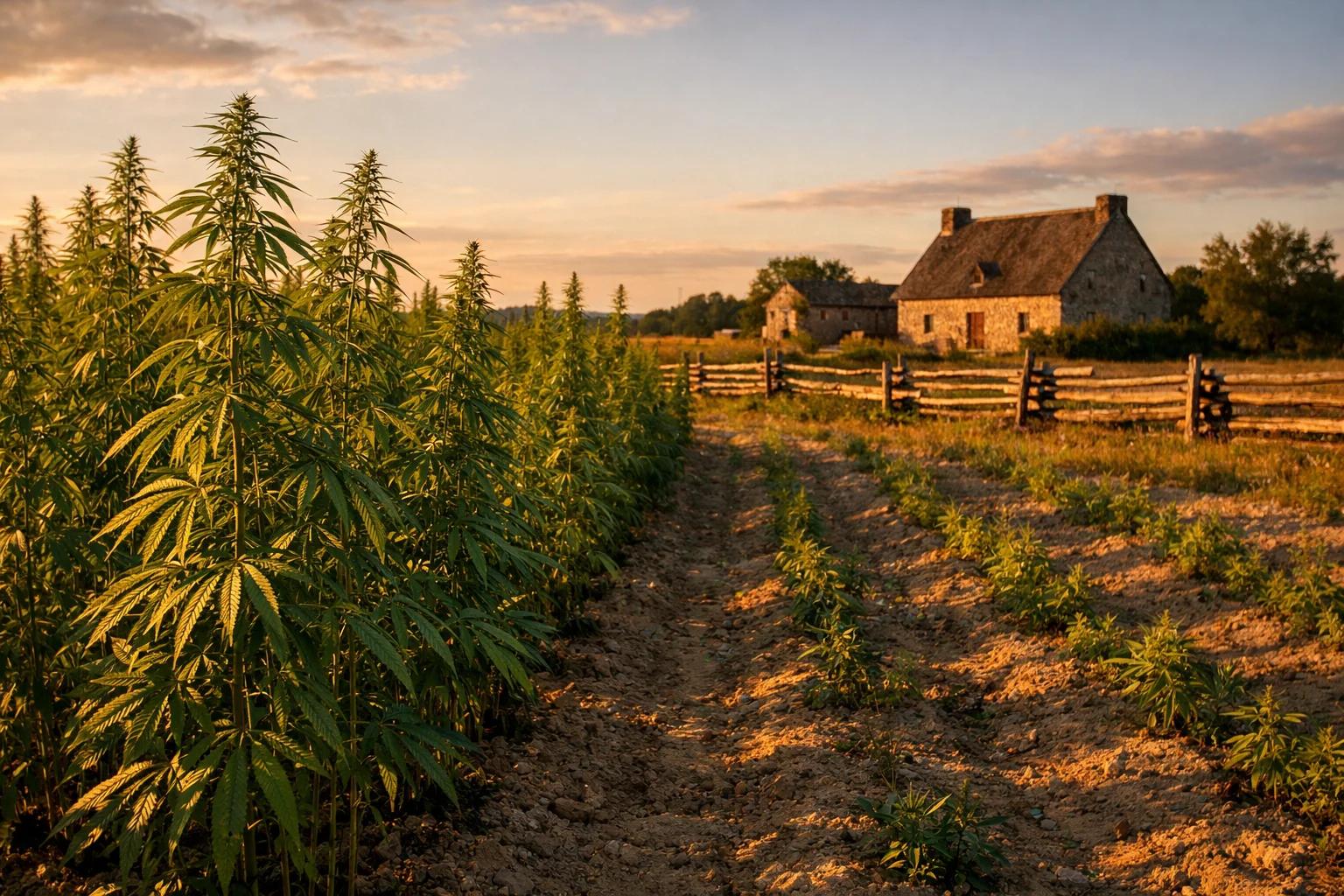
Cannabis arrived in Canada in 1606, when French apothecary Louis Hébert — the first European to farm in New France — planted hemp on his Port-Royal homestead in what is now Nova Scotia. Hébert had been hired by Samuel de Champlain specifically because the colony needed rope, sailcloth, and durable fabric, and hemp was the strategic agricultural crop of the early modern Atlantic world. The plant he sowed was Cannabis sativa L., the same species as today's drug-type cannabis, but selected over centuries for fibre length rather than cannabinoid content.
The hemp economy expanded sharply under Jean Talon, the first Intendant of New France, who in 1668 ordered colonial farmers to plant hemp and threatened to confiscate other crops if quotas were not met. Talon offered seed at no cost, provided spinning wheels, and bought finished hemp from farmers at fixed prices — a colonial mercantile system designed to free France from its Baltic hemp dependency. By the early 1700s, Quebec was producing enough hemp to clothe its own population and supply French naval yards.
After the British took New France in 1763, hemp cultivation continued but lost its strategic urgency. The Royal Navy still needed rope, but it could source it from Russia, the Baltic, or eventually the American colonies. Hemp drifted from a state-supported crop to a farm staple grown alongside flax. Ontario and the Maritimes maintained hemp acreage through the 19th century, and Canadian-grown hemp helped supply Allied navies during both World Wars before synthetic fibres displaced it.
Recreational and medicinal cannabis use, distinct from industrial hemp, also has a long history in Canada. Cannabis tinctures were sold openly in Canadian pharmacies through the late 1800s and early 1900s — the Canadian Pharmaceutical Journal listed cannabis indica preparations as standard pharmacy stock as late as 1922. Doctors prescribed it for migraines, insomnia, menstrual pain, and rheumatism. It was unremarkable. The shift from medicine cabinet to criminal contraband happened in a single year, and it happened almost entirely outside public debate.
Why was cannabis banned in 1923?
Cannabis was banned in Canada in 1923 when Liberal Health Minister Henri Béland's amendment to the Opium and Narcotic Drug Act quietly added "Cannabis indica (Indian hemp) or hasheesh" to the schedule of prohibited substances. There was no House of Commons debate. The amendment passed in a routine omnibus update to the drug schedule on April 23, 1923. Most parliamentarians did not know they had just criminalized a substance with no documented use problem in Canada at the time.
The intellectual backdrop, however, was anything but quiet. Emily Murphy — Edmonton police magistrate, suffragist, and Canada's first female judge — had published The Black Candle in 1922, a year before the ban. The book began as a series of articles in Maclean's magazine under the byline "Janey Canuck" and was assembled into book form with chapters on opium, cocaine, heroin, and "Marahuana — a New Menace." Murphy's cannabis chapter, less than 20 pages long, painted hashish users as descending into "raving maniacs" who would commit murder without warning. She quoted Los Angeles police chief Charles A. Jones describing cannabis users as people "liable to attack any human being who gets in their way" and reproduced racialized accounts of "Negroes" and "Chinese" introducing the drug to white Canadians.
The Black Candle was not a scientific document. It was a moral and racial alarm tied to a broader anti-immigrant politics in 1920s Canada — the same politics that produced the Chinese Immigration Act of 1923, passed the same year as the cannabis ban. Murphy's influence was real: she was a frequent advisor to Health Minister Béland, and historians including Catherine Carstairs (Jailed for Possession, 2006) trace the cannabis amendment directly to the climate her writing helped create.
What's striking is the absence of evidence the ban responded to anything happening in Canada. Health Canada and RCMP records show essentially zero cannabis-related arrests, hospitalizations, or police complaints in the years leading up to 1923. The first cannabis possession arrest under the new law did not happen until 1937, fourteen years after prohibition began. Canada banned a drug almost no Canadians were using because of a moral panic largely imported from American sources.
The 1923 amendment set the legal frame for the next 95 years. Cannabis sat alongside opium and cocaine in the most restrictive schedule of Canadian drug law, carrying possession penalties up to seven years in prison through most of the 20th century.
How did the 1960s and 70s shift the conversation?
The conversation shifted in the late 1960s when cannabis use crossed from racialized minority communities into white middle-class university students. Between 1965 and 1972, cannabis arrests in Canada rose from fewer than 200 per year to over 12,000 — a sixty-fold rise in seven years. The arrestees were no longer the marginalized populations Emily Murphy had warned against. They were the children of Liberal MPs, professors at McGill and the University of Toronto, and articulate young people who would not quietly accept criminal records.
The cultural drivers are well documented: rock music, the Vietnam War draft dodgers flowing north into Canadian cities, the broader counterculture, and a sense among baby boomers that their parents' drug laws didn't match the reality they were seeing in dorms and apartments. By 1969, Pierre Trudeau's Liberal government faced a problem the 1923 framework couldn't handle. Either Canada was about to put a generation of educated young people behind bars, or the law had to change.
Trudeau's response was the Royal Commission of Inquiry into the Non-Medical Use of Drugs, announced in May 1969 and chaired by Osgoode Hall Law School dean Gerald Le Dain. The commission would spend four years and over $4 million — substantial money in 1972 dollars — producing what remains the most thorough Canadian government study of recreational drug policy ever completed.
Public opinion was already moving. Gallup polls between 1969 and 1972 showed Canadian support for cannabis decriminalization climbing from 12% to 31% of respondents — still a minority, but a fast-moving one concentrated in the 18-34 age cohort. University newspapers and the 4/20 cultural emergence of the early 1970s built a vocabulary for cannabis use that Canadian parents and policymakers were not equipped to argue with.
What was the Le Dain Commission and what did it recommend?
The Le Dain Commission — formally the Royal Commission of Inquiry into the Non-Medical Use of Drugs, 1969-1973 — was a federal inquiry that produced four major reports including the influential 1972 Cannabis Report. Chaired by Gerald Le Dain, the commission travelled across Canada hearing testimony from over 12,000 individuals, reviewed every available study on cannabis pharmacology and social impact, and concluded with majority and minority recommendations that have shaped every subsequent Canadian drug policy debate.
The five-member commission's findings can be summarized briefly:
- Cannabis was not the gateway drug or violence trigger of mid-century myth. The commission found no causal link between cannabis use and either harder drug use or violent crime.
- Criminal penalties for simple possession caused more harm than the drug itself. A criminal record for cannabis possession damaged employment, education, and travel prospects in ways that the underlying behaviour did not.
- Cannabis was not equivalent to opioids or amphetamines in either dependence potential or acute risk profile, and treating them identically under the law was scientifically incoherent.
- Provincial differences in enforcement had created a "lottery of justice" where the same offence drew radically different consequences depending on the arresting officer and jurisdiction.
Commissioner Marie-Andrée Bertrand, a University of Montreal criminologist, went further. Her minority report — delivered in dissent from her colleagues — recommended full legalization with state regulation, the model that would not be adopted by any country for another 41 years until Uruguay in 2013 and Canada itself in 2018. Bertrand argued that prohibition itself was the public health problem: it pushed users toward unregulated supply, criminalized otherwise law-abiding citizens, and made honest scientific study of cannabis nearly impossible. Reading her 1972 dissent today, it is striking how closely it tracks the eventual 2018 Cannabis Act.
The Trudeau government received the report, thanked the commissioners, and did nothing. The recommendations sat. Twenty-five Liberal MPs publicly supported decriminalization in 1973. The Cabinet did not move. The political calculation — older voters, the Nixon administration's pressure for international drug-law harmonization, and a sense that the moment for reform had passed — defeated the commission's findings.
Forty-five more years. That was the gap between Le Dain and the Cannabis Act.
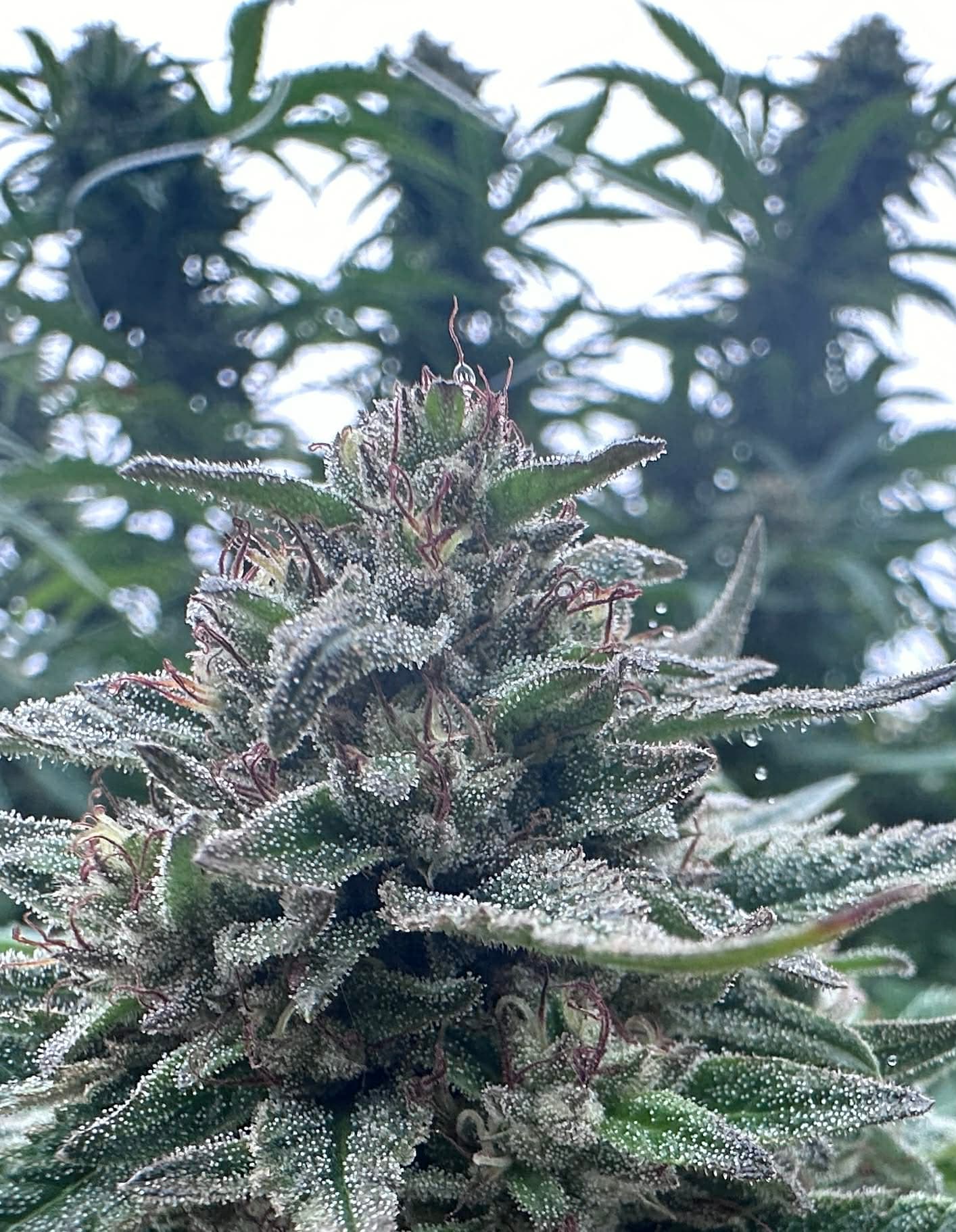
Feminized Seeds
Gorilla Glue #4 Feminized
How did medical cannabis become legal in 2001?
Medical cannabis became legal in Canada in 2001 when the Ontario Court of Appeal ruled in R. v. Parker that the absolute prohibition on cannabis violated the Charter of Rights and Freedoms by denying necessary medicine to seriously ill patients. The decision forced Health Canada to create the Medical Marihuana Access Regulations (MMAR) in July 2001, making Canada the first G7 country to establish a federal medical cannabis program. O.J. No. 2787; Marihuana Medical Access Regulations, SOR/2001-227]
The plaintiff was Terry Parker, a Toronto man with severe epilepsy who had been using cannabis to control seizures since the 1970s. Conventional anticonvulsants either failed or produced intolerable side effects; cannabis reduced his seizure frequency dramatically. Toronto police raided his apartment, charged him with possession and cultivation, and a Court of Appeal decision in 2000 found that prosecuting him violated his Section 7 Charter right to life, liberty, and security of the person. The court gave Parliament one year to fix the law — hence the July 2001 MMAR launch.
The first version of the MMAR was restrictive. Patients needed two doctors to certify their condition, government supply came exclusively from a single Manitoba grow facility (Prairie Plant Systems), and patients who wanted to grow their own had to apply for production licenses through a paper-based federal process. Quality was inconsistent, supply was unreliable, and the patient community quickly began pushing for reform.
The 2001 regulations went through three major rewrites:
- MMAR (2001-2014) — small-scale, personal production allowed, designated growers permitted.
- MMPR (2014-2016) — Marihuana for Medical Purposes Regulations under Stephen Harper's government eliminated personal production and restricted patients to licensed commercial producers. The change was struck down in 2016 by Federal Court Justice Michael Phelan in Allard v. Canada as unconstitutional.
- ACMPR (2016-present) — Access to Cannabis for Medical Purposes Regulations restored personal production rights, allowing patients to grow their own cannabis or designate a grower. The ACMPR survived the transition to legalization in 2018 and continues to operate as a separate stream for medical patients who need protected supply, specific genetics, or higher possession limits than recreational legalization permits.
The medical program also created the regulatory infrastructure that recreational legalization would inherit. Licensed producers, Good Production Practices standards, cannabinoid testing protocols, and the federal-provincial supply structure all existed before October 2018. The Cannabis Act would not have been operationally possible without the seventeen years of medical experience that preceded it.
What was the Cannabis Act of 2018?
The Cannabis Act (Bill C-45) is the federal Canadian law that legalized recreational cannabis on October 17, 2018, making Canada the second country in the world after Uruguay and the first G7 nation to legalize cannabis nationwide. It was tabled by Justin Trudeau's Liberal government in April 2017, passed the House of Commons in November 2017, cleared the Senate after extensive amendments in June 2018, and received royal assent on June 21, 2018 with a four-month implementation runway before retail launch.
The act's core provisions:
- Adults 18 or 19 and over (depending on province) may legally purchase, possess, and consume cannabis. Most provinces set the minimum age at 19, matching their alcohol age; Quebec initially set it at 18 then raised it to 21 in 2020.
- 30 grams of dried cannabis in public, no household limit indoors. Adults can carry up to 30 grams (or equivalent) of cannabis on their person and store unlimited quantities at home.
- Up to four plants per household for personal cultivation, with two provinces (Quebec and Manitoba) banning home grow entirely under provincial law. The Quebec ban was upheld by the Supreme Court in 2023.
- Federal control of production, provincial control of distribution and retail. Licensed Producers operate under Health Canada licenses; provincial cannabis boards (OCS in Ontario, SQDC in Quebec, AGLC in Alberta, BCLDB in BC) wholesale to retailers within their provinces.
- Edibles, extracts, and topicals were legalized in October 2019, exactly one year after dried flower, in what's known as "Cannabis 2.0."
- Strict promotional restrictions. No celebrity endorsements, no lifestyle imagery, no glamorization of consumption, plain packaging requirements modelled on tobacco rules.
The political architect on the bureaucratic side was Anne McLellan, former deputy prime minister, who chaired the federal Task Force on Cannabis Legalization and Regulation appointed in June 2016. Her task force produced A Framework for the Legalization and Regulation of Cannabis in Canada in December 2016, which became the blueprint for Bill C-45. McLellan's framework emphasized public health, youth protection, supply quality, and tax revenue — explicitly rejecting both pure libertarian deregulation and pure prohibition-lite. The compromise model survives largely intact in 2026.

Feminized Seeds
Northern Light x Blueberry Auto Feminized
How has Canadian cannabis policy evolved since legalization?
Canadian cannabis policy since October 2018 has evolved through three phases: launch chaos (2018-2019), market correction (2020-2022), and consolidation with patient-rights questions (2023-2026). Each phase produced legislative tweaks, regulatory adjustments, and Supreme Court decisions that have refined what legalization actually means in practice.
Launch chaos (October 2018 to late 2019) was defined by supply shortages, online retail crashes on day one, and a patchwork of provincial implementations. Ontario's Doug Ford government scrapped 40 planned public stores and re-architected the retail framework as private licensed retail, delaying brick-and-mortar access by almost a year. Quebec's SQDC opened 12 stores on launch day, ran out of multiple SKUs within 72 hours, and limited online ordering. Alberta moved fastest, with 17 private retailers operating on October 17, 2018.
Cannabis 2.0 — edibles, beverages, and concentrates — launched in October 2019 with strict 10mg THC caps on edibles, ten times lower than the 100mg per package limit in legal US states. The cap effectively kept the illicit market viable for higher-potency products, a tension that remains unresolved as of 2026.
Market correction (2020-2022) saw Licensed Producer stock prices collapse — Canopy Growth, Aurora, and Tilray each lost more than 80% of peak market capitalization — as the early thesis of explosive demand growth ran into the reality of slow retail rollout, persistent illicit market share, and overproduction. Producers consolidated. Smaller craft producers found niches. The Quebec ban on home cultivation was challenged and upheld by the Supreme Court of Canada in Murray-Hall v. Quebec (Attorney General) in 2023, confirming that provinces have constitutional authority to restrict possession and cultivation beyond federal minimums.
Provincial age limits diverged further. Quebec raised its minimum age from 18 to 21 in 2020, the strictest in Canada. Alberta and Ontario stayed at 19. Manitoba kept its home-grow ban alongside Quebec.
Consolidation phase (2023-2026) has been defined by:
- Edibles cap pressure. Industry groups and patient advocates continue to push for the 10mg THC limit to be raised or eliminated. As of early 2026, Health Canada is reviewing the cap with consultations expected before any change.
- Cannabis Act mandatory review. A statutory three-year review (now five years late) began in late 2022 and produced its final report in March 2024, recommending changes to public consumption rules, possession limits, and the regulatory framework for medical cannabis. Most recommendations remain unimplemented.
- Reciprocity discussions with provinces. As of 2026, you cannot legally bring cannabis across provincial borders, a quirk of the federal-provincial division that creates daily compliance problems.
- Patient-rights tensions. The ACMPR continues to operate alongside the Cannabis Act, but reduced LP support for medical patients (lower production caps, fewer cultivar options, higher per-gram pricing) has produced ongoing advocacy. Many patients now grow their own under ACMPR.
What does the cannabis market look like in Canada today?

The Canadian cannabis market in 2026 is the largest fully regulated federal cannabis market in the world by retail revenue. As of January 2026, there are approximately 4,200 licensed retail cannabis stores across Canada, 800+ licensed producers, and a legal market generating more than $5.6 billion annually with substantial provincial tax flows.
The structural map of the industry:
- Retail. Ontario leads with over 1,800 licensed stores under a private retail model; Alberta has roughly 750; BC operates a hybrid public-private system with approximately 500 outlets; Quebec's SQDC runs 100 government-owned stores; Saskatchewan, Manitoba, and the Atlantic provinces each operate smaller retail networks. Retail density per capita is highest in Alberta and lowest in Quebec.
- Production. Health Canada has issued more than 800 licenses across cultivation, processing, and sale-for-medical-purposes categories. The top ten producers control roughly 60% of the legal flower market; the remainder is fragmented across regional and craft producers. Several large producers have shuttered or downsized post-2022.
- Pricing. Average legal retail flower prices in 2026 sit around $5.50-$7.00 per gram for mid-tier product and $4.00-$5.00 for value-tier — finally competitive with illicit market pricing after five years of structural gap.
- Tax revenue. The federal excise tax plus provincial markups generate over $1.5 billion annually in combined government revenue, returning multiples of original implementation costs.
- Consumer demographics. Statistics Canada data show approximately 27% of Canadians aged 15+ used cannabis in the past year, with the highest use in BC and the Atlantic provinces. Daily use sits at 6-7% of the adult population.
The market's most discussed structural question is the relationship between legal retail and the persistent illicit market. Various provinces report 18-30% of cannabis still purchased through unregulated sources — driven by price, convenience, higher potency products, and in Quebec especially by the 21+ minimum age that pushes 18-20 year-olds to illicit suppliers. Closing this gap is the explicit goal of the 2024 Cannabis Act review recommendations, though enforcement and tax-reduction questions remain open.
For Canadian growers operating under personal-use cultivation or ACMPR licenses, the legal home-grow population is estimated at 200,000-300,000 households nationally, concentrated in provinces where home cultivation is permitted. The market for seeds and growing equipment has matured into its own retail segment, including feminized seed catalogs sold to legal home cultivators and the spring-to-fall growing season anchored by the outdoor cannabis calendar for Canada.
Where is Canadian cannabis policy heading next?
Canadian cannabis policy in the next five years will be shaped by three open questions: whether the 10mg THC edibles cap is raised, whether interprovincial cannabis transport is legalized, and how the federal government balances continued public-health framing against an industry pushing for normalized consumer market regulation. None of these is settled as of 2026, and the answers will determine whether Canada's cannabis market consolidates into something resembling alcohol regulation or stays in its current more-restrictive regulatory zone.
The most likely changes in the 2026-2030 horizon:
- Edibles potency cap reform. The 10mg per package limit is the single most visible competitive disadvantage versus the illicit market. Health Canada consultations in 2025-2026 are reviewing whether to raise the per-package limit (likely 50mg-100mg) while maintaining 10mg per individual serving.
- Interprovincial transport. Cross-border cannabis transport remains technically illegal between provinces, a holdover from the constitutional division of cannabis powers. Expect federal-provincial negotiations on this through 2026-2027, possibly settled by a Supreme Court reference if voluntary harmonization fails.
- Medical cannabis insurance coverage. Provincial health systems and private insurers have moved slowly on medical cannabis coverage. As prescription protocols mature, expect broader coverage by 2027-2028, possibly through Quebec or Ontario provincial drug plans as pilots.
- Public consumption rules. The 2024 Cannabis Act review recommended easing public consumption restrictions in many provinces. Municipal-level changes are most likely; full provincial harmonization is unlikely within the decade.
- International export rules. Canada exports medical cannabis to Germany, Israel, Australia, and several smaller markets. The European market expansion through 2026-2028 will produce significant export volume for the largest Canadian producers. Recreational export remains prohibited under international treaty obligations.
What is settled is that prohibition is not coming back. No major federal party advocates re-criminalization, no provincial government has tried to reverse legalization, and Canadian public opinion has stabilized at 70%+ support for the current legal framework. The next debates are about regulation design, not about whether cannabis stays legal.
For Canadian growers and patients, the practical implication is that the regulatory environment for cultivation, possession, and personal use will likely loosen modestly over the coming years rather than tighten. The bigger frontier is product diversity — extracts, edibles potency, novel delivery formats — and the continued maturation of grow knowledge and seed availability as the home-grow population stabilizes.
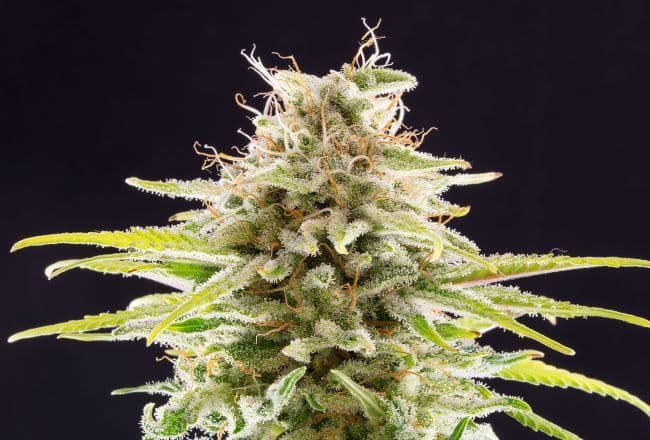
Feminized Seeds
OG Kush Feminized
The bottom line — what 100 years of policy tells us
The trajectory from 1923 to 2018 is not a straight line. It's a hundred years of overreaction, evidence ignored, court rulings forced, and political consensus catching up to social reality long after it changed. The 1923 ban happened without debate. The 1972 commission's recommendations were buried for forty-five years. Medical access only came because a Toronto man with epilepsy refused to plead guilty. And federal legalization in 2018 happened mostly because the Trudeau Liberals had promised it in 2015 and could not unmake the campaign commitment without political cost.
The lesson Canadian policymakers seem to have absorbed — and seem committed to maintaining — is that prohibition was a mistake of overreaction, and the corrective is a regulated legal market that controls quality, prevents youth access, and removes the criminal penalties that ruined careers and travel records for half a century. That framework will likely loosen modestly over the next five to ten years as the 10mg edibles cap, interprovincial transport rules, and medical insurance coverage get worked through. Re-criminalization is off the table.
For Canadians today — whether you're a recreational consumer, a medical patient, a home grower under personal cultivation rights or ACMPR, or a business owner working through the regulatory landscape — the past century has produced a regime that's imperfect, federally consistent, and historically unprecedented. No other country has legalized as broadly under a federal system. The story isn't over, but the foundational chapters are.
What 100 years of policy tells us is that good drug policy follows evidence, not panic. Emily Murphy got it wrong in 1922. Gerald Le Dain got it right in 1972. The country took until 2018 to catch up. The next 100 years will determine whether Canada keeps refining what it built — or whether the political mood that produced the 1923 ban returns under a different name.
FAQ
Who actually banned cannabis in Canada in 1923?
The amendment was introduced by Liberal Health Minister Henri Béland and passed without parliamentary debate as part of a routine update to the Opium and Narcotic Drug Act. The intellectual backdrop was driven by Edmonton magistrate Emily Murphy, whose 1922 book *The Black Candle* and articles in *Maclean's* under the byline "Janey Canuck" created the moral panic that made the ban politically possible. There was no documented Canadian cannabis-use problem at the time.
Was the Le Dain Commission's decriminalization recommendation ever implemented?
No. Pierre Trudeau's Liberal government received the 1972 *Cannabis Report* and chose not to act on the majority recommendation of decriminalization or Marie-Andrée Bertrand's minority recommendation of full legalization. The commission's findings sat unused for forty-five years until Justin Trudeau's 2018 Cannabis Act effectively adopted Bertrand's 1972 minority position.
What was the Terry Parker case and why did it matter?
Terry Parker was a Toronto man with severe epilepsy who used cannabis to control his seizures. The Ontario Court of Appeal ruled in 2000 (*R. v. Parker*) that prosecuting him for possession violated his Charter right to life, liberty, and security of the person. The decision gave Parliament one year to create medical access, which became the 2001 Marihuana Medical Access Regulations (MMAR). It is the legal foundation of Canadian medical cannabis.
Why did Quebec set the cannabis age limit at 21 instead of 18?
Quebec's CAQ government raised the legal age from 18 to 21 in 2020 citing youth brain development research and harm-reduction concerns. The change was politically driven and has been criticized by public-health researchers who argue it pushes 18-20 year-olds to the illicit market without preventing use. The 21+ age limit remains the strictest in Canada and continues to be debated.
How does the ACMPR differ from the Cannabis Act?
The ACMPR (Access to Cannabis for Medical Purposes Regulations) is a separate federal regime for medical patients with physician authorization. ACMPR patients can possess larger quantities than recreational users, grow more plants than the four-plant Cannabis Act limit, and access specific genetics tied to medical needs. Most importantly, ACMPR home production rights survive provincial home-grow bans — Quebec ACMPR patients can legally grow their own cannabis under federal law despite Quebec's general ban on home cultivation.
Will cannabis ever be exported recreationally from Canada?
Not under current international treaty law. Canada remains a party to the 1961 Single Convention on Narcotic Drugs, which limits cannabis exports to medical and scientific purposes. Canadian medical cannabis exports to Germany, Israel, Australia, and other regulated markets continue to grow, but full recreational export would require treaty renegotiation that no major Canadian political party has proposed.
19+ | Educational horticulture only.