Master Your Indoor Grow
Indoor Growing Guides
How to Grow Cannabis in Canada: The Complete Beginner's Guide
Everything you need to grow cannabis in Canada — legal basics, choosing seeds, indoor vs outdoor, growing stages, harvest and cure. Updated 2026.
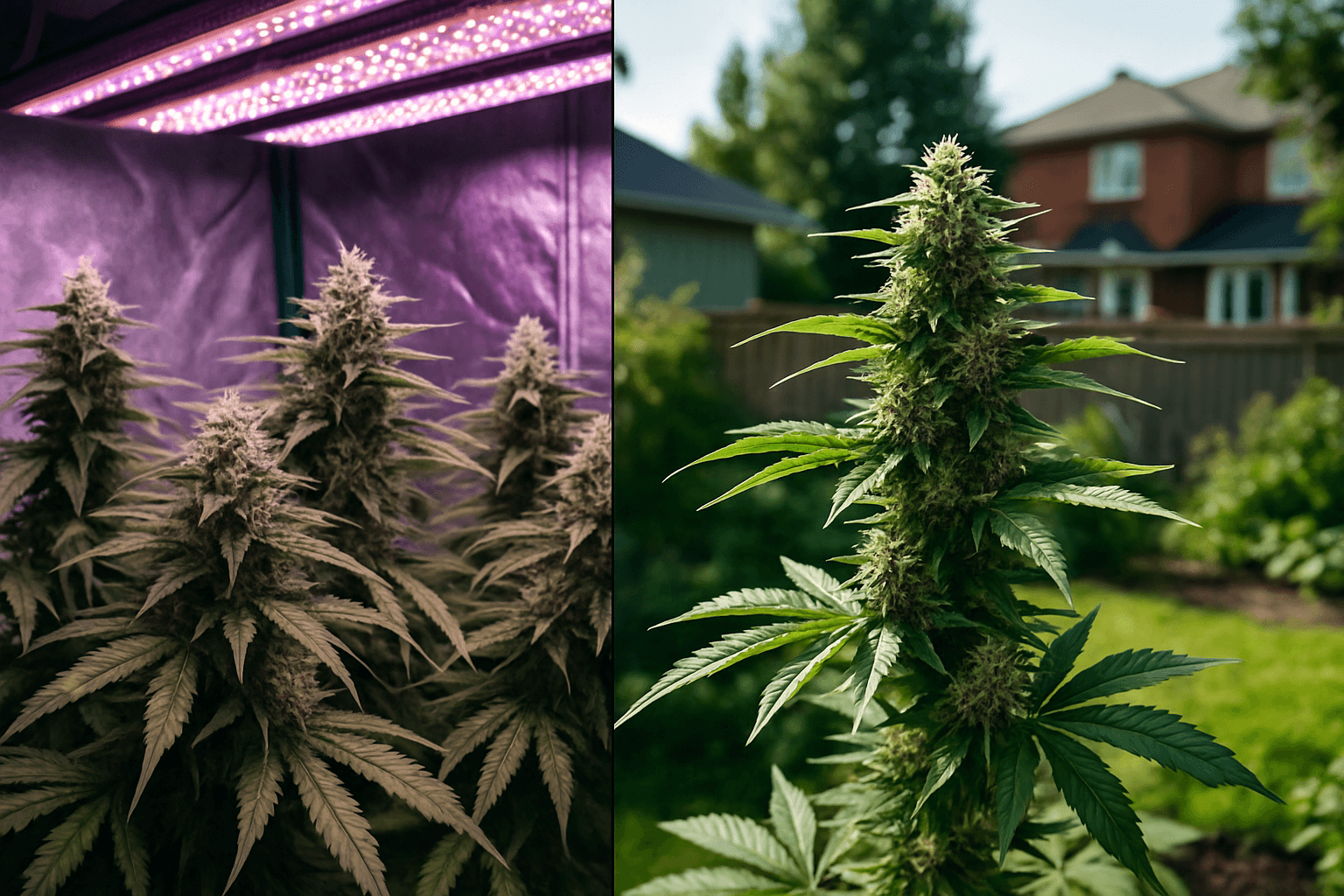
To grow cannabis in Canada, your first critical decision is selecting the right seed type. Feminized seeds produce only female plants with resin-rich buds, eliminating male plants and pollination risk, but require a precise 12/12 hour light cycle indoors. Autoflowering seeds flower within 70–90 days based on age, stay compact, are more forgiving of beginner mistakes, and suit Canada's shorter outdoor season better. This fundamental seed selection between feminized and autoflowering types is the foundation for a successful grow.
Selecting the right seed type is the single most important decision a new grower makes. There are three main categories:
Feminized seeds are bred to produce only female plants — the ones that grow the resin-rich buds you're after. No male plants means no risk of accidental pollination and no wasted grow space. These are photoperiod plants, meaning they flower in response to a shift in the light cycle (typically 12 hours light / 12 hours dark indoors, or the natural shortening of days outdoors in late summer).
Autoflowering seeds flower automatically based on age rather than light cycle — usually within 70–90 days from germination. They tend to stay compact and are highly forgiving of beginner mistakes. Canada's shorter outdoor season makes autos especially attractive, since you can fit two outdoor harvests into a single summer.
Regular seeds produce a roughly 50/50 mix of male and female plants and are best suited to breeders who want to create their own crosses. Beginners should avoid them. Shop premium cannabis seeds for feminized and autoflowering varieties perfect for your first grow.
PPS Recommendation: Start with feminized autoflowering strains if you're new to growing. You get the simplicity of automatic flowering combined with guaranteed female plants. best-autoflowering-seeds-canada top auto strains for Canadian growers
Growing cannabis at home in Canada is genuinely accessible — with the right seeds, a little patience, and this guide as your foundation, your first harvest is closer than you think. Every grow teaches you something new, and the quality you can achieve at home often surpasses what's available on store shelves. Plantation Premium Seeds offers a curated selection of feminized, autoflowering, and regular genetics specifically chosen to perform in Canadian conditions — whether you're growing in a Toronto apartment closet or a backyard in the Okanagan. Browse our full seed catalogue and find your perfect strain to get started today. seed-shop shop all Plantation Premium Seeds
Understanding what your plant needs at each stage eliminates most common mistakes.
Germination (Days 1–7)
Place your seed between two damp paper towels, inside a sealed container kept at 20–25°C. Within 24–120 hours, a white taproot will emerge. Transfer the germinated seed to a small starter pot with a light, airy growing medium — a coco-perlite mix or quality seedling soil works well. Plant the taproot facing down, about 1 cm deep. Keep the environment warm and humid (70–80% relative humidity).Seedling Stage (Weeks 1–3)
Once above soil, your seedling will develop its first iconic fan leaves. At this stage, roots are delicate and overwatering is the number-one killer. Water in small amounts around the base and let the topsoil dry slightly between waterings. Provide 18 hours of light per day indoors, or place outdoors only once nighttime temperatures are consistently above 10°C.Vegetative Stage (Weeks 3–8 for photoperiod; minimal for autos)
This is when your plant builds the structure that will support your buds. Growth accelerates — some strains can gain several centimetres per day under strong light. Nitrogen is the key nutrient here. Begin a balanced cannabis-specific feed at half the recommended dose and increase gradually. Techniques like low-stress training (LST) — gently bending and tying branches — can dramatically increase your eventual yield without stressing the plant.Flowering Stage (Weeks 8–16 from germination, strain-dependent)
For photoperiod plants, switch your indoor lights to a 12/12 schedule to trigger flowering. Outdoors, this happens naturally as days shorten past late July. Autos begin flowering on their own. You'll see white pistils (hairs) emerging from bud sites within the first two weeks of flower. Shift your nutrient focus toward phosphorus and potassium, and reduce nitrogen. Maintain humidity below 50% to prevent mould — especially important in humid Canadian falls.Late Flower (Final 2 Weeks)
Flush your growing medium with plain pH-balanced water (if growing in soil) to clear residual nutrients. Reduce humidity to 40–45%. Watch your trichomes closely — harvest timing is everything. cannabis-training-techniques-guide LST and topping for bigger yieldsHarvesting at the right moment is what separates good cannabis from great cannabis.
Reading Trichomes
The most reliable harvest indicator is trichome colour, examined with a jeweller's loupe (30–60x) or digital microscope. Trichomes are the tiny, mushroom-shaped resin glands covering your buds:- Clear trichomes = not ready; THC still developing
- Cloudy/milky white = peak THC, energetic effect
- Amber trichomes = THC degrading to CBN, more sedative effect
Drying
After harvest, trim away large fan leaves and hang branches upside down in a dark, ventilated room at 18–21°C with 50–60% humidity. Airflow is essential — a small oscillating fan prevents mould. Drying typically takes 7–14 days. The buds are ready when small stems snap cleanly rather than bend.Curing in Jars
Curing is the step most beginners skip and most experienced growers swear by. Place dried buds loosely in wide-mouth glass mason jars, filling them about 75% full. For the first week, open jars twice daily for 10–15 minutes — a process called burping — to release moisture and fresh air. After the first week, burp once daily for another week, then every few days. A proper cure of 4–8 weeks dramatically improves flavour, smoothness, and potency. Store finished jars in a cool, dark place. cannabis-drying-curing-guide complete drying and curing walkthroughChoosing where to grow shapes your entire experience. Here's a practical comparison for Canadian conditions:
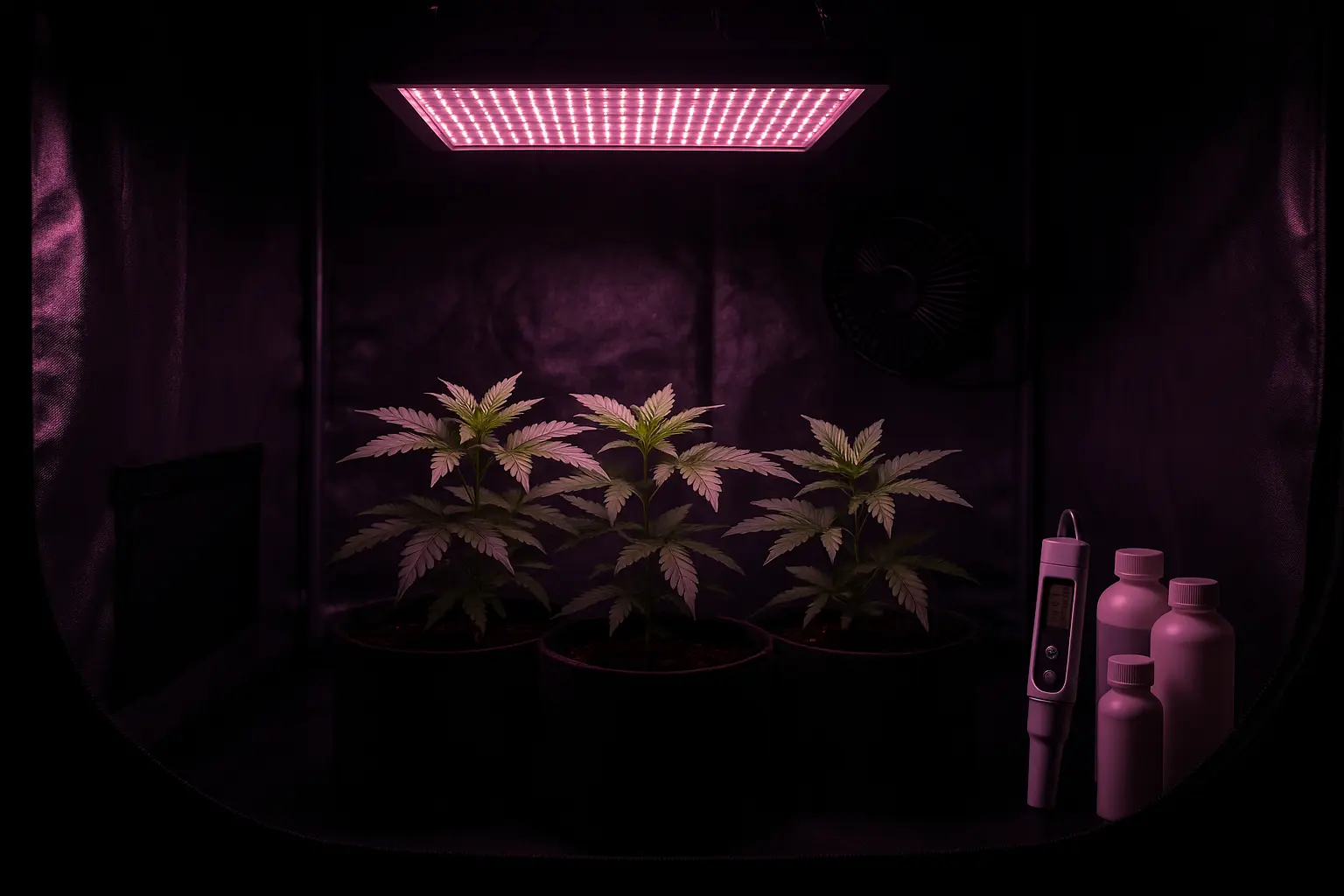
Indoor growing gives you complete control over temperature, humidity, and light — critical in Canada's variable climate. A basic 2×4 tent with an LED grow light is a cost-effective starting point for most beginners.
Greenhouse cultivation is the best of both worlds: free solar energy, protection from rain and pests, and the ability to extend your season by weeks on either end. indoor-cannabis-setup-canada beginner indoor grow room guide
Whether you're drawn by the satisfaction of growing your own or the potential to save money over retail prices, cultivating cannabis at home is one of the most rewarding hobbies a Canadian can take up. Canada's legal framework makes home growing straightforward for most residents, and with the right seeds and a little guidance, even first-time growers can produce impressive harvests. This guide covers everything a beginner-to-intermediate grower needs to know: understanding your legal limits, choosing the best seeds for your situation, deciding between indoor and outdoor growing, mastering each growth stage, and finishing with a proper harvest and cure. By the end, you'll have a clear roadmap — and Plantation Premium Seeds has the genetics to get you started.
Under Canada's Cannabis Act (Bill C-45), most Canadian adults aged 18 or 19 and older (depending on province) are permitted to cultivate up to 4 cannabis plants per household for personal use. This limit applies to the household, not per person, so a home with multiple adults still caps at four plants. Plants must be grown from licensed seeds or seedlings — which is exactly what Plantation Premium Seeds provides — ensuring your grow is fully compliant from day one.
Provincial variations matter. The key exception is Quebec, which has opted out of home cultivation entirely, prohibiting residents from growing any cannabis plants at home. Manitoba also restricts home growing; residents there should verify current local regulations before starting. In all other provinces and territories, the federal four-plant rule applies.
It's equally important to source your seeds correctly. Purchasing from a licensed Canadian seed bank like Plantation Premium Seeds means your genetics are legal, accurately labelled, and held to quality standards. Buying seeds from unlicensed sources puts your grow in a legal grey area and offers no guarantee of what you're actually planting. Always keep your receipt or order confirmation as proof of licensed purchase. canadian-cannabis-laws-home-growers full legal breakdown
FAQ
Can I grow two harvests outdoors in Canada in one summer?
Yes, autoflowering strains make this possible. Since they flower automatically within 70–90 days regardless of daylight, you can plant in early spring and again in early summer to fit two complete cycles before autumn frost. This double-harvest approach is one of the biggest advantages autoflowers offer Canadian outdoor growers.
What's the best seed type for someone growing for the first time?
Start with feminized autoflowering strains. You get guaranteed female plants (meaning every plant produces buds) combined with automatic flowering on a set schedule, removing the need to manage light cycles. This combination gives you the most forgiving path to your first successful harvest.
How long does it take from seed to harvest?
Autoflowering seeds harvest in roughly 70–90 days from germination, making them the fastest option available. Feminized photoperiod strains take considerably longer—4–6 months indoors depending on how long you keep them in vegetative growth, or until late summer outdoors when daylight naturally shortens.
Why should I avoid regular seeds as a beginner?
Regular seeds produce a 50/50 mix of male and female plants, meaning half your grow space is wasted on plants that don't produce buds. You also risk accidental pollination if you fail to remove male plants quickly, which is an unnecessary complication when you're still learning the basics.
19+ | Educational horticulture only.