Master Your Indoor Grow
Indoor Growing Guides
CBD Cannabis Seeds: How to Grow for the Maximum CBD-to-THC Ratio
Complete guide to growing CBD cannabis seeds for maximum CBD-to-THC ratio. 1:1, 20:1, 30:1 ratios, harvest timing, Canadian ACMPR medical context.
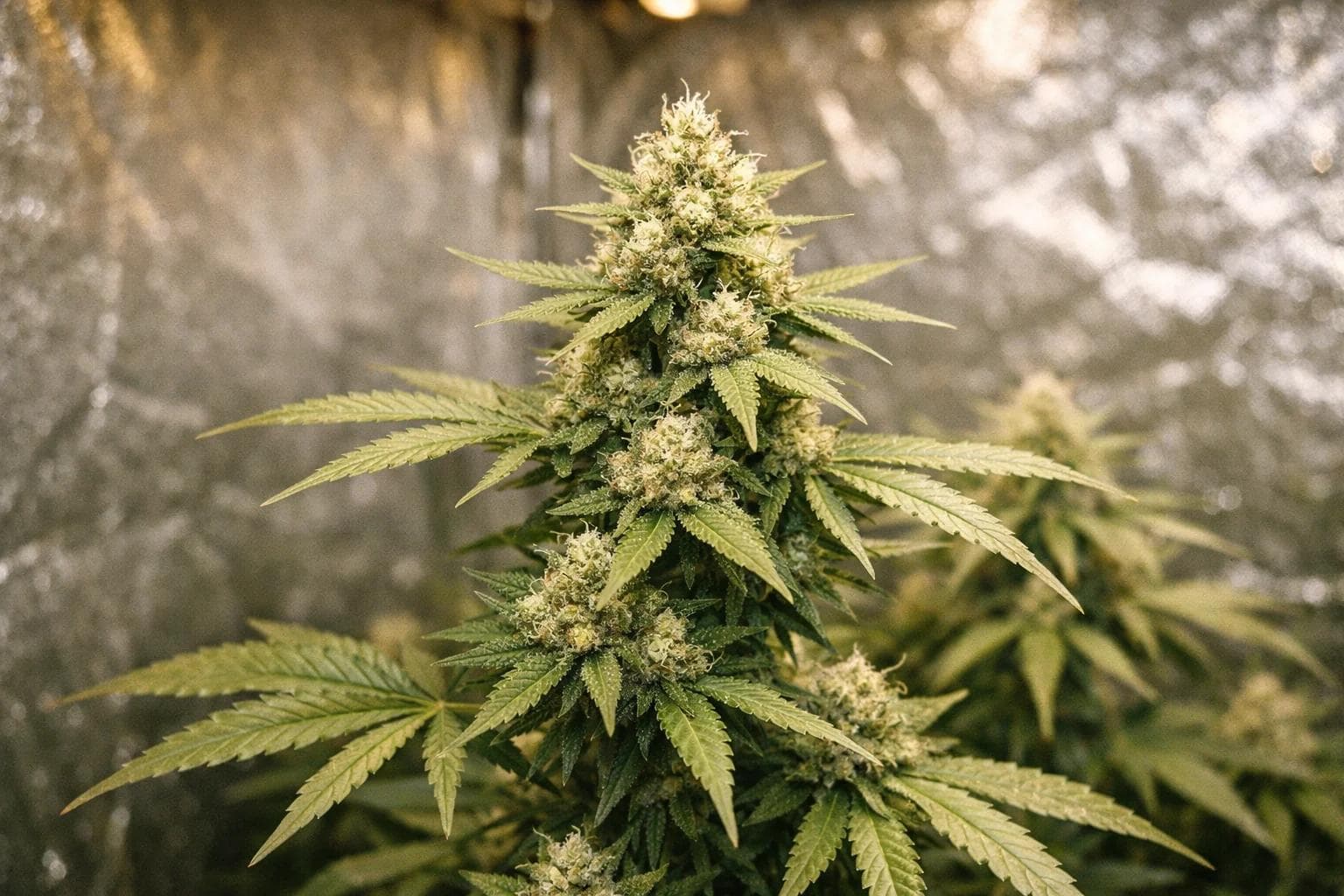
CBD cannabis seeds produce plants with high cannabidiol and low THC. The ratio — whether 1:1, 20:1, or 30:1 — is set by genetics, but cultivation choices like harvest timing, light spectrum, and stress avoidance preserve up to 15% more CBD. Pick a stable, verified-genetics CBD strain, grow under steady conditions, and harvest at 70% milky trichomes for peak ratio. [CITATION: ratio is primarily genetic, secondarily environmental — University of Mississippi cannabinoid studies]
CBD cannabis seeds produce plants with high cannabidiol and low THC. The ratio — whether 1:1, 20:1, or 30:1 — is set by genetics, but cultivation choices like harvest timing, light spectrum, and stress avoidance preserve up to 15% more CBD. Pick a stable, verified-genetics CBD strain, grow under steady conditions, and harvest at 70% milky trichomes for peak ratio.
Growing CBD cannabis isn't the same as growing THC-dominant flower. The plants look different, the harvest window sits earlier, and a single mistake — light leak, late harvest, hermaphrodite pollen — can collapse a 25:1 ratio down to 5:1. For Canadian medical growers operating under ACMPR personal production, ratio integrity matters more than yield. This guide covers what actually moves the needle: genetics first, cultivation second, harvest timing third.
What exactly is a CBD cannabis seed?
A CBD cannabis seed is a feminized or autoflower seed bred from parent plants carrying the BD allele at the cannabinoid synthase locus, producing CBDA-dominant flowers instead of THCA-dominant ones. True CBD seeds are stabilized over multiple generations to lock in a predictable ratio — typically expressed as CBD:THC, like 1:1, 20:1, or 30:1.
The biochemistry is simple. Cannabis plants synthesize CBGA, the "mother cannabinoid," then enzymes convert it into either THCA or CBDA depending on which allele the plant inherited. A plant carrying two BD alleles (homozygous) produces almost pure CBDA with trace THCA. A heterozygous BD/BT plant — common in 1:1 hybrids — splits the conversion roughly evenly.
What separates a real CBD seed from a marketing claim is breeding stability. A poorly stabilized "CBD strain" may produce plants ranging from 30:1 down to 4:1 in the same pack. Reputable Canadian-stocked breeders run third-party HPLC testing on parent stock and publish chemovar reports. If a seed listing doesn't include CBD percentage and ratio data, treat it as untested.
How do CBD:THC ratios actually work?
Ratios express the relative concentration of CBD to THC in dried flower, measured by gas chromatography or HPLC. A 20:1 ratio means 20% CBD and 1% THC, or 12% CBD and 0.6% THC — the ratio holds even as absolute potency varies. Ratio is set by genetics at germination, then modulated within a narrow band by environment, harvest timing, and post-harvest handling.
The genetic floor matters most. A 30:1 strain cannot be coaxed into producing more THC than its genotype allows, and a 1:1 strain cannot be grown into 20:1 territory no matter how perfect the conditions. Cultivation moves the ratio maybe 10-15% in either direction — meaningful, but not transformative.
Three factors shift ratios within the genetic window:
- Harvest timing. THC degrades faster than CBD in late harvest, so pulling plants 7-10 days past peak can nudge ratios higher.
- UV light exposure. UV-B increases overall cannabinoid synthesis, with slight THC favoritism — meaning CBD growers often skip supplemental UV.
- Stress events. Heat stress, root pH crashes, and physical damage trigger defensive THC production in some chemotypes, pulling ratios toward THC.
Which ratio should you grow — 1:1, 20:1, or 30:1?
The right ratio depends on what you're treating or experiencing. 1:1 ratios suit chronic pain and sleep where mild euphoria helps; 20:1 and 30:1 ratios suit anxiety, pediatric epilepsy support, and daytime functioning where psychoactivity is unwanted. There's no universally "best" ratio — there's a ratio that matches your endpoint.
A working framework for Canadian growers:
- 1:1 (e.g., White Widow CBD 1:1 Auto) — balanced effect, mild head feel, useful for pain with daytime function. Easiest to grow, most forgiving of harvest timing.
- 2:1 to 5:1 — primarily CBD-driven with light, clear-headed euphoria. Good entry point for new medical users.
- 20:1 to 30:1 (e.g., Kush CBD 30:1 Auto) — essentially non-psychoactive at normal doses. Used for seizure protocols, severe anxiety, daytime medical use, or workplace-compatible relief.
Feminized Seeds
White Widow CBD 1:1 Feminized
Can you maximize CBD output through cultivation choices?
Yes, but within the genetic ceiling. Optimal CBD output comes from steady environmental conditions during flower, protective harvest timing, and a feeding schedule that maintains trichome density without pushing the plant into stress-induced cannabinoid shifts. Expect cultivation to move total CBD yield by 10-25% versus a stressed grow.
The high-leverage choices:
- Stable VPD in flower. Hold vapor pressure deficit between 1.0-1.4 kPa from week 3 of flower onward. CBD plants are more sensitive to humidity swings than THC-dominant ones — fluctuating VPD reduces total cannabinoid synthesis.
- Light spectrum favoring broad red. A 3000K-3500K full-spectrum LED at 600-800 PPFD during flower produces dense calyx development without the UV-B kick that slightly favors THC.
- Nutrient discipline. Moderate nitrogen (under 150 ppm) in late veg, then a clean P-K bloom blend. Overfeeding CBD strains is a top cause of underwhelming ratios — see our cannabis nutrients feeding guide.
- No defoliation past week 4 of flower. Late defoliation stress on CBD-dominant plants can trigger a measurable THC bump in some chemovars.
For light-cycle specifics across veg and flower, the cannabis light schedule guide covers timing per growth stage.
How do you trigger the highest cannabinoid expression in CBD strains?
The highest cannabinoid expression in CBD strains comes from a clean veg-to-flower transition at peak plant health, paired with a flowering environment that pushes trichome production without triggering stress-defense compounds. Think "spa flower" — consistent, abundant, nothing alarming. CBD plants reward steady more than they reward intervention.
Conditions that maximize cannabinoid synthesis:
- PPFD ramp. Hold 400-500 PPFD through late veg, climb to 700-800 by week 3 of flower, hold there through week 7. Sudden light increases stress the plant; gradual ones don't.
- Tight pH window. Soil 6.2-6.7, coco/hydro 5.7-6.1. CBD plants show calcium and magnesium lockout earlier than THC strains when pH drifts — keep it dialed. The cannabis pH guide walks through correction methods.
- CO2 supplementation (optional). 800-1000 ppm CO2 during peak flower can lift total cannabinoid output by 15-20% in a sealed room. Not worth the setup cost for one-plant medical grows.
- Night-time temperature drop of 5-8°C. Cool nights from week 5 onward enhance trichome density and preserve terpene profile — read our cannabis terpenes guide for the terpene-cannabinoid relationship.
- Strict 12/12 dark integrity. Light leaks during dark periods stress CBD plants disproportionately; even minor leaks (a charging LED, a closet door gap) can cut final cannabinoid output by 8-12%.
Feminized Seeds
Kush CBD 30:1 Feminized
What's the harvest window for CBD-rich plants?
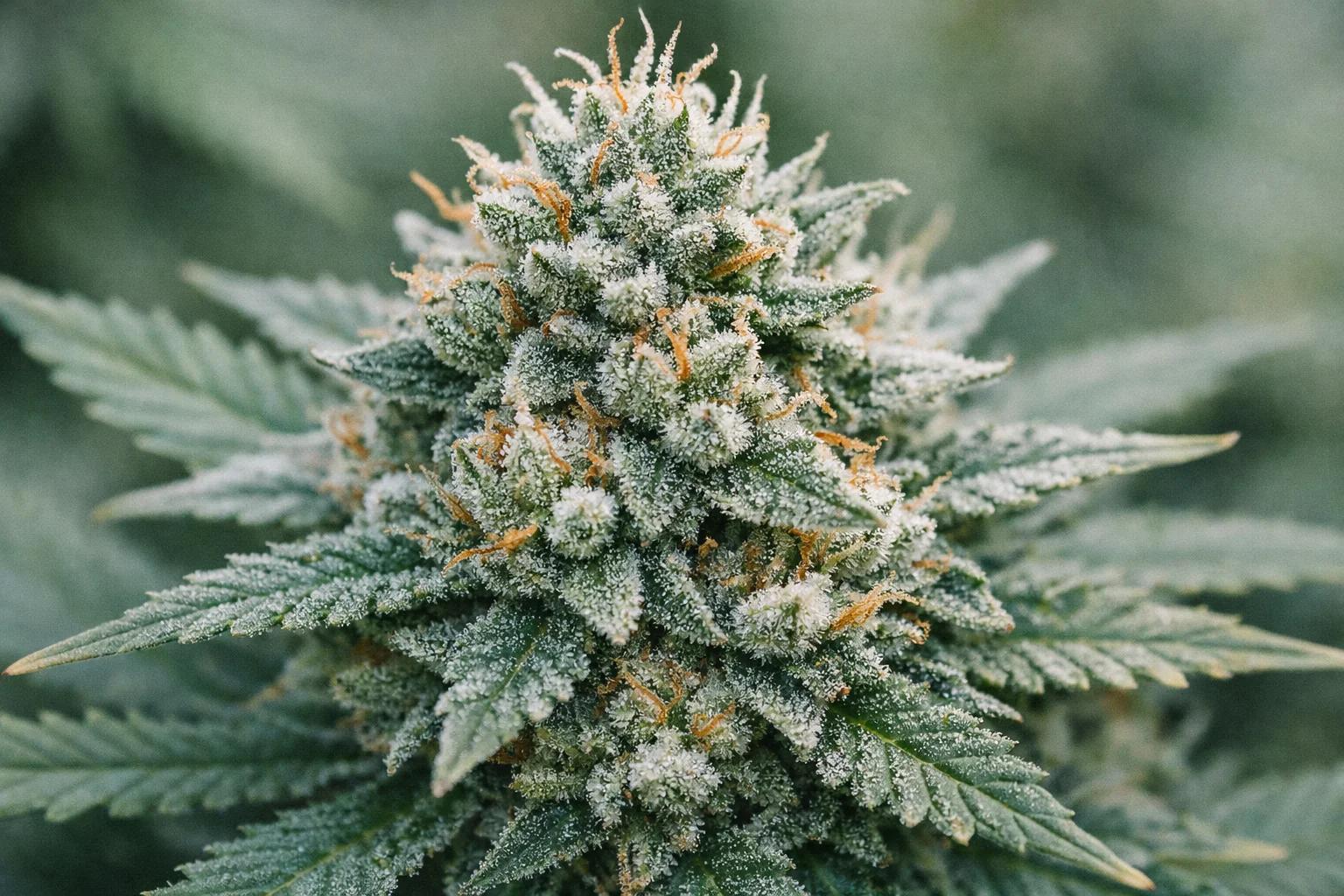
CBD-rich plants hit peak ratio when trichomes show 70% milky, 25% clear, 5% amber — slightly earlier than the THC-grower standard of 80-90% milky. Harvesting earlier preserves CBDA before it begins degrading into CBN-adjacent compounds; harvesting later shifts the ratio toward THC degradation products.
Trichome assessment under a 60-100x USB microscope or jeweler's loupe is non-negotiable. Pistil color alone is misleading for CBD strains — many CBD-dominant phenotypes show full pistil oxidation 10-14 days before trichome peak.
The CBD-specific harvest checklist:
- Days 56-63 of flower for most CBD autos; days 63-75 for CBD photoperiods.
- Trichomes mostly milky, no more than 10% amber. Past 15% amber, the THC degrades faster than CBD and ratio drifts the wrong way.
- Morning harvest before lights-on. Cannabinoid and terpene concentrations peak just before the dark-to-light transition.
- 48-72 hour dark period before harvest. Modest evidence it lifts trichome density; doesn't hurt either way.
How do CBD strains differ from THC strains during the grow?
CBD strains tend to be leaner, taller, and slower in early veg than indica-dominant THC strains, with narrower leaflets, lighter green coloration, and a more open flower structure. They handle low-stress training well but resist heavy topping and aggressive defoliation. Expect 10-15% less yield by dry weight versus a comparable THC strain in the same conditions.
Practical differences a grower notices:
- Slower veg. Add 5-7 days of veg time versus a THC-dominant equivalent to reach the same node count.
- More stretch in early flower. CBD-dominant phenos often double in height in weeks 1-3 of flower; plan vertical space accordingly.
- Lighter feed requirement. Run nutrient EC 20-25% lower than you would for a THC strain. CBD plants burn easily on aggressive feeding schedules.
- Earlier harvest signals. Trichome cap formation and pistil oxidation start 5-7 days earlier than THC strains at the same flowering week.
- Different aroma trajectory. Many CBD strains carry less terpene volume than THC strains until late flower, then bloom hard in the final two weeks. Don't pull early because "it doesn't smell ready."
- Lower hermie risk in stable genetics. True homozygous CBD lines tend to be more stress-resistant against hermaphroditism, but unstable CBD hybrids can throw nanners under heat stress.
Common pitfalls when growing CBD genetics
The recurring mistakes that destroy CBD grows fall into four buckets: bad genetics, wrong harvest timing, environmental stress, and post-harvest mishandling. Each can cut your final CBD-to-THC ratio in half. Most are preventable with discipline. A Montreal basement grower running a 20:1 strain in a 4x4 tent will see ratio integrity collapse the same way a Vancouver patient with an outdoor permit does — wrong harvest day, wrong cure RH, wrong pollen exposure. The mechanisms don't change between setups, only the trigger frequency.
The pitfall list, ranked by frequency:
- Buying unverified "CBD" seeds. No COA, no parent ratio data, no breeder accountability = roll the dice. Stick to verified Canadian-stocked breeders.
- Late harvest. A 25:1 strain pulled at 30% amber trichomes can finish at 12:1 by HPLC. Watch trichomes, not just pistils.
- Pollen contamination. A single male flower or hermie pollen sac in your tent ruins seed-free flower and stresses CBD plants toward seed production over resin.
- Heat stress in flower. Sustained 28-30°C past week 4 can trigger THC defense response in CBD plants — keep flower-room temps at 22-26°C.
- Over-fertilization. CBD strains show tip burn and ratio degradation at EC levels THC strains tolerate. Feed lighter than your instinct says.
- Late pesticide use. Any application past week 3 of flower can suppress cannabinoid synthesis and leave residue in cured flower. For medical use, this is a hard no.
- Sloppy cure. Drying too fast (under 60% RH) or curing too wet (above 65% RH) collapses both cannabinoids and terpenes. Target 60% RH at 18-20°C drying, then 58-62% RH burping cycles for 2-4 weeks minimum.
- Light leak during dark cycle. Treat any visible glow during lights-off as a problem to fix immediately — even charging indicators on power strips.
Are CBD strains worth growing for Canadian medical users?
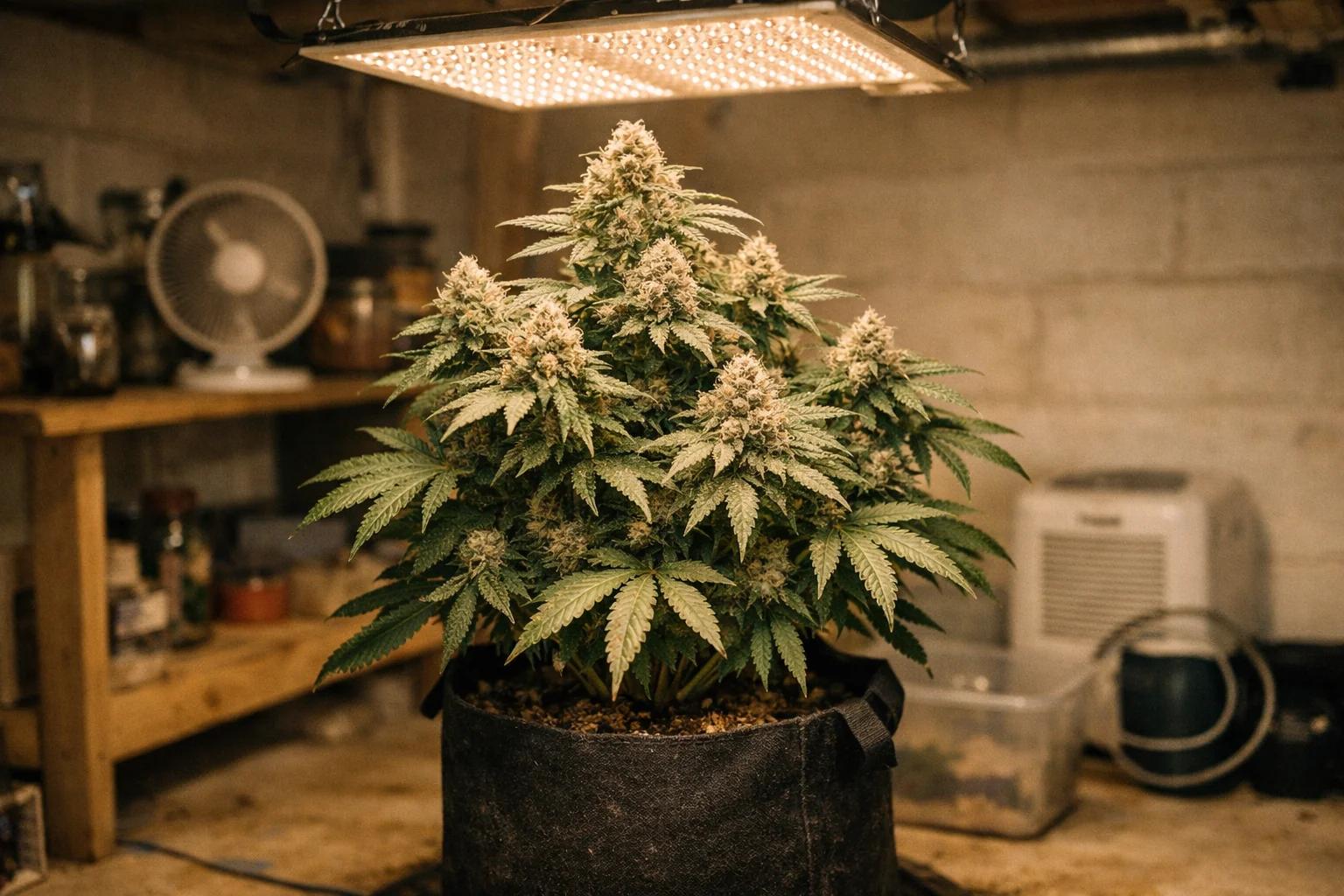
For an ACMPR-registered medical grower in Canada, growing CBD strains is often the most cost-effective path to consistent, high-ratio CBD flower. Retail CBD flower through provincial systems is limited and expensive — a personal grow of a verified 20:1 or 30:1 strain produces in one cycle what would cost $1,500-$3,000 to buy retail.
The medical-use rationale, beyond cost:
- Consistency. One mother plant, one nutrient regime, one harvest = same chemovar every time. Retail flower varies batch-to-batch.
- Strain availability. Many high-ratio CBD strains never reach retail because volume demand is low. Personal production unlocks the full breeder catalog.
- Pesticide control. You know what was applied (or wasn't). Critical for patients with chemical sensitivities, autoimmune conditions, or pediatric protocols.
- Fresh flower vs aged retail. ACMPR home grow lets you cure to your preferred RH and consume within 2-6 months of harvest, when terpenes and cannabinoids are at peak.
- Legal protection. Your ACMPR license covers production for the prescribed grams/day, including hold-back. Working with your physician on the exact ratio is part of the registration process.
Browsing the full CBD strain catalog by ratio is the starting point for new medical growers — PPS CBD seeds lists every CBD-dominant strain we stock with parent ratio data.
Feminized Seeds
Northern Light x Blueberry Auto Feminized
The bottom line — picking the right CBD strain for your goal
Match the ratio to the use case, verify the breeder, then dial in cultivation to protect what the genetics gave you. For mild pain and daytime function, a stable 1:1 strain delivers balanced effect with the most forgiving grow profile. For anxiety, seizure protocols, or pediatric-adjacent medical use, push for 20:1 or 30:1 and accept the slightly slower veg in exchange for non-psychoactive flower.
The order of operations doesn't change: genetics first, environmental discipline second, harvest timing third. Skip any one of these and the ratio drifts. Lock in all three and a CBD home grow consistently outperforms what's available at retail — both in cannabinoid integrity and in cost per gram.
For Canadian medical users under ACMPR, the math works out: one 12-14 week cycle of a verified high-ratio CBD strain replaces 6-12 months of retail purchases at a fraction of the cost, with full control over pesticides, cure, and freshness. Pair the right seed with a clean grow and the rest follows.
FAQ
Can a CBD strain ever produce more THC than CBD?
Only if the seed was mislabeled, contaminated with THC pollen during breeding, or harvested so late that CBD has degraded faster than THC. A verified homozygous CBD strain (BD/BD genotype) cannot biochemically produce more THC than CBD because it lacks the functional THCA synthase enzyme — the ratio is locked at the gene level.
Do CBD autoflowers produce the same ratios as CBD photoperiods?
Yes, when the genetics are stabilized. Ruderalis genetics used in autoflowering breeding carry no inherent ratio bias — the CBD:THC ratio depends entirely on which cannabinoid synthase alleles were locked in. A 20:1 CBD auto will produce 20:1 flower under the same conditions as a 20:1 photoperiod, with slightly lower total yield.
Will UV-B supplementation increase CBD production?
No. UV-B exposure increases overall cannabinoid synthesis but shifts the ratio slightly toward THC, since plants evolved THC as a UV protectant. CBD growers should skip supplemental UV-B and rely on full-spectrum LED at standard intensity. The yield gain isn't worth the ratio drift.
How long do CBD seeds stay viable in storage?
Properly stored CBD seeds (4-10°C, sealed container, low humidity) stay viable for 3-5 years with germination rates above 80%. After 5 years, expect viability to drop 10-15% per year. Vacuum-sealed and refrigerated seeds can extend the window to 8 years or more without significant degradation.
Can I grow CBD and THC strains in the same tent?
Yes, but plan for the longest flowering strain and avoid cross-pollination by running feminized or autoflower seeds only. Environmental conditions that suit THC strains (UV supplementation, tighter VPD) may slightly disadvantage CBD strains, but the genetic ceiling protects ratio integrity. Keep harvest schedules separate to track each strain's peak window.
What's the difference between CBD-dominant and CBD-rich on a seed listing?
CBD-dominant means CBD exceeds THC in the chemovar (any ratio above 1:1). CBD-rich is a marketing term without a fixed definition — some breeders use it for anything above 2% CBD, others reserve it for 1:1 or higher. Always check the actual ratio number rather than relying on these labels.
19+ | Educational horticulture only.