Master Your Indoor Grow
Indoor Growing Guides
Cannabis Terpenes Guide: What They Are and Why They Matter
Learn how cannabis terpenes drive flavor, aroma, and effects. Discover myrcene, limonene, caryophyllene and the science behind strain selection.
Cannabis terpenes are the aromatic compounds that determine flavor, aroma, and effects—often more accurately than THC percentage alone. The entourage effect theory suggests that cannabinoids and terpenes work synergistically to produce stronger effects when combined. Specific cannabis terpenes like myrcene, linalool, and CBD can moderate THC-induced anxiety and create more nuanced experiences. Selecting strains based on dominant terpene profiles gives cultivators precise control over the growth outcome they want, making this approach far more predictive than chasing maximum THC alone.
Overview
When most growers talk about cannabis quality, the conversation starts and ends with THC percentages. But experienced cultivators know better. Terpenes are the aromatic compounds responsible for the flavour, scent, and nuanced effects that separate a truly memorable harvest from a forgettable one. Understanding terpenes means moving beyond a single number on a lab report and appreciating cannabis as the complex, multi-compound plant it actually is.
Summary
THC percentage tells you one piece of the story. Terpenes tell you the rest. Choosing strains by their dominant terpene profile gives you far more predictive control over flavour, aroma, and effect than chasing maximum THC alone. At Premium Cultivars Canada, our strain specifications include dominant terpene data so you can select genetics that match exactly the experience you are growing toward.
Entourage Effect
The entourage effect is the widely discussed theory — increasingly supported by research — that cannabinoids and terpenes produce stronger, more nuanced effects when consumed together than when isolated. THC alone, for instance, can produce anxiety in sensitive users. But the presence of myrcene, linalool, or CBD appears to moderate that response, softening the edge and broadening the overall effect profile.
This is a key reason why full-spectrum cannabis — flower, live resin, or full-spectrum extracts — is considered by many experienced users to be more effective than pure THC isolates. When terpenes are stripped away during extraction, so is much of the complexity. For home growers, the practical takeaway is straightforward: preserving your terpene profile through proper cultivation and curing is not just about flavour — it directly impacts potency and effect quality. Growing for the full chemical profile, not just maximum THC, produces a superior end product.
Major Terpenes
Myrcene is the most abundant terpene found in modern cannabis cultivars. Its aroma is earthy, musky, and faintly herbal — think damp soil and ripe mango. Myrcene is associated with sedating, body-heavy effects, which is why myrcene-dominant strains are often marketed as relaxing evening options. It is the defining terpene in many classic indica-leaning varieties.
Limonene carries an unmistakable bright citrus scent — lemon, orange, and lime rind. It is frequently associated with uplifting, mood-elevating effects and is often prominent in strains recommended for stress relief and daytime use. Limonene-rich cultivars tend to feel energetic and mentally clarifying rather than sedating.
Caryophyllene is the spicy, peppery terpene you detect in strains with a diesel or hash-like edge. What makes caryophyllene uniquely interesting is that it is the only known terpene to directly bind to cannabinoid receptors — specifically CB2 receptors, which are involved in immune response and inflammation. This gives caryophyllene a functional role beyond aroma, making it particularly relevant for growers and consumers seeking anti-inflammatory properties.
Terpinolene has a more complex, layered scent profile: floral, fresh, slightly herbal, with hints of pine and citrus. It appears most frequently in sativa-leaning and haze-influenced genetics and is associated with uplifting, cerebral effects. Terpinolene-dominant strains like Jack Herer and Ghost Train Haze have cult followings among creative and active users.
Linalool is the terpene shared between cannabis and lavender, delivering a soft floral aroma with calming connotations. Research suggests linalool has anxiolytic and sedative properties that work in ways functionally similar to CBD. It appears most often in indica-dominant or CBD-forward cultivars, where it contributes to a relaxing, stress-reducing experience.
Terpenes & Cultivation
Every decision you make in the grow room affects your terpene output. Temperature is perhaps the most critical variable. Terpenes begin to degrade and volatilize above 30°C, so keeping your canopy temperature controlled — particularly during late flowering — is essential for terpene preservation. Many experienced growers drop temperatures slightly in the final two weeks before harvest to encourage resin and terpene accumulation.
At harvest, low-stress handling matters more than most growers realize. Rough handling of ripe colas physically damages trichomes and accelerates terpene loss. Cut carefully, handle minimally.
The drying and curing process is where terpene profiles are made or destroyed. A slow dry at 15–21°C with 55–65% relative humidity over 10–14 days, followed by a proper jar cure with regular burping, allows chlorophyll to break down gradually while preserving volatile aromatics. Heat-drying or machine-drying destroys terpenes rapidly — the fast-dry short-cut that many impatient growers take is the single biggest reason home-grown flower can taste flat. Cure properly, and your nose will tell you the difference.
What Are Terpenes?
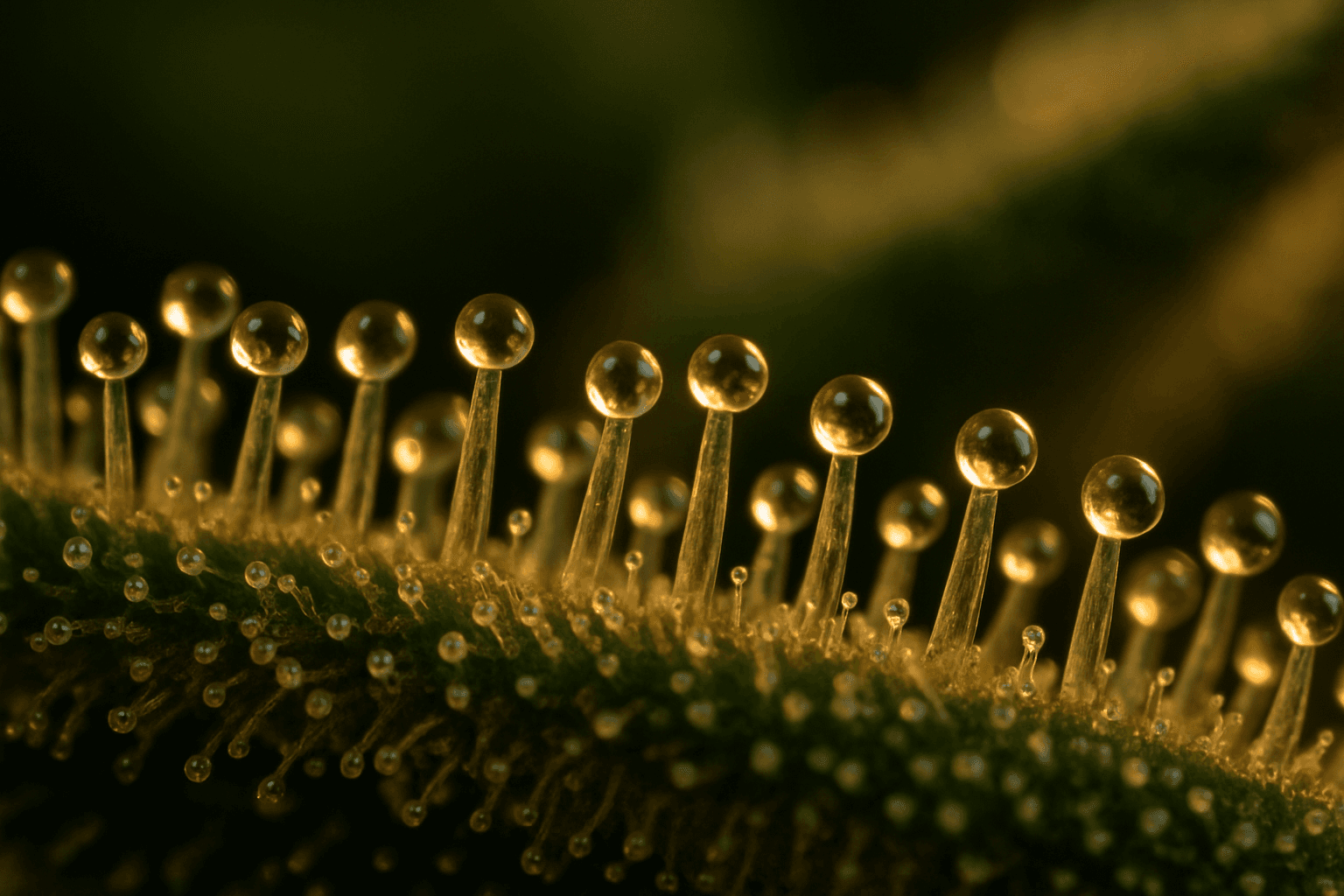
Terpenes are volatile aromatic compounds found throughout the plant kingdom — in citrus peel, pine needles, lavender, and black pepper, among thousands of other sources. In cannabis, they are synthesized and stored in the trichomes, the same resinous glands that produce cannabinoids like THC and CBD. To date, researchers have identified over 150 distinct terpenes in cannabis, though most strains express a handful of dominant terpenes that define their character.
Because terpenes are volatile, they evaporate readily when exposed to heat, light, or oxygen. This is why harvest timing, drying conditions, and curing technique have such a dramatic impact on the final aroma and taste of your flower. It also explains why vaporizing at lower temperatures tends to deliver a richer flavour profile than combustion — the terpenes survive long enough to reach your palate. Knowing this is the first step toward growing and preserving a truly high-quality crop.
FAQ
How do I identify the dominant terpenes in a strain before I buy?
Check your seed breeder's strain specifications—reputable breeders include terpene profiles alongside THC and CBD percentages. Look for the terpenes listed as "dominant" or at the highest concentration; these will shape flavor, aroma, and effect. If terpene data isn't available, ask the breeder directly—it's worth the request.
Does the terpene profile actually change how the cannabis affects me?
Yes, absolutely. A high-THC strain dominated by limonene will produce a markedly different effect than one dominated by myrcene, even with identical THC numbers on paper. Terpenes like myrcene, linalool, and CBD interact with THC through the entourage effect, influencing onset, duration, and the character of the effect—softening anxiety, extending relaxation, or sharpening clarity depending on the combination.
How do I protect terpenes during growth and harvest so they don't degrade?
Preserve terpenes by maintaining optimal humidity during drying (around 45–55% RH), keeping temperatures cool, and minimizing light exposure during the cure. Avoid excessive handling, heat stress during late flower, or over-drying—all can damage the terpene profile you've spent weeks cultivating.
Can I increase terpene production in my plants while growing?
Yes, several practices boost terpene expression: maintain stable, slightly cooler nighttime temperatures in late flower, ensure adequate light spectrum (particularly UV-B), and harvest at peak ripeness when terpene production is highest. Proper feeding and low-stress training also support robust terpene development throughout the grow cycle.
Should I prioritize terpene profile over THC percentage when choosing a strain?
Rather than choosing one over the other, use terpene profile to find a strain with THC in the range that suits you, then let terpenes be your refiner. If you're growing for a specific effect—sleep, energy, focus—the terpene profile will predict that outcome far more reliably than THC percentage alone.
19+ | Educational horticulture only.