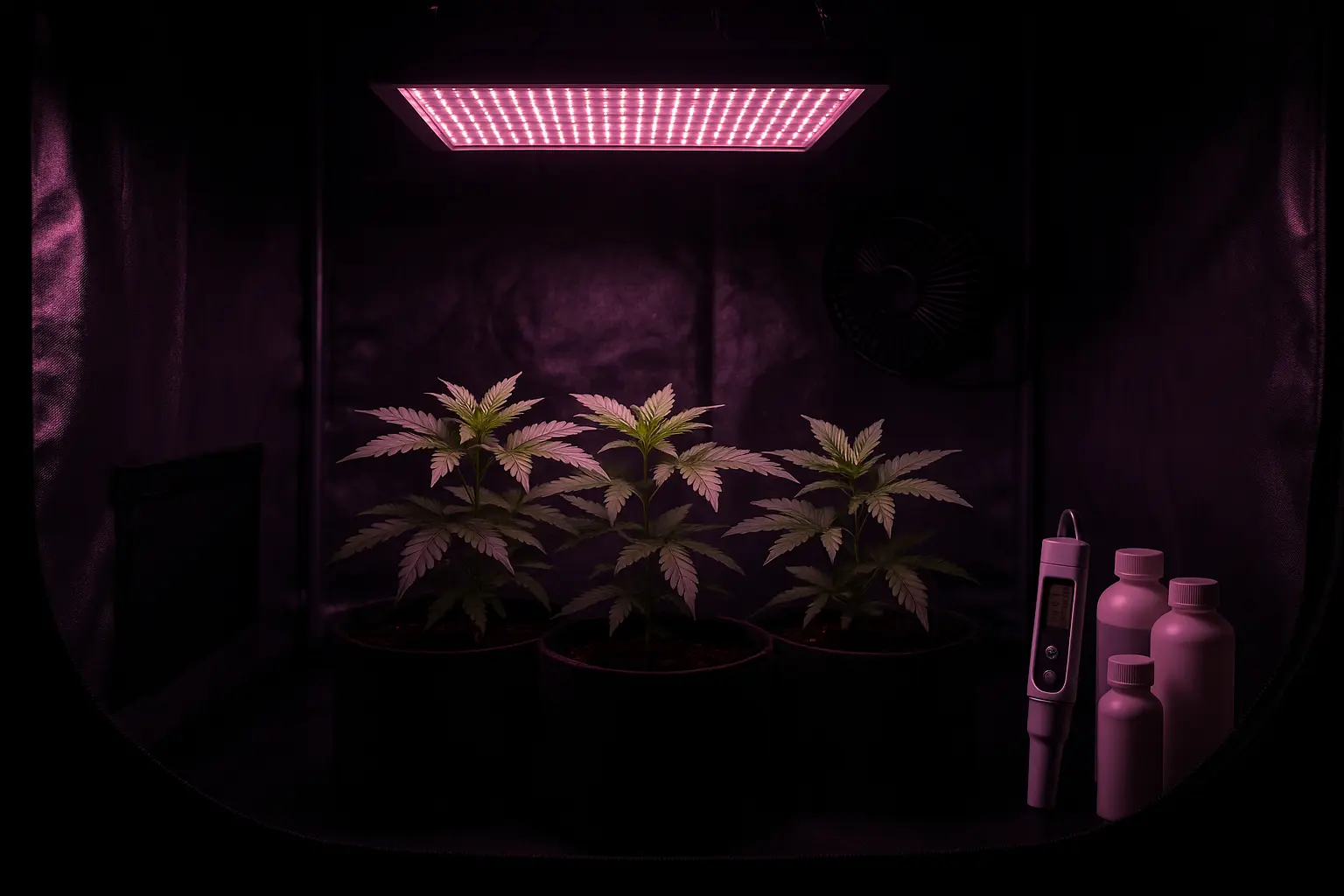
Master Your Indoor Grow
Indoor Growing Guides
Best Cannabis Strains for Beginners in Canada (2026 Edition)
10 best cannabis strains for beginner growers in Canada (2026 edition): forgiving genetics, fast finishers, mold-resistant — ranked with concrete reasons per strain.
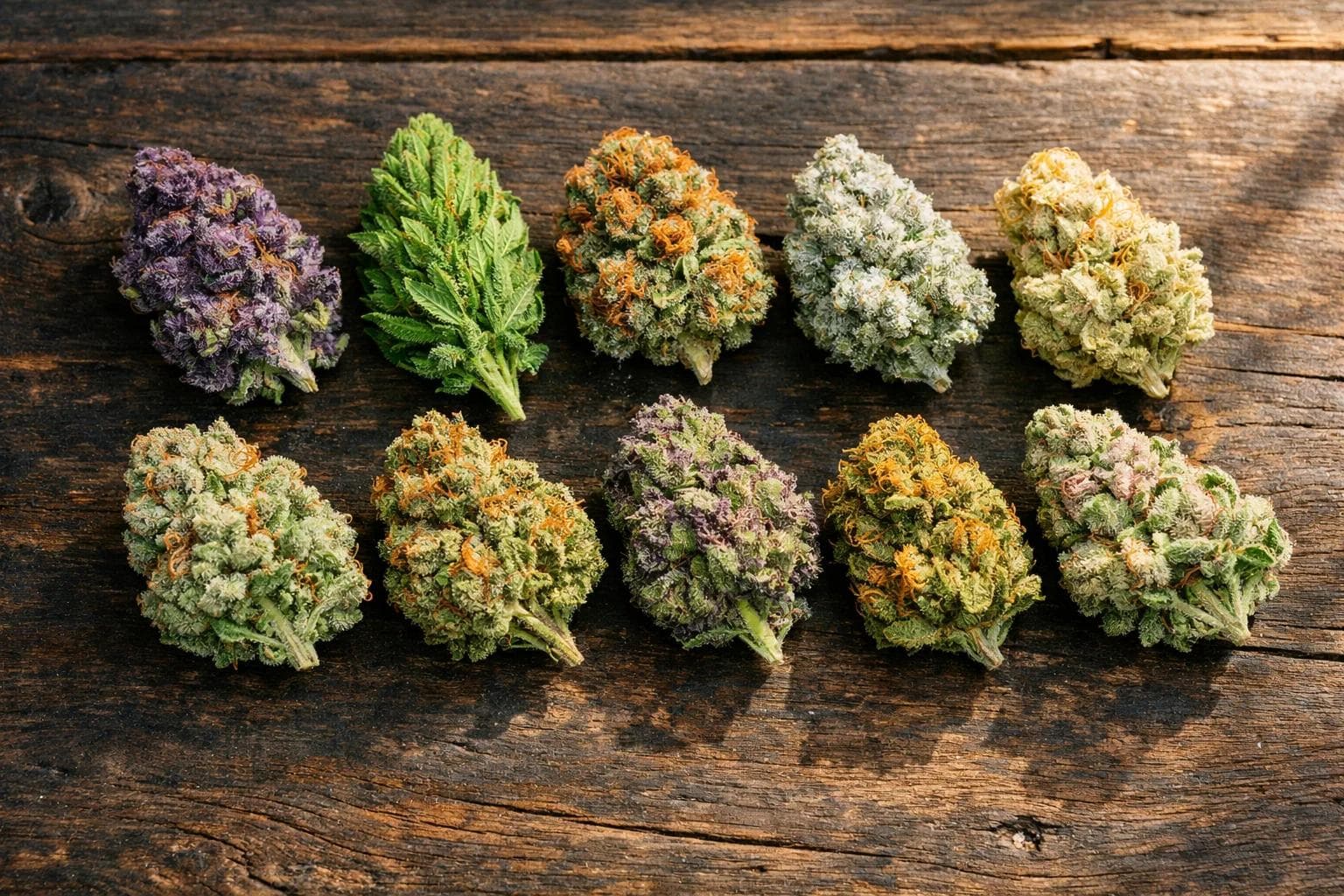
The best cannabis strains for beginners in Canada are forgiving genetics that resist mold, finish in under 100 days, and tolerate first-time mistakes — feeding errors, light schedule slips, transplant shock. Our top pick for a true first grow is Gorilla Glue Auto: 9-week seed-to-harvest cycle, 90%+ germination rate, sturdy structure that ignores light burn and pH swings. For Quebec and Ontario outdoor growers, Wedding Cake Fast Feminized finishes before October frost. For Prairie balcony growers, Northern Light × Blueberry Auto is the safest bet on the planet.
The best cannabis strains for beginners in Canada are forgiving genetics that resist mold, finish in under 100 days, and tolerate first-time mistakes — feeding errors, light schedule slips, transplant shock. Our top pick for a true first grow is Gorilla Glue Auto: 9-week seed-to-harvest cycle, 90%+ germination rate, sturdy structure that ignores light burn and pH swings. For Quebec and Ontario outdoor growers, Wedding Cake Fast Feminized finishes before October frost. For Prairie balcony growers, Northern Light × Blueberry Auto is the safest bet on the planet.
You bought seeds, set up a tent, watched three hours of YouTube — and now you're staring at a bag of beans wondering which one to germinate first. The honest answer: it matters less than you think, and it matters more than most beginners admit. Pick the wrong strain and you'll fight powdery mildew through August, hit a late harvest after the first frost, or watch your plant hermie at week 6 of flower. Pick the right strain and the grow forgives almost every mistake. This is our 2026 list — ten strains we'd actually hand a first-time Canadian grower, with concrete reasons each one earned the spot.
What actually makes a cannabis strain "beginner-friendly"?
A beginner-friendly cannabis strain has four measurable traits: high germination rate (over 90%), short total cycle time (under 100 days seed to harvest), strong resistance to mold and pests, and structural forgiveness — meaning the plant tolerates feeding mistakes, light burn, and inconsistent watering without collapsing yield. Marketing copy that calls a strain "easy" without these specifics is worth ignoring.
The four traits in order of importance for a first grow:
- Germination rate. A 95% rate means you crack 4 of 4 seeds. A 70% rate means you might lose half before you've even started — and beginners don't have backup beans. Look for breeder-published germination data and recent reviews.
- Cycle length. Anything that finishes outdoors before October 1st in Canada gives you a margin against early frost. Indoors, shorter cycles mean less time for problems to compound.
- Pest and mold resistance. Powdery mildew, botrytis (bud rot), and spider mites kill more beginner grows than any feeding mistake. Genetics with proven outdoor track records in humid eastern Canadian summers matter more than reported THC.
- Structural forgiveness. Some plants snap branches under their own bud weight, droop after a single skipped watering, or burn at PPFD over 600. Forgiving structure means heavy stems, balanced internode spacing, and a plant that recovers from stress instead of hermaphroditing.
How we picked these 10 strains for first-time growers
We started with a list of 47 strains commonly recommended on Canadian grow forums, then filtered against four hard criteria: published germination rate of 90%+ from at least two independent sources, documented finish time, mold-resistance verification from outdoor Canadian harvest reports, and beginner-pheno-stability (low hermaphrodite rate, no extreme stretch or odd structure). The 37 strains that didn't clear the bar went into a "stage 2" list for our intermediate-grower guides.
We also weighted the picks across grow contexts: indoor tent, outdoor balcony, outdoor in-ground, Quebec/Ontario climate (humid, short autumn), Prairie climate (cold nights, short summer), and West Coast (long season, dry summer). A strain that's perfect for a Vancouver balcony might fail in Saskatoon. We flagged climate fit per strain. Finally, we cross-referenced against Plantation Premium Seeds inventory — every pick on this list is available in feminized or autoflower form right now from a vendor that ships across Canada with verified germination guarantees. For seed-storage and pre-germination handling, the cannabis seed germination guide walks through every step.
The ranking is opinionated. #1 isn't the highest yielder or the most potent — it's the strain we'd hand a complete beginner with the highest confidence they'd harvest something usable. By #10 we're trusting the grower to handle a slightly more demanding plant. Start at #1, work down as you build experience.
#1 — Gorilla Glue Auto · the safest first grow
Gorilla Glue Auto is our #1 beginner pick because it combines every forgiving trait into a single 9-week package. Germination rate hits 95% on direct-to-soil starts. Cycle time is 65-75 days from seed to harvest, fitting any indoor schedule and any Canadian outdoor window from May to September. The plant carries Gorilla Glue's notoriously sticky, frost-coated buds while keeping the autoflower trait that lets beginners skip the entire light-cycle flip — just run 18/6 from start to finish.
What makes it forgiving: heavy fibrous stems that don't snap, broad nodes that resist light burn even at 600 PPFD, and a famously stable phenotype expression. You'll get the same plant shape from every seed in the pack — no surprise hermaphrodites, no wild outliers. The strain tolerates pH drift between 5.8 and 6.8 without showing deficiency. Skip a feed? It bounces back. Overwater once? Slight droop, full recovery in 24 hours. Forget to top? Doesn't matter — autoflowers don't reward topping anyway, so the "lazy" approach is the right approach.
THC sits around 22-24%, flavor is the signature chocolate-diesel-pine of original Gorilla Glue #4. Yields run 400-500g/m² indoors and 80-150g per plant outdoors in a 15-20L fabric pot. Mold resistance is excellent thanks to dense-but-airy bud structure — no soft mushy centers that invite botrytis. For a Canadian first grow whether indoor tent or sunny balcony, this is the seed we'd pop first.
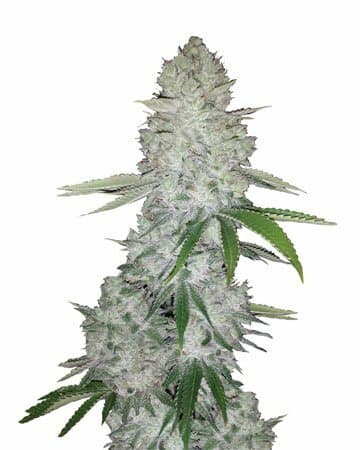
Feminized Seeds
Gorilla Glue Auto Feminized
#2 — Northern Light × Blueberry Auto · best autoflower for Prairie climates
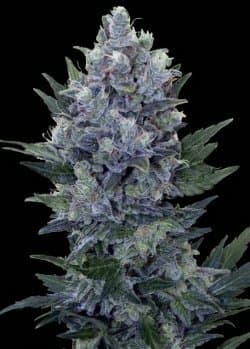
Northern Light × Blueberry Auto is the strain we recommend for Calgary, Saskatoon, Winnipeg, and anywhere with a short growing window or cold August nights. It crosses two of the most cold-tolerant indica lineages in cannabis — Northern Lights (Afghan/Thai genetics bred in 1980s Seattle for low-temperature resilience) with Blueberry (Oregon-bred for outdoor northern climates). The autoflower trait keeps the cycle at 70-80 days from seed, finishing well before Prairie first-frost dates which can hit September 10-15.
A Saskatoon grower with a 110-day frost-free window can finish this strain outdoors with weeks to spare — germination consistently reports 92-96%, the plant stays compact (60-100cm), and the indica structure means dense, low-canopy growth that doesn't need training or topping. Resistance to cool-night stress is the standout trait — most autoflowers slow growth dramatically below 15°C night temps, but NL × Blueberry keeps developing flowers through Prairie September nights that drop to 8°C. Bud structure is medium-dense, with enough airflow to resist botrytis even when fall rain hits.
THC lands at 18-22%, with a sweet blueberry-pine terpene profile from the parent cross. The high is heavy-indica, body-focused — well suited to evening medical use. Yields are modest by autoflower standards (300-400g/m² indoors, 60-120g per plant outdoors) but the reliability is the point. Plant in early June, harvest by mid-August, no light-flip required, no autumn frost risk. Check the outdoor cannabis calendar for Canada for province-specific planting dates.
#3 — Wedding Cake Fast Feminized · best Fast Version for Quebec / Ontario
Wedding Cake Fast Feminized is the strain we recommend for outdoor growers in Quebec, Ontario, and Atlantic Canada where the late-season window is brutal — early October frosts, late September rain, humid August nights. Fast Version genetics finish 7-14 days earlier than standard feminized, which is the difference between harvesting clean buds on September 25 and pulling moldy plants on October 8.
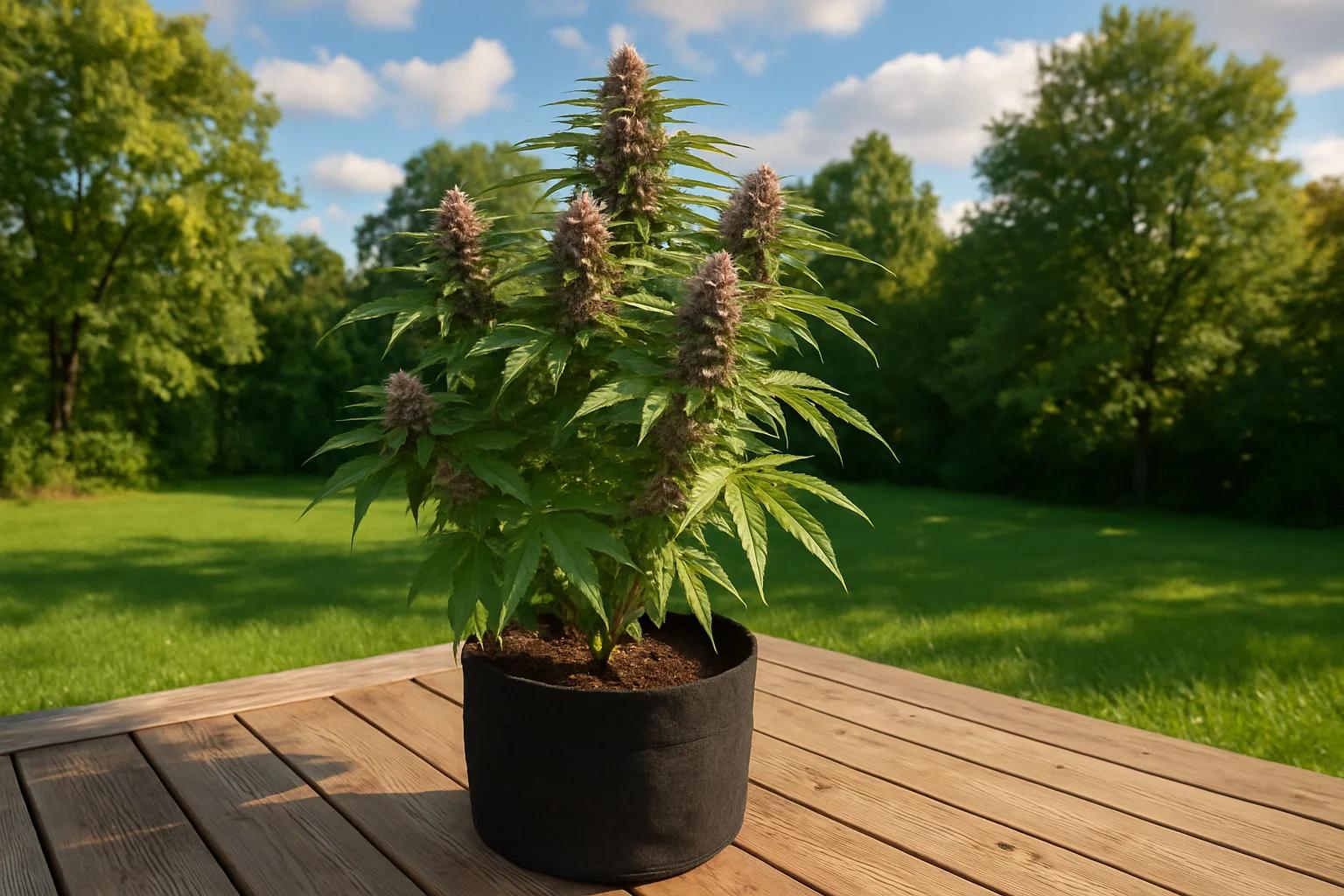
Why it works for beginners: Wedding Cake is one of the most stable photoperiod phenotypes in modern cannabis. The Fast Version cross retains 100% feminized stability — no autoflower-induced random ruderalis genetics in the gene pool — while pulling the finish forward. Germination is 90-94%. Structure is medium-sturdy with a moderate stretch, ideal for outdoor in-ground or 25-30L fabric pots on a deck. Powdery mildew resistance is above average, which matters enormously in Quebec's humid late summer.
THC sits at 22-25% with the signature Wedding Cake terpene profile — vanilla, tangy citrus, cake-batter sweetness. The high is balanced — euphoric head, relaxed body — making it a versatile harvest for new growers exploring effects. Indoor yields hit 500-600g/m²; outdoor plants in fabric pots reach 200-400g. The Fast Version finish time means you can germinate as late as mid-June outdoors and still harvest before October. For the why behind Fast Version, see feminized vs autoflower vs Fast Version.
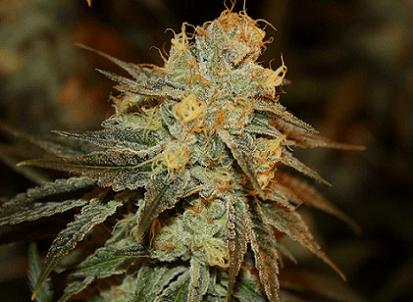
#4 — Bruce Banner Feminized · most forgiving feeder
Bruce Banner Feminized earns the #4 spot for one reason: it eats heavy nutrients without burning, but also tolerates underfeeding without showing major deficiency. For beginners who can't decide whether to follow the nutrient bottle schedule or wing it, Bruce Banner survives both approaches. The wide nutrient tolerance window is documented across hundreds of Canadian grower journals — the plant simply doesn't punish small feeding mistakes the way Cookie or Diesel lineages do.
What a first-time indoor grower actually gets: 90-93% germination, 8-9 week flower (10-11 weeks total from seed indoor), strong main-cola dominance that doesn't require complex training, and resistance to both mold and most pest pressure. The plant shows clear visual feedback — leaves yellow noticeably at deficiency, curl tips at overfeeding — so first-time growers can actually learn to read the plant in real time. Structure is medium-tall with moderate stretch, suiting a 4×4 indoor tent or an in-ground outdoor spot with full sun.
THC is the dramatic part: 24-28% in dialed conditions, with extracts hitting 30%+. Effect is heavy-sativa, racy and euphoric. Yields run 500-700g/m² indoors in a SCROG, 300-500g per outdoor plant in a 25-30L pot. The high yields require dialing in PPFD ramps and a clean P-K bloom feed in weeks 5-7, but the strain produces a respectable harvest even on a hands-off schedule. For light-schedule fundamentals through veg and flower, the cannabis light schedule guide covers the essentials.
Feminized Seeds
Bruce Banner Feminized
#5 — Big Bud Auto · best balcony pick
Big Bud Auto is the strain we recommend for Montreal, Toronto, and Vancouver balcony growers working in 15-25L fabric pots with limited footprint. It's an autoflower version of the classic Big Bud — bred in 1980s Netherlands specifically for maximum bud-to-leaf ratio, then autoflower-crossed in the 2010s for the modern compact-grow market. Cycle time is 75-85 days from seed, plant height stays at 70-110cm, and yield per plant beats almost every other autoflower in the same footprint.
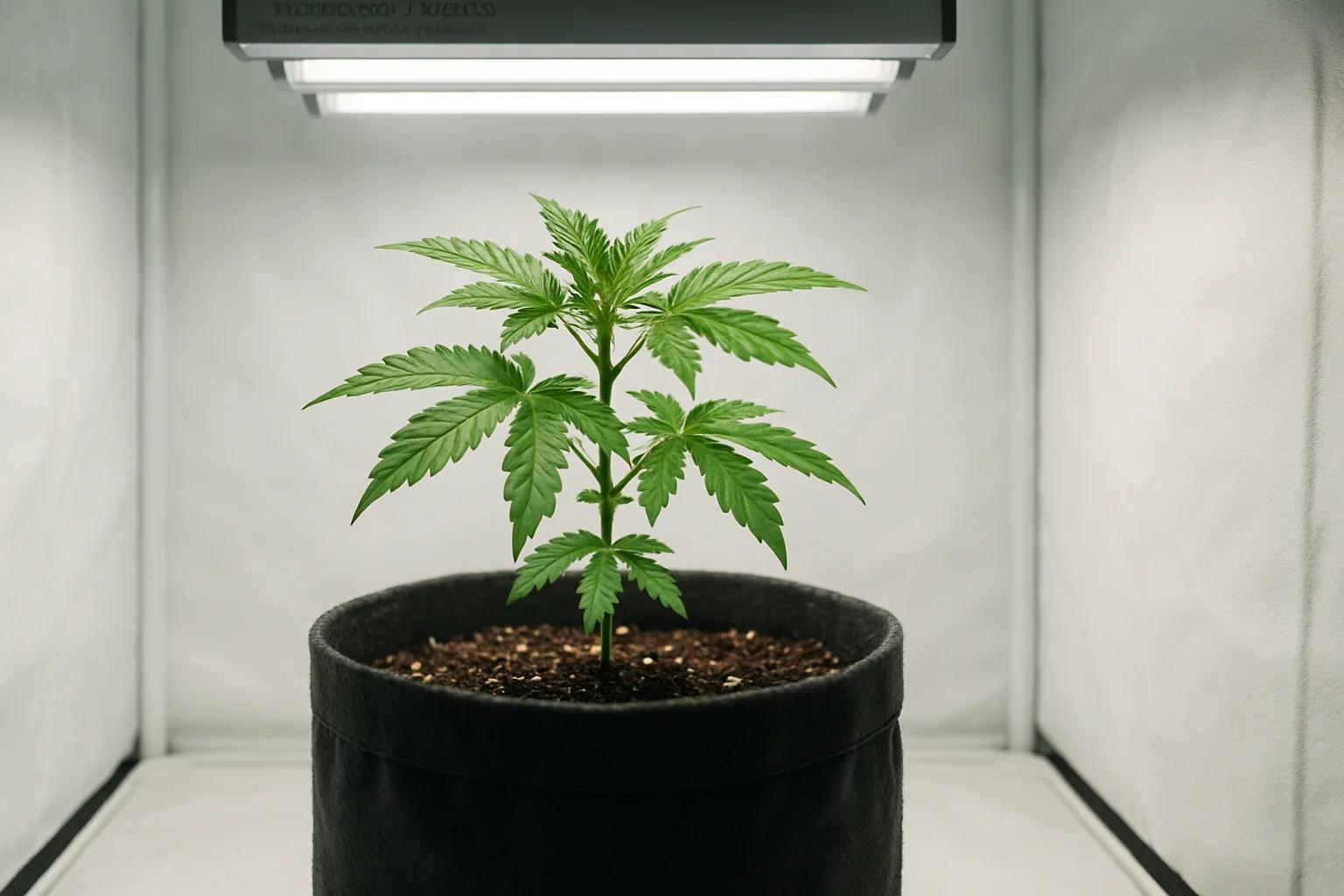
Why balcony growers love it: the plant's compact indica structure stays under 1.2m in 99% of phenos, which keeps it below balcony privacy-rail heights and out of neighbor sight-lines. Bud structure is heavy and dense without being so tight that it traps moisture — meaning balcony grows in humid coastal climates (Vancouver, Halifax) don't lose harvest to botrytis. Wind tolerance is high; the squat structure resists Toronto June-storm winds without staking.
Germination rate is 90-94%. THC sits at 18-21%, leaning slightly under the high-THC contenders but compensated by sheer yield — 80-180g per plant outdoors, occasionally 200g+ in optimal pot-and-feed conditions. Aroma is earthy-skunk-citrus, with a classic indica body effect. Mold resistance is good rather than excellent, so monitor closely in humid August. Big Bud Auto pairs especially well with beginners who want to maximize quantity from one or two plants on a small balcony — a single plant can produce 4-6 weeks of personal stash.
#6 — White Widow CBD 1:1 Auto · best CBD-leaning for new wellness growers
White Widow CBD 1:1 Auto is for the beginner who wants to grow medical-grade flower rather than chase pure recreational THC. The 1:1 ratio (roughly 8-10% CBD with 8-10% THC) produces a mild, clear-headed effect — daytime-functional, anxiety-friendly, useful for chronic pain without heavy intoxication. For new growers operating under ACMPR personal production licenses, this is the genetics that justifies the medical paperwork.
The forgiveness factor is real here: White Widow is one of the most genetically stable cannabis cultivars ever bred — 30+ years of stabilization since its 1990s Dutch debut. The CBD 1:1 version inherits that stability. Germination rate consistently reports 93-96%. Autoflower cycle is 70-80 days, plant height stays compact at 60-100cm, and structure is the textbook indica-leaning hybrid — moderate branching, dense main cola, broad fan leaves that signal problems clearly.
Mold resistance is high — White Widow lineage tested heavily in humid Dutch outdoor conditions, and that resistance carries through. The CBD profile shifts the harvest window slightly earlier (70% milky trichomes rather than 90%) which helps beginners who tend to harvest too early anyway. Yield is 300-450g/m² indoors, 60-150g per plant outdoors. For full coverage of CBD growing techniques, our deeper guide is worth a read. The flower is excellent for tincture and infused-oil production at home, where CBD ratios shine.
#7 — OG Kush Feminized · best high-THC indica for new indoor growers
OG Kush Feminized is the cultural icon — the strain that defined modern Californian cannabis. We rank it #7 because while it's not the most forgiving on this list, it teaches the most. New indoor growers who run OG Kush learn pH discipline, learn light-burn signs, learn the difference between deficiency and overfeed — because OG Kush shows everything. It's a teacher strain. Once you've grown a clean OG, you can grow almost anything.
Honest expectations for a first-time photoperiod grower: this isn't the absolute easiest plant on the list (Gorilla Glue Auto holds that crown), but it's the easiest photoperiod high-THC option. Germination is 88-92%. Flower time is 8-9 weeks indoors, total cycle 11-13 weeks. Structure is medium-tall with significant stretch (200% from flip), so plan for SCROG, topping, or LST training in a 4×4 tent. The plant rewards a steady 12/12 dark integrity — light leaks will trigger stress and possible hermaphrodite tendencies.
THC lands at 22-26%, with the legendary OG pine-fuel-lemon terpene profile. Yields are moderate — 400-550g/m² indoors under proper light — but the quality is reference-grade. New growers who learn OG Kush develop an intuition for cannabis cultivation that transfers to every strain after. Mold resistance is average; bud density is high enough to require strong airflow through late flower. Run a humidity controller in weeks 6-8 and you'll be fine. For a full grow walkthrough start to finish, see how to grow cannabis in Canada.
#8 — Purple Kush Auto · best sativa-leaning balanced hybrid
We rank Purple Kush Auto at #8 as the picked option for new growers who want visual reward — those deep purple, almost-black late-flower buds that photograph like magazine covers. Genetics combine Purple Kush (BC-bred from 1990s Hindu Kush and Purple Afghani) with a modern autoflower line. Result: a compact 70-100cm plant that flowers in 65-75 days from seed, with anthocyanin pigmentation triggered by cool nights — making it especially suited to Canadian outdoor or temperature-controlled indoor.
Despite the name, this Auto leans balanced-hybrid in effect — body-relaxing without the heavy-sedation couch-lock of pure Kush. THC sits at 18-22%, terpenes are grape-pine-incense, and the visual finish is unmatched in this price bracket. On a Toronto balcony with southwest exposure, this performs predictably: 92-95% germination, sturdy compact structure, low pest pressure thanks to dense trichome coverage that physically deters spider mites and aphids, and forgiveness on watering schedules.
Cool-night sensitivity is the trade-off. Indoors, drop late-flower nighttime temps to 16-18°C from week 5 onward to trigger the purple expression. Outdoors in Canada that happens naturally in late August Prairie nights or Quebec September evenings. Yields are 300-400g/m² indoors, 70-130g per plant outdoors. Mold resistance is good thanks to the dense trichome layer that acts as a botrytis barrier. The strain rewards beginners who pay attention to environmental conditions — and it produces flower that's photogenic enough to motivate the next grow.
#9 — Moby Dick Auto · best yield-per-effort
Moby Dick Auto earns #9 as the maximum-yield-per-effort pick. Genetics cross White Widow with Haze — sativa-dominant, vigorous growth, and outsized bud production. The auto version stays compact at 80-130cm while pushing yields that rival many photoperiods: 400-600g/m² indoors, 100-200g per outdoor plant. For beginners who want to maximize harvest weight from a single 9-week cycle, this is the strain.
Tested across BC and Ontario indoor first grows: 91-94% germination, sturdy stems that handle bud weight without staking, strong main-cola dominance, and decent resistance to pH drift in soil. The sativa-leaning structure means slightly more vertical growth and modest stretch, which beginners should plan for — drop the seedling 5-10cm into deeper soil at week 1 to manage final height. Light tolerance is high; the plant happily takes 700+ PPFD without burning, unlike more sensitive indica strains.
THC is 19-22%, terpenes are sharp citrus-pine-incense, effect is energetic sativa-leaning. Mold resistance is moderate — the dense Haze-influenced bud structure can hold moisture, so monitor through late flower in humid climates. Cycle is 75-85 days from seed. Where Moby Dick Auto shines for beginners: the plant essentially produces yield on autopilot. Provide adequate light, decent feed, and consistent watering, and it delivers harvest weight that surprises first-time growers — most expect 40-60g per plant and pull 150g instead. Crystal-clear visual feedback on health makes problems easy to diagnose early.
#10 — Diesel Auto · the gateway to your second grow
Diesel Auto sits at #10 as the strain that bridges beginner and intermediate cultivation. It's slightly less forgiving than the strains above — meaning if you've successfully run Gorilla Glue Auto or NL × Blueberry on a first grow, Diesel Auto is the next-step challenge that builds real cultivation skills. Genetics derive from NYC Diesel and Sour Diesel autoflower-crossed lines: tall sativa structure (110-150cm), aggressive nutrient uptake, sharp diesel-citrus terpene profile.
Feminized Seeds
Northern Light x Blueberry Auto Feminized
Why we still recommend it for beginners ready to level up: germination is solid at 90-93%, the plant produces clear visual feedback at every stage (deficiencies, light burn, and stretch all show clearly), and the cycle stays at 80-90 days from seed. The challenge is structural — Diesel Auto stretches more than other autoflowers, so beginners need to plan vertical space and consider light-distance adjustments through weeks 3-5. The plant also wants slightly more nitrogen in late veg than the safer picks above; underfeed and you'll see pale leaves by week 4.
THC reaches 20-23%, yields hit 350-500g/m² indoors and 100-180g outdoors. Effect is energetic-cerebral, daytime-functional, and the terpene profile is the classic East Coast Diesel — sharp, almost-mechanical citrus-fuel-pine. Mold resistance is average; the dense Haze-influenced buds need strong airflow in late flower. Run this strain after a successful first grow and you'll graduate to confident intermediate cultivation. Browse the full autoflower seed collection or check the feminized strain library for next-step options once Diesel Auto is in the books.
The bottom line — pick this one if you're truly new
If you're reading this with one seed pack to buy and one chance to get it right, buy Gorilla Glue Auto. Germinate three seeds, plant the two strongest sprouts in 25L fabric pots with quality potting soil, run an 18/6 light schedule under a 240W LED, water when the pots feel light, and harvest in 70 days. You'll get 80-150g of high-quality flower from your first grow with almost no way to fail.
After that first successful harvest, work down this list. Try Northern Light × Blueberry Auto for outdoor balcony reliability. Try Bruce Banner Feminized when you're ready to learn photoperiod light flips. Try Diesel Auto when you want a challenge. Browse the full autoflower seed catalog for variations, or step up to the feminized strain library once you've cracked the photoperiod flow.
Every strain on this list ships across Canada from Plantation Premium Seeds with verified germination and shipping guarantees. Welcome to the grow — your first harvest is closer than you think.
FAQ
Which strain should I pick if I've never grown anything before?
Gorilla Glue Auto. It's the most forgiving combination of germination rate, cycle length, structural sturdiness, and mold resistance on this list. If you can germinate it and water it on a vaguely regular schedule, you'll harvest something usable. Other strains might give you 10% more yield or 3% more THC under perfect conditions — none give you a higher floor for a first grow.
Are autoflowers really better for beginners than feminized photoperiods?
For most beginners, yes — but not because autoflowers are easier to grow correctly. They're easier to grow **at all**. Autoflowers don't require a light-cycle flip, they fail in shorter time windows (so mistakes don't compound for months), and they finish in 9-12 weeks regardless of when you started. Feminized photoperiods produce better flower quality on average when grown well, but the "when grown well" qualifier is doing a lot of work. Start auto, graduate to feminized after your first successful harvest.
Can I grow these strains outdoors in Quebec or Ontario?
Yes, with strain selection mattering. Autoflowers on this list (Gorilla Glue Auto, NL × Blueberry, Big Bud, Purple Kush, Moby Dick, Diesel) all finish before September 30 if started in May or early June — well before Quebec first-frost. Feminized photoperiods (Bruce Banner, OG Kush) only work outdoors in Quebec if started indoors in April and transplanted out by May 15; otherwise the late-September finish runs into rain and frost. Fast Version (Wedding Cake) bridges the gap. Check the [outdoor calendar for Canada](/en/articles/outdoor-cannabis-calendar-canada) for province-specific dates.
What's the cheapest setup for growing one of these strains indoors?
A 2×2 grow tent ($120-150), a 240W full-spectrum LED ($150-200), a small clip-on fan ($25), one 25L fabric pot ($15), and 30L of quality potting soil ($30) — total around $350. That setup grows one autoflower plant per cycle producing 60-120g of dried flower. Any strain on this list except Bruce Banner and OG Kush (which want a 4×4) works in a 2×2. Run on a 18/6 schedule from seed to harvest for autos, no flip needed.
How many seeds should I order for my first grow?
Three to five, even if you're only growing one plant. Beginners germinate at 85-90% success rather than the 95% published rate, lose one seedling to overwatering or transplant shock at week 2, and want a backup if a plant herms or stalls. Five seeds gives margin without breaking the budget. Plantation Premium Seeds ships across Canada with germination guarantees on every order.
What's the biggest beginner mistake to avoid with these strains?
Overwatering. Every strain on this list dies faster from too much water than from underfeeding, light stress, or pH drift. Water until the pot is heavy, let it drain, then wait until the pot feels light before watering again — usually 3-5 days for autoflowers in 15-25L fabric pots. Most "mystery deaths" of beginner plants are root rot from waterlogged soil, not nutrient or light problems.
19+ | Educational horticulture only.