Master Your Indoor Grow
Indoor Growing Guides
Sativa Cannabis Seeds: Genetics, Effects, and How to Grow Them in Canada
Sativa cannabis seeds for Canadian growers: equatorial genetics, terpene-driven cerebral effects, height management, real-world flowering times, top strains to try.
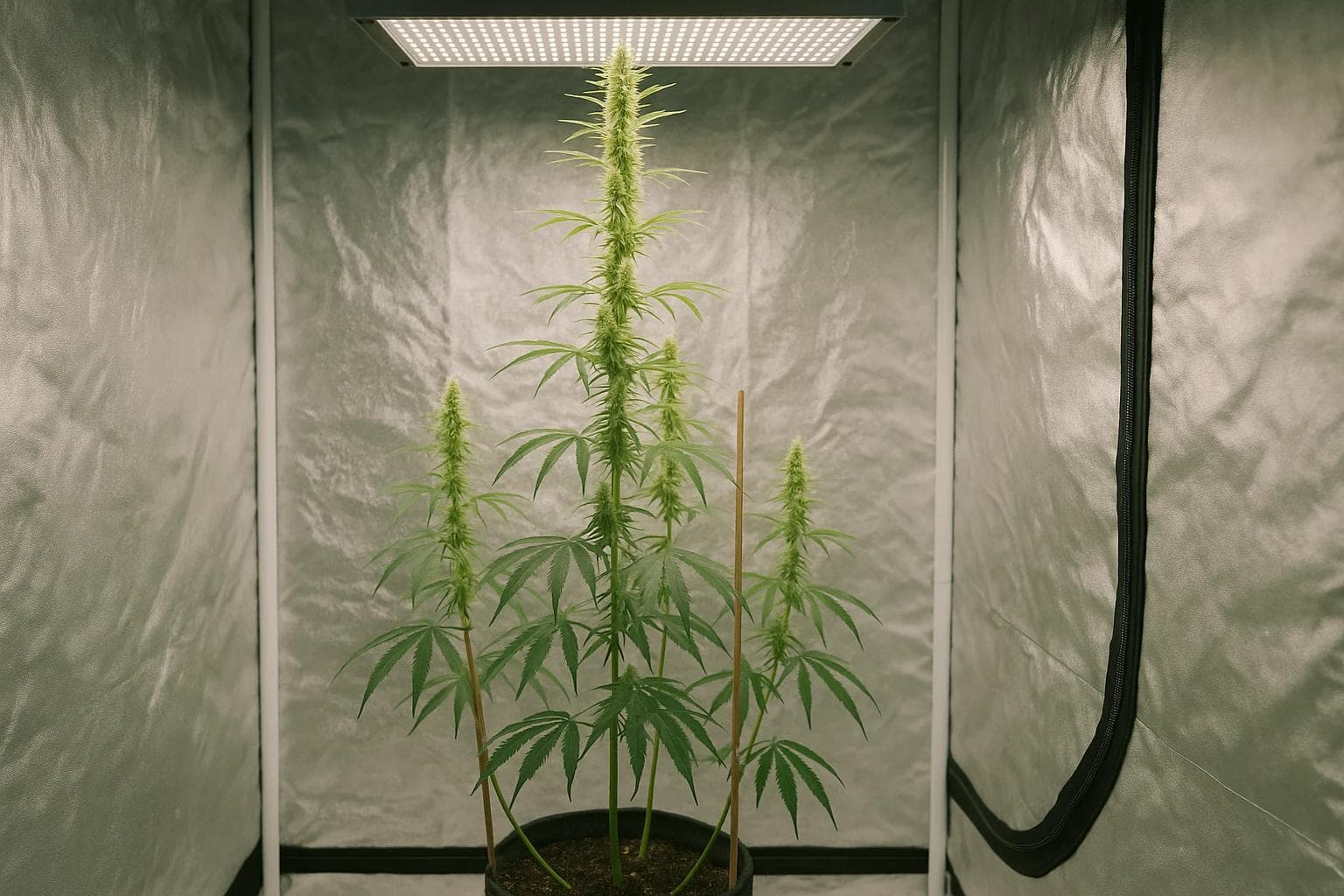
Sativa cannabis seeds produce tall, slender plants with narrow leaves, long flowering cycles (10–14 weeks), and cerebral, energizing effects driven by terpenes like limonene, pinene, and terpinolene. They originate from equatorial regions — Thailand, Colombia, southern Africa, Mexico — and were bred for sunlight-rich, year-round climates, which makes them more demanding for Canadian indoor growers than indica or hybrid options. Expect untrained heights of 2–3 metres, longer veg-to-harvest timelines, and the need for height management (LST, topping, SCROG) to keep them inside a standard tent.
Sativa cannabis seeds produce tall, slender plants with narrow leaves, long flowering cycles (10–14 weeks), and cerebral, energizing effects driven by terpenes like limonene, pinene, and terpinolene. They originate from equatorial regions — Thailand, Colombia, southern Africa, Mexico — and were bred for sunlight-rich, year-round climates, which makes them more demanding for Canadian indoor growers than indica or hybrid options. Expect untrained heights of 2–3 metres, longer veg-to-harvest timelines, and the need for height management (LST, topping, SCROG) to keep them inside a standard tent.
Sativa gets romanticized as the "daytime weed" — the uplifting, social, creative cannabis that gets you moving instead of glued to the couch. Most of that is true. What rarely gets said: pure sativas are genuinely harder to grow than indicas or modern hybrids, especially in a Canadian indoor setup where ceiling height, light penetration, and electricity costs all push back against a plant that wants to behave like a tropical small tree.
This guide is for growers who want the real picture. We'll cover what makes a seed actually sativa (genetically), where these plants came from, how they differ from indica in measurable ways, why they feel the way they do, the practical challenges of growing them in a 4-plant Canadian household, and which strains are worth the patience. By the end you'll know whether sativa is your match — or whether a sativa-dominant hybrid does the job with half the headache.
What is a sativa cannabis seed genetically?
A sativa cannabis seed carries the genetic profile of Cannabis sativa — the tall, narrow-leaved subspecies adapted to equatorial latitudes between roughly 0° and 30°. Genetically, sativas evolved under near-constant 12-hour day length year-round, which is why they tolerate longer light cycles and flower more slowly than indica or ruderalis.
Three taxonomic camps exist among cannabis researchers. The traditional view (Schultes, Anderson) treats sativa, indica, and ruderalis as separate species. The modern molecular view (McPartland, Small) treats them as subspecies or chemovars of one species, Cannabis sativa L. The breeder's view — the one that actually matters at the seed-buying level — splits them by morphology, flowering time, and effect: sativa = tall + airy + cerebral, indica = short + dense + sedating, ruderalis = small + autoflowering + low potency.
At the chromosome level, all three interbreed freely and produce fertile offspring, so the lines blur. A modern "sativa-leaning" seed is almost never 100% sativa. Most commercial sativa-dominant strains sit at 70/30 or 80/20 sativa/indica — pure landrace sativa genetics like Thai or Colombian Gold are increasingly rare and require specialty breeders.
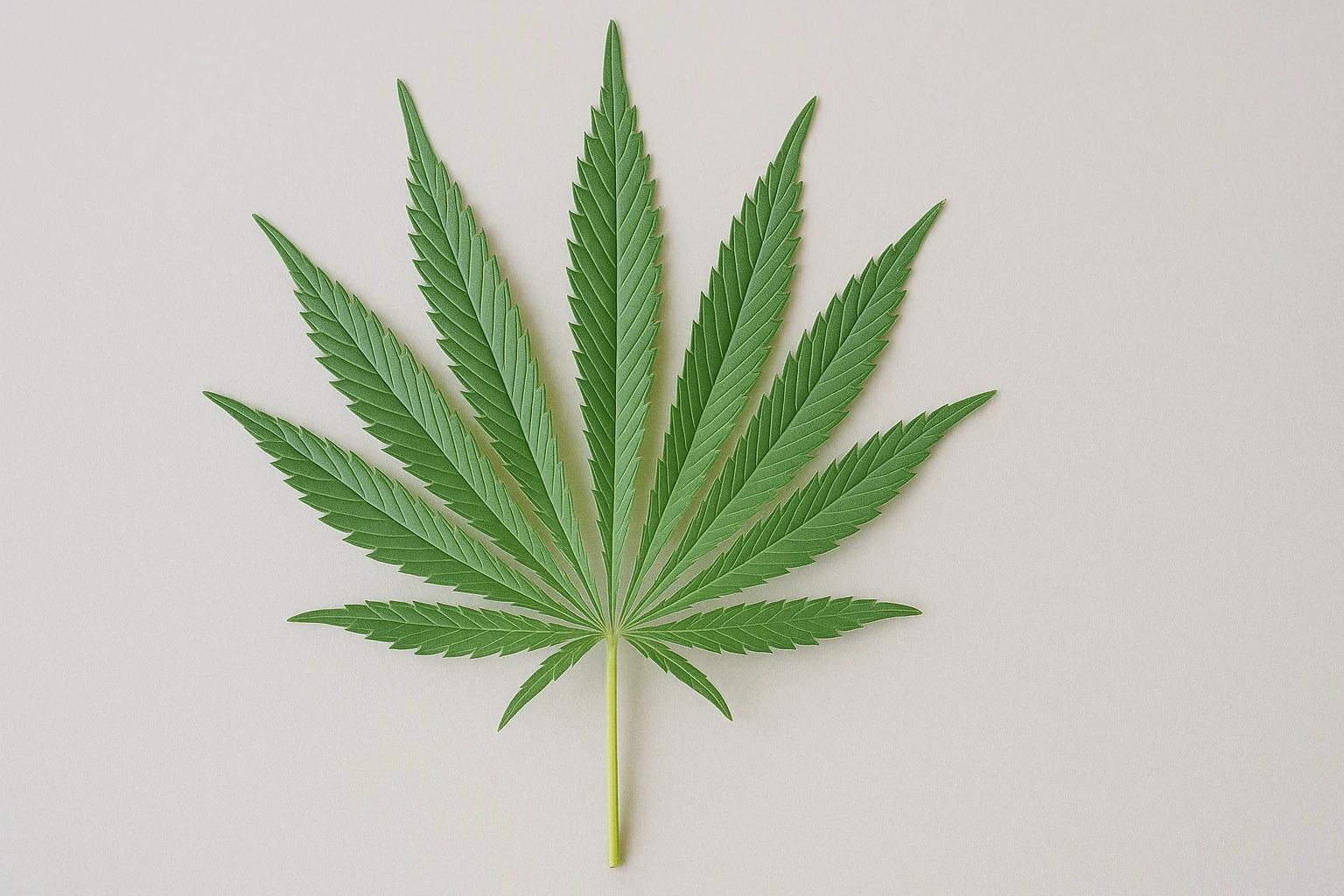
What a sativa seed actually inherits: narrow-leaflet morphology (9–13 fingers per fan leaf), elongated internodal spacing, late-flowering trigger response, dominant production of limonene/pinene/terpinolene terpenes, and a cannabinoid expression skewed toward THC with secondary CBG and trace CBD. These traits are stable across breeding generations when seeds come from properly stabilized lines — which is why buying from verified-genetics seed banks matters more for sativa than for forgiving indica hybrids.
Where does Cannabis sativa come from?
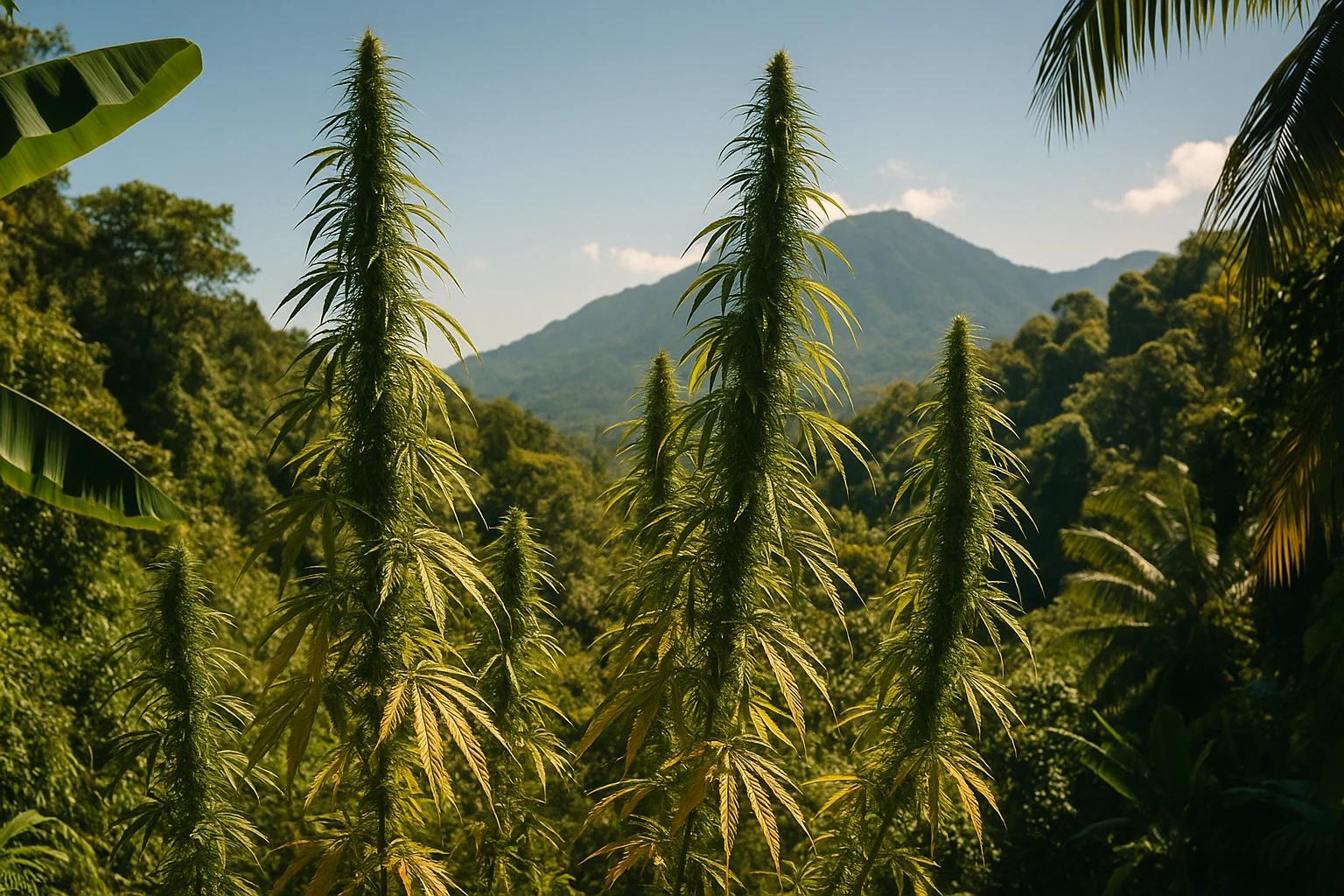
Cannabis sativa originated in equatorial and tropical regions where photoperiod stays near 12/12 year-round, allowing the plant to vegetate and flower simultaneously for months at a time. The classic landrace zones — Thailand, Colombia, southern Mexico, southern Africa (Malawi, Swaziland, Durban), and parts of Vietnam, Cambodia, and Laos — share equatorial sun, monsoon-driven moisture, and warm year-round temperatures. These conditions selected for plants that grow tall to compete for light, branch openly to dissipate heat, and flower slowly to maximize bud development across a long wet season.
The landrace sativas that defined the modern cannabis lineage came out of three primary corridors:
- Southeast Asian (Thai stick, Cambodian, Vietnamese): extreme sativa morphology, 14–18 week flowering, soaring cerebral effects with terpinolene dominance. The classic "Thai" gene runs through Haze, which seeded most modern sativa hybrids.
- South and Central American (Colombian Gold, Acapulco Gold, Panama Red, Oaxacan): slightly shorter, 11–14 week flowering, limonene-forward citrus terpenes, energetic but more grounded than Asian sativas. Acapulco Gold and Panama Red genetics are foundational to most American breeding programs.
- Sub-Saharan African (Durban Poison, Malawi Gold, Swazi Gold): more compact than their Asian and American cousins, slightly faster flowering (10–13 weeks), licorice and anise terpene notes, very clear-headed effect. Durban Poison's relatively manageable size made it a building block for hybrid breeders looking to capture sativa effects in a more tractable plant.
How does a sativa plant differ from indica in real terms?
The differences between sativa and indica show up in seven measurable ways: height, leaf shape, internodal spacing, flowering time, terpene profile, effect, and cultivation footprint. Pure indicas grow to 1–1.5 metres untrained, flower in 7–9 weeks, and produce dense, resinous buds with myrcene-dominant terpenes that drive body-heavy sedation. Pure sativas reach 2–3+ metres untrained, flower in 10–14 weeks, and produce airier, foxtail-shaped flower clusters with limonene/pinene/terpinolene terpenes that drive cerebral, uplifting effects.
Here's how the differences play out in real numbers:
If you're new to comparing seed types, our guide on feminized vs autoflower vs fast version cannabis seeds covers another dimension of the seed-choice question — separate from sativa/indica, but worth pairing.
Feminized Seeds
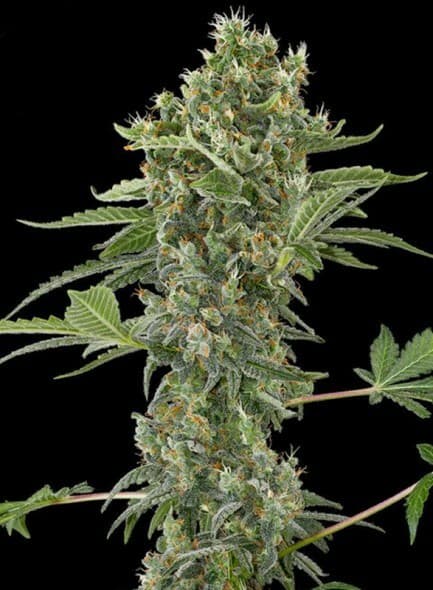
Moby Dick Auto Feminized
What does sativa actually feel like — and why?
Sativa effects are classically described as cerebral, energizing, uplifting, creative, and socially engaging — and the reason isn't just THC. The terpene profile drives most of the experiential difference between sativa and indica. Limonene (citrus, found in lemon peel) produces mood elevation and stress relief. Pinene (pine, also found in rosemary) sharpens focus and short-term memory. Terpinolene (floral, fresh) contributes to the heady, almost giggly quality of strong sativas. None of these are sedating. Many are mildly stimulating.
The entourage effect — the synergy between cannabinoids and terpenes — explains why two strains with identical THC percentages can feel completely different. A 22% THC indica with myrcene dominance will put you on the couch. A 22% THC sativa with limonene and pinene dominance will get you painting your kitchen. Same THC, totally different terpene chemistry, totally different lived experience. Our cannabis terpenes guide walks through each major terpene in depth.
What sativa is good for, based on user reports and the limited clinical data available:
- Daytime use without sedation. The classic case — a morning or afternoon session that doesn't end in a nap.
- Creative work and ideation. Many writers, musicians, and visual artists prefer sativa for divergent-thinking tasks. The clarity component matters here.
- Social settings. Limonene's mood-elevating effect makes sativas easier in groups; indicas tend to make people quiet and inward.
- Mild depression and low motivation. Anecdotal but consistent — clear-headed sativas can lift a flat mood without the sedation drag of an indica.
- Physical activity. Some users find sativa pairs well with hiking, light exercise, or yard work; the pinene focus component helps.
The legal context: in Canada, both SQDC in Quebec and provincial cannabis retailers nationwide now label products by chemovar (terpene profile + cannabinoid percentage) rather than just "sativa/indica" — partly because the indica/sativa label has become commercially unreliable. The science increasingly supports labeling by dominant terpene plus THC/CBD percentages, which is more predictive of how a strain will actually feel.
Why are sativas trickier for indoor Canadian growers?
Sativas are harder indoors because they were never designed for it. A pure sativa wants 2–3 metres of vertical space, 12–14 weeks of flowering, lots of horizontal branching, and stable warm temperatures — none of which is the default in a Canadian basement, closet, or 1.2m × 1.2m grow tent. Every constraint you have indoors works against the plant's genetic preferences.
The specific challenges:
- Vertical space. A standard 1.5m tent leaves you about 80cm of head room after pot height and light clearance. A sativa stretching 250% post-flip will hit the lights by week 3 of flower. You either commit to aggressive height management from day one or buy a 2.4m tall tent.
- Long flowering = more electricity. Twelve to fourteen weeks of 12/12 light at 400–600 watts adds up. At Ontario or Quebec rates, you're looking at $80–120 in electricity just for flower per plant — roughly double an indica's footprint.
- Light penetration. Sativas branch openly, which means lower bud sites get shaded out quickly. Without defoliation or SCROG netting, you end up with one big top cola and a lot of larfy popcorn underneath.
- Mold risk in late flower. Long flowering cycles in Canadian basements (cool, often humid) mean you're managing humidity for an extra month versus an indica. Botrytis (bud rot) loves dense sativa colas in week 11.
- Yield-to-time ratio. A 10-week indica might produce 500g/m². A 14-week sativa might produce 400g/m². You're investing 40% more time for 20% less weight, and that math hurts when you're under Canada's 4-plant household limit.
The other fix is hybrid selection. A 70/30 sativa-dominant hybrid like Super Lemon Haze or Jack Herer captures most of the sativa experience while finishing 1–2 weeks faster and growing 30–40% shorter than a landrace. For most Canadian indoor growers, hybrid sativa is the right call.
How tall will a sativa get — and how do you control it?
Pure sativas reach 2–3 metres untrained indoors, and 3–4+ metres outdoors in long seasons. Even modern sativa-dominant hybrids will hit 1.5–2.0 metres indoors without training. The defining feature of sativa growth is the post-flip stretch — the explosive vertical growth that happens in the first three weeks after switching to 12/12 light. While an indica might double in height, a sativa often triples or quadruples.
Height control is non-negotiable for indoor sativa growing. The five techniques that actually work:
- Topping. Cut the main stem above the 4th or 5th node during veg. The plant responds by sending out two new dominant tops, then four, then eight if you keep topping. This breaks apical dominance and reduces the height advantage of the central cola.
- LST (Low-Stress Training). Tie down the main stem and major branches horizontally so the plant grows wide instead of tall. Best done during veg when stems are flexible. Continue tying through early flower.
- SCROG (Screen of Green). Install a horizontal net 30–40cm above the soil. Weave branches through the net as they grow, keeping the canopy flat and even. This is the single most effective technique for sativas — it turns a vertical monster into a flat productive canopy.
- Supercropping. Pinch and bend major branches at a 90° angle in mid-veg to break their internal fibers without breaking the skin. Plant responds by thickening at the bend and slowing vertical growth in that branch.
- Veg time limitation. Most sativa growers flip to flower at 30–45cm tall (instead of the indica norm of 60cm) to account for the stretch. A sativa flipped at 30cm will finish around 90–120cm — fits a 1.5m tent.
For the full light schedule logic across veg and flower stages, see our cannabis light schedule guide.
Feminized Seeds
Northern Light x Blueberry Auto Feminized
What's the flowering time of a typical sativa, and why?
A typical pure sativa flowers for 10–14 weeks, with landrace Haze strains pushing 14–18 weeks. Modern sativa-dominant hybrids have been bred down to 9–11 weeks. By comparison, indicas finish in 7–9 weeks and most autoflowers are done seed-to-harvest in 9–11 weeks total. The long sativa flowering window is a direct inheritance from equatorial origins — these plants evolved to flower across an extended wet season, not under a forced 12/12 light schedule.
Why the long flower window?
- Equatorial evolution. Wild sativas in tropical climates kept flowering for months as monsoon weather and stable 12/12 photoperiod persisted. They didn't evolve a "stop flowering" trigger the way temperate-zone plants did.
- Calyx development is slower. Sativa flower clusters are airier and more elongated than indica buds — they take longer to fill out and ripen. The "foxtail" shape that defines sativa colas (long, tapering, narrow) develops over many weeks.
- Trichome maturation lags. Pure sativas often hit visual ripeness at week 11–12 but don't reach optimal trichome maturity (70–80% milky) until week 13–14. Harvesting at week 10 leaves a meaningful percentage of THCA still unconverted.
- Cannabinoid synthesis curve. In sativas, total cannabinoid production peaks later than indica and continues climbing well past week 10. Harvesting early sacrifices potency.
Environmental fine-tuning matters more in long flowering windows. VPD swings, humidity creep, and light leaks compound over 14 weeks in ways they don't over 8. Our cannabis VPD, temperature and humidity guide covers the environmental targets stage by stage — particularly relevant for the long late-flower window where bud rot risk peaks.
Can you grow a long-cycle sativa outdoors in Canada?
Yes, but only in southernmost Canada with very early starts and very late finishes — and even then, only sativa-dominant hybrids, not pure landraces. Canadian latitudes run from about 42°N (Windsor, Ontario) to 60°N (Yellowknife). Pure sativas were bred for 0–30°N. The mismatch is real. A 14-week flowering Thai sativa started outdoors in May 15 will finish around October 1 — exactly when southern Ontario and southern Quebec get their first hard frosts. Most years, you lose the plant.
The realistic Canadian outdoor sativa playbook:
- Southern Ontario, southern Quebec, southern BC (Okanagan, Fraser Valley). You can finish a 9–11 week sativa-dominant hybrid outdoors with greenhouse protection in October. Skip pure landraces. Stick to Super Lemon Haze, Jack Herer, Sour Diesel, Durban Poison, or anything explicitly bred for shorter flowering.
- Maritimes, southern Manitoba, southern Alberta. Borderline. You need a 9-week sativa hybrid maximum, with a clear plan to move plants indoors or into a heated greenhouse by mid-September. Mold risk in the Maritimes especially is brutal in late flower.
- Anywhere north of Calgary/Saskatoon/Winnipeg/Quebec City. Pure outdoor sativa is unrealistic. Even hybrid sativas finishing in mid-October risk frost loss. The window is too short.
- Light deprivation greenhouses. Cover plants with blackout tarps to force 12/12 starting in late June, finishing flower by late September before frost. Effective for serious outdoor growers; impractical for the 4-plant Canadian household limit.
- Move-indoors finishing. Start outdoors in May, move plants into a garage or basement under supplemental lighting in mid-September. Takes work but salvages the harvest.
Many Canadian growers run sativas indoors during winter (when basements stay cool and humid air is dry) and indicas outdoors during summer. That seasonal split plays to the strengths of each subspecies and Canadian latitude.
Top sativa strains worth attempting
The sativa strains that actually work for Canadian home growers split into three tiers: manageable hybrids for beginners, classic sativa-dominant strains for intermediate growers, and demanding pure-leaning sativas for experienced cultivators. Skip pure landraces unless you have unlimited height and patience.
Tier 1 — Manageable hybrids (sativa-leaning, 9–10 week flower)
- Super Lemon Haze. 80/20 sativa hybrid. Limonene-dominant citrus, energetic, 9–10 weeks flower, stays under 2m indoors with light training. Probably the best entry-point sativa for Canadian indoor growers. Foundational Haze genetics in a manageable package.
- Jack Herer. 60/40 sativa hybrid. Pine and spice terpenes, clear-headed creative effect, 9–10 weeks, very stable phenotype. Great daytime strain, excellent for SCROG.
- Durban Poison. Roughly pure sativa but unusually compact and fast-flowering for a landrace (8–9 weeks). Anise and licorice terpenes, very clear cerebral effect. The exception that proves the "pure sativas are hard" rule.
- Sour Diesel. 70/30 sativa, fuel and citrus terpenes, daytime energy effect, 10–11 weeks. Stretchy but rewards SCROG. THC consistently 18–22%.
- Green Crack (Cush). 65/35 sativa, mango and citrus, sharp focus effect, 9–10 weeks. Renamed in many Canadian retail spaces but the genetics are widely available.
- Strawberry Cough. 80/20 sativa, strawberry-pine terpenes, mild euphoria, 9–10 weeks. Excellent social strain. Approachable yield.
- Original Haze. Landrace-influenced sativa, 14+ weeks flower, soaring cerebral effect, will hit 2.5–3m indoors. Worth growing once if you have the tent height and patience.
- Acapulco Gold. Landrace Mexican sativa, 12–14 weeks, gold-tinted buds, classic 1970s sativa head high. Hard to find stable seed lines.
- Thai (Chocolate Thai, Thai Stick). True landrace from Thailand. 14–18 weeks flower, narrow popcorn buds, the original sativa experience. Mostly available through specialty preservationist breeders. Yield is modest.
Feminized Seeds
Gorilla Glue #4 (fast) Feminized
The bottom line — when sativa is the right pick
Sativa is the right pick when you want cerebral, energizing, daytime effects and you're willing to put in extra cultivation work for them. It's the wrong pick when you want sleep, deep relaxation, or maximum yield-per-week-of-effort.
Pick sativa if: you grow indoors with 2m+ ceiling height, you have experience training plants (LST, SCROG, topping), you value cerebral effect over couch-lock, you want diversity in your stash, or you're treating low mood/fatigue rather than pain/insomnia.
Skip pure sativa and choose a sativa-dominant hybrid if: you grow in a standard 1.5m tent, you want a 9–10 week flower window, you're newer to growing, or you don't have the patience for a 14-week flower. Super Lemon Haze, Jack Herer, and Durban Poison cover most of the sativa experience in a more tractable package.
Skip sativa entirely if: you want pain relief and sleep, you're growing for maximum yield in minimum time, or you live north of the major Canadian metro areas and want to grow outdoors. Indica-dominant strains and autoflowers will serve you better in those contexts.
The sativa experience is genuinely different — clearer, more social, more functional. Even in a small Canadian indoor grow, one well-managed sativa-dominant plant per cycle is worth the planning. Just go in with realistic height expectations, a SCROG net ready, and 12 weeks of flowering patience.
Browse our current sativa seed library for verified-genetics options stocked for Canadian growers, and pair your selection with the right tent height and training plan before you germinate.
FAQ
Are sativa seeds harder to germinate than indica seeds?
No. Germination is essentially identical across sativa, indica, hybrid, and autoflower seeds. The genetic differences emerge during veg and flower, not in the first 72 hours. Use the same paper towel or direct-soil method, maintain 22–25°C, and you'll get the same 90%+ germination rates regardless of subspecies.
Will a sativa grown indoors taste the same as one grown outdoors in its native climate?
Close, but not identical. Terpene expression is partly environmental — full-spectrum natural sunlight, soil microbiology, and stable warm temperatures contribute to peak terpene production. Indoor sativas under quality LEDs at proper VPD can match 85–90% of native-climate terpene complexity, but the rare top 10–15% (the floral, ethereal notes specific to landrace mountain air) is hard to replicate indoors.
Can I grow a pure sativa under a 4-plant household limit in Canada?
Yes, but plan your space. One 1.2m × 1.2m × 2.4m tent will comfortably hold one large pure sativa SCROGged across the entire footprint, or 2–3 trained sativa-dominant hybrids. Use the full 4-plant limit only if you have enough tent space for the canopy spread.
Why does my sativa keep "foxtailing" near the end of flower?
Foxtailing — where new calyx towers grow out of existing buds late in flower — is mostly genetic in sativas and is normal. It's an inheritance from equatorial origins where flowering would have continued beyond what we consider "harvest." Light too close to the canopy or temperature stress over 28°C can exaggerate it. Keep lights at proper distance, hold flowering temp at 22–25°C, and let the plant finish.
Should I supplement CO2 for sativa growing?
Only in a sealed room with strong ventilation control. CO2 supplementation (800–1200 ppm) can boost sativa yield by 15–25% during peak flower, but it also requires elevated PPFD (over 900 µmol) to be useful and higher temperatures (28–30°C) to maximize gain. Not worth it for one-plant or small-tent Canadian setups.
Are autoflower sativas a good shortcut?
For the effect, yes. Auto sativas like Moby Dick Auto, Amnesia Haze Auto, and Sour Diesel Auto deliver most of the sativa terpene profile and cerebral effect in a 10-week seed-to-harvest cycle, at 80–120cm height. You lose some yield potential and some of the classic Haze nuance, but you gain massive simplicity — no light schedule changes, no height management drama, and a fast turnaround. ---
19+ | Educational horticulture only.