Master Your Indoor Grow
Indoor Growing Guides
Cannabis Growing Problems: Diagnose and Fix 7 Common Issues
Diagnose and fix the most common cannabis growing problems — yellowing leaves, drooping, nutrient burn, powdery mildew, root rot and more.
Stable environmental management—controlling temperature, humidity, airflow, pH, and watering frequency—prevents most cannabis growing problems before they start. Drooping plants typically signal a watering issue, with overwatering being more common than underwatering. This guide addresses seven prevalent cannabis growing problems including yellowing leaves, nutrient burn, powdery mildew, and root rot. Daily plant monitoring combined with consistent environmental discipline beats reactive treatment, which always costs time and yield. Treat this as a reference tool when symptoms appear, but prioritize building proper growing conditions as your main defense.
Overview
Even the most experienced cannabis growers encounter problems at some point in a grow. The difference between a ruined crop and a full recovery almost always comes down to one thing: speed of diagnosis. The faster you identify what's wrong, the faster you can correct it before stress compounds and yield suffers. This guide walks you through the most common issues Canadian home growers face — from yellowing leaves to root rot — with clear, practical fixes you can apply immediately.
Summary
The most important lesson from every problem on this list is the same: a stable, well-managed environment prevents most issues before they start. Controlling temperature, humidity, airflow, pH, and watering frequency eliminates the conditions that pathogens, deficiencies, and stress responses need to take hold. Reactive treatment works, but it always costs time and yield. Build good habits, monitor your plants daily, and use this guide as a fast-reference tool when something looks off — not as a substitute for consistent environmental discipline.
Drooping
Drooping is almost always a watering issue, but overwatering and underwatering look surprisingly similar at first glance. Knowing the difference prevents you from making the problem worse.
Overwatering is the more common mistake. Leaves droop with a distinctive clawing downward curl, and the medium feels heavy and saturated. Roots are suffocating from lack of oxygen. Fix: let the pot dry out fully before watering again. Going forward, water only when the pot feels noticeably light and the top 2–3 cm of soil is dry.
Underwatering produces a soft, limp wilt — leaves look thin and lifeless rather than firm and curled. The pot will feel very light. Fix: water thoroughly until you get 10–20% runoff, then establish a consistent watering schedule.
A simple lift test — picking up the pot to gauge weight — is the fastest and most reliable diagnostic tool you can use at every watering.
Nutrient Burn
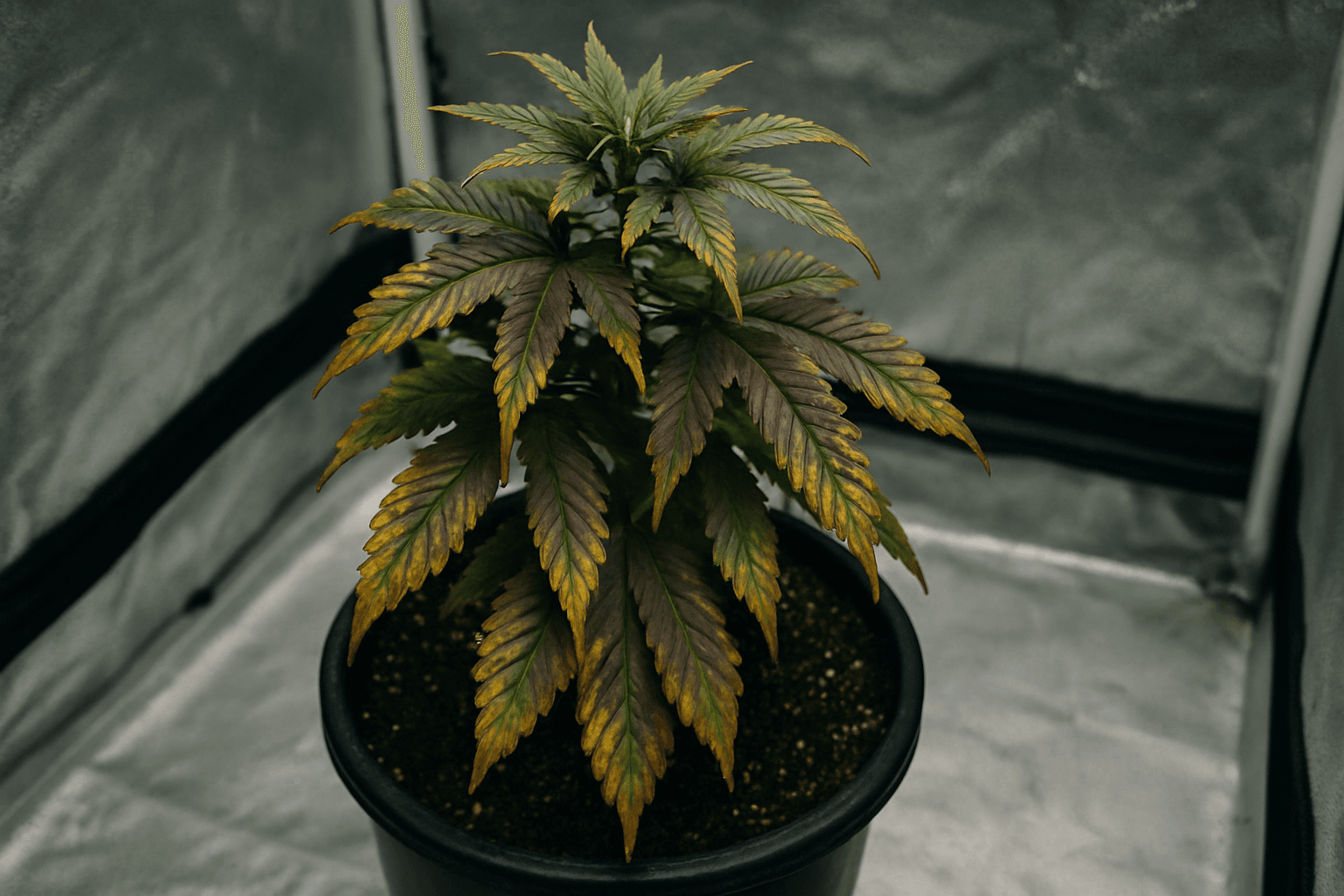
Nutrient burn is the result of feeding your plants more than they can absorb — most often excess nitrogen. The first sign is leaf tips turning yellow, then browning and crisping upward in a distinctive claw-like curl. Unlike deficiency, the rest of the leaf stays green. Burn typically appears on newer growth first and progresses inward if uncorrected.
The fix has two steps. First, flush your medium thoroughly with plain, pH-balanced water — use approximately 3x the pot volume in water to push excess salts out through the drainage holes. Second, reset your feeding schedule at a lower concentration, around 50–75% of the previously used dose, and build back up slowly while monitoring new leaf growth.
Nutrient burn is far more common than deficiency among new growers. When in doubt, less is more — cannabis responds better to a mild underfeeding than an overdose. Always follow manufacturer guidelines as a ceiling, not a target.
Powdery Mildew
Powdery mildew (PM) is one of the most recognisable cannabis pathogens: it appears as white or grey powdery circular spots on the upper surface of leaves, eventually spreading across the whole plant if left unchecked. It thrives in conditions of high humidity (above 55% RH), poor airflow, and moderate temperatures — conditions that are especially common in Canadian grows during humid summers or in poorly ventilated tents.
For immediate treatment, a baking soda spray (1 tsp baking soda + 1 tsp dish soap per litre of water) raises surface pH, making the leaf hostile to the fungus. More effective still is a potassium bicarbonate solution (follow product label rates), which is widely considered the gold standard for organic PM control and works both as a treatment and preventative.
Prevention is always preferable: maintain RH below 50% during flower, ensure strong oscillating airflow throughout the canopy, avoid overcrowding plants, and remove any infected fan leaves immediately. In Canada's colder months, dehumidifiers are a worthwhile investment for indoor grows.
Root Rot
Root rot is a serious condition most commonly encountered in hydroponic systems, though it can occur in any medium with persistently wet conditions. Healthy roots are white and firm; root rot turns them brown, grey, or black, with a slimy texture and a foul, swampy odour. It's primarily caused by the water mould Pythium, which proliferates rapidly in warm, oxygen-depleted reservoirs.
For immediate intervention in hydro systems, perform a hydrogen peroxide (H₂O₂) flush — use a 3% food-grade solution at 3 ml per litre of reservoir water. This kills anaerobic pathogens on contact. Drain and refill after 24 hours with fresh, properly pH'd nutrient solution.
Long-term prevention is critical: keep reservoir temperatures between 18–22°C (warmer water holds less oxygen and accelerates Pythium growth), use an air stone for consistent oxygenation, and introduce beneficial bacteria such as Hydroguard (Bacillus amyloliquefaciens) at every reservoir change. Beneficial microbes outcompete harmful pathogens and dramatically reduce recurrence.
Stretching
Excessive stretching — long, weak internodal spacing — is almost always caused by insufficient light intensity or a light source positioned too far from the canopy. When plants don't receive enough photons, they instinctively reach upward in search of more, producing tall, fragile stems that struggle to support heavy buds later.
Fix it at the source: lower your light to the manufacturer's recommended hanging height and verify intensity with a PAR meter if possible. For LED fixtures, most strains perform well with 600–900 µmol/m² PPFD during veg.
If your plant has already stretched significantly, don't panic. Use LST (Low Stress Training) — gently bend and tie down the tallest branches to create a more even canopy. This redirects growth hormones laterally, encouraging bushier growth and improving light penetration across all bud sites. Stretching in early flower (the first 1–2 weeks) is normal; extreme stretch beyond that signals a lighting problem.
Yellowing Leaves
Yellowing leaves are the most common alarm signal in cannabis cultivation, but the cause matters enormously before you act.
Nitrogen (N) Deficiency starts at the bottom of the plant, with older fan leaves turning pale yellow-green, then fully yellow, before dropping. Growth slows noticeably. Fix by increasing your nitrogen-rich nutrient solution gradually.
pH Lockout is trickier — it can mimic almost any deficiency because nutrients are present but unavailable to the roots. You'll often see yellowing, spotting, or discolouration across multiple leaf ages simultaneously, not just the bottom. Check your runoff pH: soil should sit between 6.0–7.0, hydroponics between 5.5–6.5. Flush with correctly pH'd water and resume feeding.
Natural Senescence happens late in flower — lower leaves yellow and drop as the plant redirects energy to buds. This is completely normal in the final 2–3 weeks and requires no intervention. Distinguish it by timing: if you're deep into flowering with no other symptoms, let it be.
FAQ
How do I tell the difference between overwatering and underwatering?
Overwatered plants show drooping leaves with a distinctive downward curl, and the soil feels heavy and stays wet for days between waterings. Underwatered plants droop but the soil is bone-dry and pulls away from pot edges. Always check soil moisture with your finger before watering—water when the top inch is dry but the root zone still has some moisture.
What's the fastest way to recover drooping plants from overwatering?
Stop watering immediately and let the pot dry out completely to restore oxygen to the root zone where it's needed. Increase air circulation with a fan to speed the drying process. Most plants recover within 24–48 hours once watering stops and airflow improves.
How often should I check my plants for problems?
Check your plants daily—even 5–10 minutes to scan for leaf color changes, wilting, or damage. Early diagnosis is the difference between a full recovery and yield loss; the faster you identify an issue, the faster you can fix it before stress compounds.
What environmental factors prevent most growing problems from starting?
Stable temperature, appropriate humidity, consistent airflow, proper pH, and disciplined watering eliminate the conditions pathogens and deficiencies need to take hold. Build strong habits around these five fundamentals and you'll prevent far more problems than you ever treat reactively.
19+ | Educational horticulture only.