Master Your Indoor Grow
Indoor Growing Guides
Feminized vs Autoflower vs Fast Version Cannabis Seeds: Which to Choose for Canada
Complete 3-way comparison of feminized, autoflower, and Fast Version cannabis seeds for Canadian growers. Decision matrix by zone, yield, indoor/outdoor, balcony — premium genetics with germination guarantee.
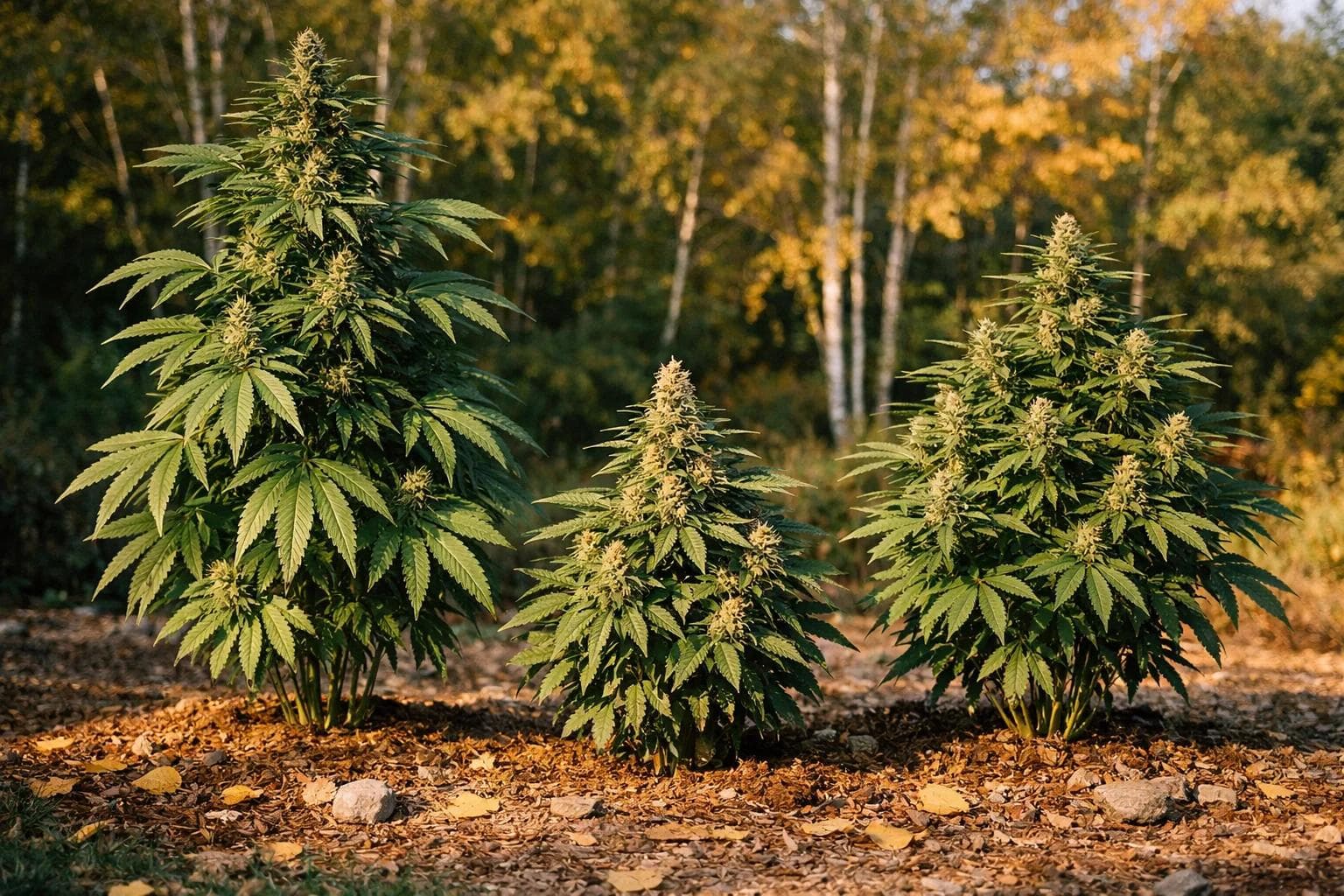
For Canadian growers, the choice comes down to season length and goals. Feminized seeds deliver maximum yield and quality but need a long autumn. Autoflowering seeds finish in 70–90 days regardless of light, perfect for short Prairie summers. Fast Version seeds split the difference — photoperiod genetics that finish 1–2 weeks earlier than standard feminized, ideal for Quebec and Ontario outdoor.
For Canadian growers, the choice comes down to season length and goals. Feminized seeds deliver maximum yield and quality but need a long autumn. Autoflowering seeds finish in 70–90 days regardless of light, perfect for short Prairie summers. Fast Version seeds split the difference — photoperiod genetics that finish 1–2 weeks earlier than standard feminized, ideal for Quebec and Ontario outdoor.
How do feminized, autoflower, and Fast Version seeds actually differ?
The three seed types differ in two core ways: how they trigger flowering and how fast they finish. Feminized seeds flower when daylight drops below ~14 hours. Autoflowers flower automatically by age. Fast Version seeds are feminized photoperiods crossed with autoflower genetics to shave 7–14 days off the standard finish.
That single sentence captures the genetic mechanism, but the practical implications run deeper. Feminized photoperiod seeds are descendants of Cannabis sativa and Cannabis indica — the two subspecies humans have selected for cannabinoid production for millennia. They follow the natural light cycle: long days = vegetative growth, short days = flowering. Indoors you control this with a 12/12 flip. Outdoors, Mother Nature handles it around the autumn equinox.
Autoflowering seeds introduce a third genetic player: Cannabis ruderalis . Ruderalis evolved in regions with brutally short summers and constant near-24-hour daylight, so it stopped relying on light cues entirely. It flowers based on age — usually 3–4 weeks from germination — full stop. Cross that trait into a modern hybrid and you get a plant that goes from seed to harvest in 60–90 days without ever changing the light schedule.
Fast Version seeds are the youngest category and the most misunderstood. They're not autoflowers. They're true feminized photoperiods crossed with an F1 autoflower parent, then back-crossed to recover the photoperiod trait while keeping a portion of the speed gene. The result: a plant that still needs a 12/12 flip to flower, still produces feminized-grade yields, but finishes flowering 7–14 days faster than the original photoperiod parent.
For a grower making the seed-buying decision, this matters because each type rewards a different setup. Get the match wrong and you'll fight your genetics for an entire season.
What are feminized cannabis seeds and when should you pick them?
Feminized seeds are bred to produce only female plants, eliminating the 50% culling rate of regular seeds and letting every plant you germinate become a productive harvest contributor. Pick them when you have full control over your light cycle, a long enough outdoor season, and you care more about maximum yield, terpene depth, and training potential than calendar speed.
The mechanics: a female plant is stressed — typically with colloidal silver sprayed on a chosen branch — into producing pollen that carries only XX chromosomes . Cross that pollen onto another female and every resulting seed is genetically female. Reputable breeders test feminization rates and stable lines hit 99%+ female expression.
The reason serious growers gravitate to feminized photoperiod seeds is control. You decide when to flip to 12/12. Want a 3-week veg for a sea-of-green setup with 16 plants under a 4×4? Easy. Want an 8-week veg with heavy LST to fill a 5×5 scrog screen? Also easy. The plant waits for you.
Outdoors, feminized photoperiods are the heavyweight champions of yield in Canada — if your season is long enough. In southern Ontario, southwestern Quebec, the Fraser Valley, and Vancouver Island, a plant going outside on May 24 can run a full vegetative cycle through July and August before flowering kicks in around mid-August. Harvest lands late September to mid-October. A single well-grown outdoor feminized plant in 100-gallon fabric pots can pull 500–1000g dry .
When to skip feminized photoperiods: short Prairie or Atlantic seasons (first frost in early September), no light-cycle control on a balcony with streetlights or porch lights bleeding into the dark cycle, or beginner growers who want to skip the flip-timing decision entirely. For those situations, see our deep-dive on feminized vs autoflower — it goes harder on the 2-way trade-off.
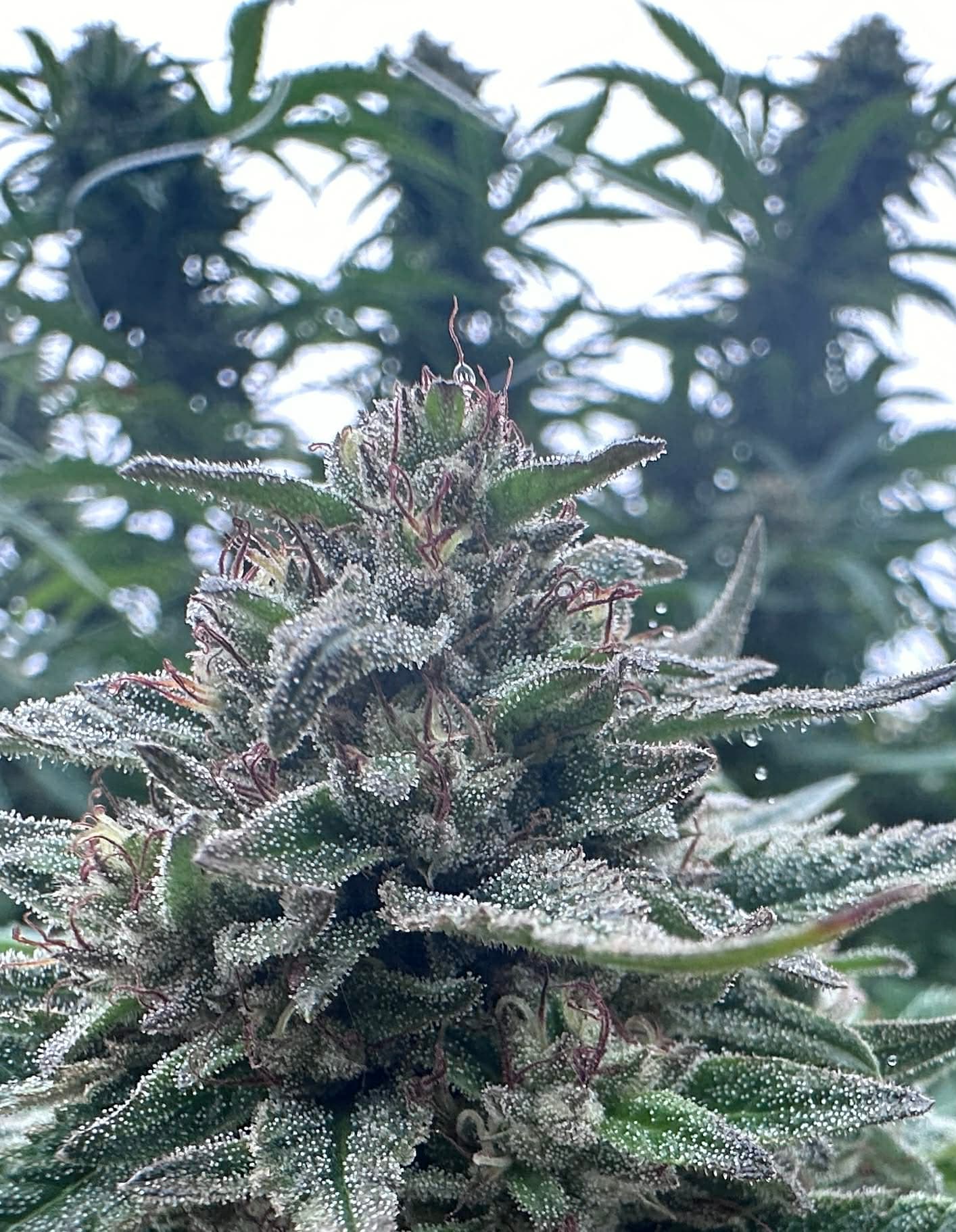
Feminized Seeds
Gorilla Glue #4 Feminized
How does an autoflowering cannabis seed differ in real terms?
Autoflowering seeds flower automatically 3–4 weeks after germination based on plant age, not light cues. You can run them on 18/6 or even 20/4 from seed to harvest, never flip. Total seed-to-harvest is typically 70–90 days, plants stay compact (40–100 cm), and yields are lower per plant — but you can fit 2–3 harvests into a single Canadian outdoor summer.
The trade-off is real. An autoflower won't let you veg longer to grow a bigger plant. Whatever size your plant is at week 4 is roughly what you'll harvest off — there's no recovery from a slow start. This makes feeding mistakes and transplant shock costly. Pros run autoflowers in their final pot from day one (no transplant), use light feeding for the first 3 weeks, and avoid any high-stress training like topping after week 3.
Where autoflowers shine: short Canadian seasons. Saskatchewan, Manitoba, Alberta foothills, northern Quebec, the Maritimes — anywhere your frost-free window is 90–110 days, autoflowers let you start indoors under a cheap T5 in late April, transition outdoors by mid-May once nights are above 10°C, and harvest by late July. Then you start another round and harvest in late September before the first frost. Two harvests off the same patio in one summer.
Indoors, autoflowers suit growers who don't want to deal with separate veg and flower tents or rooms. Run a 18/6 schedule the whole way through. Lower electricity. Simpler workflow. Yields per plant land around 50–150g dry from a well-run plant in a 3–5 gallon pot under a 200W LED — solid for personal supply, not so great for SoG production at scale.
If autoflowers are your direction, our autoflower growing guide covers the feeding curve and pot-size choice in detail, and you can browse our current autoflower lineup for in-stock genetics.

Feminized Seeds
Northern Light x Blueberry Auto Feminized
What makes Fast Version seeds the dark horse for Canadian growers?
Fast Version seeds are feminized photoperiod plants with autoflower genetics back-crossed in for speed, finishing 7–14 days earlier than their standard feminized parent while keeping full photoperiod control and full feminized yield potential. For Canadian growers facing 90–110 day frost-free seasons, that extra two weeks can be the difference between harvesting clean buds and watching October rain rot your colas.
Here's why Fast Version is underrated: most Canadian outdoor growers default to the autoflower-vs-feminized binary. Feminized = "too slow for my zone" or autoflower = "too small a yield." Fast Version splits the middle. You get a 7–8 week flower cycle instead of 9–10 weeks. You still need the autumn light drop to trigger flowering. You still run a normal veg through July. But the finish lands in mid-September instead of early October — squarely inside the safe window for Quebec, southern Ontario, and southern Prairies.
The yield story matters too. A Fast Version plant doesn't yield like an autoflower. It yields like a feminized photoperiod, because that's what it genetically is — a feminized photoperiod with a turbo button. Outdoors in 50–100 gallon fabric pots, expect 300–700g dry per plant depending on genetics, sun exposure, and training. That's 3–5× what you'd get from an autoflower in the same spot.
The catch: Fast Version genetics are less mature than the feminized or autoflower category. Fewer strains exist. Stability varies between breeders. A Fast Version Gorilla Glue from one breeder might finish in 7 weeks; from another, 8.5 weeks. Read seed listings carefully — premium breeders publish honest finish times for their Fast Version lines. Browse our current Fast Version lineup to see what we ship today.
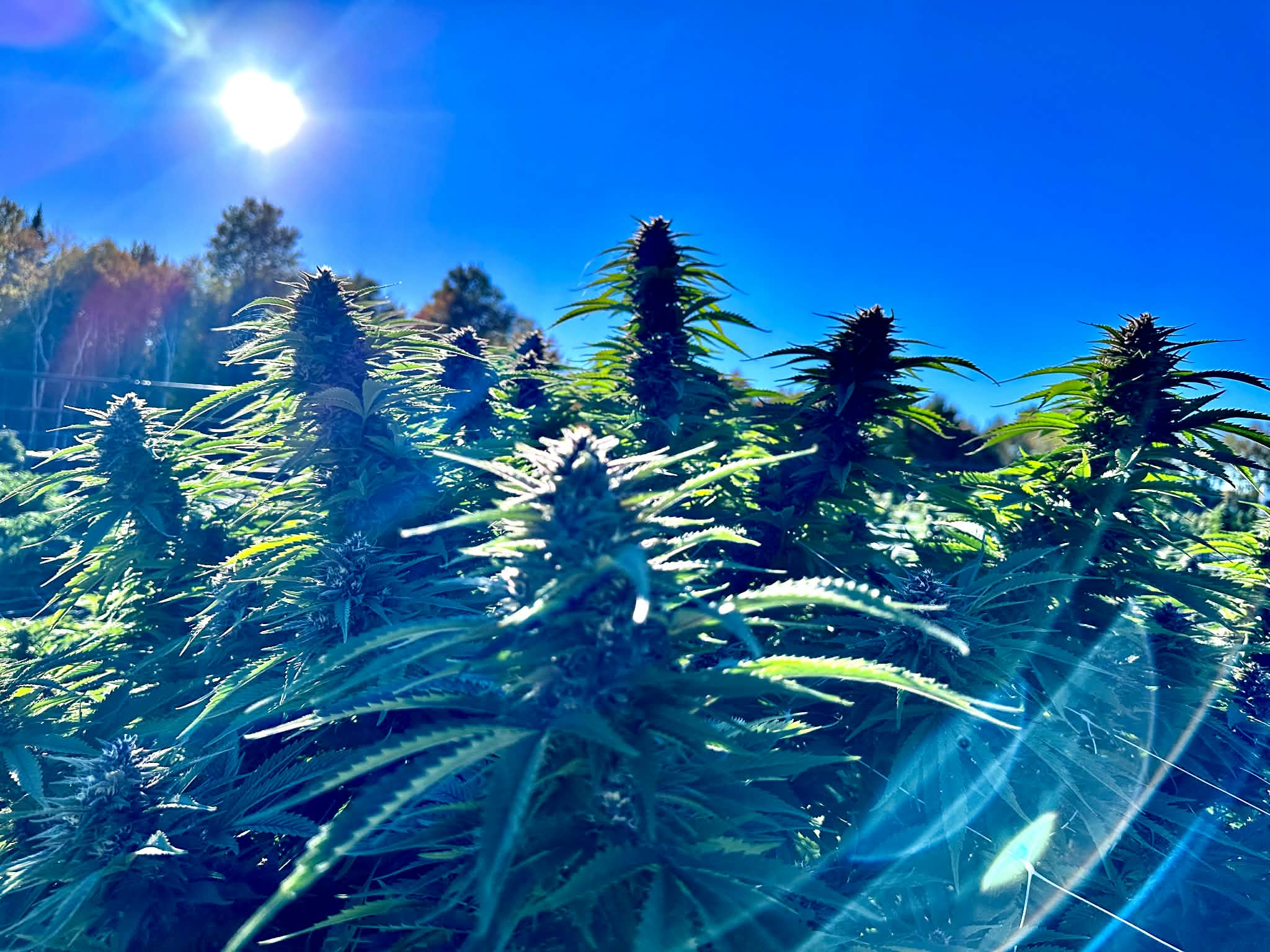
Feminized Seeds
Gorilla Glue #4 (fast) Feminized
A real-world use case: a grower in Sherbrooke, Quebec gets reliable frost around October 5–10. A standard feminized OG Kush flowering 9 weeks from an August 20 flip would harvest October 22 — already past first frost. The same strain in Fast Version finishes mid-September. Same genetics, same flavour, same yield ceiling — just timed for the actual Canadian climate.
Head-to-head: feminized vs autoflower vs Fast Version (comparison table)
Here is the direct side-by-side. Use this as your decision matrix — pick the column that matches your highest-priority constraint (season length, space, harvest count, yield target) and let that dictate the seed type.
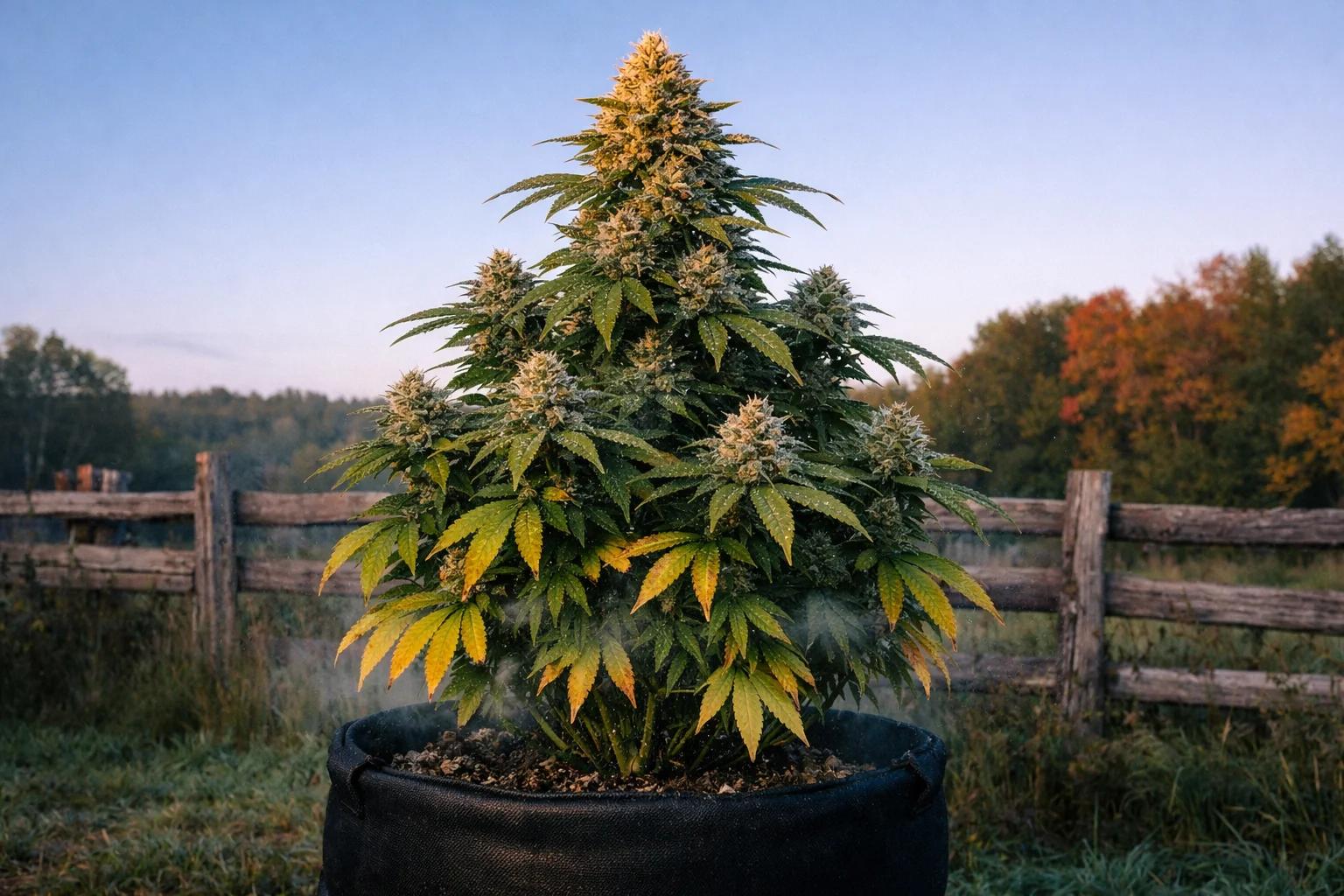
Which is best for outdoor growing in Canada's short season?
For outdoor growing across most of Canada, Fast Version is the optimal default — you get photoperiod yield and quality but finish 1–2 weeks before standard feminized, landing safely inside the September harvest window. Autoflowers come second (great for sub-90-day zones and double-harvests), feminized photoperiods third (only viable in southernmost Canadian zones).
Canada's growing reality: the frost-free window varies wildly. Vancouver Island and parts of the Fraser Valley get 200+ frost-free days. Toronto/Niagara region gets ~160 days. Montreal gets ~145 days. Winnipeg gets ~120 days. Edmonton gets ~115 days. Calgary gets ~110 days. Saskatoon gets ~110 days. Halifax gets ~140 days but with much higher humidity in September that drives bud rot risk.
Match seed type to your zone:
Zones 5b–8 (Vancouver, southern Ontario, southwest Quebec): any of the three works. Feminized for max yield, Fast Version for insurance, autoflower for double harvest.
Zones 4b–5a (Montreal, Ottawa, Quebec City, southern Manitoba): Fast Version is the smart default. Standard feminized 9–10 week flowering strains will run too close to first frost. Sativa-leaning genetics especially benefit from Fast Version because regular sativas can run 11+ weeks of flower.
Zones 3b–4a (Edmonton, Saskatoon, northern Ontario, Maritimes interior): autoflower territory. Even Fast Version photoperiods need a flowering trigger that arrives too late in these zones. Run autoflowers from mid-May to late August for a clean harvest, or start indoors and move out.
Zone 3a and below: indoor only, or strict autoflower in a hoop house with frost cloth. Don't fight it.
For deeper outdoor planning by month, see our Canadian outdoor cannabis calendar. And before deciding on container choice — which radically changes your season flexibility — read our pots vs ground guide.
Which performs best indoors with a 4×4 or 5×5 tent?
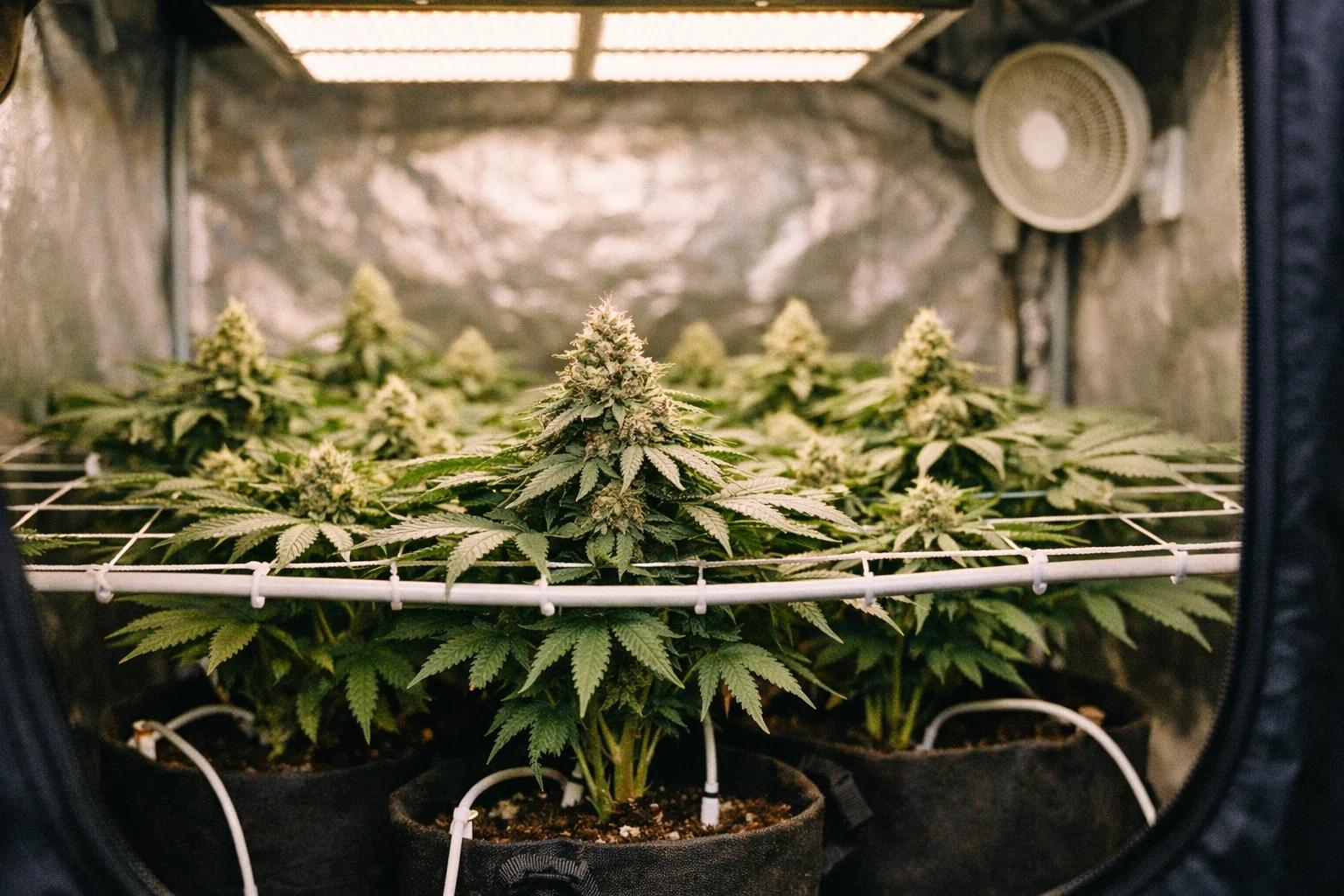
Indoors with a real tent and proper environmental control, feminized photoperiod wins decisively — full control over veg length, plant count, and training method translates directly to higher yield per watt and per square foot. Fast Version is a strong second when you want faster turnaround. Autoflowers are the weakest indoor choice unless you're running a perpetual harvest setup.
Why feminized dominates indoors: a 4×4 tent with a 480W LED quantum board produces roughly 800–1600g dry per harvest with feminized photoperiods, depending on grower skill and strain choice. The grower controls everything — veg time, plant count (1 big scrog plant vs 9 SoG plants vs 4 medium plants), training intensity, light intensity. None of this is possible with autoflowers, which simply won't wait for you to fill your scrog screen.
A 5×5 tent under a 720W LED with 4 well-trained feminized photoperiod plants in 7-gallon pots, vegged 5 weeks, scrogged from week 3, flipped at canopy fill, can produce 1000–2000g dry. That ceiling doesn't exist for autoflowers.
For Fast Version indoors, you get nearly the same yields as standard feminized minus a small genetic penalty for the speed cross. The advantage: 7–8 turnarounds per year in flower instead of 5–6. If your business model or personal supply runs on harvest frequency rather than per-harvest yield, Fast Version may net more annual flower.
Autoflowers indoors only make sense if you're running a perpetual: start a new plant every 2 weeks, harvest one every 2 weeks. This works in a single tent with mixed-age plants because they all run on the same 18/6 schedule. It's a niche workflow and most home growers don't need it.
Before you set up any indoor grow, dial in VPD, temperature, and humidity and get your runoff pH consistent. Indoor grows fail on environment far more often than they fail on genetics.
Balcony grower in Montreal or Vancouver — what should you choose?
For a Montreal balcony, autoflowers win on stealth and timing. For a Vancouver balcony, Fast Version is the better play thanks to the longer season. Both cities share the balcony grower's three big constraints: limited footprint, neighbour visibility, and the inability to fully control light at night from streetlights and apartment windows.
Montreal balconies face a real season constraint. Even on a sunny southwest-facing 7th-floor balcony, your frost-free window runs roughly May 25 to September 20 — about 118 days. Standard feminized photoperiods are too risky. Autoflowers let you start in late May with a small plant and harvest by late August, then run a second round through September. Two harvests of 50–100g each off a 2-plant balcony is realistic.
Vancouver balconies have an extra month and milder nights. Fast Version photoperiods in 15-gallon fabric pots can run from late April through mid-October. Yields per plant climb to 150–300g if you can get full sun and dial in feeding. The catch in Vancouver is the rain — September and October are wet, so you need to choose mold-resistant genetics and have a tarp or overhang ready for the worst weeks.
Both cities share a hidden issue: light pollution at night. Streetlights, signage, and indoor lights from across the courtyard can bleed onto your plants during their dark period and disrupt flowering. For photoperiod plants (feminized and Fast Version), even brief night-time light exposure can revert flowering plants back to veg or cause hermaphroditism. Autoflowers don't care — they ignore light cycles entirely. This is a significant point in autoflower's favour for any urban balcony with ambient light.
For balcony-specific layout, pot sizing, and stealth tactics, see our balcony cannabis Canada guide.
Common mistakes growers make when picking seed type
The biggest mistake is choosing seed type based on what sounds easiest rather than what fits the actual setup. Running a 4×4 tent under 600W and not sure where to start? You'll likely default to autoflowers because "set and forget" sounds beginner-friendly, then feel let down when yields land at 60g per plant. Intermediate growers go the opposite way — they pick feminized photoperiods for the big yields, then watch their October outdoor plants get rained on for three weeks straight.
Five specific mistakes to avoid:
1. Buying autoflowers for a long-season Niagara grow. If you live somewhere with 160+ frost-free days and good September weather, you're leaving 70% of yield on the table by running autos outdoors. Use that season — feminized photoperiods or Fast Version will reward you 3–5×.
2. Buying feminized photoperiods for a Saskatoon outdoor grow. Even a 9-week flowering strain flipped by the natural August 20 light drop finishes October 22 — already past first frost. You'll harvest mouldy half-ripe buds. Choose autoflowers or Fast Version for any sub-130-day season.
3. Topping autoflowers after week 3. Autoflowers can't recover lost time. A topping cut at week 4 sets the plant back permanently and you'll harvest a smaller plant than if you'd left it alone. Use only light LST on autoflowers, and only before week 3.
4. Running Fast Version on 24-hour light expecting them to autoflower. They won't. Fast Version is still photoperiod. You still need a 12/12 flip indoors. Skip the flip, and you'll veg a Fast Version plant indefinitely until the lights eventually trigger flowering — wasting weeks and electricity.
5. Mixing seed types in one tent without thinking through the schedule. A feminized plant on 12/12 next to an autoflower on 18/6 means one of them is in the wrong environment. Either separate them physically or pick one schedule and accept the trade-off. More on this in the FAQ below.
There's a sixth mistake worth mentioning: choosing seeds before choosing training method. If you plan to ScrOG, you need a photoperiod plant — feminized or Fast Version. If you plan to grow lazy and untouched, autoflower is forgiving. Read our training techniques guide on LST and ScrOG before you click "add to cart."
The bottom line — our recommendation by use case
There's no universal winner. There's only the right match for your specific situation. Here's the no-fluff recommendation matrix:
Best for a Quebec or central Ontario outdoor grow → Fast Version. The 1–2 week early finish is the single most valuable trait for a Canadian outdoor grower. Browse Fast Version genetics.
Best for Prairie or northern Atlantic outdoor → autoflower. Two harvests possible in a single summer if you plan well. The yield-per-plant trade-off is offset by harvest frequency. Browse autoflowering seeds.
Best for southern Ontario, southern BC, southern Quebec outdoor → feminized photoperiod for max yield, or Fast Version for less weather risk. Browse feminized seeds.
Best for a 4×4 or 5×5 indoor tent with full light control → feminized photoperiod. Full stop. The yield-per-watt ceiling is highest, the training options are widest, and your skill scales linearly with your output. Pair with our complete how-to-grow-cannabis Canada guide.
Best for an apartment balcony → autoflower for stealth, Fast Version if your balcony gets clean dark periods. Light pollution is the real determinant. Mixed strains on a balcony usually means autoflower wins by default.
Best for a true beginner first grow → autoflower indoors. Forgiving, fast feedback loop, no flip-timing decision. You'll learn whether you actually want to do this hobby in 75 days instead of 150.
Best for a grower who wants premium quality and doesn't mind waiting → feminized photoperiod. The genetic library is deepest here. The legendary strains, the terpene-heavy phenotypes, the cuttings you'll clone for years — they're almost all photoperiod.
One last thought. Seed choice is upstream of nearly every other decision you'll make this season — pot size, feeding curve, training method, harvest date. Get the match right and the rest of the grow gets easier. Get it wrong and you'll spend twelve weeks fighting your genetics, dialing VPD and runoff pH on a plant that was never going to fit your window in the first place. Whichever direction you go, lock in your harvest timing — our harvest guide covers the trichome-reading and flush-timing details that separate decent flower from great flower regardless of seed type. The seed is the starting line, not the finish.
FAQ
Can I run feminized, auto, and Fast Version in the same tent?
Technically yes, but it's a compromise. Autoflowers prefer 18/6 throughout; feminized and Fast Version need 12/12 for flowering. Run them all on 12/12 once the photoperiods flip — autoflowers tolerate 12/12 fine but yield slightly less. The cleaner solution: separate veg and flower tents, or stick to one seed type per cycle.
Do Fast Version seeds finish faster than feminized photoperiod?
Yes — typically 7–14 days faster from flip to harvest. A standard feminized strain flowering in 9 weeks will finish in 7.5–8 weeks as a Fast Version of the same strain. The veg time is unchanged. Total seed-to-harvest savings: 1–2 weeks, which is exactly the buffer Canadian outdoor growers need for a clean September harvest.
Will autoflowers give me as much yield as feminized?
No — not per plant, and rarely per square foot. A well-grown autoflower yields 50–150g dry; a well-grown feminized photoperiod yields 100–400g dry in the same conditions . Autoflowers compete on speed and harvest frequency, not absolute yield. Choose autoflower for time-to-bud, feminized for max-per-plant.
Are feminized seeds harder than autoflowers for beginners?
Slightly, because they require a light-cycle flip decision. But the flip is a one-time call — pick a date, switch the timer, done. Autoflowers are more forgiving of environmental swings but less forgiving of training mistakes. For a true first grow, autoflower is gentler. For a second grow with any indoor light control, feminized is the better learning path.
Which seed type is best for an outdoor grow in Quebec or Ontario?
Fast Version for most of Quebec and central Ontario — the 1–2 week early finish protects against late September frost. Feminized photoperiods work in southwestern Ontario (Niagara, Windsor) and southwestern Quebec (Montérégie) where seasons run into mid-October. Autoflowers are the backup choice for northern parts of either province where seasons drop below 120 days.
How many days does a Fast Version save versus a standard feminized?
Roughly 7–14 days of total finish time, all of it shaved off the flowering phase. Veg duration is identical because both types are photoperiod. The exact savings depend on the original parent strain — a sativa-dominant Fast Version saves more days (because the parent flowered longer) than an indica-dominant Fast Version. Always check the breeder's published finish window.
19+ | Educational horticulture only.