Grow Under the Open Sky
Outdoor Growing Guides
Outdoor Cannabis Calendar: Month-by-Month Growing Guide for Canada
Grow outdoor cannabis successfully in Canada with a month-by-month guide. Learn province-specific timing, frost dates, and when to plant seeds through harvest.
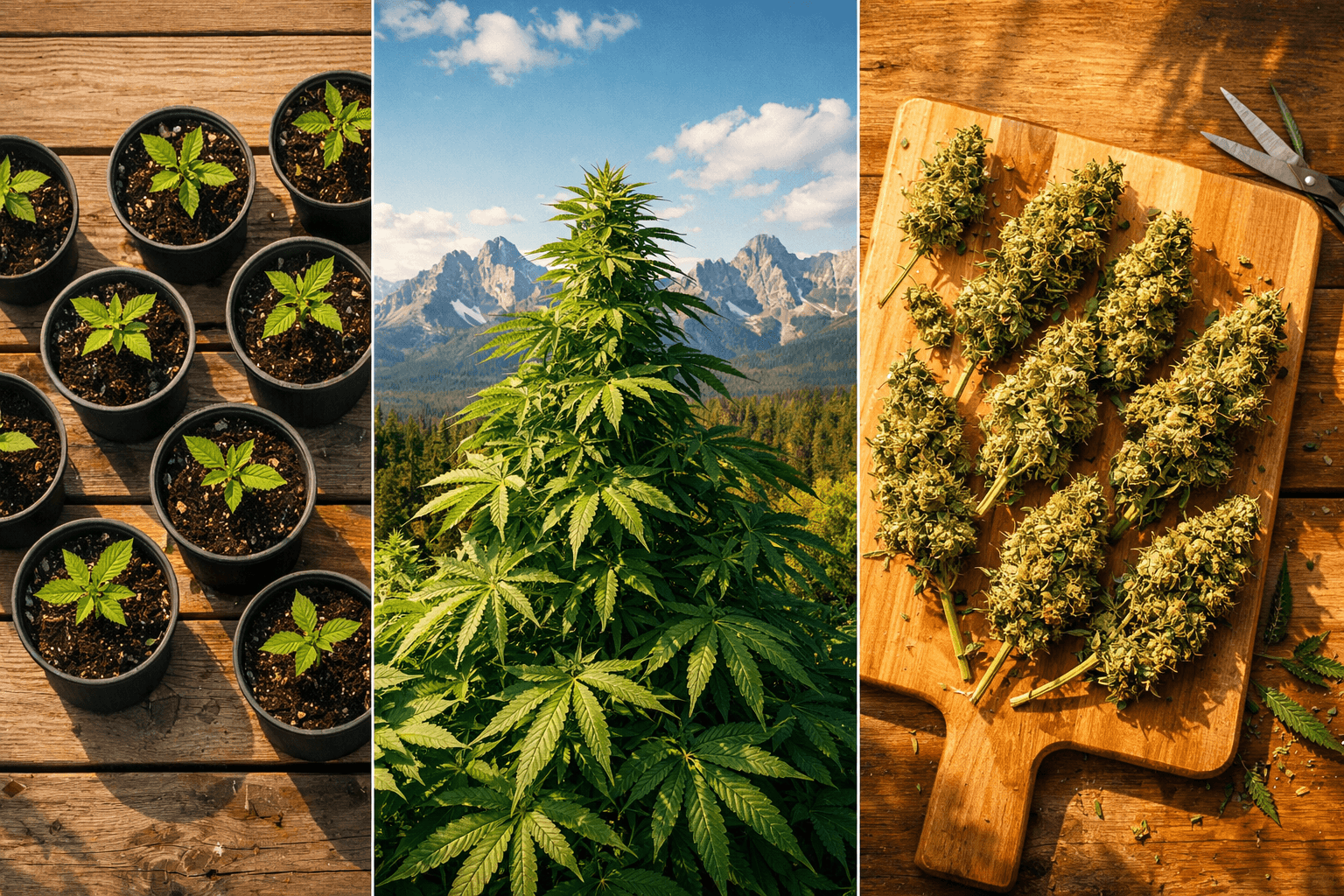
Canada's outdoor cannabis season is brief but productive when timed to your province's frost dates. Success begins with selecting appropriate genetics — autoflowering strains finish in 70 to just over 100 days from seed and suit northern regions like the Yukon, while fast-version and cold-hardy photoperiods maximize longer growing zones. A month-by-month outdoor cannabis calendar maps your timeline from seed germination through harvest, accounting for regional climate differences. Cold-hardy feminized strains bred for northern climates deliver superior yields and quality. Following a province-specific schedule and starting with climate-adapted seeds maximizes your Canadian outdoor growing potential.
Canada's outdoor cannabis season is short but intense — and that's exactly what makes it so rewarding. By respecting your province's frost dates, choosing genetics bred for northern climates, and following a disciplined month-by-month calendar, you can grow exceptional flower right in your own backyard.
The single biggest factor in outdoor success? Starting with the right seeds. At Plantation Premium Seeds, we carry a curated selection of autoflowering, fast-version, and cold-hardy feminized strains specifically chosen for Canadian outdoor growers. From quick-finishing autos for the Yukon to heavy-yielding photoperiods for BC's long season, we've got your climate covered.
Shop our outdoor seed collection today and make this your best Canadian growing season yet.
Growing cannabis outdoors in Canada is one of the most rewarding experiences a home cultivator can have — but it demands respect for the calendar. From the mild, rain-soaked coastline of British Columbia to the hot, humid summers of Southern Ontario, the frosty springs of Quebec, and the wind-swept shores of Atlantic Canada, our country spans an extraordinary range of climate zones. What unites every Canadian outdoor grower is a single, non-negotiable truth: timing is everything. Plant too early and a late frost kills your seedlings overnight. Plant too late and autumn mould or an early freeze robs you of a harvest. This month-by-month outdoor cannabis growing calendar is built specifically for Canadian growers, province by province, so you can plan with confidence from January seed orders right through to your October cure. Whether you're tending your first legal plants on a balcony in Toronto or managing four monster photoperiods in the Okanagan, this guide from Plantation Premium Seeds will keep you on track.
The snow may be deep, but January and February are planning months — and the decisions you make now determine your entire season.
Choose your strains wisely. If you grow in a region with fewer than 120 frost-free days (Prairies, Quebec, Atlantic, Northern Canada), prioritize autoflowering seeds, which finish in 70 to just over 100 days from seed depending on the strain, or fast-version feminized seeds, which finish flowering one to two weeks ahead of classic photoperiods. Growers on the BC coast or Southern Ontario have more flexibility to run full-season photoperiod strains, but even here, selecting cultivars bred for Canadian climates reduces risk. Shop outdoor cannabis seeds
Order seeds early — popular genetics sell out by spring. Stock up on germination supplies (quality soil or coco, seedling trays, a small grow light or sunny south-facing window) so everything is ready when March arrives. Sketch out your outdoor plot or container setup, confirm it receives 6+ hours of direct sunlight, and review your province's specific growing regulations. This is also the perfect time to read up on soil preparation.
July and August are the powerhouse months — your plants will explode in size during peak vegetative growth before transitioning to flower as daylight hours begin to shorten after the summer solstice (June 21).
July: Peak Vegetation
By mid-July, healthy outdoor cannabis plants in Southern Ontario or BC can reach 1–2 metres tall. Key tasks:
- Water deeply and consistently. Canadian summers can bring scorching 30°C+ heat waves, especially in Ontario and the Prairies. Water early in the morning; container plants may need daily watering.
- Continue vegetative feeding (nitrogen-rich) through mid-July for photoperiod strains. Switch to a bloom-phase nutrient (higher phosphorus and potassium) as you notice the first pre-flowers — tiny white pistils at the nodes — usually by late July to early August at Canadian latitudes.
- Scout for pests weekly. Aphids, spider mites, caterpillars, and slugs are the most common outdoor threats. Neem oil or insecticidal soap applied preventatively can save your crop.
August: Early Flower
By mid-August, most photoperiod strains are in full flower. This is when bud sites swell and trichome production kicks into gear.
- Install support stakes, cages, or trellising — heavy colas combined with Canadian late-summer rainstorms can snap branches.
- Monitor humidity religiously. August nights in Ontario, Quebec, and Atlantic Canada can be humid, creating ideal conditions for botrytis (bud rot) and powdery mildew. Improve airflow by defoliating excess fan leaves, and avoid watering foliage.
- Autoflower growers in shorter-season regions (Prairies, Quebec, Atlantic, Northern Territories) may begin harvesting fast-finishing autos as early as late August — a massive advantage when frost threatens in September.
March is when the real work begins — indoors. Around mid-March, start germinating your seeds using the paper towel method or by planting directly into small pots with a light seedling mix. Seedlings need 18 hours of light (a basic LED panel or a bright windowsill supplemented with a shop light works well) and consistent temperatures between 20–25°C.
By late March to mid-April, your seedlings should have 2–3 sets of true leaves. This is the stage to begin gentle feeding with a diluted vegetative nutrient (quarter-strength). Keep humidity around 60–70% to encourage healthy root development.
Hardening off — the critical process of gradually exposing indoor seedlings to outdoor conditions — should start in late April for growers in BC's coast and Southern Ontario, where last frost dates are earliest. Move plants outside for 2–3 hours on mild days, increasing exposure over 7–10 days. Bring them in at night — even a single overnight frost below 0°C can kill young cannabis.
For Quebec, Prairie, and Atlantic growers, hardening off typically begins in early-to-mid May. Patience pays off here. Northern growers in the Yukon or NWT should keep plants indoors until at least late May, and consider supplemental lighting to keep them in vigorous vegetative growth while waiting. For tips on protecting young plants, see our guide to hardening off cannabis seedlings.
May and June are the most exciting — and nerve-wracking — months on the Canadian outdoor cannabis calendar. This is transplant season.
Transplant Timing by Province
- BC Coast: Transplant outdoors by mid-May (after Victoria Day is a safe benchmark).
- Southern Ontario: May 15–24 — many growers use Victoria Day weekend (the Monday before May 25th) as their traditional planting date, borrowing from the vegetable gardening tradition.
- Quebec: Wait until May 20–25 at minimum; Montreal growers often push to June 1 for safety.
- Prairies (Alberta, Saskatchewan): May 25–June 5 — late frost is common; keep row covers or cloches handy.
- Atlantic Canada: June 1–10 — mobile containers are highly recommended so plants can be moved indoors if a cold snap hits.
- Northern Territories: June 10–15+ — autoflowers are strongly recommended; the season is too short for most photoperiods.
What Is Victoria Day for Cannabis Planting?
Victoria Day (the last Monday before May 25th) is a widely recognized benchmark across Canada for transplanting frost-sensitive plants outdoors. For cannabis, it's a reliable minimum date in Southern Ontario and BC, though colder regions should add 1–2 weeks of buffer.
Key Tasks in May–June
- Prevent transplant shock by watering with a diluted kelp or B-vitamin solution at transplant.
- Begin topping or low-stress training (LST) once plants have 5–6 nodes to encourage bushy, multi-cola growth.
- Ensure your site gets 6+ hours of direct sunlight daily — more is better.
- Mulch around the base of plants to retain moisture and regulate soil temperature.
- Feed a balanced vegetative nutrient (higher nitrogen) every 5–7 days, adjusting for rain.
This is the finish line — and where many Canadian outdoor grows are won or lost.
September: The Harvest Window Opens
Early September brings the first frost risk to the Prairies and Northern Territories. Even in Southern Ontario and Quebec, overnight lows can dip below 5°C by mid-month, slowing growth and stressing plants. Key priorities:
- Read your trichomes. Use a jeweller's loupe (60x magnification) to inspect trichome colour on the calyxes of the buds, not the sugar leaves — mostly cloudy with 5–15% amber is the cut point most growers aim for. Clear trichomes mean it's too early.
- Begin flushing (feeding only plain pH-balanced water) 7–14 days before your planned harvest to improve flavour and smoothness.
- Harvest before a hard freeze. A light frost (0 to -2°C) marks the foliage but usually spares a ripe plant. If a low of -2°C or colder is forecast and you can't cover the plants, harvest the night before, between midnight and first light. Watch your local forecast daily: our guide to predicting frost on cannabis explains why plants can ice up when the forecast says 3°C, and how far to push a late harvest helps you weigh maturity against risk.
October: Final Harvest and Curing
In BC's coast, some long-flowering photoperiod strains can safely mature into mid-October thanks to the milder maritime climate. In Quebec and the Prairies, aim to have plants down by mid-October; past October 20 you are racing the clock, with little light, persistent damp and repeated frosts.
- Wet trim vs. dry trim: Wet trimming (cutting sugar leaves immediately at harvest) speeds drying in humid climates like Atlantic Canada. Dry trimming (hanging whole branches for 7–14 days at 15–18°C and 55–60% humidity before trimming) often produces smoother smoke and is preferred in drier regions like Alberta and BC Interior.
- Cure dried buds in airtight glass jars, burping daily for the first two weeks, then weekly for 4–8 weeks. Proper curing is what transforms a good harvest into a great one.
Since the Cannabis Act took effect in October 2018, adults across most of Canada can legally grow up to 4 cannabis plants per household outdoors. The key exception is Manitoba, where home cultivation remains prohibited under provincial law — always check your local bylaws before you start.
Canada's effective outdoor cannabis season is short — roughly 4 to 5 months of frost-free growing in most provinces. Understanding your region's last spring frost date is the single most important planning detail:
FAQ
When should I start cannabis seeds indoors in Canada?
In most Canadian provinces, start seeds indoors 4–6 weeks before your last frost date — typically late March to mid-April. This gives seedlings time to develop before outdoor transplant in late May or early June.
What is the best month to transplant cannabis outdoors in Canada?
Late May to early June, once overnight temperatures stay consistently above 10°C. In Quebec and Ontario, this is typically around the Victoria Day long weekend.
When do outdoor cannabis plants flower in Canada?
Photoperiod strains begin flowering naturally in late July or August as days shorten below 14 hours of light. Most strains are harvest-ready between mid-September and mid-October before the first hard frost.
How do I protect outdoor cannabis from early frost in Canada?
Water the soil deeply one to two days ahead, then cover in the late afternoon with frost cloth that reaches the ground without touching the leaves. According to the FAO, a row cover gains 1°C to 5°C. If a low of -2°C or colder is forecast and you can't cover, harvest the night before, between midnight and first light.
19+ | Educational horticulture only.