Master Your Indoor Grow
Indoor Growing Guides
Cannabis Light Schedule Guide: From Seedling to Harvest
Complete cannabis light schedule — 18/6 veg, 12/12 flower trigger, dark period rules, autoflower schedules, and outdoor sunlight timing for Canada.
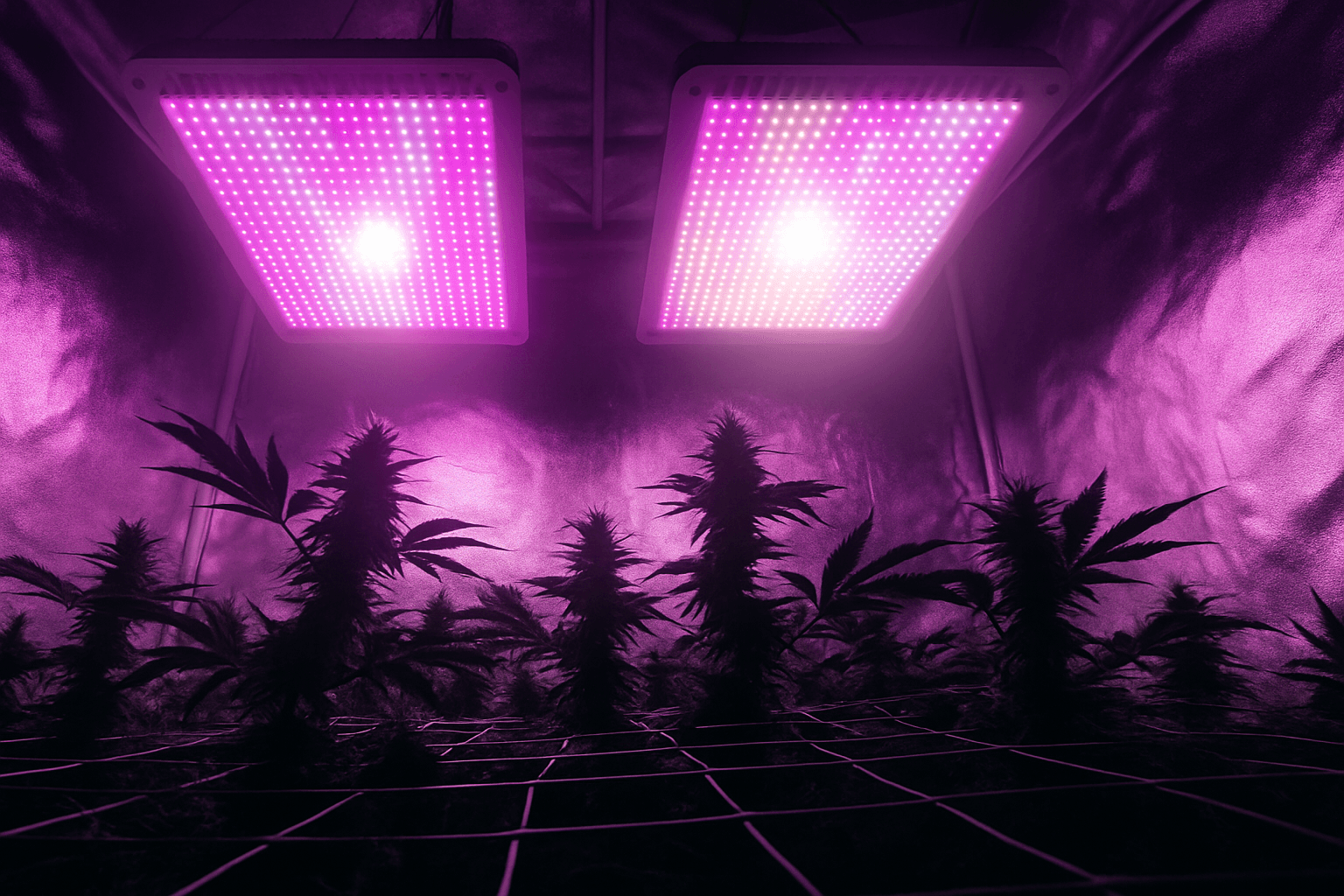
Autoflowering cannabis strains flower based on age rather than light hours, eliminating the need for timer flips. An 18/6 light schedule—18 hours on, 6 hours off—is the most practical choice for Canadian home growers, balancing photosynthesis and electricity costs. Some growers use 20/4 for slightly higher yields, while continuous 24/0 light exists but carries stress risks without proportional gains. More light generally increases yield potential through enhanced photosynthesis, but 18/6 remains the standard for reliable results without excessive energy consumption or plant stress.
Autoflowering strains don't rely on photoperiod to trigger flowering — they flower based on age, thanks to Cannabis ruderalis genetics in their lineage. This means you never need to flip the timer. That said, light hours still directly impact yield potential, because more light generally equals more photosynthesis and bigger harvests.
18/6 is the most widely recommended schedule for autos, providing a strong growth light window while allowing a brief rest period. 20/4 is also popular and can push slightly heavier yields — some growers report 5–10% more biomass under 20/4 versus 18/6, particularly with high-yielding, fast-finishing varieties. The 24/0 debate applies here too — some auto growers run continuous light successfully, but the same stress risks apply, and the electricity savings from an 18/6 or 20/4 schedule are worth considering. Plants also use the dark period to translocate sugars and repair cellular tissue; skipping it entirely can result in slightly muted terpene profiles in the final product, even if yield differences appear negligible. For most Canadian home growers, 18/6 is the practical sweet spot for autos from seed to harvest.
One underappreciated factor with autoflowering schedules is consistency. Autos are forgiving with light intensity and duration, but erratic schedules — shifting between 18/6 and 20/4 randomly, or letting a timer malfunction go unnoticed for several days — can introduce unnecessary stress during a lifecycle that leaves no room to recover. Set your timer at germination, verify it's running accurately every week, and let the plant do the rest. If you're growing autos alongside photoperiod plants in the same space, running everything on an 18/6 schedule simplifies your setup without meaningfully sacrificing auto yields.
Dialling in your light schedule is the foundation of every successful photoperiod grow. From your first 18/6 seedling day to the critical 12/12 flip and beyond, every hour of light you provide — or withhold — shapes the plant's potential. Premium Pheno Seeds carries a diverse catalogue of photoperiod strains engineered to perform under every schedule covered in this guide, from fast-flowering varieties perfect for short Canadian outdoor seasons to heavy indoor producers bred to dominate under long veg cycles. Find your next strain and put this knowledge to work. Shop premium cannabis seeds
The uninterrupted dark period is arguably more critical than the light period itself. Cannabis measures night length to determine whether to flower — even a brief light interruption can reset the hormonal clock and revert plants back to vegetative growth or, more dangerously, cause hermaphroditism. A stressed, light-interrupted plant may produce male pollen sacs, which can pollinate your entire crop and fill buds with seeds.
This biological mechanism is rooted in phytochrome signalling. During the dark period, cannabis converts a light-sensitive protein called phytochrome far-red (Pfr) back into its inactive form (Pr). This shift is what the plant interprets as "night." Interrupt that conversion with even a few seconds of light mid-cycle and the clock resets — the plant behaves as though dawn has arrived, pausing its hormonal cascade toward flowering. Repeated interruptions during early flower can extend the pre-flower window by a week or more, costing you time and canopy.
Checking your tent seal before and during flower is essential. Run your light cycle at night, then stand inside the tent in complete darkness once your eyes have adjusted — you're looking for any pinhole leaks, zipper gaps, or cable port gaps letting ambient light in. Use black electrical tape, Velcro, or ducting baffles around ports. Even the small LED on a power bar inside the tent can be enough to cause stress. A USB indicator light on a fan controller, the standby LED on a digital timer, or a poorly routed grow journal app notification lighting up a phone screen near an intake vent — all of these are real-world sources of light leak that growers have traced back to hermaphrodite problems. Tape over every indicator LED inside a sealed space. Respect the dark period and your plants will reward you.
It's also worth noting that dark period temperature management matters alongside light discipline. A large temperature swing between the light-on and light-off periods can compound plant stress, particularly during the first three weeks of flower when the plant is already adapting to a new hormonal state. Aim to keep the lights-off temperature within 5–8°C of your lights-on temperature during the stretch phase.
Flipping your photoperiod plants into flower is as simple as changing your timer to 12 hours light / 12 hours darkness. The plant detects the extended dark period and begins producing flowering hormones within days. Visible pistils typically appear within 7–14 days of the flip, though certain sativa-dominant varieties may take up to 21 days to show clear sex and begin formal bud development.
During this transition period — often called pre-flower or the stretch — the plant is simultaneously continuing vegetative growth while ramping up reproductive hormone production. Feeding strategy should reflect this dual state: maintain moderate nitrogen levels through the first two weeks post-flip, then begin tapering nitrogen while gradually introducing higher phosphorus and potassium to support bud site development. Cutting nitrogen too aggressively at the flip itself can stall the stretch and leave you with a shorter, less productive canopy than your space allows.
Knowing when to flip is the real skill. A general rule is to flip when plants are 50–60% of your target final height, because most strains undergo a vegetative stretch of 50–100% during the first two to three weeks of flower. Flip too early and you waste canopy potential; flip too late and plants outgrow your space.
If you're running a Screen of Green (ScrOG) setup, the ideal flip window is when approximately 70% of your screen is filled with trained canopy. The remaining 30% will fill in during the stretch, giving you a dense, even bud plane across the entire net. For growers using Low Stress Training (LST) or simple topped-and-tied plants in a standard tent, use the height rule as your primary trigger, then cross-reference with overall canopy density. A lush, well-branched plant with multiple developed node sites will make far better use of the 12/12 flip than a young, single-cola plant flipped early in an attempt to limit height.
Experienced growers also use root zone development as a secondary indicator. If you're growing in fabric pots and notice significant root pruning activity — roots visibly browning at the pot surface — your plant has likely reached full vegetative maturity and is ready for the transition. Plants that have not yet filled their container's root zone are often better served by another one to two weeks of veg, regardless of above-ground height metrics. A well-developed root network translates directly into nutrient uptake capacity during flower, which is when your plant's demands peak.
FAQ
What's the best light schedule for autoflowering cannabis?
18/6 (18 hours light, 6 hours dark) is the most practical sweet spot for home growers, balancing strong photosynthesis with the benefits of a rest period. While 20/4 can push yields by 5–10%, the electricity savings and healthier terpene development from 18/6 make it the ideal starting point for most growers.
Can I run my lights 24/7 to get faster results?
While continuous light is possible, the electricity costs and stress risks typically outweigh the minimal yield gains. More importantly, plants use dark periods to translocate sugars and repair tissue—skipping this entirely can result in muted terpene profiles and lower overall quality in the final product.
What happens if my light schedule is inconsistent?
Autoflowering plants are forgiving, but erratic schedules—randomly shifting hours or letting a timer malfunction—can stress plants when they have no time to recover in their compact lifecycle. Set your timer at germination and verify it's running accurately every week for the best results.
Can I grow autoflowers and photoperiod plants on the same light schedule?
Yes, running everything on 18/6 simplifies your setup without meaningfully sacrificing autoflower yields. This approach works well if you're mixing strains in the same grow space and want to avoid managing multiple timer configurations.
19+ | Educational horticulture only.