Master Your Indoor Grow
Indoor Growing Guides
Cannabis Defoliation Guide: How to Remove Leaves for Better Yields
Master cannabis defoliation — when to defoliate, which leaves to remove, light vs aggressive defoliation, and how to help plants recover.
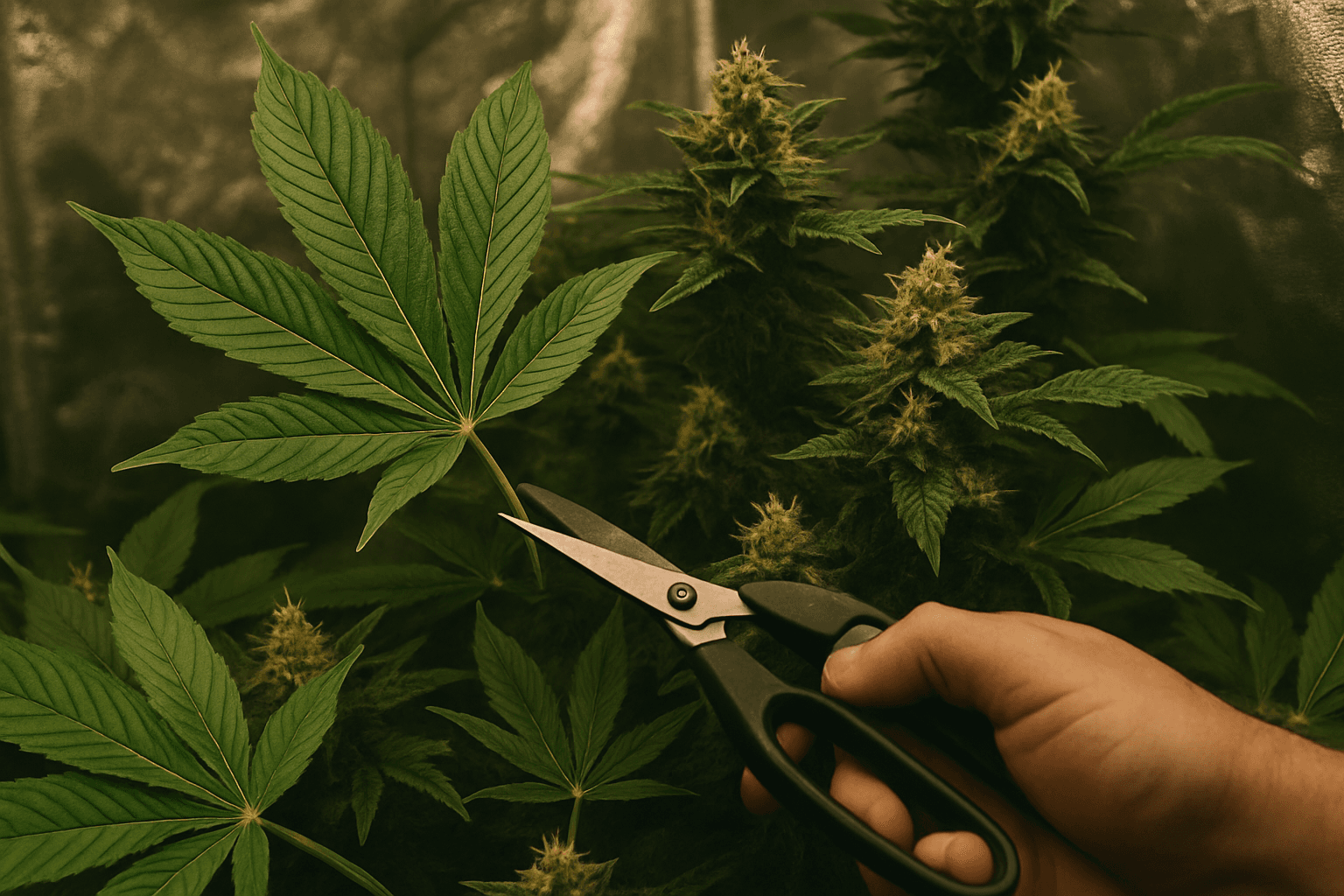
Defoliation improves cannabis yields by strategically removing fan leaves to increase light penetration and airflow. Light defoliation removes 20-30% of fan leaf mass per session and is ideal for beginners and sativa-dominant or autoflowering strains, which recover more slowly from stress. Aggressive defoliation, including the schwazzing technique, removes 50% or more of leaves at two key windows and can deliver impressive results with the right genetics and grower experience. Match your cannabis defoliation approach to your skill level and plant genetics to maximize yields without risking stunted growth.
Overview
Defoliation is the practice of deliberately removing fan leaves from your cannabis plant to improve light penetration and airflow throughout the canopy. Done correctly, it's one of the most effective techniques available to home growers for maximizing yield and bud quality. Done wrong, it stresses your plants and costs you grams. This guide covers everything you need to defoliate with confidence.
Summary
Defoliation is a high-upside technique, but the number one mistake growers make is overdoing it — especially on a first attempt. Start conservative, observe how your specific cultivar responds, and build from there. A modest, well-timed defoliation will outperform an aggressive one done at the wrong moment every time. Less is more, particularly until you know your plants.
Aggressive vs Light
Defoliation exists on a spectrum, and matching your approach to your experience level and genetics matters. Light defoliation — removing roughly 20–30% of the fan leaf mass per session — is the right starting point for most home growers and is strongly recommended for beginners or anyone working with sativa-dominant or autoflowering strains, which tend to be more stress-sensitive and slower to recover. This conservative approach still meaningfully improves light penetration and airflow without risking stunted growth. Aggressive defoliation, most notably the technique known as schwazzing, involves removing 50% or more of the plant's fan leaves — sometimes nearly all of them — at the two key defoliation windows. This approach can produce impressive results in the right hands but carries real risk. It's best reserved for experienced growers working with indica-heavy, fast-recovering genetics under dialled-in environmental conditions. If you're uncertain where your strain sits, start light — you can always remove more over successive grows once you understand how your cultivar responds.
Recovery
After any defoliation session, your plant needs time to recalibrate. Expect a 3 to 5 day recovery window where growth may appear to slow — this is normal. During recovery, keep your VPD, temperature, and humidity stable; environmental stress compounds plant stress and extends the recovery period unnecessarily. Avoid stacking other high-stress techniques like aggressive training or transplanting immediately before or after defoliation. Give the plant one thing to adapt to at a time. Once the recovery window passes, you'll typically see an accelerated burst of growth as the plant responds to improved light access.
What to Remove
Knowing which leaves to pull is the core skill of effective defoliation. Target these first: large primary fan leaves whose petioles are oriented directly over a bud site, blocking downward light. Next, remove any leaves pointing inward toward the centre of the plant — these contribute to the stagnant air pocket at the heart of the canopy and receive poor light themselves. Yellowing or damaged lower leaves should also go; they're already senescing and offer minimal photosynthetic value while consuming a small amount of plant resources. A useful rule is: if a leaf isn't receiving direct or meaningful indirect light, it's a candidate for removal. What you should keep is equally important. Leave any fan leaf that sits in open, well-lit space — these are your primary photosynthetic engines and pulling them unnecessarily is counterproductive. Keep leaves on young lateral branches that are still developing, and always retain sugar leaves emerging directly from bud sites. The goal is a structured, open canopy — not a stripped plant.
When to Defoliate
Timing is everything with defoliation. There are two accepted windows where the technique delivers maximum benefit with minimum stress. The first is at the end of the vegetative stage, typically in the final 24–48 hours before you flip your lights to 12/12. At this point your plant is mature, resilient, and about to shift its energy toward reproduction — clearing the canopy now gives every bud site the best possible start entering flower. The second window is day 18 to 21 of flowering, often called the second defoliation. By this stage, pre-flowers have formed and the plant's structure is clear, making it easy to identify exactly which leaves are blocking which sites. Removing them here drives energy into the sites that matter most during the critical mid-flower bulking phase. Never defoliate in late flower — from week five onward, your plant is under significant metabolic load finishing buds, and removing leaves at this stage is genuinely stressful, can trigger premature senescence, and will cost you potency and weight at harvest.
Why Defoliate?
Cannabis plants are vigorous growers, and by mid-veg they've typically developed a dense canopy where large fan leaves cast heavy shade over lower bud sites. Those shaded sites — sometimes called larf zones — receive so little light that they produce airy, underdeveloped buds not worth the plant's energy. Removing strategic leaves solves this in two ways. First, it opens up light pathways so lower and mid-canopy sites can develop into dense, harvestable colas. Second, improved airflow dramatically reduces the humid, stagnant pockets where botrytis (bud rot) and powdery mildew thrive — a real concern during Canadian grows where humidity management can be challenging. Finally, the plant redirects the metabolic energy it was spending maintaining shaded, low-productivity leaves toward active bud development, which is exactly where you want resources going during flower.
FAQ
When should I start defoliation on my cannabis plant?
You can begin light defoliation during the vegetative stage and continue into early flowering to improve light penetration and airflow. The key is removing the largest fan leaves that are clearly blocking bud sites and crowding the interior canopy—start with 20–30% of fan leaf mass per session to minimize stress. Timing depends on your strain; sativas need more recovery time between sessions, while indicas bounce back faster.
How do I know if my strain can handle aggressive defoliation?
Indica-dominant strains with denser node spacing and robust root systems typically recover faster from heavy defoliation and can handle 50%+ leaf removal. Sativa-dominant and autoflowering strains are more stress-sensitive and recover slower, so stick with light defoliation (20–30%) unless you have extensive experience with your specific cultivar. When in doubt, start conservatively and observe how your plant responds over successive grows.
What's the difference between light defoliation and schwazzing?
Light defoliation removes roughly 20–30% of fan leaf mass and is ideal for beginners and stress-sensitive genetics. Schwazzing involves removing 50% or more of the plant's fan leaves—sometimes nearly all of them—at specific defoliation windows and is best reserved for experienced growers working with fast-recovering indica-heavy strains under dialled-in environmental conditions.
How long does it take a plant to recover from defoliation?
Recovery time varies by strain: indica-dominant plants typically bounce back within days, while sativas can take two weeks or more to fully recover from aggressive cuts. This extended recovery window is especially important during flowering, as slow bounce-back can cut into your flowering period and potentially reduce yields rather than improve them. Always factor in your strain's recovery timeline before defoliating.
Can I defoliate my autoflowering plants the same way as photoperiod strains?
Autoflowering strains are more stress-sensitive than photoperiod plants, so they require lighter defoliation—stick with the 20–30% fan leaf removal approach rather than aggressive schwazzing. The limited vegetative window in autoflowers means they have less time to recover from stress, so conservative, strategic leaf removal is your safest approach to maximize yields without stunting growth.
19+ | Educational horticulture only.