Master Your Indoor Grow
Indoor Growing Guides
Best Soil for Cannabis: What to Use and How to Amend It
The best soil for growing cannabis — recommended mixes, how to amend for drainage and nutrients, correct pH range, and coco coir as an alternative.
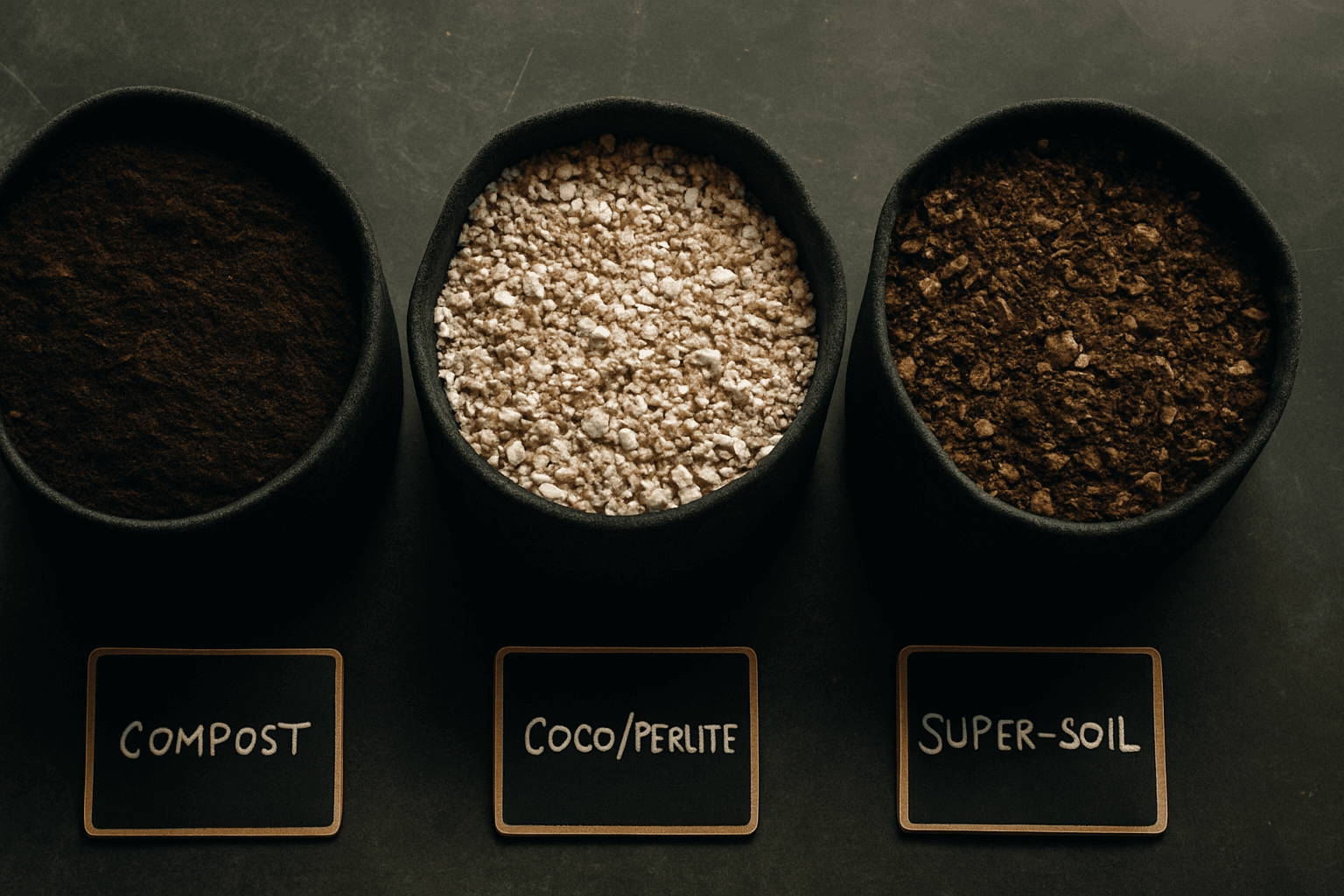
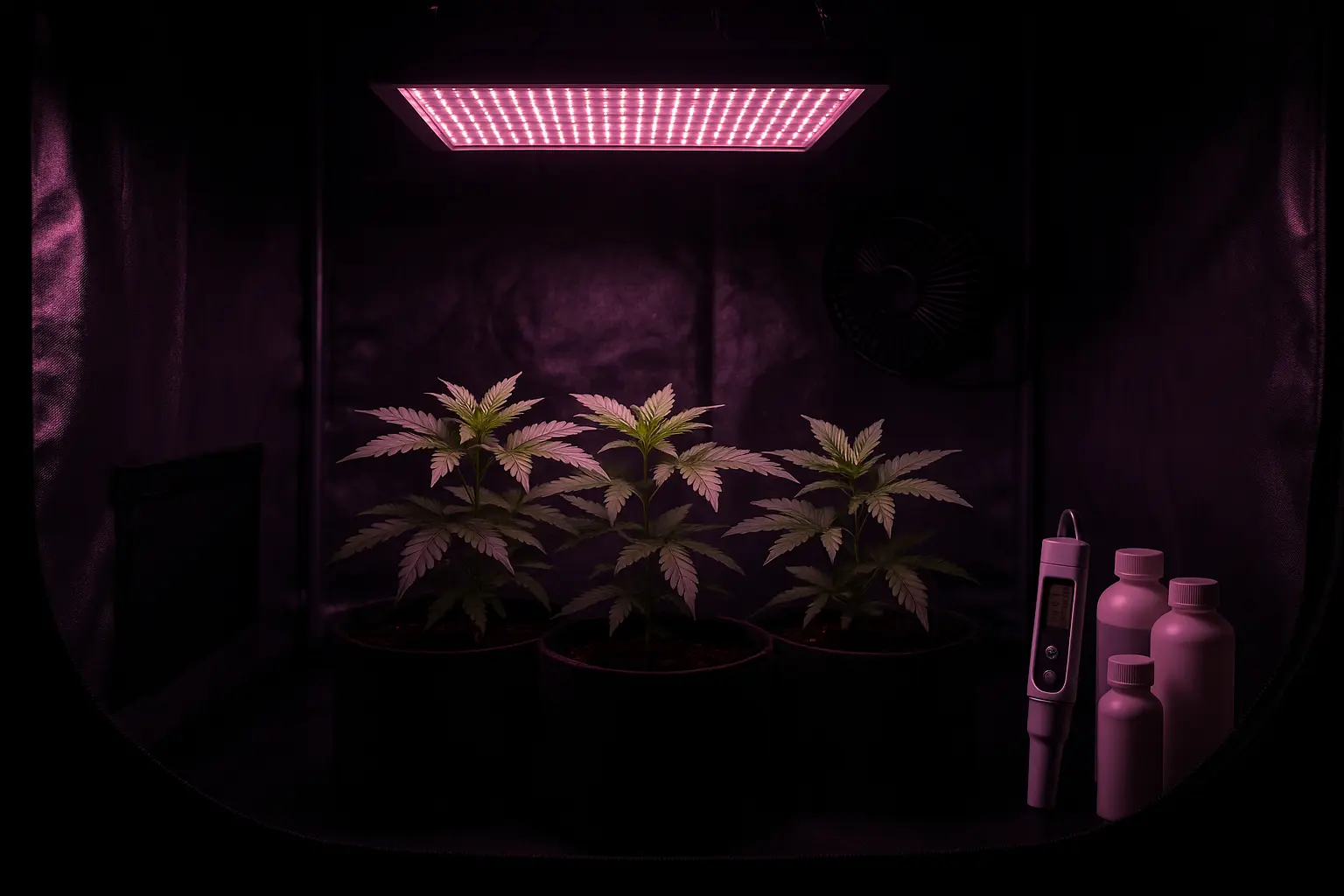
The best soil for cannabis combines a quality base mix with strategic amendments. Add 20–30% perlite by volume for drainage and aeration—critical in humid environments and larger containers. Include 10% worm castings to provide slow-release nutrients, beneficial microbes, and humic acids that enhance nutrient uptake. Quality compost contributes organic matter and microbial diversity, while mycorrhizal inoculants colonize root tips and extend the plant's root reach. Building your own amended mix gives complete control over nutrition, structure, and the specific microbial profile your plants need for optimal growth.
Even a quality bagged mix can be improved, and building your own amended soil gives you full control over what your plants are eating. The most important amendment for most Canadian growers is perlite — those white volcanic glass beads that improve drainage and aeration dramatically. Add 20–30% perlite by volume to any base soil, especially if you're growing in larger containers or your environment runs humid. Without adequate aeration, roots suffocate in compacted, waterlogged soil, leading to slow growth, nutrient deficiencies, and root rot that can kill a plant before you realize something is wrong. Perlite solves this cheaply and reliably.
Worm castings at around 10% of your mix introduce slow-release nutrients, beneficial microbes, and humic acids that make nutrient uptake more efficient. Unlike synthetic fertilizers that dump nutrients all at once, castings release slowly as microbial activity breaks them down — a gentler, more forgiving feed that suits beginners and experienced growers alike. Humic acids also chelate minerals, meaning they bind nutrients into forms roots can absorb more readily, which is especially helpful in slightly alkaline conditions where iron and zinc otherwise become unavailable.
Quality compost adds bulk organic matter and a diverse microbial profile. The best compost for cannabis is well-aged, finished, and free of any strong ammonia smell — if it still smells hot, it's still breaking down and can burn roots. A dark, earthy-smelling compost with visible fungal threads running through it is the gold standard. Mycorrhizal inoculants — available in powder or granule form at most grow shops — colonize root tips and effectively extend your plant's root network, dramatically improving water and nutrient absorption. These fungi form a symbiotic relationship with the plant: the plant feeds them sugars, and in exchange, the fungal network reaches far beyond where roots could grow alone, scavenging phosphorus, water, and trace minerals. Apply inoculants directly to the root zone at transplant for best results, since they need root contact to colonize.
For growers ready to go deeper, a DIY super soil recipe gives plants everything they need through the entire grow with minimal feeding: start with a quality base like Pro-Mix, add 20–25% perlite, 15% worm castings, 10% quality compost, a cup of dolomite lime per cubic foot (for pH buffering), and a pre-mixed dry organic amendment blend containing bone meal, blood meal, kelp meal, and rock phosphate. Water it in, let it compost for 2–4 weeks before use, and your root zone becomes a living ecosystem. The waiting period is non-negotiable — those amendments need time to break down and mellow. Skipping it risks nitrogen burn in early veg. Once cured, a properly built super soil requires little more than plain pH-balanced water throughout the grow, letting the microbial life do the work of making nutrients available on demand.
Not all bagged soils are created equal, and cannabis is a demanding enough plant that the cheap stuff from a hardware store often creates more problems than it solves. Generic potting mixes frequently contain high levels of slow-release synthetic fertilizers, poor-quality peat, or bark-heavy compost that repels water when it dries out. A few standout options are trusted by growers worldwide.
Fox Farm Ocean Forest is an American staple — a pre-amended, pH-adjusted mix with aged forest products, earthworm castings, and bat guano that's ready to use straight from the bag. It runs slightly hot for seedlings, so many growers cut it 50/50 with a lighter mix for the first few weeks before transplanting into straight Ocean Forest. Biobizz All-Mix is a popular European option available at many Canadian grow shops, pre-loaded with organic nutrients and beneficial biology for a solid first 3–4 weeks of growth. Its lighter sibling, Biobizz Light-Mix, is better suited for seedlings or growers who want to control feeding from day one.
For Canadian growers, Sungro Sunshine Mix and Pro-Mix BX or HP are widely available and reliable, though these lean more toward a peat-based, lightly amended profile and will benefit from additional amendments. Pro-Mix HP (High Porosity) in particular is a favourite among experienced growers who want a well-draining, semi-inert base they can load up with their own amendments and control precisely. Both are available at most agricultural supply stores and many Canadian grow retailers. Pair your chosen soil with quality genetics: Shop premium cannabis seeds.
When reading a label, look for: listed pH range (ideally 6.0–6.8), ingredients like perlite, coco fibre, or pumice for aeration, worm castings or compost for nutrition, and the absence of heavy synthetic slow-release fertilizers (those little coloured beads), which can lock you into a feeding schedule that's hard to manage. Moisture-retention crystals are another ingredient to avoid in cannabis grows — they can hold too much water around roots in already-humid conditions, inviting fungus gnats and root issues.
Coco coir deserves mention as a popular alternative to traditional soil, especially for growers who want more control over their feeding program. Made from compressed coconut husks, coco is an inert, soilless medium — it holds no nutrients of its own, meaning you feed everything through your watering solution. This sounds like more work, but it means precision: you know exactly what your plants are getting at every stage of the grow. Coco also has a naturally excellent air-to-water ratio, holding moisture while retaining plenty of oxygen at the root zone. It's lightweight, renewable, and reusable after a proper flush and sterilization between runs.
One key difference when growing in coco: it has a slight cation exchange affinity for calcium and magnesium, meaning these elements get bound up in the medium before reaching roots. Cal-Mag supplementation is essentially mandatory in coco from week one — skipping it leads to deficiencies that look like pH problems and are often misdiagnosed. Feeding in coco also means watering more frequently than in soil, ideally to a small runoff at each watering to prevent salt buildup. Once you understand the rhythm, coco is highly rewarding. Coco supports faster growth and bigger yields when managed properly — pairing it with a solid cannabis nutrients feeding guide is essential to get the most out of this medium.
Whether you build your own amended mix, run a quality bagged soil, or go full coco, the principle is the same: healthy roots produce healthy plants. Time invested in your growing medium pays back in faster growth, better resistance to stress, and heavier harvests.
FAQ
How much perlite should I add to my soil, and why is it so important?
Add 20–30% perlite by volume to your base soil, especially for larger containers or humid growing spaces. Without adequate aeration, roots suffocate in compacted, waterlogged soil, leading to nutrient deficiencies, slow growth, and root rot that can kill plants before you notice the problem.
What's the difference between worm castings and regular compost?
Worm castings (~10% of your mix) release nutrients slowly as microbial activity breaks them down, making them gentler and more forgiving than synthetic fertilizers. They also introduce beneficial microbes and humic acids that help roots absorb minerals more efficiently, especially in alkaline conditions where nutrients like iron and zinc become locked up.
How do I know if my compost is ready to use?
Finished compost should be dark, earthy-smelling, and show visible fungal threads running through it—avoid any with a strong ammonia smell, as that means it's still breaking down and can burn roots. Well-aged, dark compost is the gold standard for cannabis growing.
Do mycorrhizal inoculants actually make a difference?
Yes—mycorrhizal fungi colonize root tips and extend your plant's root network far beyond what roots alone could reach, dramatically improving water and nutrient absorption. The fungi form a symbiotic relationship with your plant: you feed them sugars, and they scavenge phosphorus, water, and nutrients from deeper in the soil you couldn't access otherwise.
Can I just use bagged soil as-is, or should I always amend it?
Even quality bagged mix benefits from amendments that give you full control over drainage, nutrients, and microbial life. Adding perlite, worm castings, and mycorrhizae transforms any base soil into a living, well-draining medium that suits both beginner and experienced growers.
19+ | Educational horticulture only.