Identify, treat, and prevent every fungal threat to your plants
Cannabis Fungal Diseases
Septoria Leaf Spot on Cannabis: Identification and Organic Treatment
Septoria leaf spot on cannabis: spot the yellow-ringed brown lesions on lower leaves early and treat them before they climb the plant.
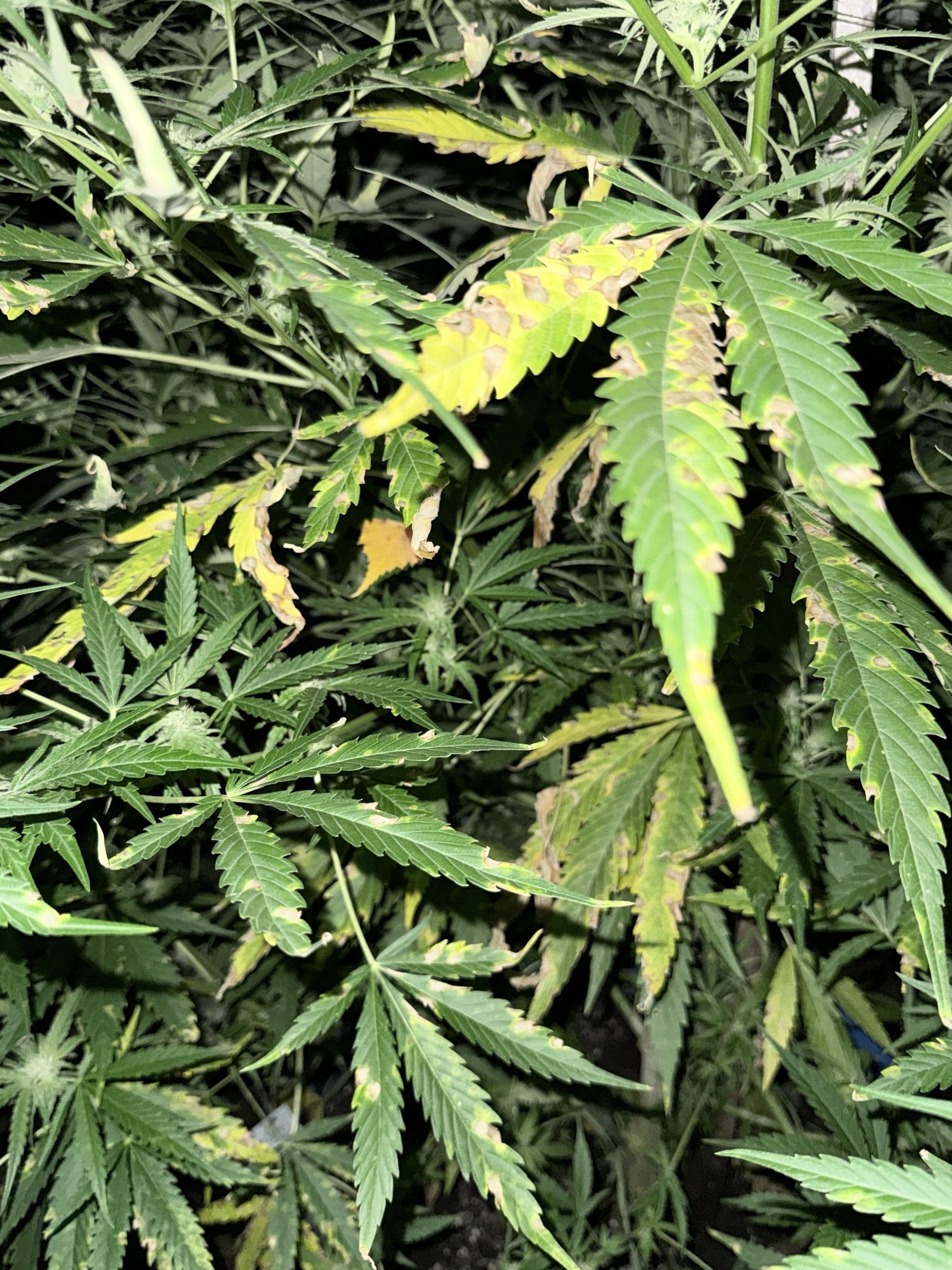
Septoria leaf spot (Septoria cannabis) starts as small tan spots with a dark brown margin on the lowest, oldest fan leaves, then climbs upward as the plant matures. Cool, humid conditions and wet foliage drive the spread. Removing infected leaves, improving airflow, and copper-based or potassium bicarbonate fungicide are the standard organic response.
Key takeaways
- Septoria leaf spot starts on the lowest, oldest leaves as small tan or gray spots with a dark brown margin, then spreads upward.
- Cool, humid weather with wet foliage and poor airflow drives the infection — most common in late summer and fall outdoor grows.
- Copper-based fungicide and potassium bicarbonate are the standard organic treatments; neither reverses damage already done.
- Infected leaves must be removed and destroyed, never composted near the grow area — spores survive in old plant debris.
- Rarely fatal on its own, but a heavy infection weakens the plant and can cut into yield if it reaches the upper canopy before harvest.
- What does Septoria leaf spot look like on cannabis?
- What causes it and how does it spread?
- What are the 5 steps to treat Septoria leaf spot?
- How do you prevent it from coming back?
- FAQ — Septoria leaf spot on cannabis
That's Septoria leaf spot, one of the most common fungal diseases on outdoor cannabis in Canada, and one of the easiest to misdiagnose. Here's how to tell it apart from a deficiency, stop it before it climbs into the canopy, and keep it from coming back next season.
What does Septoria leaf spot look like on cannabis?
Septoria leaf spot is caused primarily by the fungus Septoria cannabis. A second, molecularly distinct species — Septoria neocannabina — was recently described through multi-gene phylogenetic analysis and produces essentially the same leaf spot disease; the two are difficult to tell apart without lab identification, and S. cannabis appears to be the more widely reported of the two in North American outbreaks, including a documented reemergence on hemp in Kentucky. For a grower, the practical identification and treatment are the same regardless of which species is involved. The disease follows a distinctive bottom-up pattern that sets it apart from most nutrient problems.
Early stage Small circular spots, roughly 2 to 4 mm across, appear on the oldest, lowest fan leaves first — usually the ones closest to the soil and most often on the underside. Centres are tan to light gray, ringed by a darker brown margin.
Progressing stage Spots multiply and merge into larger, irregular patches. The tan centres dry out, crack, and sometimes show tiny black dots (pycnidia — the fungus's fruiting bodies) visible with a hand lens. The surrounding leaf tissue often yellows.
Advanced stage Heavily spotted leaves turn yellow, then brown, and drop. Because the disease climbs from the bottom of the plant upward as the canopy fills in and airflow drops, by late flower it can reach leaves near the buds — though it rarely infects the flowers themselves the way botrytis does.
How is this different from a nutrient deficiency?
Deficiencies tend to progress symmetrically and predictably across the whole plant, following a pattern tied to which nutrient is mobile or immobile. Septoria spots are irregular, start as discrete rust-brown-margined circles rather than a uniform colour shift, and — the clearest tell — worsen even when feeding is adjusted. If in doubt, pull a spotted leaf and check the underside with a hand lens for the tiny black pycnidia; a deficiency never produces those.
What causes it and how does it spread?
Septoria spores need moisture to germinate and infect a leaf, which is why the disease tracks closely with weather and canopy conditions rather than with feeding schedule.
Weather conditions Cool nights combined with humid days, wet foliage from rain, dew, or overhead watering, and stretches of overcast weather all favour infection. This is why Septoria is most common in late summer and fall outdoor grows across Canada, when nights cool down but humidity stays high.
Plant conditions Dense canopies with poor airflow trap moisture against the lower leaves, extending the time foliage stays wet after rain or dew — the single biggest factor in how fast the disease spreads once it's present.
Spread Spores travel by splashing water (rain, overhead irrigation) and wind, and survive on infected plant debris left in or near the grow area between seasons. Unsanitized pruning tools can also carry spores from an infected plant to a healthy one.
What are the 5 steps to treat Septoria leaf spot?
Removing existing infection and stopping new spores from spreading matters more than any single spray — treatment works best combined with the sanitation and airflow steps below.
- Remove infected leaves immediately. Cut away any spotted leaves as soon as you spot them, working from a healthy plant to an infected one if you're doing several, not the reverse. Bag and remove the debris — never leave it on the ground near the grow, and never compost it in the same area.
- Copper-based fungicide. A copper fungicide labelled for edible/consumable crops is the standard organic treatment, most effective applied preventively or at the very first spots rather than on an advanced infection. Follow label instructions for the specific product's pre-harvest interval.
- Potassium bicarbonate spray. Mix roughly 1 tablespoon of potassium bicarbonate with 1 teaspoon of liquid soap per gallon (about 4 L) of water, and spray both sides of the foliage thoroughly. Repeat every 7 days while active spots are present.
- Improve airflow immediately. Add a fan directed at the lower canopy, increase plant spacing where possible, and remove select lower fan leaves (not just infected ones) to open up airflow around the base of the plant.
- Sanitize tools between plants. Wipe pruning shears with rubbing alcohol between each plant, and especially between an infected plant and a healthy one, to avoid spreading spores mechanically.
How do you prevent it from coming back?
Septoria survives in plant debris and soil between seasons, so prevention is mostly about breaking that cycle rather than treating symptoms after the fact.
- Water at the base, not overhead. Overhead watering wets the foliage and directly recreates the conditions Septoria needs — drip irrigation or hand-watering at the soil line avoids this entirely.
- Space plants for airflow. Crowded canopies trap humidity against lower leaves for hours after rain or dew; wider spacing lets that moisture evaporate faster.
- Clean up plant debris at the end of the season. Remove and destroy (don't compost near the grow) any fallen leaves or plant material from an infected season — spores overwinter in this debris and reinfect the next crop.
- Rotate growing location outdoors where possible. If Septoria was present in a given garden bed or spot, avoid planting cannabis there again the following season if you have the option.
- Inspect the lowest leaves weekly once canopy closes in mid-summer — catching the first spots before they multiply is far easier than treating an established infection climbing the plant.
FAQ
How do you get rid of Septoria leaf spot on cannabis?
Remove and destroy infected leaves immediately — bagged and taken away, never composted near the grow. Improve airflow through the lower canopy, sanitize pruning tools with rubbing alcohol between plants, and apply a copper-based fungicide or a nettle/horsetail preparation weekly while active spots remain. Prevention — watering at the base, wider spacing, end-of-season cleanup — matters more than any single treatment.
Is it Septoria or a calcium deficiency?
This is the most common mix-up on this symptom. A deficiency progresses symmetrically across the plant and responds to a feeding adjustment. Septoria produces distinct, irregular 2-4 mm spots with a sharp dark-brown margin that keep spreading regardless of nutrition. The decisive check: examine the underside of a spotted leaf with a loupe — Septoria shows tiny black dots (pycnidia, the fungus's fruiting bodies), a deficiency never does.
Can Septoria leaf spot kill a cannabis plant?
Rarely on its own, and it's usually curable when caught early. A plant tolerates moderate loss of lower fan leaves without a major yield hit. But left untreated it climbs and can eventually kill the plant: a severe infection reaching the upper canopy before harvest strips photosynthetic area at a critical stage.
What does Septoria leaf spot look like on cannabis?
Small circular tan or grey spots, roughly 2-4 mm, ringed by a sharp dark-brown margin, appearing first on the lowest and oldest fan leaves and often on the underside. They merge into irregular patches, the centres dry and crack, and surrounding tissue yellows. The bottom-up progression is the most distinctive sign.
Does Septoria come back every year?
Yes, unless the cycle is broken. Spores overwinter in infected plant debris left in or near the grow area, then reinfect the following crop through rain splash. Removing and destroying all plant material at season's end, and rotating the outdoor growing location when possible, meaningfully reduces recurrence.
Why does Septoria show up mostly in late summer and fall?
The fungus needs sustained leaf wetness and cool, humid conditions to infect. Late-summer and fall outdoor grows in Canada combine cooling nights, lingering daytime humidity, and dense mature canopies that trap water against lower leaves for hours after rain or dew — exactly what Septoria favours.
Does Septoria leaf spot affect the buds?
Rarely, unlike Botrytis. Septoria is a foliar disease: it attacks leaves and climbs the plant, but seldom infects the flowers themselves. The real risk is indirect — losing leaf area weakens the plant mid-flower, and an already damp, dense canopy then favours bud rot, which is far more destructive.
Can you still smoke buds from a plant that had Septoria?
Generally yes, provided the flowers themselves stayed clean — Septoria affects leaves rather than buds, so a plant that recovered with healthy flowers is normally fine. Inspect the buds closely for any grey, fuzzy or discoloured tissue first: that would indicate bud rot, which is a different pathogen and makes the flower unsafe to consume.
19+ | Educational horticulture only.