Identify, treat, and prevent every fungal threat to your plants
Cannabis Fungal Diseases
Cannabis Fungal Diseases: The Complete Guide to Causes, Identification and Treatment
Complete guide to cannabis fungal diseases: the exact species, temperature/humidity thresholds and treatments backed by peer-reviewed research — powdery mildew, Septoria, Fusarium, Botrytis, Sclerotinia and more.
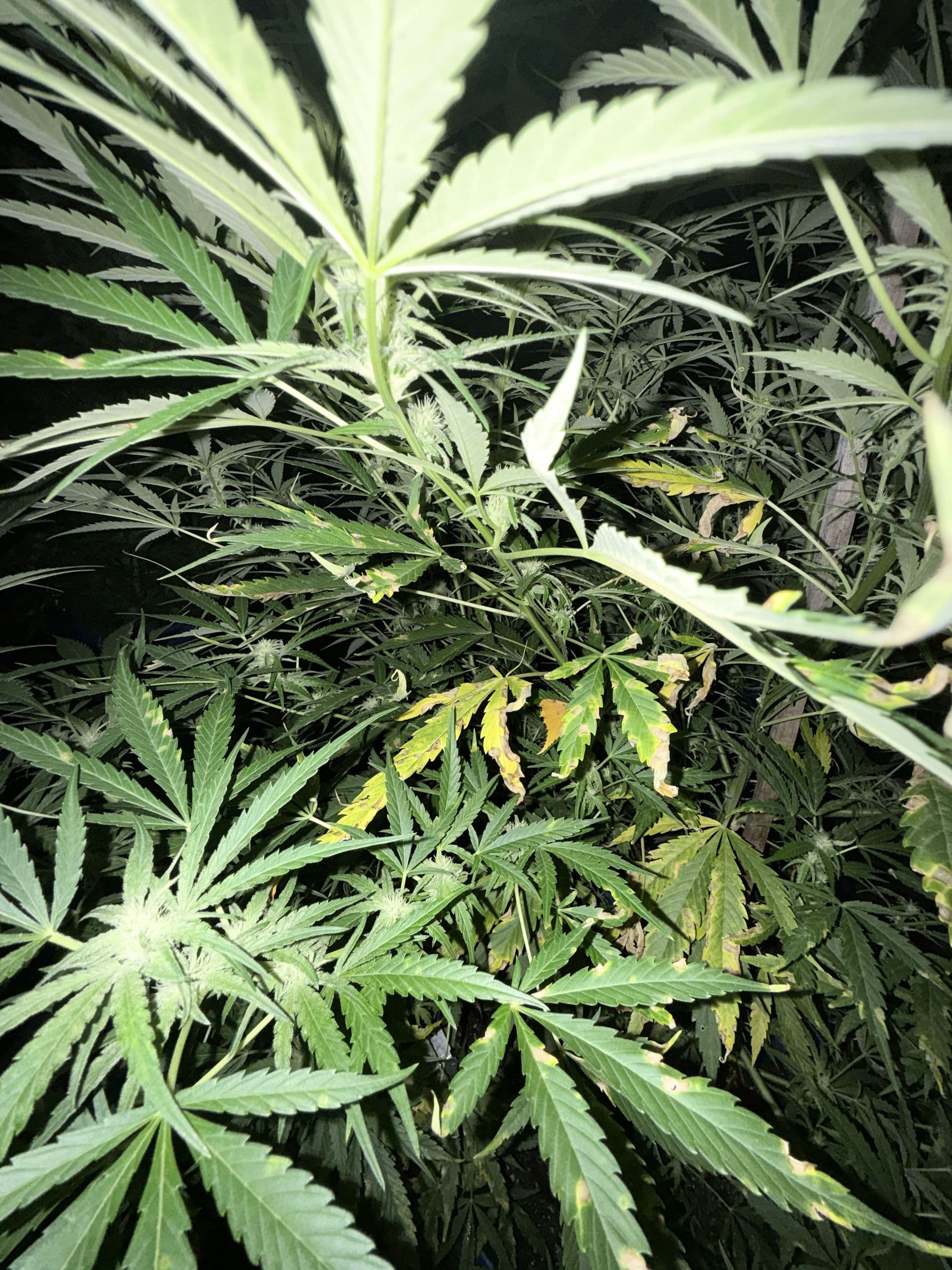
Cannabis fungal disease is driven by a small number of environmental levers — moisture on the plant surface, airflow, and temperature/humidity ranges specific to each pathogen — but the pathogens themselves are more numerous and more precisely identified than most growing guides suggest: at least 16 Fusarium species alone are documented on cannabis, powdery mildew is now attributed mainly to Golovinomyces ambrosiae (not a generic 'powdery mildew fungus'), and Botrytis cinerea accounted for 88% of 178 bud rot isolates in a two-year British Columbia field study. This pillar guide breaks down the real taxonomy, the peer-reviewed temperature/humidity data by growth stage, and the comparative treatment efficacy data available for each major disease.
Key takeaways
- Cannabis fungal disease isn't one problem — peer-reviewed research documents at least 16 Fusarium species alone affecting cannabis, plus distinct powdery mildew, Septoria, Botrytis, Sclerotinia and Colletotrichum pathogens, each with its own environmental triggers.
- Powdery mildew on cannabis is primarily Golovinomyces ambrosiae (a 2020s taxonomic revision, formerly grouped under G. cichoracearum), with Podosphaera macularis — the hop pathogen — confirmed as a second, less common cause.
- Botrytis cinerea alone accounted for 88% of 178 bud rot isolates collected over two years across 10 British Columbia cannabis sites (Punja et al., Simon Fraser University).
- Cannabis-specific greenhouse data recommends roughly 50-70% relative humidity in flowering, with airflow of 0.5-1.0 m/s shown to suppress Botrytis development directly.
- More than a dozen products ARE registered for cannabis use in Canada (BC Ministry of Agriculture table, June 2024) — mostly biological: Trichoderma, Bacillus, Streptomyces and Gliocladium products, plus two sulfur options for powdery mildew. Controlled trials on cannabis measured 30 to 56% reductions in disease severity, but only when applied before infection.
- How many fungal diseases actually affect cannabis?
- What causes fungal disease on cannabis — the real mechanism
- What temperature and humidity data actually applies to cannabis?
- What are the major fungal diseases affecting cannabis?
- How do you tell them apart at a glance?
- What treatments actually work, by the numbers?
- Is genetic resistance to fungal disease coming?
- What are the 6 universal prevention steps?
- Indoor vs outdoor: what changes?
- FAQ — Cannabis fungal diseases
This pillar guide is built from that research: named species, not genus-level guesses; humidity and temperature figures tested on cannabis in controlled greenhouse conditions, not borrowed wholesale from tomatoes or grapes; and treatment comparisons run head-to-head in actual trials rather than repeated by convention. Where a figure comes from a related crop rather than cannabis-specific data, we say so explicitly — the distinction matters if you're making a real decision about your plants.
How many fungal diseases actually affect cannabis?
More than most growers assume, and the taxonomy has shifted meaningfully in the last five years as researchers have applied modern molecular identification (ITS/gene sequencing) instead of older morphology-based guesses.
Powdery mildew is caused primarily by Golovinomyces ambrosiae, an obligate biotrophic fungus — this is a relatively recent taxonomic clarification; the pathogen was previously grouped under the broader G. cichoracearum label. A second species, Podosphaera macularis (better known as the hop powdery mildew pathogen), has also been confirmed naturally infecting cannabis under field conditions, and both species have been found co-occurring on the same plants in field surveys.
Septoria leaf spot is caused by Septoria cannabis, with a second, molecularly distinct species — Septoria neocannabina — recently described via multi-gene phylogenetic analysis. The two produce essentially the same leaf spot disease and are difficult to distinguish without lab identification; S. cannabis appears to be the more widely reported of the two.
Fusarium is the most taxonomically complex genus on this list by far: a 2021 review in Frontiers in Agronomy documents 16 distinct Fusarium species associated with cannabis disease, spanning six species complexes (F. oxysporum, F. solani, F. incarnatum-equiseti, F. sambucinum, F. tricinctum, and F. fujikuroi complexes). Different species specialize in different symptoms — some attack roots and crowns, others attack flower buds directly — which is why "Fusarium" as a single label undersells how differently an infection can present.
Botrytis cinerea causes the classic gray mold/bud rot, and remains overwhelmingly the dominant bud rot pathogen — but at least two other Botrytis species have been documented causing gray mold on industrial hemp in Oregon, meaning "Botrytis" isn't always a single species either.
Sclerotinia sclerotiorum causes hemp canker — stem cankers and crown/root rot — and is a generalist pathogen affecting over 400 plant species beyond cannabis, with sclerotia capable of surviving 3 to 5 years in soil.
Colletotrichum species (anthracnose), including C. fioriniae, cause water-soaked leaf spots that can progress to a full canopy blight under severe, prolonged wet-leaf conditions.
What causes fungal disease on cannabis — the real mechanism
Fungal spores are present almost everywhere, indoors and outdoors, essentially all the time. Disease only takes hold when surface and environmental conditions let a specific spore germinate and the fungus establish itself — and this is where the mechanism differs sharply between pathogens in a way most generic advice glosses over.
Moisture requirements differ by pathogen — this is the most misunderstood point. Botrytis cinerea needs free water on the surface to germinate efficiently: at 18-24°C, only about 2 hours of leaf wetness is enough. Powdery mildew works differently — research on related powdery mildew species confirms that standing water or prolonged leaf wetness actually inhibits and can kill most powdery mildew spores; the disease spreads from brief humidity spikes, not from wet leaves. Treating every fungal risk as "keep everything dry" misses this — a strategy tuned purely against Botrytis (avoid any leaf wetness) does nothing to stop powdery mildew, which thrives specifically without it.
Airflow controls localized humidity that room averages miss. Cannabis-specific greenhouse research recommends maintaining airflow of 0.5-1.0 m/s specifically because it suppresses microbial development, including Botrytis — a canopy with stagnant air can hold humidity at leaf and bud level well above what a room's average humidity sensor reports.
Temperature and humidity needs shift by growth stage — cannabis doesn't have one "safe zone." Peer-reviewed greenhouse guidance sets different targets at each stage: propagation/cloning around 20-24°C with humidity above 90%, vegetative growth around 25-28°C with 65-75% humidity, and flowering around 23-28°C with 50-70% humidity. Notably, this means the humidity level considered acceptable in propagation would be a serious bud rot risk in flowering — "ideal humidity" is stage-dependent, not a fixed number.
What temperature and humidity data actually applies to cannabis?
This is the section most guides get vague on. Here's what's actually documented, and where the data comes from a related crop rather than cannabis itself.
Cannabis-specific data (by growth stage, greenhouse research):
- Propagation/cloning: 20-24°C, >90% relative humidity
- Vegetative stage: 25-28°C, 65-75% RH (VPD roughly 0.94-1.1 kPa)
- Flowering stage: 23-28°C, 50-70% RH (VPD roughly 1.13-1.4 kPa)
- Reduced plant density measurably lowers ambient humidity levels in the canopy
- Germinates in vitro across a wide 5-30°C range
- At 18-24°C, as little as 2 hours of leaf wetness is enough to germinate
- Below 16°C or above 27°C, germination slows and requires longer wetness periods
- Requires relative humidity above roughly 90% for spore germination specifically (distinct from the ambient room humidity that affects bud-core moisture)
Sclerotinia sclerotiorum (general Sclerotinia pathology from related crops, applied to hemp by analogy): sclerotia germinate when soil water potential is at or above -100 kPa and soil temperature sits between 5-20°C; in non-tropical zones, a conditioning period of several weeks at or below 4.4°C in moist soil is typically required before germination.
The honest summary: cannabis-specific stage-by-stage humidity targets are well documented, but pathogen-specific germination thresholds mostly come from general plant pathology research on the same fungi affecting other crops, applied to cannabis by reasonable extension rather than cannabis-exclusive trials in every case. Where a cannabis-specific figure exists, it's the one to prioritize.
What are the major fungal diseases affecting cannabis?
Each of these has a distinct taxonomic identity and a distinct primary risk zone on the plant — treating them as interchangeable is where a lot of generic advice goes wrong.
Powdery mildew (Golovinomyces ambrosiae, Podosphaera macularis)
Signature: fine white powder on leaf surfaces, spreading to stems and sometimes flowers; leaves yellow and drop if untreated. Conditions: moderate temperature, brief humidity spikes rather than sustained leaf wetness — prolonged surface moisture actually suppresses it. Genetics: two candidate susceptibility genes (CsMLO1, CsMLO4) identified in 2021 research; no natural resistant cultivars yet exist commercially. Priority treatment: preventive mineral oil or plant-extract sprays before symptoms appear; potassium bicarbonate or citric/lactic acid products once established; sulfur vaporization in greenhouse settings. Dedicated guide coming soon to this cluster.
Septoria leaf spot (Septoria cannabis, Septoria neocannabina)
Signature: tan spots with a dark brown margin starting on the lowest, oldest leaves, climbing upward as the plant matures. Conditions: cool nights, humid days, sustained wet foliage — most common in late summer and fall. Priority treatment: remove infected leaves, copper-based fungicide, improve airflow. → Full guide: Septoria leaf spot on cannabis
Fusarium (16 species documented — F. oxysporum, F. solani, F. proliferatum, F. graminearum, F. equiseti and others)
Signature: varies sharply by species. F. oxysporum and F. solani attack roots and crowns — vascular discolouration, wilting, internal stem/pith blackening. F. equiseti and F. graminearum attack flower buds directly, causing circular tan-to-gray lesions and, in some cases, prolific pink-white mycelium. Conditions: warm, consistently wet soil for root/crown-attacking species; humid flowering conditions for bud-attacking species. Priority treatment: improve drainage, avoid overwatering, remove and destroy affected plants for root/crown infections — Trichoderma-based biological treatments have shown direct antagonism against F. oxysporum in trials. Dedicated guide coming soon to this cluster.
Bud rot / Botrytis cinerea
Signature: soft, discoloured buds that turn crisp and brown as the infection progresses, typically starting from the inside of a dense cola outward; circular leaf lesions with margins delimited by leaf veins. Conditions: overwhelmingly the dominant bud rot cause — 88% of 178 isolates in a two-year, 10-site British Columbia study — most frequently recovered September through February, when cool nights meet humid daytime conditions. Priority treatment: humidity control, airflow of at least 0.5-1.0 m/s through the canopy, harvesting before excessive bud density traps internal moisture. Trial data ranks Trichoderma harzianum and Reynoutria sachalinensis-based products as the most effective biological treatments tested. → Full guide: Mold on weed — bud rot prevention during flowering and storage
Sclerotinia sclerotiorum (hemp canker / white mold)
Signature: stem cankers and wilting beyond the canker point when ascospores infect aboveground tissue; crown, root, and stem-base rot when mycelium infects from the soil directly. Black sclerotia visible inside the stem pith on close inspection. Conditions: a generalist pathogen (400+ host plant species) whose sclerotia can survive 3-5 years in soil, making a previously affected growing site a long-term risk. Priority treatment: crop rotation away from affected sites, avoiding excess soil moisture, prompt removal of infected stems. Dedicated guide coming soon to this cluster.
Anthracnose (Colletotrichum fioriniae and related species)
Signature: water-soaked leaf spots progressing to dark brown or black lesions; under severe, sustained wet-leaf conditions can progress into a full canopy blight. Both mature and young plants are vulnerable, with young plants at risk of outright mortality. Conditions: prolonged wet leaf surfaces and poor air circulation. Priority treatment: remove infected foliage promptly, improve airflow and spacing to reduce leaf wetness duration. Dedicated guide coming soon to this cluster.
How do you tell them apart at a glance?
What treatments actually work, by the numbers?
Controlled comparative trials (cannabis-specific greenhouse research) rank treatment efficacy rather than listing options as equally valid — a distinction most grow guides skip.
Against flower/bud rot pathogens, tested in descending order of efficacy: Trichoderma harzianum-based products performed best, followed by Reynoutria sachalinensis extract, then Bacillus amyloliquefaciens, then Bacillus mycoides, then Gliocladium catenulatum. Hydrogen peroxide-based treatment showed no demonstrated effect in the same trial.
Against powdery mildew, preventively (applied before symptoms appear): mineral oil-based and Reynoutria sachalinensis-based products performed best.
Against powdery mildew, curatively (applied to an established infection): potassium bicarbonate and citric/lactic acid-based products performed best — notably different products from the best preventive options, meaning the right treatment depends on whether you're catching it early or already dealing with visible mildew.
Additional findings: Trichoderma shows direct antagonism against F. oxysporum in laboratory trials and also reduces post-harvest Penicillium populations. Nighttime UV-C application has been shown to suppress powdery mildew mycelium development directly.
The regulatory reality in Canada: contrary to what many growing guides claim, there are products registered for use on cannabis in Canada — the British Columbia Ministry of Agriculture publishes an official table (updated June 2024) listing more than a dozen, the majority of them biological. Registered options include Trichoderma harzianum products (RootShield, Trianum P — 0-day pre-harvest interval), Trichoderma asperellum (Asperello T34), Gliocladium catenulatum (PreStop), Bacillus amyloliquefaciens (Double Nickel — the only listed product naming white mould specifically), Streptomyces lydicus (Actinovate, CannaPM), and two sulfur products for powdery mildew (Agrotek vaporizer, Bartlett foliar spray, maximum 10 applications per cycle). Always verify current registration with Health Canada's PMRA before purchasing, since registrations change.
Is genetic resistance to fungal disease coming?
Not yet in commercial seed — but the research groundwork exists. Genome-wide analysis has identified two candidate susceptibility genes in the MLO gene family, CsMLO1 and CsMLO4, both showing measurable overexpression within hours to days of powdery mildew inoculation. Screening across 32 cultivars found over a dozen natural genetic variants (SNPs) in each gene, but no natural loss-of-function mutation — the kind that would confer real resistance — has been identified in any commercially available cultivar. A separate, distinct resistance locus (PM2) has also been mapped in more recent research, though this work is still at the preprint stage and not yet peer-reviewed.
In practical terms: MLO-based resistance (well established in crops like barley and tomato, where knocking out these genes confers durable mildew resistance) is a plausible future breeding target for cannabis, but it isn't in any seed you can buy today. Environmental management remains the only lever growers actually have.
What are the 6 universal prevention steps?
These habits address the shared root causes across nearly every disease covered here, with one important caveat: they're tuned primarily against Botrytis and Septoria, and slightly less against powdery mildew, which behaves differently around moisture (see below).
- Water at the base, not overhead. Overhead watering wets leaf surfaces and recreates the exact conditions Botrytis, Septoria and Colletotrichum need to germinate — though this specific step does little against powdery mildew, which doesn't require standing water.
- Prioritize airflow over raw humidity numbers. Cannabis greenhouse research specifically recommends 0.5-1.0 m/s airflow through the canopy to suppress microbial development — a room-average humidity reading can look fine while stagnant pockets around dense buds stay well above it.
- Manage the day/night temperature swing, not just the average. A gradual, moderate drop rather than a sharp one reduces the condensation that particularly favours Botrytis infection.
- Match humidity targets to growth stage. Roughly 50-70% RH in flowering is the cannabis-specific target range — what's appropriate in propagation (90%+) would be a serious bud rot risk by flowering.
- Sanitize tools between plants. Pruning shears and other tools can mechanically carry spores — including Fusarium, which can also spread through infected cutting material — from an infected plant to a healthy one.
- Clean up all plant debris at season's end, and consider site rotation outdoors. Spores and sclerotia overwinter in fallen leaves and old plant material; Sclerotinia sclerotia specifically can persist in soil for 3-5 years, making rotation away from a previously affected outdoor site a meaningfully longer-term precaution than annual cleanup alone.
Indoor vs outdoor: what changes?
Indoor growers control humidity and airflow directly, which means most fungal disease indoors traces back to an equipment or scheduling gap: a dehumidifier undersized for the room, fans that don't reach the lower canopy, or a light-off temperature drop that's too steep. Powdery mildew is a common indoor culprit precisely because it doesn't need the standing water most other pathogens do — just the brief humidity spikes that come with lights-off cooling cycles.
Outdoor growers are working against weather they can't control, which is why timing and airflow-through-spacing matter more than indoors. Septoria and Botrytis bud rot dominate outdoor risk in Canada, both peaking from late summer through winter as nights cool while daytime humidity lingers — matching the September-through-February window documented for Botrytis isolate recovery in British Columbia field research. Site selection (morning sun to dry dew quickly, open airflow rather than a sheltered corner) does more outdoor prevention work than any spray, and avoiding replanting cannabis on a site with a known history of Sclerotinia or Fusarium infection is worth the inconvenience given how long both pathogens persist in soil.
FAQ
What causes fungal disease on cannabis?
It depends on the specific pathogen more than most guides suggest. *Botrytis*, Septoria and anthracnose need surface moisture to germinate; powdery mildew actually spreads better from brief humidity spikes than from sustained wetness. Poor airflow and temperature swings that cause condensation drive most of these risks regardless of species.
How many different fungal diseases affect cannabis?
More than the handful usually named in grow guides. Peer-reviewed research documents at least 16 *Fusarium* species alone, plus distinct powdery mildew species (*Golovinomyces ambrosiae*, *Podosphaera macularis*), at least two *Septoria* species, *Botrytis cinerea* (and related *Botrytis* species reported on hemp), *Sclerotinia sclerotiorum*, and *Colletotrichum* anthracnose species.
What temperature stops fungal growth on cannabis?
There's no single number for every pathogen. *Botrytis* germination slows notably below 16°C or above 27°C. Powdery mildew research on related species shows suppression above roughly 30°C in some studies, with lethal effects reported starting around 36-38°C in certain species — though sustained heat that high stresses the plant too and isn't a practical control method by itself.
What humidity level actually causes fungal disease on cannabis?
It's stage-dependent, not a single threshold. Cannabis greenhouse research recommends roughly 50-70% RH in flowering; anything meaningfully above that raises bud rot risk. *Botrytis* specifically needs above roughly 90% RH for spore germination — but a dense bud's internal humidity can exceed that even in a room reading well below it.
Is Golovinomyces ambrosiae the same thing as regular powdery mildew?
It's the primary species responsible for what's commonly called cannabis powdery mildew, but the naming has shifted — it was previously grouped under the broader *G. cichoracearum* label until taxonomic revision separated it out. A second species, *Podosphaera macularis* (the hop powdery mildew pathogen), has also been confirmed on cannabis and can co-occur with *G. ambrosiae* on the same plants.
Why does powdery mildew behave differently from other fungal diseases around humidity?
Unlike *Botrytis*, Septoria, and most other cannabis fungal pathogens, powdery mildew spores don't need free water on the leaf to germinate — in fact, sustained leaf wetness actually inhibits and can kill most powdery mildew spores. It spreads instead from brief periods of elevated humidity, which is why it can appear even in grows that seem well-ventilated and reasonably dry overall.
Are all Fusarium infections the same?
No — this is one of the most misunderstood points in cannabis disease identification. At least 16 species are documented, and they specialize differently: some (*F. oxysporum*, *F. solani*) attack roots and crowns, causing wilting and vascular discolouration, while others (*F. equiseti*, *F. graminearum*) attack flower buds directly, causing lesions and sometimes visible mycelium on the bud itself.
Is Botrytis cinerea really the main cause of bud rot?
In the best-documented Canadian field study — 178 isolates collected across 10 British Columbia sites over two growing seasons — *Botrytis cinerea* accounted for 88% of bud rot isolates identified. It's overwhelmingly the dominant cause, though other *Botrytis* species and several *Fusarium* species can also cause bud rot symptoms that look similar without lab identification.
What season is bud rot most common in Canada?
Isolate recovery data from British Columbia field research shows *Botrytis* most frequently identified from September through February — the period combining cool nights with lingering daytime humidity, which matches the same conditions that drive Septoria outbreaks in outdoor grows.
Can genetics make a cannabis plant resistant to fungal disease?
Not yet in any commercially available cultivar. Research has identified candidate susceptibility genes (CsMLO1, CsMLO4) tied to powdery mildew, and this same gene family confers durable resistance in other crops when naturally mutated or edited out — but no natural resistance mutation has been found in the 32 cultivars screened so far, and this remains a research target rather than something in seed today.
What actually works against powdery mildew — prevention or treatment?
Different products for each, based on trial data. Preventive application (before symptoms appear) works best with mineral oil or *Reynoutria sachalinensis*-based products; once mildew is established, potassium bicarbonate or citric/lactic acid-based products perform better as a curative response.
Is there a registered fungicide for cannabis in Canada?
Yes — more than a dozen, according to the British Columbia Ministry of Agriculture's official table (June 2024), though the large majority are biological rather than conventional chemical fungicides. Registered options include *Trichoderma* products (RootShield, Trianum P, Asperello T34), *Gliocladium catenulatum* (PreStop), *Bacillus amyloliquefaciens* (Double Nickel), *Streptomyces lydicus* (Actinovate, CannaPM), and two sulfur products for powdery mildew. Many carry a 0-day pre-harvest interval; others range from 14 to 28 days. Verify current registration with Health Canada's PMRA before buying — registrations change, and the provincial table is a snapshot.
How long can fungal pathogens survive in soil between growing seasons?
It varies a lot by pathogen. *Sclerotinia sclerotiorum* sclerotia can survive 3 to 5 years in soil depending on conditions — considerably longer than most growers assume — which is why site rotation matters more for this pathogen specifically than a single season's cleanup would suggest.
Can fungal diseases affect the buds directly, or just the leaves?
Bud rot (*Botrytis*) and several bud-attacking *Fusarium* species (*F. equiseti*, *F. graminearum*) attack flower buds directly, often from the inside of a dense cola outward. Powdery mildew and Septoria are primarily leaf-surface diseases, though a severe, untreated powdery mildew infection can spread onto flowers as well.
Is fungal-infected cannabis dangerous to consume?
Products showing active fungal infection — visible mold, mildew, or soft rotted spots — shouldn't be consumed. Beyond contamination risk, a heavily infected harvest is also lower quality in the affected areas regardless of which specific fungus is involved.
How do fungal spores spread between plants?
Primarily through splashing water (rain, overhead irrigation) and wind, but also mechanically — on unsanitized pruning tools, hands, or clothing. *Fusarium* specifically can also spread through infected vegetative cutting material, making clone sourcing a relevant risk factor for this genus in particular.
Do fungal diseases come back every year in the same outdoor spot?
Often, yes — and for longer than most growers expect. *Sclerotinia* sclerotia persist 3-5 years in soil; *Botrytis* and Septoria spores overwinter in plant debris. Removing and destroying (not composting nearby) all plant material at season's end, and rotating growing location where a known infection occurred, breaks this cycle.
Are some cannabis strains more resistant to fungal disease than others?
Structurally, yes to a degree — cultivars with looser bud structure trap less internal moisture (lower Botrytis risk) than very dense, resin-heavy phenotypes. But no natural genetic resistance to powdery mildew has been confirmed in commercial cultivars yet (see the MLO gene research above), so structural traits matter more than any claimed disease-resistant genetics at this point.
Should I prioritize airflow or humidity control first?
Airflow, in most cases — cannabis greenhouse research specifically ties 0.5-1.0 m/s canopy airflow to suppressed *Botrytis* development, and it addresses stagnant micro-pockets of humidity that a dehumidifier's room-average reading won't catch. That said, powdery mildew's odd relationship with moisture (spreading from humidity spikes rather than wetness) means airflow alone isn't a complete answer for every pathogen on this list.
Can I treat an infected plant and still get a normal harvest?
For leaf-level disease (Septoria, early powdery mildew, anthracnose) caught before it reaches the buds, generally yes — remove infected material, treat, and continue as normal. Bud-level infection (Botrytis or bud-attacking Fusarium) is different: an infected bud should be removed and discarded outright, since the affected tissue won't recover once the core is compromised.
What's the single most effective habit for preventing fungal disease overall?
Airflow through the canopy, based on the available research — it's the one control shown to directly suppress *Botrytis* development, it addresses the stagnant humidity pockets that most drive Septoria and anthracnose, and it works continuously rather than requiring a scheduled intervention like a spray does.
Why do different sources give different temperature numbers for the same disease?
Because much of the detailed germination-threshold data available comes from general plant pathology research on these same fungi affecting other crops (tomato, grape, canola), applied to cannabis by reasonable extension rather than from cannabis-exclusive trials in every case. Where cannabis-specific greenhouse data exists — as it does for stage-by-stage humidity targets — it should be weighted more heavily than a figure borrowed from a different crop. For variety-specific growing guidance and a full breakdown of insect and pest threats — a related but distinct set of problems — see our companion [guide to cannabis pests and insects](/en/articles/cannabis-pests-practical-guide). If you're building an outdoor rotation designed to finish before fall humidity peaks, our [autoflowering strains](/en/shop/autoflowering) are worth a look.
19+ | Educational horticulture only.