Every Part of the Plant
Cannabis Plant Anatomy
Mold on Weed: Bud Rot Prevention During Flowering & Storage
Mold on weed: how to identify bud rot, prevent it during flowering, and safely store cured cannabis. Canadian climate guide for growers.
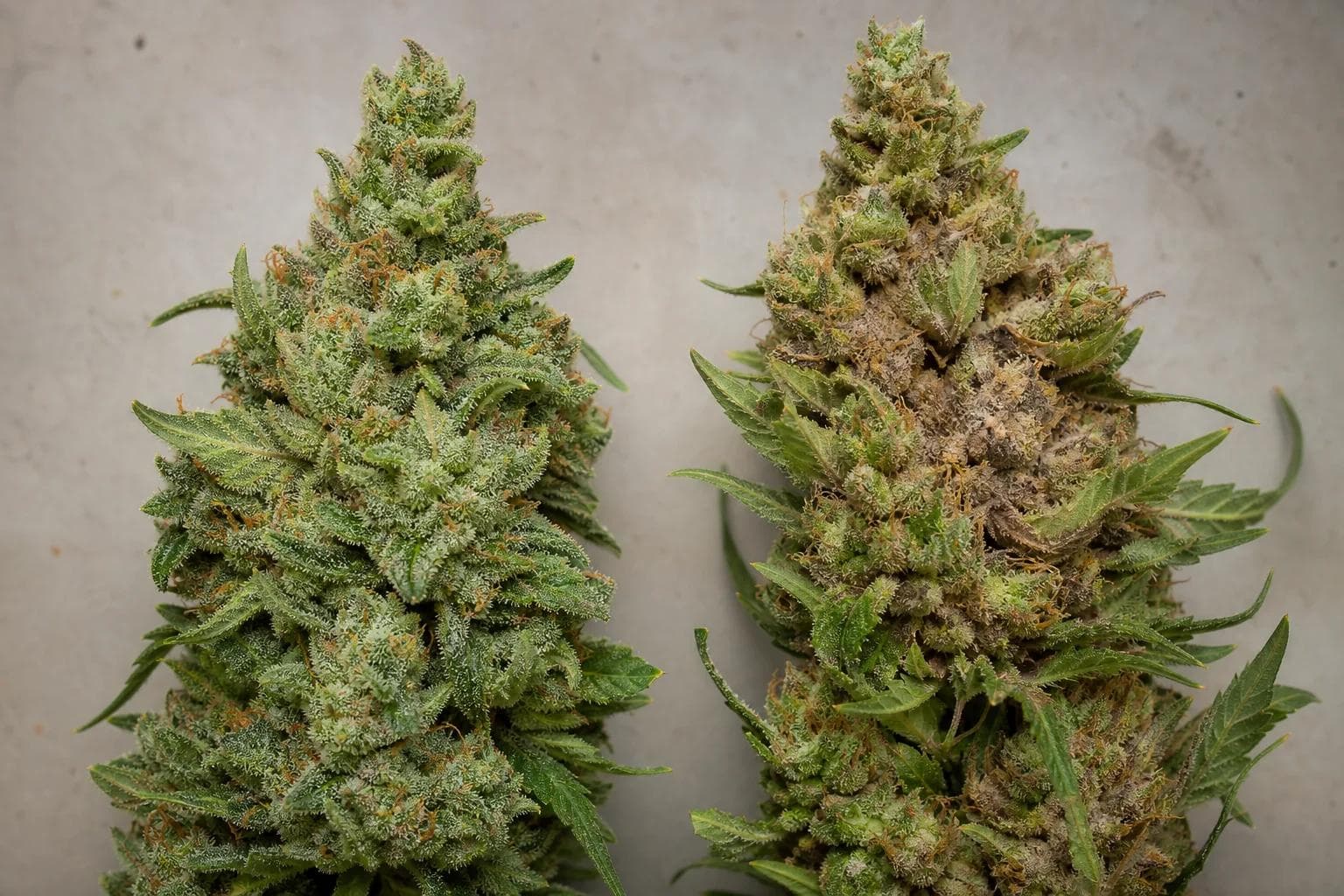
Bud rot (Botrytis cinerea) is a fungal pathogen that destroys cannabis colas from the inside out during late flowering and continues spreading through drying and storage if relative humidity stays above 65% RH. Keep late-flower RH below 50%, run oscillating fans continuously, and store cured buds at 58–62% RH in sealed glass jars to eliminate the risk at every stage.
What is bud rot, and why does it destroy cannabis so fast?
Mold on weed — specifically Botrytis cinerea bud rot — is a fungal disease that colonizes cannabis tissue by germinating inside dense cola cores where air circulation is lowest. It is the single most common cause of late-flower crop loss for Canadian home growers, capable of collapsing a mature cola within 24–48 hours under the right humidity conditions.
Botrytis spreads through airborne spores present in virtually every growing environment. Under dry conditions, spores remain dormant on surfaces indefinitely. When relative humidity climbs above 70% and free water contacts plant tissue — through condensation, rain, heavy dew, or restricted airflow — fungal hyphae germinate and begin breaking down plant cells. The speed is disorienting: a cola that looks healthy at 6 p.m. can show grey collapse by morning.
Dense indica-leaning genetics are hit hardest. Overlapping petals in a tight cola trap moisture inside the bud structure, creating a humid microclimate that stays wet long after the canopy surface dries. That structural density is a yield advantage in good conditions — and a liability the moment humidity climbs.
The damage is also progressive. Once rot takes hold inside a cola, adjacent healthy tissue is already coated in microscopic spores. This is why "cutting around" affected areas is not a reliable fix — and why every triage rule in this guide is strict.
Understanding the Cannabis Flowering Stage Guide week by week helps you time your environmental responses before Botrytis has a chance to establish.
What does bud rot look like on cannabis?
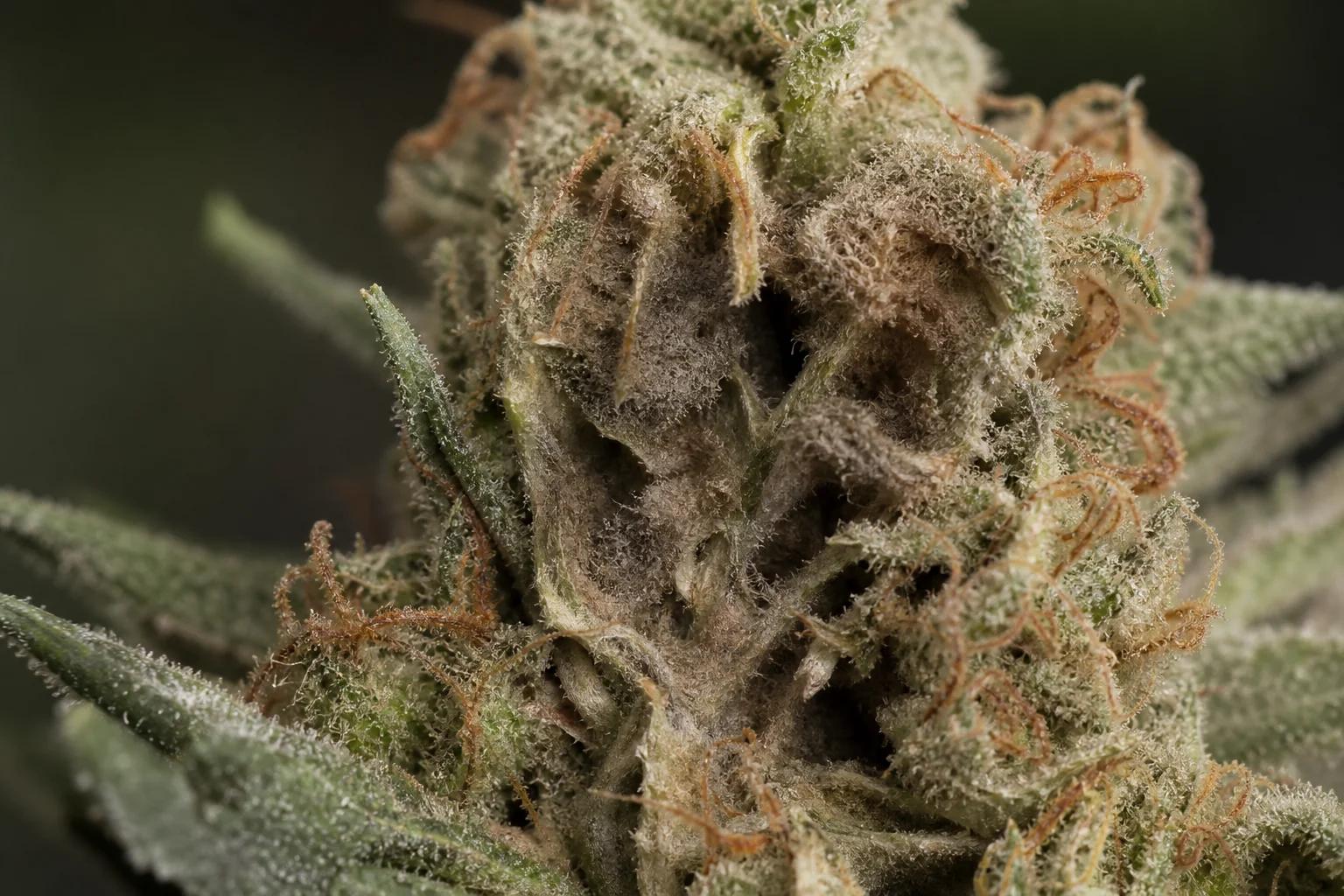
Mold on weed first appears as brown or grey discolouration inside the base of a cola — not on the outer leaves. The earliest external sign is one or two leaves turning yellow or wilting unexpectedly while the rest of the canopy looks healthy. By the time visible grey fuzz appears, the infection is advanced.
Early-stage visual signs:
- A single yellowing or dead fan leaf emerging from an otherwise healthy tight cola
- Soft or mushy bud tissue at the stem junction when gently probed
- Dark brown discolouration spreading from the core outward through petal layers
- A damp, waterlogged appearance to affected sections of the bud
- Dense grey mycelium — the hallmark "grey mould" appearance of Botrytis
- Cola collapsing into a soft, wet, dark mass
- Visible spore dust released when disturbed
How do browning pistils differ from rot?
Browning pistils are a normal, genetically programmed signal of late-stage ripening — not decay. Pistils shift from white to amber or brown as trichomes mature, typically across weeks 7–10 depending on genetics. Rot browning originates in the bud interior and is accompanied by tissue softness and a faint musty odour. Cannabis Pistils Explained
If pistils are browning from the tip inward and the bud tissue feels firm and resinous, you are watching normal ripening. If the browning starts inside the cola and the underlying tissue is wet, discoloured, or smells off, probe deeper and investigate immediately.
How do you tell bud rot apart from powdery mildew?
What causes bud rot in cannabis?
Bud rot does not appear randomly. It requires three converging conditions: ambient Botrytis spores (present almost everywhere), a susceptible host, and the right microclimate. Remove any one of the three and the pathogen cannot establish.
Free water is the trigger for mold on weed, not just high humidity. Botrytis spores require liquid water on a surface to germinate — not merely humid air. This free water arrives through condensation (cool nights after warm humid days), direct rain contact, heavy dew on outdoor plants, or excessive transpiration in an under-ventilated tent. Once a surface stays wet for two to four hours, germination can begin.
Cola density determines susceptibility. Indica-dominant and indica-leaning hybrids produce compact, dense colas with tightly packed internodal spacing. These structures trap moisture internally even when the outer surface appears dry. Push your fingers into the core of a tight indica cola an hour after lights-off and you'll often find it still damp inside. Sativa-dominant genetics, with their more open and airy bud structure, shed moisture faster and present fewer still-air pockets. Sativa vs Indica Plants covers structural differences between plant types that directly affect rot risk.
Late-flower plant stress compounds vulnerability. Plants stressed by heat fluctuations, excessive nitrogen late in flower, or root issues have weakened vascular tissue — easier colonization routes for fungal hyphae once the microclimate tips in Botrytis's favour.
What humidity and temperature trigger bud rot?
Bud rot risk rises sharply when relative humidity (RH) exceeds 70% at temperatures between 17–24°C. Below 50% RH at similar temperatures, Botrytis spore germination is strongly inhibited regardless of spore load.
This range is precisely the problem for late-summer outdoor growing in Ontario, Quebec, and the Maritime provinces, where September nights drop to 12–15°C while daytime humidity stays above 70%. The resulting condensation cycle — warm humid days, cool nights — produces free water on bud surfaces repeatedly across weeks 7–10 of a long-finishing photoperiod strain.
Indoors, the same danger zone appears when a grower removes the dehumidifier in week 6 to "let the plant finish naturally" while lights-off temperatures drop. At lights-off, transpiration slows and canopy temperature can fall several degrees below ambient — below the dew point if RH is mismanaged.
To understand the relationship between temperature, humidity, and vapour pressure deficit (VPD) precisely, see Cannabis VPD, Temperature & Humidity Guide. The RH target for late flower indoors is 40–50% — aggressive, but necessary.
How do you prevent bud rot during late flowering?
Bud rot prevention is an integrated management problem, not a single action. It requires controlling the microclimate inside the canopy, not just the room average. The tools differ by growing environment, but the underlying logic — eliminate free water, maximize airflow, reduce spore load — is the same across all three.
How do indoor growers stop bud rot before it starts?
Indoor prevention runs on three levers: dehumidification, airflow, and canopy architecture.
Dehumidification: The most reliable barrier against mold on weed is a properly sized dehumidifier running throughout late flower — do not stop in the final two weeks. For a 4×4 tent at week 6 and beyond, target 40–50% RH. A 30-pint-per-day unit handles most single-tent setups; larger rooms need proportionally more capacity. Run it through lights-off too — that's when temperature drops, RH climbs, and the canopy sits in still air for hours.
Oscillating fans: Position at least one oscillating fan at canopy level and one below the canopy to prevent dead-air pockets inside dense colas. Moving air evaporates surface moisture and disrupts the humidity layer that forms around tight bud structures. Two small oscillating units working through the canopy do more than a single static fan aimed at the wall.
Canopy management and plant spacing: Selective defoliation in weeks 5–6 opens airflow channels between colas. Remove large fan leaves blocking air paths without over-stripping. See Cannabis Defoliation Guide for timing and technique. Crowded plants share both humidity and spore load — maintain at least 50 cm between pots indoors.
IPM workflow:
- Inspect canopies three times per week from week 5 onward
- Remove dead or yellowing leaf material immediately — decaying tissue is Botrytis food
- Wipe condensation from tent walls during lights-off temperature drops
- Keep growing medium surface dry — wet topsoil adds ambient humidity inside the tent
How do outdoor Canadian growers beat September humidity?
For outdoor growers across Ontario, Manitoba, and the Maritime provinces, September is the highest-risk window. In Halifax, late-season Atlantic storm systems push RH above 80% for days at a time — this is a plant architecture and genetics problem as much as an environmental one. Outdoor Cannabis Calendar Canada maps the regional harvest windows in detail.
Early-finishing genetics: In Ontario and Quebec, outdoor plants finishing in mid-to-late September are racing against the first major sustained humidity period. Genetics that finish by late September rather than mid-October dramatically reduce exposure. Vancouver's coastal climate adds its own challenge — Pacific moisture persists into October even in milder years, and the lower mainland sees rot pressure comparable to Portland, Oregon, where late-season rain events hit outdoor crops hard in the same harvest window.
Rain protection: A simple polycarbonate panel or lean-to over plants during rain events prevents the direct water contact that triggers germination. After any heavy rain, shake water from dense colas — trapped water in a bud core is a direct rot accelerant.
Plant spacing: Maintain 1.5–2 metres between plants outdoors to allow wind to perform the same dehumidification function that fans provide indoors.
In Calgary and Edmonton, the drier Prairie climate offers natural protection against September rot that Ontario and Quebec growers don't enjoy. Denver outdoor growers see a similar advantage from the arid altitude — but early frost is the tradeoff in both regions, making early-finishing genetics the correct selection regardless.
How does greenhouse growing reduce mold risk?
Greenhouses offer temperature buffering and rain protection but create their own humidity traps if ventilation is passive. Active ventilation — ridge vents combined with wall-mounted fans — and a dehumidifier during the final two weeks are non-negotiable. Closing a greenhouse at night without active humidity management recreates the exact condensation cycle that triggers outdoor rot.
Can you save buds with bud rot?
The decision rule is clear: cut wide, not close. If you find an infected cola, remove it entirely with at least 5 cm of healthy stem below the visible rot boundary. Seal the removed material in a bag and exit the grow room without carrying it across the canopy.
Do not attempt to cure or dry rotted material for consumption. Do not rinse, peroxide-wash, or "trim around" affected areas expecting to salvage the bud. Mycotoxins produced by Botrytis penetrate beyond the visibly discoloured zone — what you can see is not where the contamination ends.
If rot is extensive (25–30% or more of colas affected): Consider an early harvest of all unaffected colas if the plant is within one to two weeks of its target window. A harvest at 85–90% trichome maturity is a significantly better outcome than losing half the crop to spreading rot. See When and How to Harvest Cannabis for the maturity signals that confirm an early harvest is viable.
How do you stop bud rot from spreading after you spot it?
Triage sequence — in order:
- Identify fully — walk the entire canopy before touching anything. One infected cola means adjacent plants have been exposed to elevated spore load.
- Isolate yourself — stop touching healthy buds after contacting infected material. Spores transfer on hands, scissors, and clothing.
- Cut wide — remove the infected cola with a 5 cm clean margin below the visible rot. Sterilize scissors with isopropyl alcohol between every cut.
- Bag it immediately — seal removed material in a plastic bag before carrying it through the grow room. An open infected cola moved through the space releases a spore cloud.
- Drop humidity fast — bring RH below 50% as quickly as possible after discovery. Every additional hour above 65% RH with active Botrytis present accelerates exponential spread.
- Inspect again at 24 and 48 hours — secondary infection points regularly appear 1–2 days after initial discovery, as spores that landed during the first event germinate.
Does bud rot keep spreading after harvest?
Yes. Mold on weed does not stop at harvest — Botrytis cinerea continues growing on cut cannabis during the drying phase whenever RH exceeds 65% or temperature drops into the condensation range overnight.
Growers who harvest a partially infected plant and hang it in a humid room often find two days later that rot has progressed to previously healthy colas. The spore load released during harvest — particularly during wet trimming — is also high, and cut surfaces provide direct entry points.
The drying environment is not neutral. It is an active mold-risk environment that requires the same environmental discipline as the late-flower tent.
How do you dry cannabis without growing mold?
A well-managed drying environment is one of the clearest competitive advantages available to a home grower. The right parameters prevent both mold and terpene loss during the most vulnerable post-harvest window.
Target drying room parameters:
- RH: 55–60% (do not exceed 65%; do not drop below 45%)
- Temperature: 18–21°C
- Light: Dark — UV degrades cannabinoids and terpenes during drying
- Airflow: Oscillating fan on low, not aimed directly at hanging buds
Timeline: Most cannabis dries properly in 7–14 days at these parameters. Buds are ready to jar when the smallest stems snap cleanly rather than bending.
In a Canadian basement, winter furnace heating pulls ambient RH down to 20–30% in Toronto, Ottawa, and Winnipeg homes from November through March — this can over-dry buds and degrade terpenes within days. A small humidifier corrects this. Summer basement conditions in the same cities may push ambient RH to 70–80%, requiring active dehumidification. A hygrometer is not optional — it is the most important piece of equipment in the drying room.
How do you prevent mold in cured and stored cannabis?
Curing and long-term storage are where mold on weed catches growers most off guard — attention drops because the plant is "done," but Botrytis doesn't care. Curing and Storing Cannabis Buds covers the full curing process; here is the mold-specific protocol.
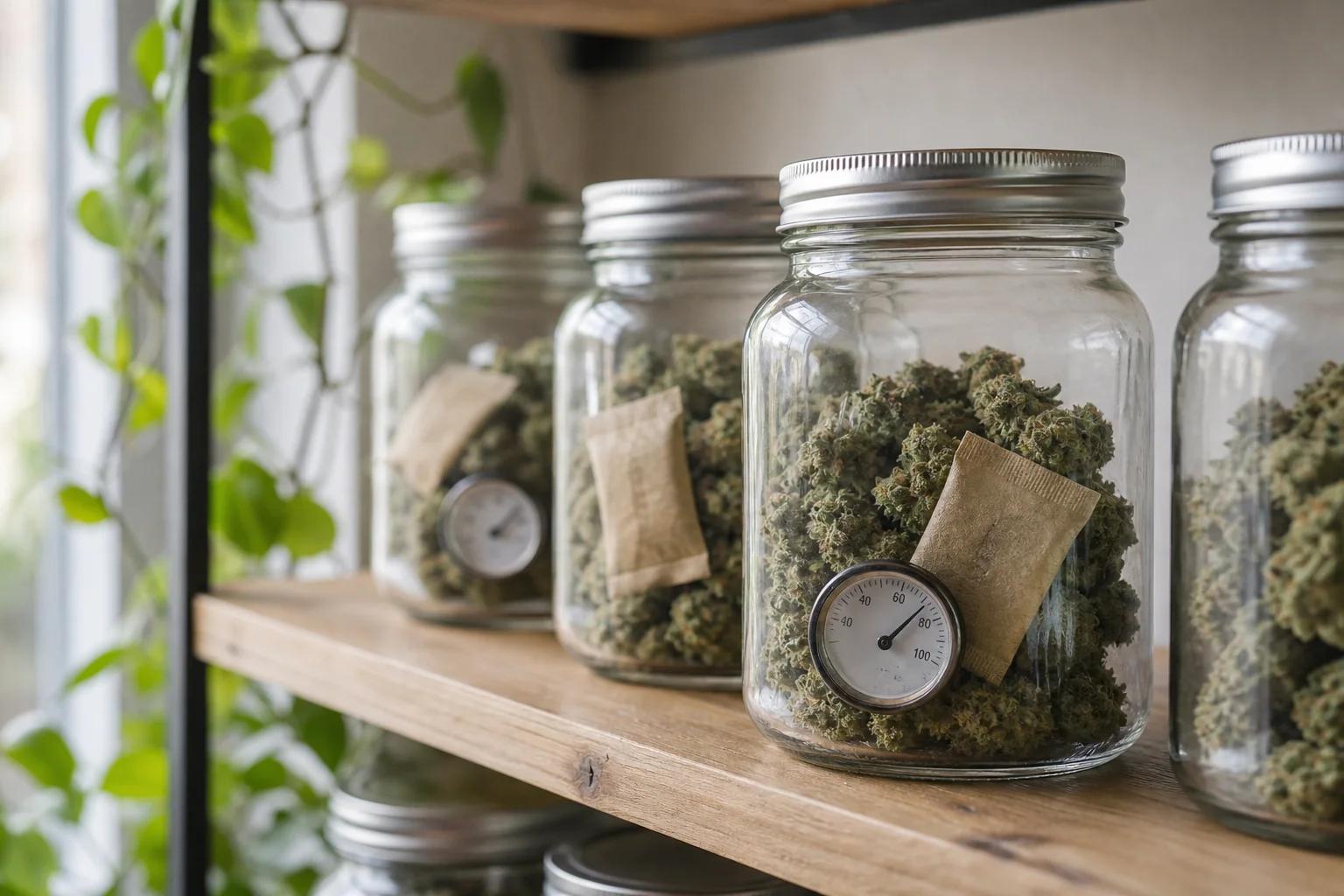
Target jar RH: 58–62%. Below 55%, terpene degradation accelerates noticeably within weeks. Above 65%, mold risk climbs sharply — and in a sealed jar, that threshold is reached and held continuously.
Boveda packs (62% RH): Insert one appropriately sized Boveda or Integra humidity pack per jar. These two-way humidity regulators prevent both over-drying and over-humidification. They maintain clean buds — they do not remediate contaminated ones.
Burping protocol: During the first two to four weeks of curing, open jars daily for 15–30 minutes to release off-gassing and equalize residual moisture. If buds feel sticky or smell of ammonia after closing, they went into the jar too wet — spread them on a clean surface for two to four hours before re-jarring.
Container choice: Wide-mouth glass mason jars are the standard. Avoid plastic bags beyond two weeks — plastic off-gasses, and zip-lock seals degrade with temperature fluctuations. Opaque or ceramic containers are preferable for storage exceeding three months.
Storage environment: Cool, dark, and temperature-stable. An interior closet shelf is better than a garage, windowsill, or basement exposed to seasonal swings.
How should Canadians store cannabis through winter heating and summer humidity?
Canadian home growers face a two-season storage challenge that most guides never address — and that creates mold risk even after a perfectly executed cure.
Winter (forced-air furnace heating): Indoor RH drops to 20–30% in Ottawa, Winnipeg, and Toronto homes from November through March. Mason jars without humidity packs will lose moisture rapidly — buds drop below 55% RH within weeks, destroying terpene profiles. Use Boveda 62% packs and replace every two to four months. This is not an optional winter step; it is baseline storage hygiene.
Summer (basement storage): Canadian basements reach 60–75% ambient RH through July and August. A sealed mason jar with a fresh Boveda pack absorbs excess humidity from the jar atmosphere. Jars stored in a humid basement without humidity control are a mold risk even after a clean cure — the pack is what stands between the bud and the ambient environment.
Garage storage: Not recommended in Canadian climates. Temperature swings exceeding 20°C between night and day in shoulder seasons cause condensation inside sealed containers. Seattle outdoor growers face the same issue in their damp Pacific winters — even garage shelves protected from rain are subject to condensation cycling.
Freezer storage: Long-term freezer storage is viable for seeds and trim but problematic for whole cured buds. Trichomes become brittle and break at freezing temperatures, and moisture condenses on buds during defrost cycles. If freezing cured flower, vacuum-seal first and defrost slowly in the refrigerator — never at room temperature.
Is moldy weed safe to smoke?
No. Mold on weed makes it unsafe to consume by any method — smoked, vaped, or used in edibles. The safety rule is absolute.
Botrytis cinerea produces mycotoxins that can cause respiratory irritation in healthy individuals. Cannabis mold frequently co-occurs with Aspergillus species, which are substantially more dangerous. Aspergillus fumigatus spores inhaled via smoking have been associated with invasive pulmonary aspergillosis in immunocompromised patients. Health Canada does not provide a "safe threshold" for mold in cannabis — the guidance is unambiguous.
Attempting to "bake off" mold by decarboxylating at high temperature does not neutralize mycotoxins. Mycotoxins are thermostable at baking temperatures. If the product is visibly contaminated, it is discarded — not processed.
Can you wash mold off weed?
No. Bud washing — rinsing cannabis in hydrogen peroxide solutions or plain water — is sometimes promoted as a mold remediation technique. It does not work on established Botrytis infection.
Surface washing removes visible grey mycelium but cannot penetrate the bud interior where hyphae have colonized tissue. It does not eliminate mycotoxins already present in the degraded tissue matrix. Post-wash drying also creates a new mold-risk window — wet cannabis in a humid environment is near-optimal conditions for secondary infection.
Bud washing has a legitimate and separate use case: removing surface dust, outdoor pollutants, and spray residue from uninfected cannabis at harvest. It is a cleanliness practice, not a contamination fix.
What does a complete bud rot prevention checklist look like?
Flowering Stage (Weeks 5–Harvest)
- Maintain RH at 40–50% — run dehumidifier through lights-off period
- Position oscillating fans at canopy level and below; eliminate dead-air pockets
- Defoliate strategically at weeks 5–6 to open airflow paths between colas
- Maintain minimum 50 cm spacing between pots indoors
- Inspect canopy three times per week — look for sudden leaf wilt inside colas
- Remove dead or yellowing leaf material immediately
- Wipe condensation from tent walls during lights-off temperature drops
Outdoor (Late Summer Through Harvest)
- Know your regional calendar — see Outdoor Cannabis Calendar Canada
- Select genetics finishing before late September for Ontario, Quebec, and Maritime grows
- Install rain cover for the final four weeks of flowering
- Shake free water from dense colas after rain events
- Maintain 1.5–2 m spacing between outdoor plants
At Discovery
- Cut 5 cm below visible rot margin with sterilized scissors
- Seal removed material immediately before crossing the canopy
- Sterilize tools with isopropyl alcohol between every cut
- Drop RH to below 50% immediately
- Re-inspect at 24 and 48 hours post-triage
Drying Room
- Target 55–60% RH at 18–21°C — confirm with a hygrometer
- Dark room — cover all light sources
- Oscillating fan on low, not aimed directly at buds
- Hang whole branches; do not rush below 7 days
Curing and Storage
- Jar at 58–62% RH — insert Boveda or Integra 62% pack per jar
- Burp jars daily for the first two to three weeks
- Store in cool, dark, temperature-stable location (interior shelf preferred)
- Replace humidity packs every two to four months
- In winter-heated Canadian homes, monitor jar RH monthly
Mold risk is also present earlier in the lifecycle — see Preventing Mold & Rot During Cannabis Seed Germination for the germination-stage guide.
FAQ
What RH should I keep my grow tent at during week 7?
Target 40–50% RH in week 7 and beyond. By this stage, bud mass and cola density are at their highest — the internal microclimate inside a dense cola can run 5–10% higher than the room average. Aggressive dehumidification through lights-off is the most important single environmental action in late flower.
How fast does bud rot spread once it starts?
In optimal *Botrytis* conditions (RH above 70%, 17–22°C), a single infected cola can become a visible grey mass within 24–48 hours. Adjacent colas exposed to spore drift typically show secondary symptoms within three to five days. Discovery-to-triage within the same day is the only reliable response window — the window does not stay open.
Can I cure rotted buds and use them later?
No. Curing does not neutralize mycotoxins or eliminate fungal hyphae embedded in bud tissue. Material with visible bud rot should be discarded in full — not dried for later use, not processed into edibles, not used for any consumption method. The contamination is not correctable post-harvest.
Why does outdoor cannabis in Quebec rot in September?
Quebec's September weather pattern combines warm daytime humidity — often 70–85% RH during unsettled periods — with cool nights dropping to 10–14°C. This creates repeated condensation cycles on dense bud surfaces: exactly the free-water conditions *Botrytis* spores require to germinate. Growers selecting genetics that finish before mid-to-late September sidestep the majority of this risk.
Does CO₂ supplementation increase bud rot risk?
Not directly — CO₂ itself does not promote *Botrytis*. However, the elevated canopy temperatures often maintained alongside high-CO₂ supplementation (28–30°C lights-on) create a larger temperature delta at lights-off, increasing condensation risk on canopy surfaces. Properly sized dehumidification covers this; the CO₂ variable is secondary.
What's the best dehumidifier size for a 4×4 grow tent?
A 30-pint-per-day (approximately 14 L/day) portable dehumidifier handles a single 4×4 tent under most conditions. In regions with high ambient humidity — coastal BC, summer basements in Montreal or Halifax — a 50-pint unit provides the capacity headroom needed during late flower. Run on a humidistat set to 45% rather than on a continuous cycle.
Is brown bud always rot?
No. Normal late-stage senescence, nutrient flush, and trichome ripening all cause visible browning. Mold on weed is a specific pattern — the diagnostic question is *where* the browning originates: pistils browning from the tips inward with firm, resinous tissue = normal ripening. Cola tissue browning from the core outward with softness or a musty odour = investigate for rot immediately.
Should I cut my plant early if I see rot?
If the infected area is isolated — one or two colas — and the plant is within one to two weeks of its target harvest window, cut the infected material and manage the environment aggressively for the remaining time. If 25–30% or more of colas show infection, harvesting all unaffected material immediately is the better outcome than watching spread accelerate over days.
Can mold get through Boveda packs?
Boveda packs maintain humidity — they do not sterilize the jar contents. If buds were jarred with existing mold contamination, a 62% pack will maintain conditions that support continued fungal growth. Humidity packs protect clean cannabis; they are not remediation tools for already-infected material.
Do mold-resistant strains exist?
Genetics influence susceptibility meaningfully — strains with open, airy bud structures and shorter flowering windows are inherently less vulnerable than dense, long-season plants in humid climates. No strain is immune to *Botrytis* under conditions of extreme humidity and poor airflow. Genetics are one variable in an integrated management system, not a standalone solution.
19+ | Educational horticulture only.