Every Part of the Plant
Cannabis Plant Anatomy
Cannabis Pistils Explained: What White and Amber Hairs Mean
What pistils are, what white and amber hairs mean, and how to use them to time your cannabis harvest in Canada. The complete guide for growers.
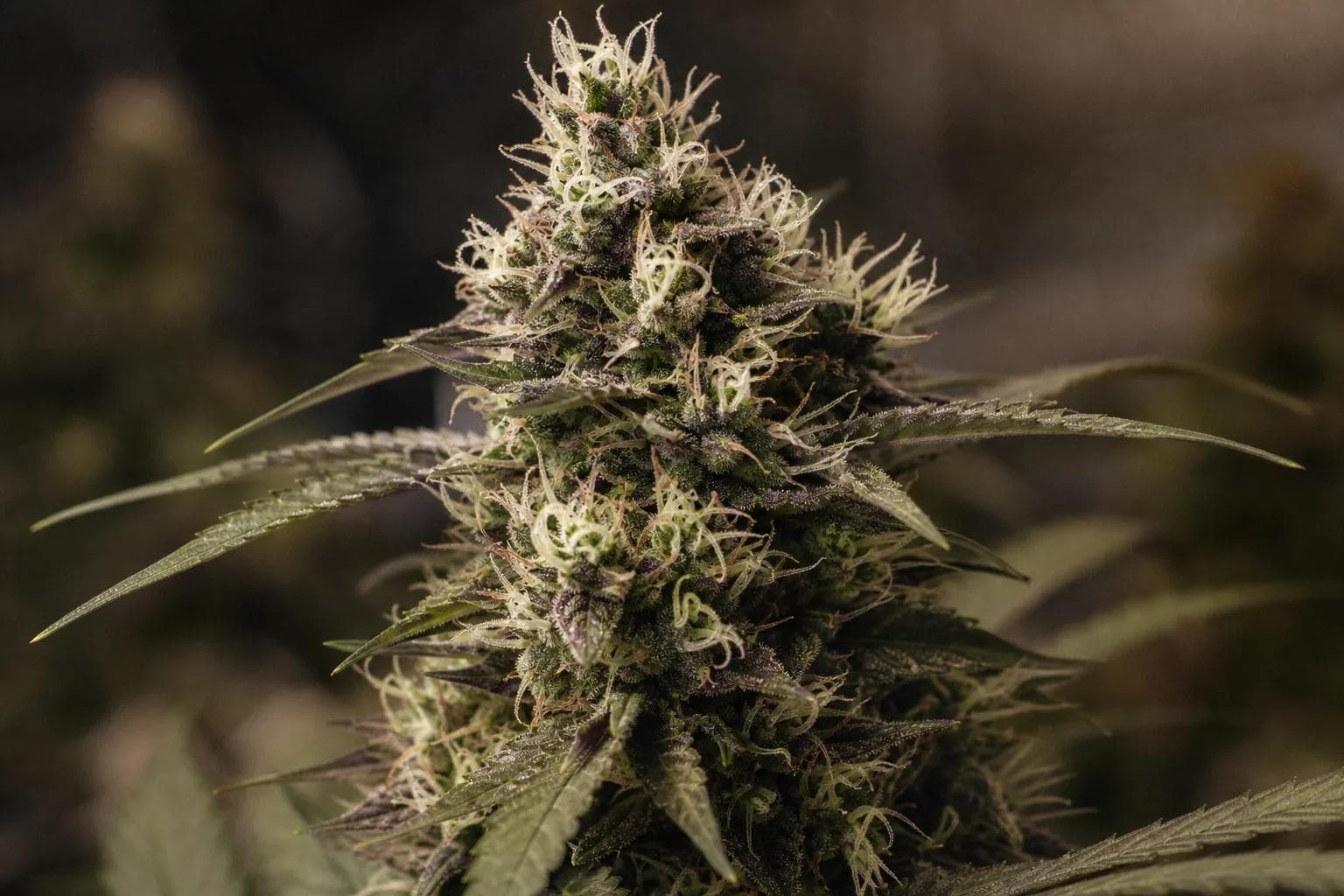
Cannabis pistils are the female reproductive structures on flowering plants — the fine hairs you see are the stigmas, and they shift from white to orange and amber as buds ripen over 6–12 weeks of flower. They're a useful ripeness indicator, but not a harvest trigger. Trichome colour, not pistil colour, decides when to cut.
Week 4: white hairs everywhere. Week 6: a few orange ones creeping in. Week 9: you're hunched over your bud with a loupe, tallying percentages, trying to convert colour into a cut date.
Every grower ends up here. And almost every grower gets burned — not because the pistil lies, exactly, but because it tells a story rather than a verdict. The white hairs on your plant carry real biological information about where it sits in the reproductive cycle. What they can't do, accurately and alone, is tell you whether it's time to chop.
That's what this article is about: what pistils actually are, what each colour stage means, what breaks the signal, and how to use them honestly alongside trichomes to make confident harvest calls.
What Are Cannabis Pistils, Exactly?
Cannabis pistils are the female reproductive organs of the cannabis flower, each consisting of three parts: the stigma (the visible "hair"), the style (the connecting stalk), and the ovary nestled inside the calyx. What growers call "white hairs" are specifically the stigmas — one component of the full pistil structure, not the whole thing.
Most growing guides conflate the stigma and the pistil, which leads to sloppy language and sloppy readings of the plant. The stigma is the thread-like projection you see extending from the calyx surface. Its only biological job is catching pollen — it's coated in a sticky secretion designed to trap airborne or insect-carried male gametes. When growers say "my pistils are turning amber," they're accurately describing stigma senescence: the natural drying and oxidation of that exposed hair as the plant ages past its active pollen-catching window.
The broader pistil structure — stigma, style, ovary — sits inside or just above the bract and calyx of each individual flower. In a sinsemilla grow, the ovary never develops into a seed. The calyx instead swells with resinous material as the plant redirects reproductive energy toward cannabinoid and terpene production. That's exactly the outcome you're managing for.
Pistils are also the first anatomical sign of sex. When a female plant begins expressing its gender — in the pre-flower window of late veg, or in the early weeks of flower — the first signal is a pair of fine white hairs emerging from the node junction, just above a bract. That two-hair preflower is the earliest reliable confirmation you're working with a female.
Why Do Cannabis Pistils Start White?
Fresh stigmas are white because they are metabolically active, hydrated tissue designed to catch pollen. When the plant enters its flowering stage, pistils extend outward from each calyx to maximize surface area and increase the probability of catching windborne pollen. White colour signals the stigmas are viable and receptive — biologically ready to do their job.
At this stage, the ovary beneath is undeveloped. No seed formation has begun, and the calyx and surrounding bracts are just starting to accumulate the resinous trichomes that will define your final harvest.
From a cultivation standpoint, a bud producing white pistils is still building. Calyx stack is happening. Trichome density is increasing. The plant has not yet begun redirecting energy toward maturation. White pistils mean grow is in progress — this is not the window to harvest.
When Do Pistils Start Turning Orange or Amber?
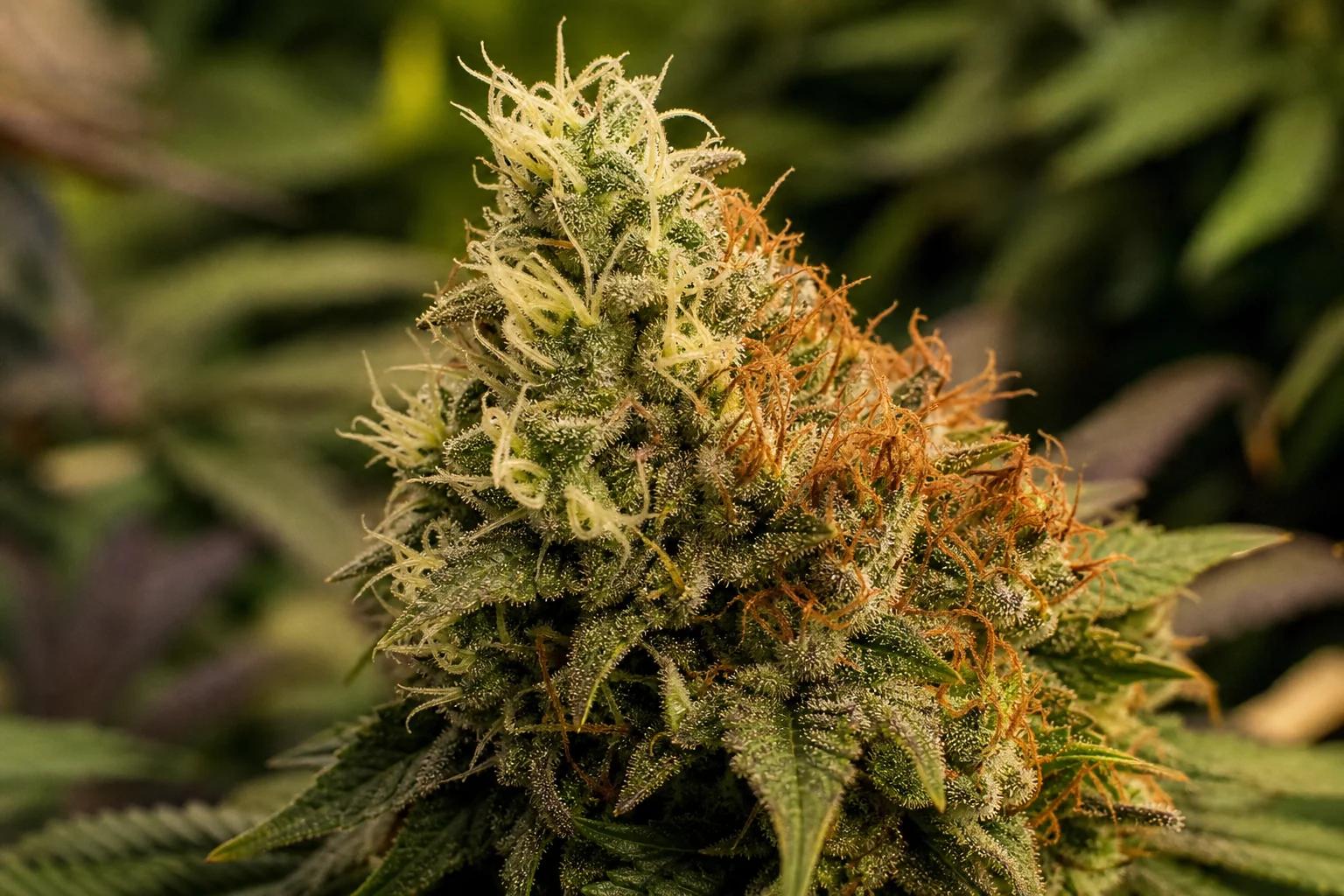
Pistils shift from white to yellow, orange, red, or amber as the plant moves through mid-to-late flower and the stigma tissue undergoes senescence — natural cellular aging as the pollen-catching function becomes biologically redundant. This colour change is driven by oxidation and pigment breakdown in the drying stigma tissue, and it happens on a timeline that varies widely by genetics and environment.
General timing by genetics:
- Indica-dominant photoperiod strains typically begin showing significant pistil colour change around weeks 6–8 of flower, with most of the shift complete by weeks 8–10
- Sativa-dominant and long-flowering hybrids may show only minor colour change until weeks 9–11 or later — a bud still 60% white at week 9 is not necessarily behind schedule
- Autoflowers compress the entire flowering timeline to 7–9 weeks, with pistil progression similarly accelerated
What Percentage of Pistils Should Be Amber Before Harvest?
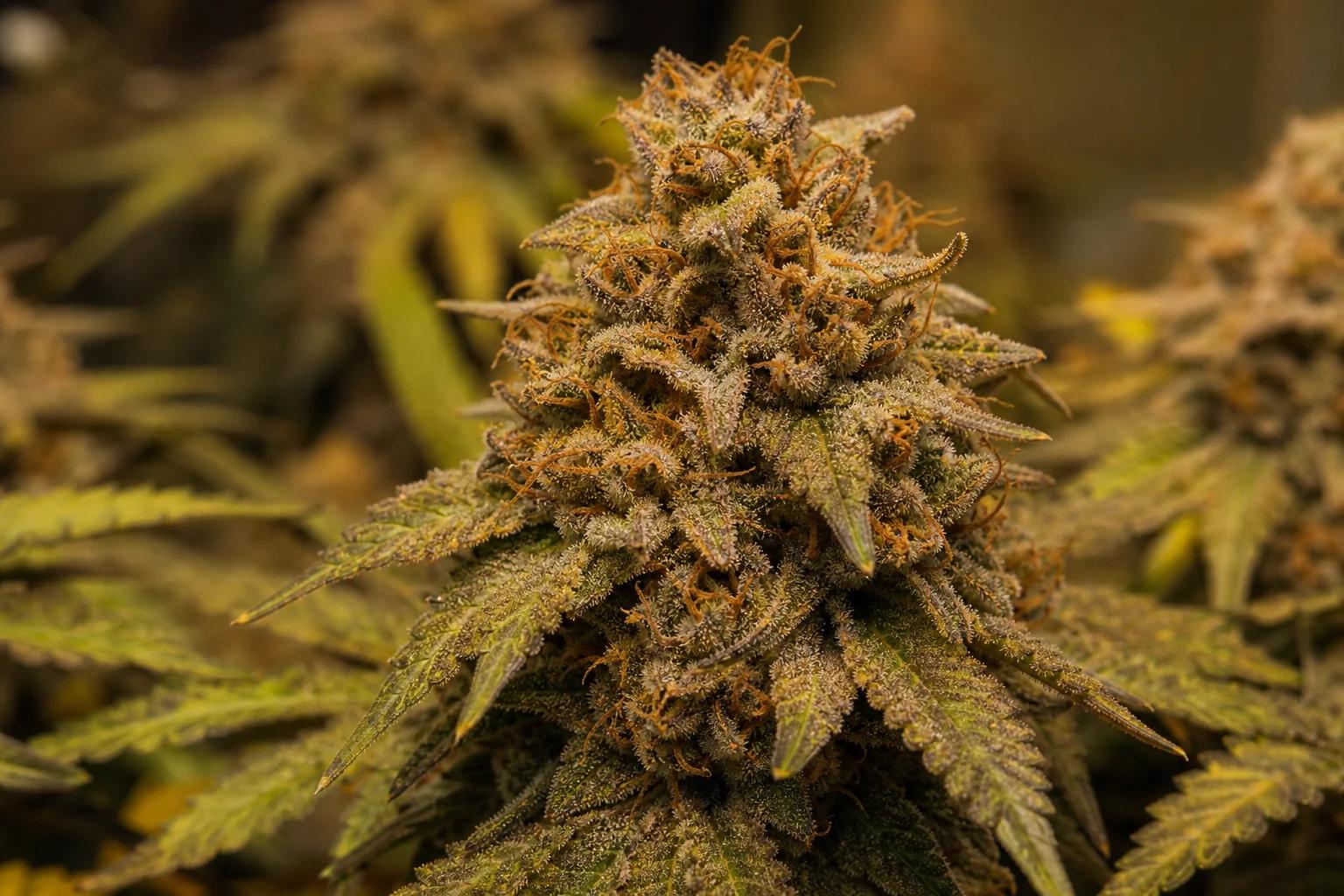
The commonly cited rule is 50–70% amber pistils as a rough indicator that your plant is approaching harvest — but this is a soft signal, not a trigger. At 50% colour change, most strains are entering late flower and beginning to near their cannabinoid peak. At 70–90% amber, THCA production has typically plateaued and some degradation is beginning.
Use this range as a prompt to start close trichome monitoring — not as confirmation the plant is ready. The 50–70% rule breaks in several common scenarios:
- Environmental stress (cold, rain, UV exposure) browns pistils weeks before actual ripeness
- Foxtailing strains continuously produce new white pistils on mature buds, keeping the amber percentage artificially low even when trichomes are fully developed
- Some genetics show near-complete pistil browning while trichomes are still predominantly clear — meaning the plant is nowhere near ready despite looking "done" by pistil standards
Pistils vs. Trichomes — Which One Actually Tells You When to Harvest?
Trichomes tell you when to harvest. Pistils tell you where you are in the story. This is the most important distinction on this page, and the one point where most content on this topic either hedges or gets it backwards.
Pistils reflect the plant's reproductive biology — the aging of its pollen-catching structures. Trichomes reflect its cannabinoid and terpene chemistry — the actual potency, effect profile, and degradation state of the compounds you're cultivating.
Pistil percentage is genuinely useful for knowing when to start trichome monitoring in earnest. Once you're in that window — typically when 30–50% of pistils have shifted colour — pull out your loupe and let the trichomes make the call.
Why Are My Pistils Still White at Week 8 or 9?
White pistils at week 8 or 9 are normal for many strains — particularly sativa-dominant genetics and certain long-flowering hybrids — and do not indicate a problem. This is one of the most common sources of grower anxiety, and the answer is almost always genetics, not failure.
Common reasons pistils stay white longer than expected:
- Genetics: True sativas and sativa-leaning hybrids regularly run 10–14 weeks of flower. At week 9, they may still have 40–60% white pistils. That's on the strain's schedule, not yours.
- Light interruption during dark period: Even brief light leaks can disrupt the hormonal cascade that drives stigma senescence. Check your dark periods before blaming genetics.
- Heat stress: Temperatures consistently above 28°C during flower can slow both trichome and pistil development, producing an extended white-hair phase.
- Foxtailing: Some high-THC hybrids continuously push new growth at bud tips in late flower — fresh white pistils on new material sitting on top of mature tissue below. A plant in active foxtail production can look weeks behind when it's actually approaching harvest.
- Disrupted 12/12 schedule: If your flip wasn't clean or your timer drifted, flowering can be delayed or inconsistent.
Why Are My Pistils Turning Brown or Red Too Early?
Premature pistil browning — colour change before week 5–6 of flower — is almost always a stress response, not a ripeness signal. This is the section most guides on this topic skip entirely, and it's where outdoor growers in particular get seriously misled.
Diagnostic checklist for early browning:
- Cold temperatures: Nighttime lows below 10°C cause stigma browning that has nothing to do with ripeness. A cold snap in late September across Ontario and Quebec outdoor grows can brown the pistils on a plant that still has 3–4 weeks of genuine ripening ahead of it. The stigmas are damaged — the buds are not ready.
- Rain and moisture: Sustained rain physically damages and discolours exposed stigmas. Vancouver growers in the Lower Mainland know this well — a week of October rain during peak ripening can brown the outer pistils while interior buds are still building. That's rain damage, not readiness.
- Low humidity: Indoor environments below 30% RH during late flower can desiccate exposed stigmas prematurely, mimicking the amber-browning of natural senescence.
- Heat stress: Radiant heat from HPS lighting or intense direct sun accelerates browning on the upper-most exposed pistils without affecting actual cannabinoid development below.
- Pollination from a rogue male or hermaphrodite: Pollinated pistils brown and curl back into the calyx rapidly — but the giveaway is calyx swelling and eventual seed formation inside the bract, not just surface colour change.
- Early-stage bud rot: Botrytis cinerea can cause localized pistil browning before visible grey mold appears. If browning is patchy and concentrated on specific dense colas rather than uniform across the canopy, inspect closely for mold.
The diagnostic heuristic: stress-driven browning tends to be external, surface-level, and concentrated on exposed upper pistils. Maturity-driven browning tends to be gradual and more uniform across the whole plant. When in doubt, trichomes don't lie about ripeness the way stressed pistils do.
Are Brown Pistils a Sign My Buds Got Pollinated?
Brown pistils alone do not confirm pollination — but pollination does produce a distinct browning pattern. When a stigma catches viable pollen and fertilization begins, the pistil browns, curls back, and retracts into the calyx as the ovary begins developing a seed. That retraction is the key physical tell.
The definitive signs of pollination, in order:
- Pistil browns and curls inward — more abruptly than natural senescence, often within 24–48 hours of contact
- Calyx swells into a recognizably round, seed-shaped bulge — a fertilized calyx looks noticeably different from its neighbours within 5–7 days
- Visible seed development 10–14 days post-pollination — crack open a swollen calyx and you'll find a developing seed inside
Can Pistils Turn White Again After Browning?
Yes — fresh white pistils appearing on buds that had begun showing amber is almost always a sign of foxtailing or re-vegging. Either way, it signals the plant is generating new, immature tissue on top of or adjacent to existing mature tissue.
Foxtailing is the more common cause. Certain genetics — particularly sativa-dominant strains and some high-THC hybrids — produce elongated, spire-like growth at bud tips in late flower. These new formations come with fresh white pistils. Foxtailing can be a pure genetic trait (normal for that strain) or a stress response to excessive heat or light intensity. Genetic foxtailing is relatively benign and doesn't significantly compromise quality; stress foxtailing is a flag that something in the environment needs correcting.
Re-vegging is less common but more disruptive. If a plant in flower receives too many hours of light — through an interrupted dark period, persistent light leaks, or an accidental flip back to veg schedule — it can begin reverting to vegetative growth. This produces abnormal leaf structures within the bud and fresh white pistils on a plant that was deep into flower. Re-vegging extends finishing time substantially and typically reduces potency and structural bud quality.
If you're seeing new white pistils on what looked like a nearly-ready plant, figure out first whether this is a strain-typical foxtail trait or an environmental problem. Either way: check trichomes to get an accurate read on actual maturity.
Do Some Strains Naturally Have Amber, Pink, or Red Pistils?
Yes — and this is one of the most under-documented sources of grower confusion. Some genetics express red, pink, purple, or deep amber pistils as a phenotypic trait from early in the flowering stage, driven by anthocyanin pigmentation rather than ripeness or stress.
Strains with anthocyanin-rich genetics — particularly those bred for purple, red, or colourful phenotypes — can show pronounced pistil colour from as early as weeks 3–4 of flower. The expression is typically intensified by cooler temperatures (the same chemistry that produces fall foliage in deciduous trees), but in genetically predisposed plants, the colour appears regardless of temperature.
Lineages where genetic pigmentation commonly affects pistil colour:
- Grand Daddy Purple and its descendants — deep purple/red expression throughout plant tissue, including stigmas, from early flower
- Purple Punch and related crosses — similar anthocyanin density; pistils often show pink to deep red at week 4–5
- Certain Zkittlez-derived hybrids — pink to amber pistil colour as a strain trait, not a maturity clock
How Should Growers Read Pistil Colour in Cold Climates and Rainy Conditions?
Growers in cold-climate regions must treat premature pistil browning with particular skepticism throughout the September–October harvest window. The environmental conditions that are routine in much of the country during this period are exactly the conditions that produce misleading pistil colour.
Ontario and Quebec outdoor growers often see pistils browning from cold exposure by the third week of September — well before peak trichome maturity in most strains. Overnight lows of 7–10°C are common in the Ottawa Valley, the Laurentians, and across much of southern Quebec by late September. A plant that reads "ready" by pistil percentage at that point may have 2–3 weeks of genuine ripening still ahead. Always carry a loupe for late-season outdoor harvests. The trichome check takes 30 seconds and will save you from chopping too early.
Coastal BC growers in the Lower Mainland and on Vancouver Island face the inverse problem. A week of sustained October rain can damage and brown exposed pistils on a plant that is biologically still building its cannabinoid load. Rain-burned stigmas are visually indistinguishable from naturally aged amber ones. When it's rained for a week straight, read the trichomes — not the hairs.
Prairie growers in Alberta and Manitoba typically face the hardest deadline: frost, not ripeness, forces the harvest. A hard frost at −3°C or below will end an unprotected outdoor grow regardless of where the plant is in its cycle. In this context, pistil colour is nearly irrelevant as a harvest signal. The question is whether trichomes have reached acceptable maturity before the weather window closes. Montreal growers dealing with early October cold fronts face a version of the same pressure — the frost deadline can arrive before the trichomes are fully ready, and no pistil percentage rule changes that calculus.
In all cold-climate and wet-climate scenarios: use pistils to know roughly where you are in the cycle, and trichomes to confirm whether you're actually ready.
What's the Honest Harvest Framework?
The honest harvest framework combines three signals weighted in order: trichome maturity (primary), pistil colour (secondary indicator), and breeder-stated flowering time (contextual baseline). No single signal is used in isolation — the three together give a much more reliable picture than any one alone.
The sequence:
- Track flowering time from the first confirmed white preflowers. Use the breeder's week estimate as a window to operate within, not a hard deadline to hit.
- Monitor pistils from week 5–6 onward. When 30–50% are showing colour shift, start trichome checks every 2–3 days.
- Read trichomes under magnification. Clear = not ready. Predominantly cloudy = approaching or at peak. Cloudy with some amber = peak to just past. Majority amber = past peak, with THC degrading toward CBN.
- Make the harvest call on trichomes. Pistil percentage at that moment is secondary context — useful for triangulation, not for overriding the trichome data.
Pistils are your rough progress bar. Trichomes are your final answer. Use both, weight them correctly, and the harvest call becomes a lot less stressful.
Pistil colour is genuinely useful information. It tells you when flowering began, where you are in the reproductive cycle, and when to start paying close attention to your trichomes. That's worth knowing. What it isn't is a verdict — it's a prompt to investigate more closely.
Once you understand pistils as the opening chapter and trichomes as the conclusion, you stop second-guessing the colour of a hair and start making consistent harvest calls based on what your plant is actually telling you.
For the full guide on trichome stages and how to read them for harvest timing, see Cannabis Trichomes: Clear, Cloudy, Amber Explained.
FAQ
Do white pistils mean my buds are still growing?
Yes. White pistils indicate the stigmas are still metabolically active and the plant is still in a building phase — calyx stacking, trichome development, and cannabinoid accumulation are ongoing. A bud covered in white pistils is not approaching harvest. Expect continued growth until at least 50% of pistils have begun changing colour. ---
Should I harvest when pistils are white or brown?
Neither colour alone determines harvest. White pistils mean the plant is still growing; predominantly brown or amber pistils suggest the plant is maturing. The actual harvest decision should be made on trichome colour — cloudy trichomes with some amber indicate peak to just-past-peak maturity. Use pistil colour to time when to start close trichome monitoring. ---
Why are my pistils turning red?
Red pistils are caused by one of two things: genetic pigmentation (some strains express red or pink stigmas as a phenotype trait from early flower, driven by anthocyanin pigmentation) or environmental stress (cold temperatures, low humidity, UV exposure, or early-stage pollination). Red pistils on a colourful-genetics strain from week 3–4 are almost always phenotypic, not a ripeness signal. Red pistils appearing suddenly mid-grow may indicate stress. ---
What's the difference between pistils and trichomes?
Pistils are the reproductive structures of the female cannabis flower — the visible "hairs" are the stigmas, which catch pollen. Trichomes are the resin glands covering buds and sugar leaves that produce THCA, CBDA, terpenes, and other cannabinoids. Pistil colour reflects reproductive biology and stigma aging. Trichome colour reflects cannabinoid maturity. For harvest timing, trichomes are the definitive signal. ---
Can I trust pistils on an autoflower?
Autoflowers follow the same pistil colour progression as photoperiod plants — white during building phases, shifting to amber as maturity approaches — but on a compressed timeline. Because autoflowers run a full flower cycle in 7–9 weeks, colour transitions happen faster. The same rule applies: use pistil colour to estimate where you are in the cycle, and trichomes to confirm harvest readiness. Don't assume a 9-week autoflower is ready at week 9 just because pistils are amber — check trichomes first.
19+ | Educational horticulture only.