Every Part of the Plant
Cannabis Plant Anatomy
Cannabis Trichomes: Clear, Cloudy, Amber Explained
Clear, cloudy, and amber trichomes explained: how to read them, when to harvest, and why trichomes are the source of every cannabis concentrate.
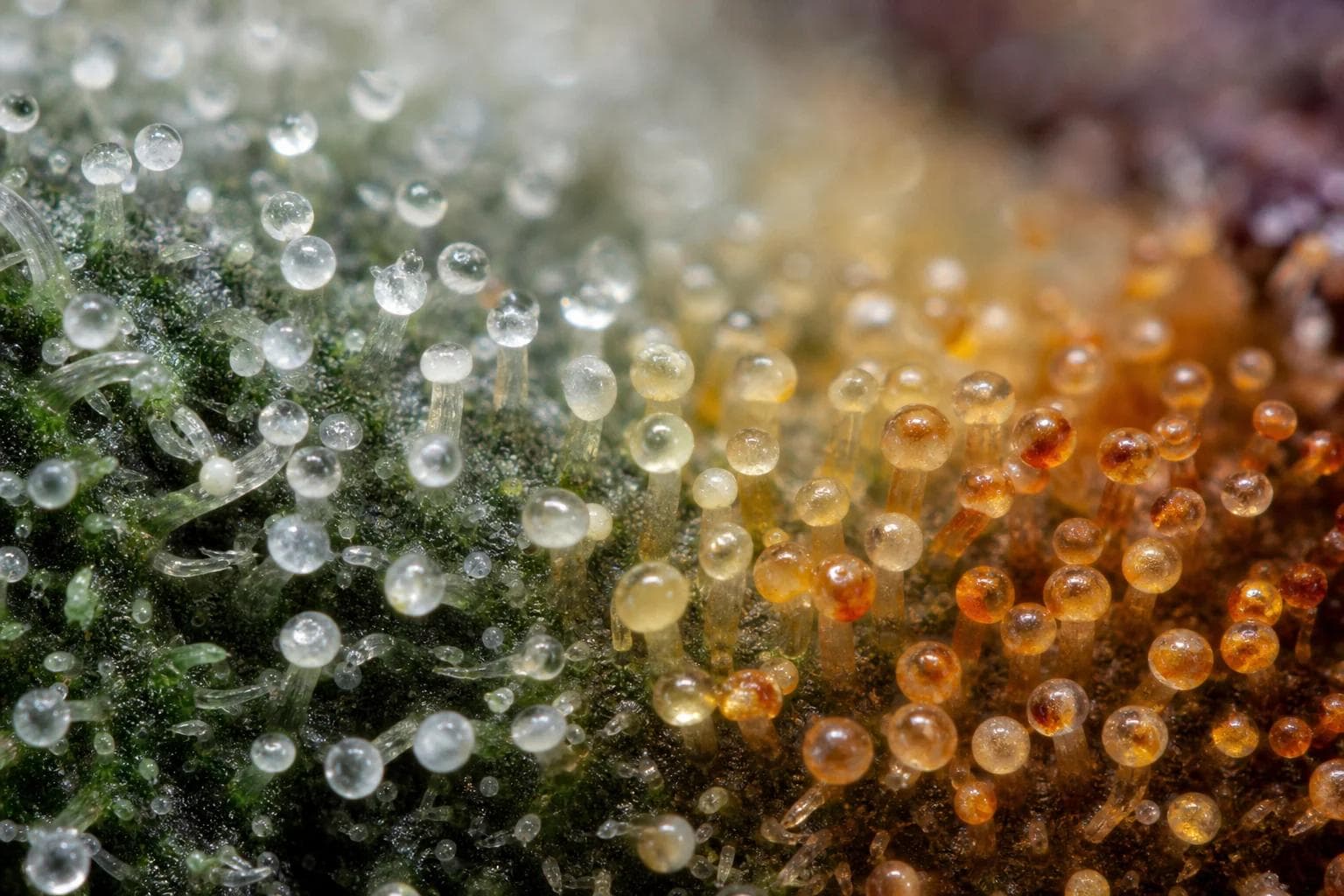
Clear, cloudy, and amber trichomes mark three sequential stages of cannabinoid maturity. Clear trichomes mean THC is still forming — wait. Mostly cloudy (90–100%) signals peak potency. Amber indicates THC degrading into CBN; the harvest window runs roughly 7–14 days after first amber appears, tuned by your target effect profile.
You're in week eight of flower, loupe in hand, squinting at a cola. Most trichomes look white and frosted. A few are going amber. The question isn't "what is a trichome?" — it's "do I cut today, or do I wait?"
Trichome colour is the most reliable harvest signal in cannabis cultivation. Unlike pistil colour, which shifts in response to pollination, physical contact, and humidity swings, trichome colour tracks cannabinoid maturity directly. Read it correctly and you're dialling in your effect profile — energetic and cerebral to heavy and body-dominant — rather than guessing from a calendar or a seed-packet week estimate.
This guide covers what clear, cloudy, and amber trichomes mean at the biochemical level, what magnification you need to read them accurately, how to build a harvest-timing decision matrix by effect target, and why Canadian outdoor growers face a frost-and-mould trade-off no other guide on this topic addresses.
What Are Cannabis Trichomes, Exactly?
Cannabis trichomes are microscopic resin-producing glands found on the surface of flowers, sugar leaves, and stems. The capitate-stalked trichome — the type relevant to harvest timing — consists of a stalk topped by a spherical glandular head packed with THCA, CBDA, and aromatic terpenes produced by the plant's secretory disc cells.
Three types exist on the cannabis plant, but only one drives harvest decisions:
- Bulbous trichomes — the smallest type, barely visible at 100×, not meaningful for harvest-timing reads
- Capitate-sessile trichomes — low-profile glands covering most leaf surfaces, minor cannabinoid contribution
- Capitate-stalked trichomes — the large, mushroom-shaped glands concentrated on bud calyxes and surrounding sugar leaves. These are what you're reading under a loupe. They hold the majority of THCA and are where the clear → cloudy → amber transition plays out.
What Do Clear, Cloudy, and Amber Trichomes Mean?
Clear, cloudy, and amber trichomes represent three sequential stages of cannabinoid maturation. Clear trichomes are still actively synthesising THCA — harvest is premature. Cloudy (milky white) trichomes signal THCA at peak concentration and maximum potency. Amber trichomes indicate ongoing oxidative degradation of THCA into CBN, meaning the peak THC window has passed and the effect profile is shifting.
Where on the Plant Should I Check Trichomes?
Check trichomes on the calyxes of your main colas — not on sugar leaves. Sugar leaves mature 7–14 days ahead of the surrounding calyx tissue, so a sugar-leaf trichome read will make your plant appear more mature than it actually is. Fan leaves are even further along and are irrelevant for harvest decisions entirely.
Here's what actually works: sample a top-cola calyx, a mid-canopy calyx, and a lower bud calyx, then average what you see. Upper buds always mature faster under higher light intensity. If your top cola is showing 20% amber while lower buds are still sitting at 95% cloudy, you've got a decision to make about harvesting in sections — more on that in the strain-archetype section below. One sample from the highest bud is not a whole-plant read.
What Magnification Do I Need to See Trichomes?
You need a minimum of 30× magnification to reliably distinguish clear from cloudy trichomes on a calyx. At 60×–100×, you can read amber colouration accurately, assess trichome integrity, and estimate ratios across a bud surface. Anything below 20× shows you surface frost coverage but not colour stage — useful for photography, not harvest calls.
Tool comparison for trichome inspection:
Should I Harvest When Trichomes Are Clear or Cloudy?
Never harvest when trichomes are predominantly clear. Clear trichomes mean THCA synthesis is still active — you are harvesting an incomplete cannabinoid profile with low potency, underdeveloped terpenes, and a harsh, grassy smoke. Wait until at least 80–90% of the capitate-stalked trichomes on your calyxes have turned cloudy white before considering any harvest decision.
The real decision point begins at mostly cloudy — and the variable is how much amber you allow before cutting. That ratio is where you control the effect profile.
What Percentage of Amber Trichomes Is Best for Harvest?
The ideal amber percentage is not universal — it depends on the effect profile you are targeting. The difference between 5% amber and 40% amber is significant at the pharmacological level: peak THCA versus elevated CBN, uplifting versus sedative, focused versus sleep-adjacent. Choosing a ratio is choosing a product.
Harvest decision matrix by target effect:
How Long Does It Take Trichomes to Go From Cloudy to Amber?
Under typical indoor conditions, trichomes transition from predominantly cloudy to 10–30% amber over roughly 7–14 days. The pace of that transition varies by genetics, environmental conditions, and late-stage plant stress.
Variables that accelerate amber formation:
- Temperatures above 28°C in the canopy (speeds THCA oxidation)
- High light intensity at close proximity to canopy
- Indica-dominant and autoflower genetics (genetically faster maturation)
- Water stress or significant nutrient deficiency in the final week
- Cooler canopy temperatures (20–22°C)
- Stable humidity (45–55% RH during late flower)
- Sativa-dominant genetics with extended flowering programmes
- Consistent light without heat spikes
Do Amber Trichomes Mean More CBD or CBN?
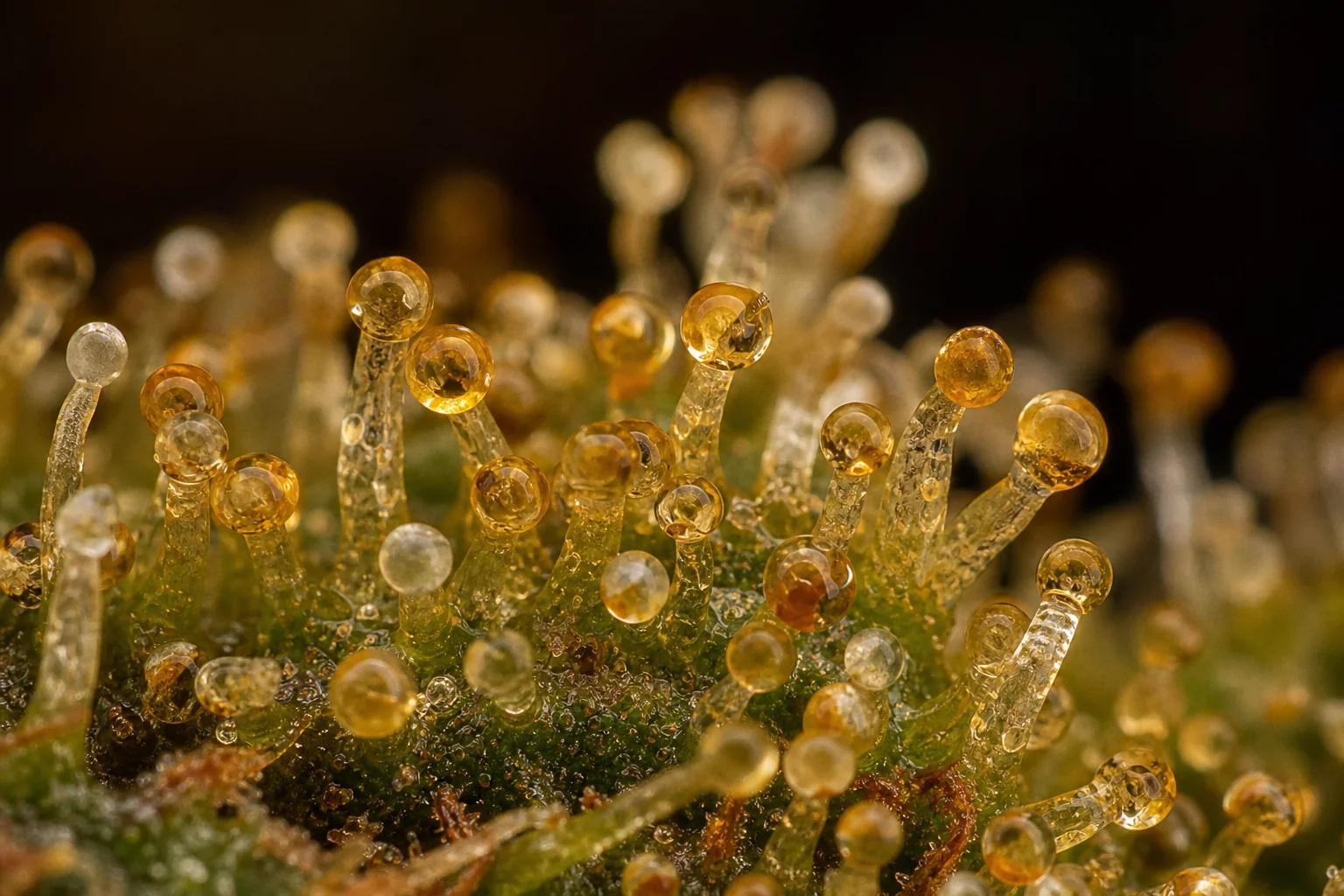
Amber trichomes do not indicate increased CBD. They indicate THC degradation into CBN (cannabinol) — a distinct minor cannabinoid produced by the oxidative breakdown of THCA as trichomes age. This is one of the most persistent myths in home cultivation, and it matters because misunderstanding it leads growers to over-wait expecting a different cannabinoid that their genetics never produced.
Here's what's actually happening:
- During active flowering, the plant synthesises THCA in the trichome head
- THCA converts to psychoactive THC upon decarboxylation (heat from smoking or vaping)
- As trichomes age and oxidize, THCA breaks down into CBN — not into CBD
- CBD is genetically determined; a strain producing 1% CBD will not gain CBD from extended waiting
- CBN is mildly psychoactive, distinctly sedating at higher concentrations, and present in small amounts even in fresh, non-amber harvests
Can I Use Pistil Colour Instead of Trichomes?
Pistil colour is a secondary signal, not a trichome replacement. White pistils (stigmas) transitioning to orange and brown indicate the plant is progressing through late flower, but pistils shift colour in response to factors entirely unrelated to cannabinoid maturity — pollination, physical handling, elevated humidity, and heat stress can all redden pistils before trichomes are anywhere near ripe.
Use 70–90% orange pistil coverage as a rough indicator that you're entering the harvest window, then confirm and time your actual cut with a loupe. Cannabis Pistils Explained: What White and Amber Hairs Mean covers the full pistil signal and how to read it alongside trichomes. For harvest timing, trichomes are the primary read; pistils are supporting context and a useful early warning.
What Happens If I Harvest Too Early When Trichomes Are Still Clear?
Harvesting predominantly clear trichomes produces low-potency, underdeveloped cannabis. THCA synthesis is still active in clear trichomes — the cannabinoid reservoir is incomplete and terpene accumulation has not peaked, meaning the final aroma complexity is significantly reduced.
You'll consume more to achieve less, and the smoke will taste grassy and chlorophyll-heavy rather than the developed terpene profile the strain is capable of producing. The only scenario where early harvest makes sense is an emergency — advancing mould, or a hard freeze you can't cover (a forecast low of -2°C or colder), where harvesting something beats losing everything. In that case, early-harvested material handles concentrates and extractions better than direct flower consumption, since extraction tolerates immature cannabinoid profiles more forgivingly.
Does Strain Type Change the Best Harvest Window?
Strain genetics significantly affect how quickly trichomes mature and how narrow the usable harvest window is. A single universal harvest percentage does not apply across all varieties. Indica-dominant, sativa-dominant, autoflower, and high-CBD genetics each behave differently — and a seed bank that understands this distinction will produce better harvests than one that does not.
Indica-Dominant Strains
Indica-dominant genetics typically complete the cloudy-to-amber transition quickly, often within 5–9 days of first amber appearance. The harvest window is narrow, and amber accumulates fast once it starts. Check every 2 days in the final window. High-resin indica-dominant varieties like Gorilla Glue #4 feminized seeds are renowned for extreme trichome coverage — worth monitoring closely because they can go from ideal window to over-ripe within a week.
Sativa-Dominant Strains
Sativa-dominant genetics mature more slowly and hold a stable cloudy window for a longer period — sometimes 2–3 weeks before amber becomes dominant. This extended window gives you more control to fine-tune harvest ratio. The complication: sativa-dominant plants can still be showing green pistils while trichomes are already mostly cloudy, creating a pistil-versus-trichome mismatch that misleads growers not using a loupe. Always trichome-confirm with sativas.
Autoflowers
Autoflowering genetics compress the entire lifecycle and the cloudy-to-amber transition with it. Expect a 5–10 day window between predominantly cloudy and predominantly amber — sometimes shorter with compact, fast-finishing autoflower varieties. The ratio precision you have with photoperiods is reduced. Check every day once the first amber appears, and sample multiple canopy levels, since autoflowers mature unevenly across the plant more often than photoperiods do.
High-CBD Strains
High-CBD genetics are optimally harvested at predominantly cloudy with minimal amber (0–10%). Because THC levels in these genetics are by design low, allowing amber to accumulate degrades the limited active THC present without any proportional gain in CBD. Harvest earlier in the window to preserve the cleanest cannabinoid profile. Trichome checks still matter here — the cloudy stage varies in length by CBD-strain genetics just as it does in THC-dominant varieties.
How Do Canadian Outdoor Growers Balance Amber Trichomes Against Frost and Mould?
Canadian outdoor growers face a trade-off that no standard trichome guide addresses: waiting for optimal amber ratios means pushing into late September and October, exactly when frost and mould pressure peak across most of the country.
In Vancouver's coastal humidity, botrytis (bud rot) is the primary threat — dense late-flowering colas hold moisture through cool, damp Pacific shoulder-season nights, and grey mould progresses faster than most growers expect once it establishes. In Toronto, first frost can arrive any time from mid-October onward, but humidity-driven mould often appears first and forces the decision. Prairie growers often see frost in late September, and Quebec City averages its first frost around October 5 (MétéoMédia), leaving outdoor photoperiod strains little buffer between "predominantly cloudy" and the hard freezes that follow. outdoor cannabis calendar for Canada
The practical rule for Canadian outdoor harvests:
A light frost (0 to -2°C) marks the foliage but usually spares a ripe plant, so on its own it is no reason to cut. To weigh a frost forecast against maturity, see how far to push a late harvest up north.Harvesting at 80–85% cloudy and 5–10% amber is vastly better than losing the crop entirely or harvesting mould-compromised flowers. The amber-percentage ceiling for outdoor growers decreases as latitude increases — the ideal window in a Quebec City garden in late September is not the same window as a controlled indoor run finishing in January.
Cultivars with dense indica morphology and tightly packed colas carry the highest bud rot risk. Check them for mould from week seven of flower, and accept that they may need to come down before ideal trichome ratios are reached — saving the cola is the priority, not the chart. Mold on Weed: Bud Rot Prevention During Flowering & Storage
Growers in Denver and Portland face a similar calculation in October — altitude frost arrives early in Denver's high desert climate, and Portland's Pacific fall brings the rain-and-mould pressure familiar to BC coastal growers. In all of these climates, the loupe tells you where the trichomes are. The forecast tells you how much time you actually have.
Why Do Trichomes Look Clear in Some Photos and Cloudy in Others?
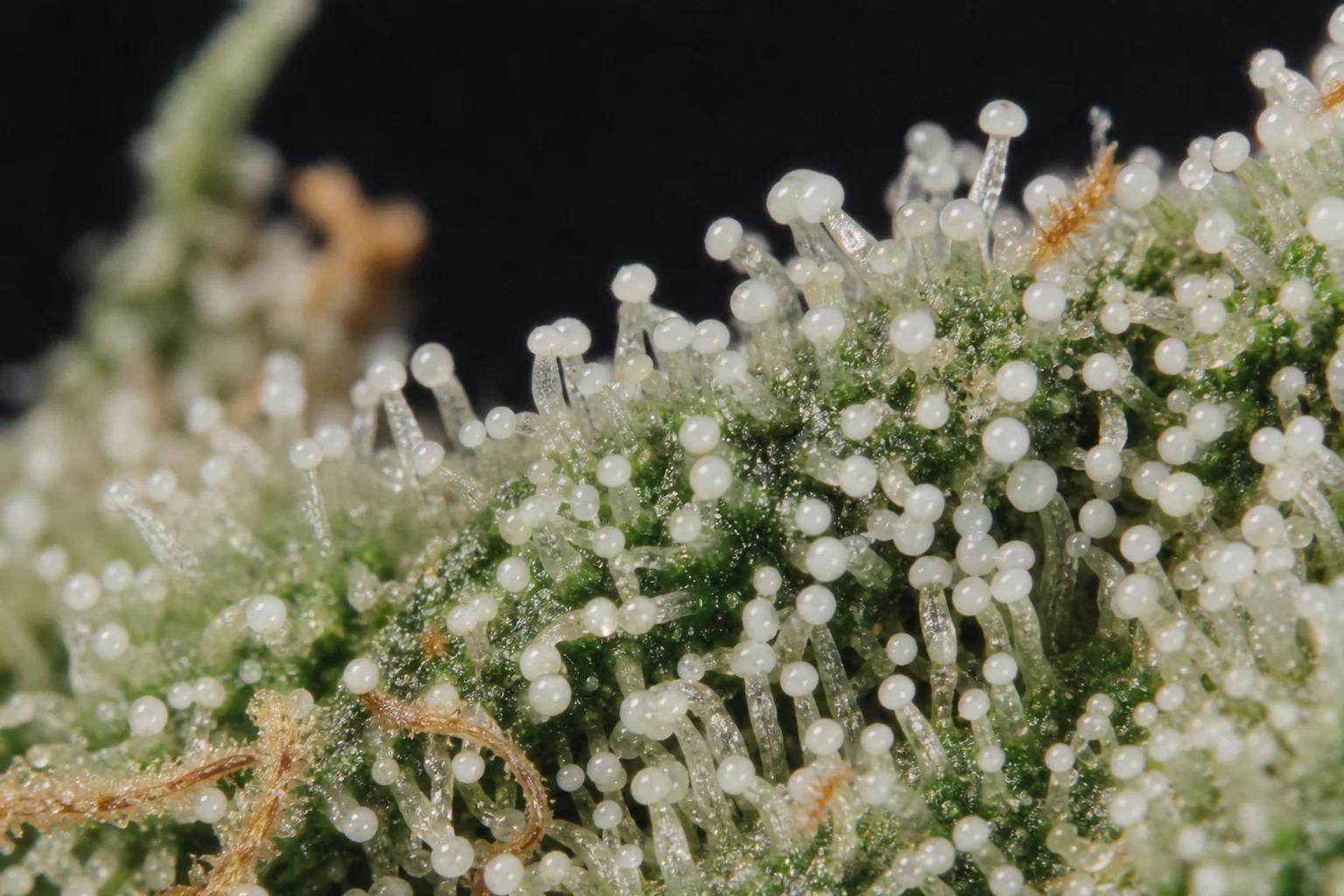
Camera flash, white balance settings, and depth-of-field artefacts can make cloudy trichomes appear clear — or vice versa — in photos. Direct flash from a phone or USB microscope ring light reflects off the curved trichome head surface, creating a false transparency effect that reads as "clear" even on mature, fully opaque trichomes. Side-angled illumination rather than direct overhead flash gives a dramatically more accurate colour read under magnification.
Depth of field matters too: only trichomes at the exact focal plane render accurately. Out-of-focus trichomes in the background of a macro shot always appear lighter and more translucent than they are. Judge colour only from the sharpest-focused specimens in the frame. When there's a discrepancy between your photo and your direct-eye loupe read, trust the loupe — your eye in real time has better dynamic range than a phone sensor under artificial macro lighting.
Before you harvest, read when and how to harvest cannabis for the full flush, cut, dry, and cure sequence. Once the plant is down, curing and storing cannabis buds covers how to lock in the terpene profile those cloudy trichomes worked all season to build. If you want to grow varieties known for exceptional trichome density, explore MAC 1 feminized seeds — a variety that sets a high standard for frost coverage and late-flower resin architecture.
FAQ
Are amber trichomes stronger or weaker than cloudy trichomes?
Amber trichomes are weaker in active THC content. The amber colour signals that THCA has begun degrading into CBN through oxidation. Cloudy trichomes represent peak THCA concentration — the highest-potency state the plant reaches. Amber trichomes produce a more sedative, body-heavy effect not because they are stronger, but because active THC concentration is lower and CBN is elevated.
How often should I check trichomes in late flower?
Check every 3–4 days from week six of flower onward. Once you see the first amber trichomes appear, increase inspection to every 1–2 days — especially with indica-dominant and autoflower genetics where the cloudy-to-amber window narrows quickly. Keeping a simple log with dated photos taken at consistent magnification helps you track the rate of amber accumulation and predict when your target ratio will be reached.
Do I need to harvest the whole plant at once, or can I harvest in sections?
You can harvest in sections. Top colas mature faster than lower buds due to higher light exposure and heat accumulation at the canopy ceiling. With large photoperiod plants, many experienced growers take the top third first, leave lower buds an additional 7–10 days, then take a second cut. The key is to trichome-read each canopy level individually rather than applying a top-of-plant read to the whole plant.
What if my trichomes never turn amber?
Some strains — particularly slow-finishing sativa-dominant varieties — hold the cloudy window for an extended period without significant amber development. If trichomes are predominantly cloudy and the breeder's estimated flowering window has been exceeded by more than a week, harvest in the cloudy window rather than waiting indefinitely. Some genetics simply do not amber substantially before plant senescence begins. Extended waits beyond the cloudy peak will eventually produce amber, but other senescence signals — calyx swelling reversing, accelerating leaf yellowing — will confirm you are past optimal before the amber percentage tells you.
Does flushing affect trichome maturation?
Flushing does not directly accelerate or inhibit the cloudy-to-amber transition. Trichome maturation is driven by genetics, light intensity, temperature, and time — not by the presence or absence of nutrient salts in the final days. Continue your normal trichome inspection schedule during a flush and make your harvest decision based on trichome ratio, not on how many days of plain water you have run. Do not extend or shorten the harvest window based on flush timing alone.
19+ | Educational horticulture only.