
Every Part of the Plant
Cannabis Plant Anatomy
Triploid, Tetraploid & Polyploid Cannabis: What Canadian Growers Need to Know
Triploid, tetraploid, and polyploid cannabis explained: how seedless triploid seeds are made, why they yield more, and whether they're legal in Canada.
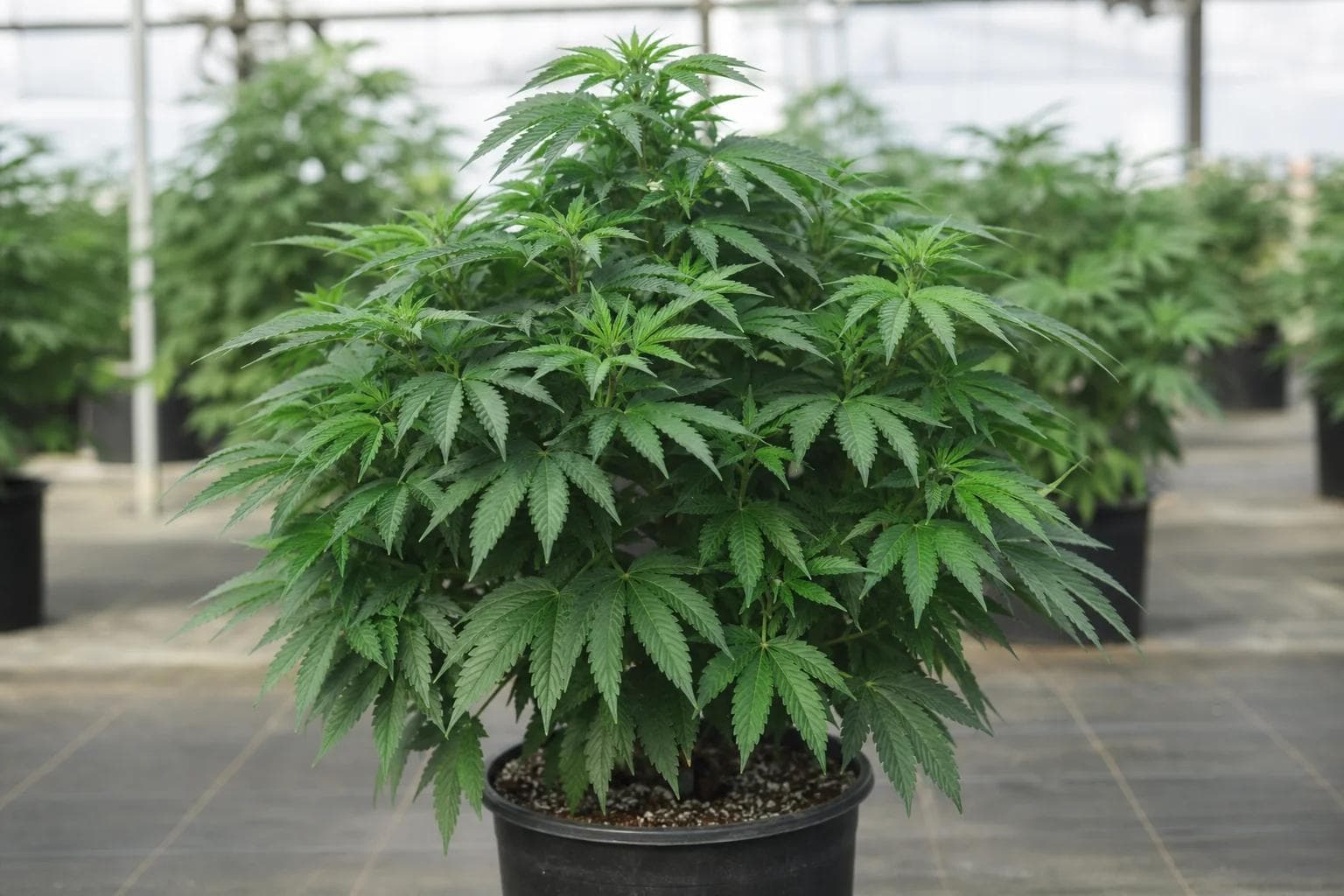
Triploid cannabis carries three chromosome sets instead of the standard two, making plants functionally seedless because the odd number blocks viable seed production during meiosis. The science is solid. Commercial claims of 15–25% yield gains are biologically plausible but unsupported by rigorous controlled trials. Here is what the evidence actually says — and whether it changes what you should grow in 2026.
Triploid vs Diploid — Genetic Comparison
How polyploid cannabis differs from standard genetics
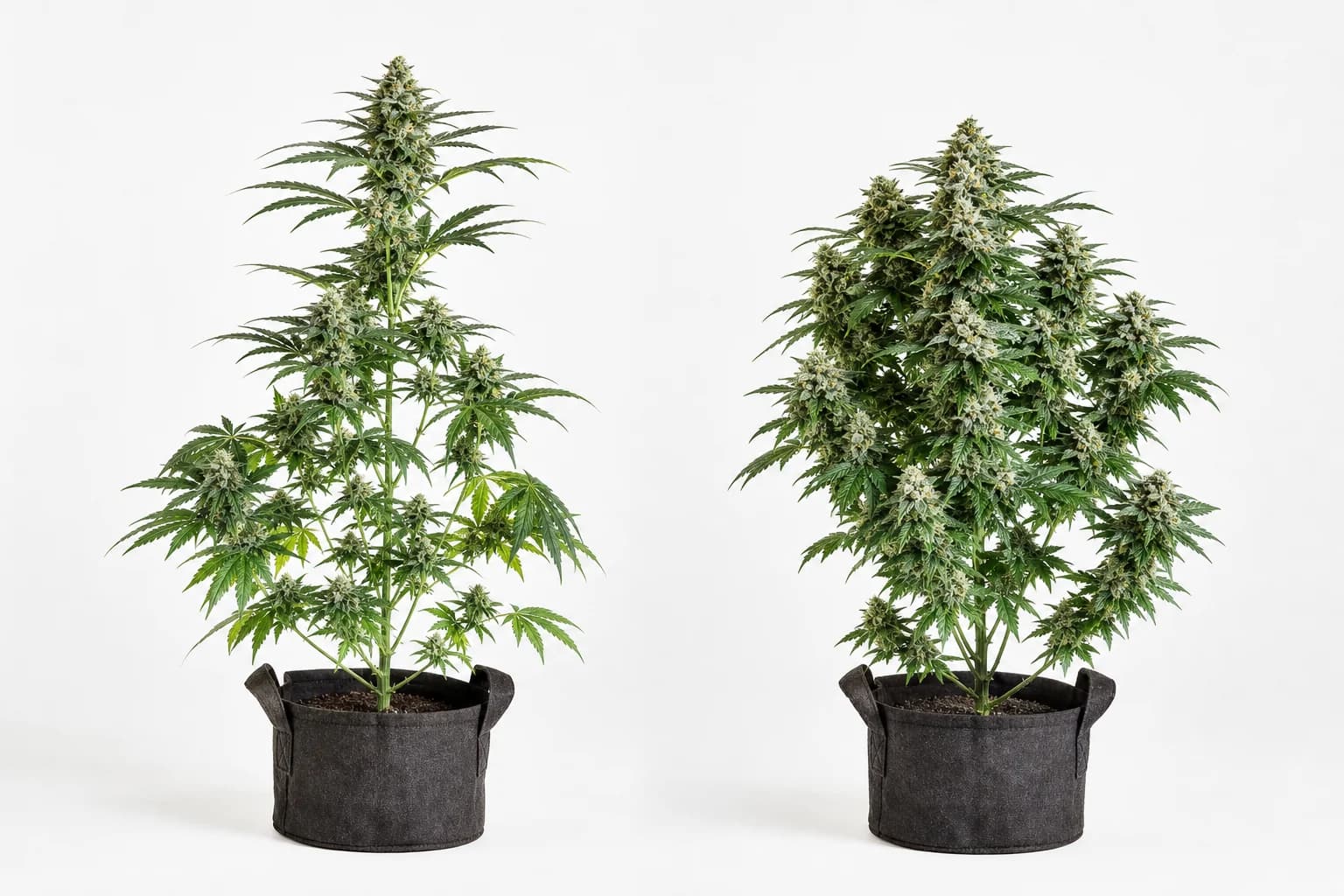
Diploid (2n)
- •Produces seeds
- •Standard genetics — two chromosome sets
- •Can be pollinated and bred conventionally
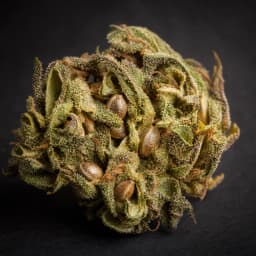
Triploid (3n)
- •Largely sterile — no seeds
- •Flower-focused growth, often higher yield
- •Three chromosome sets (tetraploid × diploid)
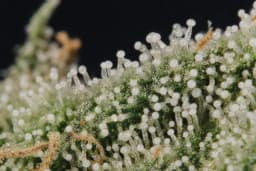
If you've been shopping for seeds lately, you've seen the language. "Triploid genetics." "Seedless by design." "Pollen-resistant sinsemilla." Breeders are marketing triploid cannabis as the most significant leap in home growing since feminized seeds — plants that produce no seeds even when exposed to rogue pollen, with the density and cannabinoid biosynthesis to match.
Some of that is real, grounded in genuine chromosome science. Some of it is commercial enthusiasm running well ahead of published evidence.
This article separates those two things — chromosome biology in plain English, an honest audit of the seed-page claims, and a clear-eyed look at what Canadian research institutions, including the University of Guelph, are actually doing with polyploid cannabis genetics. By the time you finish, you'll know exactly what triploid, tetraploid, and polyploid mean, whether the science holds up to the marketing, and whether any of this changes what you should be running in your tent this season. Sativa vs indica genetics
What Does "Polyploid" Mean for Cannabis?
Polyploid cannabis is any plant that carries more than two complete sets of chromosomes. Standard cannabis is diploid (2n) — it inherits one chromosome set from each parent, giving it two complete copies of its genome. A polyploid plant carries three, four, or more complete sets. This changes how the plant grows, how it reproduces, and — in the case of triploids — whether it can produce seeds at all. Cannabis normally carries 20 chromosomes (10 pairs); ploidy level describes how many full sets of 10 are present.
Those three terms — triploid, tetraploid, polyploid — cover a family of related genetic states, each with distinct practical implications for cultivation and breeding. Diploid (2n = 20 chromosomes) is standard. Triploid (3n = 30) is the grower-facing product. Tetraploid (4n = 40) is the breeder-facing tool.
What Is Triploid Cannabis (3n)?
Triploid cannabis carries three complete sets of chromosomes (3n = 30 chromosomes) instead of the standard two. Because three chromosome sets cannot divide evenly during meiosis — the cell division process that produces gametes — triploids are almost always sterile. Their reproductive cells are too genetically mismatched to form viable pollen or functional ovules, which is the biological basis for the "seedless cannabis" claim. That claim is accurate.
The practical consequence lands exactly where you'd want it to: when a triploid female encounters pollen — even from an undetected hermaphrodite — it typically cannot set seed. Growers get sinsemilla not because they achieved perfect environmental control, but because the plant's chromosome count makes seeding biologically improbable. That's a structurally different kind of seedlessness from what a diploid feminized plant requires constant vigilance to maintain.
What Is Tetraploid Cannabis (4n)?
Tetraploid cannabis carries four complete sets of chromosomes (4n = 40). Unlike triploids, tetraploids are fertile — their four sets pair off evenly during meiosis and produce viable gametes. This makes tetraploids useful to breeders, not primarily to home growers. The tetraploid is the intermediate step in manufacturing triploid seeds; it is the genetic parent, not the finished crop.
Tetraploid plants sometimes display morphological differences compared to their diploid parents: thicker leaves, enlarged stomata, slightly darker colouration, and altered internode spacing. These traits vary widely by genetic line and environment, and in a real grow room they're not a reliable way to identify ploidy level. You need flow cytometry for that — not a visual inspection.
What's the Difference Between Triploid and Tetraploid Cannabis?
The difference is fertility, use case, and who actually needs each one. Triploids are grower-facing: effectively sterile plants you cultivate for sinsemilla. Tetraploids are breeder-facing: fertile genetic tools used to produce the triploid seeds you eventually buy. Most marketing conflates these two; keeping the distinction clear protects you from confused purchasing decisions.
How Are Triploid Cannabis Seeds Actually Made?
The standard production workflow crosses a stable tetraploid parent (4n) with a standard diploid (2n). When the tetraploid contributes an unreduced gamete — one carrying two chromosome sets instead of one — and that fuses with a normal haploid gamete from the diploid parent, the resulting seed carries three complete chromosome sets. That seed is a triploid. Cannabis seed anatomy
Creating the stable tetraploid parent is the technically demanding part. Breeders apply chromosome-doubling agents to seedling tissue during cell division. The most commonly used is colchicine, a plant alkaloid derived from Colchicum autumnale (autumn crocus), which disrupts spindle fibre formation during mitosis and causes the dividing cell to retain a doubled chromosome complement. Oryzalin, a synthetic herbicide with a similar mechanism, is used as an alternative. Both are applied at controlled concentrations to meristematic tissue; both require careful handling.
The production sequence, step by step:
- Select a high-performing diploid line. Genetic quality in the final triploid is bounded by the starting material.
- Apply a doubling agent to create a tetraploid candidate. Success rates per application are typically low — many attempts produce chimeric or unstable plants rather than true tetraploids.
- Verify ploidy by flow cytometry. True tetraploids are selected and grown on.
- Stabilise the tetraploid line over multiple generations. This is where breeding programs diverge in quality; under-stabilised tetraploid parents produce inconsistent triploid offspring.
- Cross the stable tetraploid female × diploid male. The resulting seeds are triploid candidates.
- Verify the triploid seed lot by flow cytometry. Reputable breeders test representative samples from each batch before sale.
- Package and sell verified triploid seeds.
Is Polyploid Cannabis Natural, or Is It GMO?
Polyploid cannabis is not GMO. It contains no foreign DNA, no transgenic insertions, and no gene-editing modifications. Polyploidy is a chromosomal event — a multiplication of the plant's own existing genome — and it occurs in nature without human assistance.
Research published in PMC documents that triploid plants arise spontaneously in natural cannabis populations at approximately 0.5% frequency — roughly one plant in every 200. In selfed (self-pollinated) populations, this rate can reach approximately 2.3%. Polyploidy is one of the most common evolutionary mechanisms in the plant kingdom: commercially grown bananas are triploids, seedless watermelons are triploids, and wheat is a hexaploid. None of these are GMO.
Induced polyploidy — using colchicine or oryzalin to create tetraploid parents — accelerates what nature does slowly and unpredictably. The resulting plant's DNA is entirely its own, simply duplicated. This process does not meet the definition of genetic modification under Health Canada's regulatory framework, nor under any comparable international standard. The GMO anxiety around triploid cannabis is understandable given how the terms "chromosome manipulation" can land — but it is scientifically unfounded. Settle it firmly: polyploidy ≠ transgenic.
Are Triploid Cannabis Plants Really Seedless?
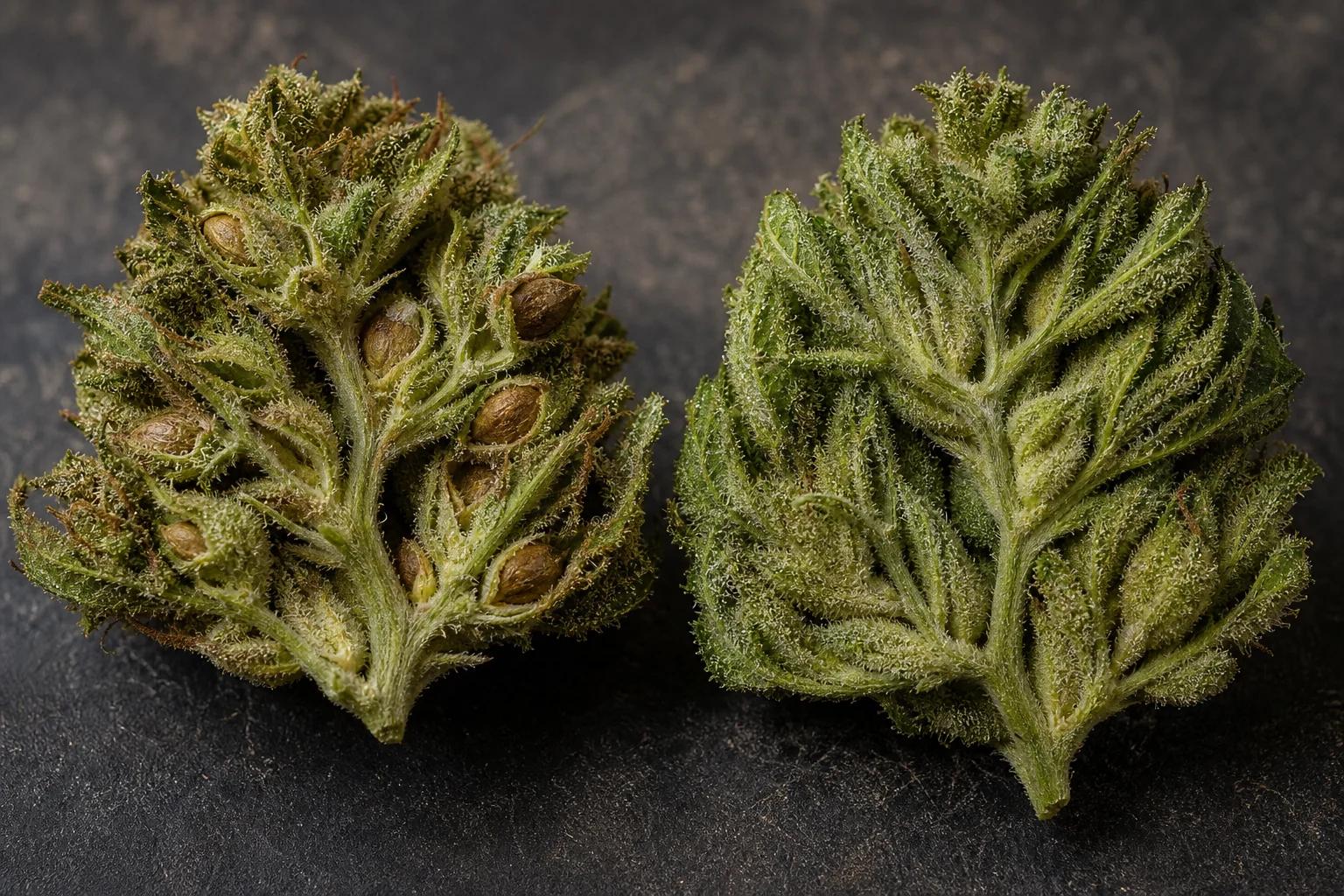
Triploid cannabis plants are functionally seedless under nearly all practical growing conditions. The three-chromosome architecture makes successful meiosis — the division that would produce viable gametes — essentially impossible. Without functional pollen or ovules, pollination cannot result in viable seed development. The plant literally lacks the genetic machinery to do it.
"Functionally seedless" is the technically precise framing. Under extreme conditions — sustained heavy pollen exposure from multiple undetected male plants, or specific environmental stressors triggering hermaphroditism in a poorly stabilised genetic line — occasional seed formation is reported. Edge case, not normal behaviour. For a well-maintained home grow in Toronto or Vancouver — single tent, no undetected males, verified feminized triploid genetics — sinsemilla production is the expected outcome.
The key distinction: triploid plants don't produce seeds because the plant is sterile, not because the environment is controlled. That's structurally more robust than the seedlessness you maintain in a diploid feminized grow through vigilance and luck. It does not mean triploid plants are immune to all pollen under all circumstances.
Are Triploid Cannabis Seeds Sterile?
Triploid cannabis seeds are not sterile — the plants that grow from them are. A properly produced triploid seed contains a viable embryo that germinates and establishes normally. Germination rates and early seedling vigour in verified triploid seeds from quality breeders are comparable to standard feminized genetics from the same genetic line.
What changes is what happens during flowering. The adult plant, carrying three chromosome sets, cannot complete meiosis to produce functional gametes. Sterility is expressed in the reproductive phase, not the seed itself. Store, germinate, and treat a triploid seed like any other feminized seed — the differences show up in the flowering tent, not the propagation tray.
Do Triploid Cannabis Plants Yield More or Hit Harder?
Here is where honest reporting diverges sharply from commercial messaging. The marketing claim deserves a direct examination.
The claim you'll encounter: Triploid cannabis produces 15–25% higher yields, elevated cannabinoid biosynthesis, and denser trichome profiles compared to equivalent diploid plants.
The biological reasoning behind it: There is a credible mechanism. Seed production is a significant metabolic cost for a diploid cannabis plant — energy, sugars, and precursor compounds are redirected into embryo development. A plant that cannot produce seeds theoretically redirects that energy budget into flower mass, resin production, and terpene profile development. This logic is sound. It mirrors the agronomic reasoning behind seedless watermelon development, where fruit quality improved markedly once plants were bred away from seed production.
What the published evidence shows: Peer-reviewed controlled trials comparing genetically matched triploid and diploid cannabis lines under identical conditions — same medium, same lighting, same VPD, multiple harvest cycles — remain limited in the scientific literature as of 2026. The "15–25% yield increase" figure circulates widely in commercial seed marketing, but the trial design behind it is almost never disclosed: which genetic line, what controls, what measurement methodology.
What would constitute credible evidence:
- Same genetic background, triploid vs diploid lines grown as a split trial
- Identical environment and inputs across the comparison
- Multiple independent harvest cycles
- Third-party cannabinoid and terpene analysis alongside dry weight data
- Published in a peer-reviewed journal, not a seed company blog
What Goes Wrong With Polyploid Cannabis Genetics?
This is the section that doesn't appear on seed shop pages — and it is the most practically useful thing you can read before spending a premium on triploid cannabis seeds.
Phenotype instability from under-stabilised breeding. Producing a consistent tetraploid parent line requires multiple generations of careful selection. Breeders who rush this process release triploid seeds with highly variable offspring — plants in the same batch showing different structure, flowering times, and cannabinoid profiles. That F1 uniformity you'd expect from a well-executed line gives way to segregation that makes planning a grow difficult. Phenotype stability is a function of how rigorously the tetraploid parent was developed, not just whether a triploid cross happened.
Reduced vigour in some lines. The relationship between chromosome doubling and plant performance is not linear. Some tetraploid lines develop significantly slower, with thicker and darker foliage, reduced internode extension, and longer times to flowering. These traits can carry into the triploid offspring when the tetraploid parent wasn't aggressively selected against them. Growers in Calgary or Montreal, working with tight outdoor seasons or optimised perpetual indoor cycles, may find that slow-developing polyploid genetics are a poor fit for their constraints — and this wouldn't be apparent from a seed page description.
Hermaphroditism risk in unstable lines. Genetic instability in polyploid cannabis can increase the frequency of hermaphrodite expression — male flowers developing on a predominantly female plant. The practical irony: a triploid purchased specifically for pollen resistance may, if the breeding foundation was poor, introduce the pollen problem it was meant to solve. This risk is low in verified, well-stabilised lines from established breeders. It is not negligible in unknown or unverified sources.
Progeny scrambling if seeds are saved. The rare seeds a triploid plant does produce — typically under heavy pollen stress — will carry scrambled ploidy levels: unpredictable combinations of diploid, triploid, tetraploid, and aneuploid chromosome counts. Aneuploids — plants with unbalanced, non-complete chromosome sets — are typically inviable or highly aberrant. Never use seeds harvested from a triploid grow as mother material or breeding stock. They will not produce consistent progeny, and the genetic chaos introduced is not recoverable without flow cytometry and multiple selection cycles.
The verification gap. Triploid seeds look, germinate, and grow exactly like standard feminized seeds. Without flow cytometry — laboratory equipment no home grower owns — there is no way to verify a ploidy claim at home. This creates a real market risk: seeds sold with a significant triploid premium and no ploidy documentation may simply be standard diploid feminized seeds. Ask for lot-specific flow cytometry data before purchasing any triploid cannabis seeds at a meaningful markup.
Why Is the University of Guelph Involved in Tetraploid Cannabis?
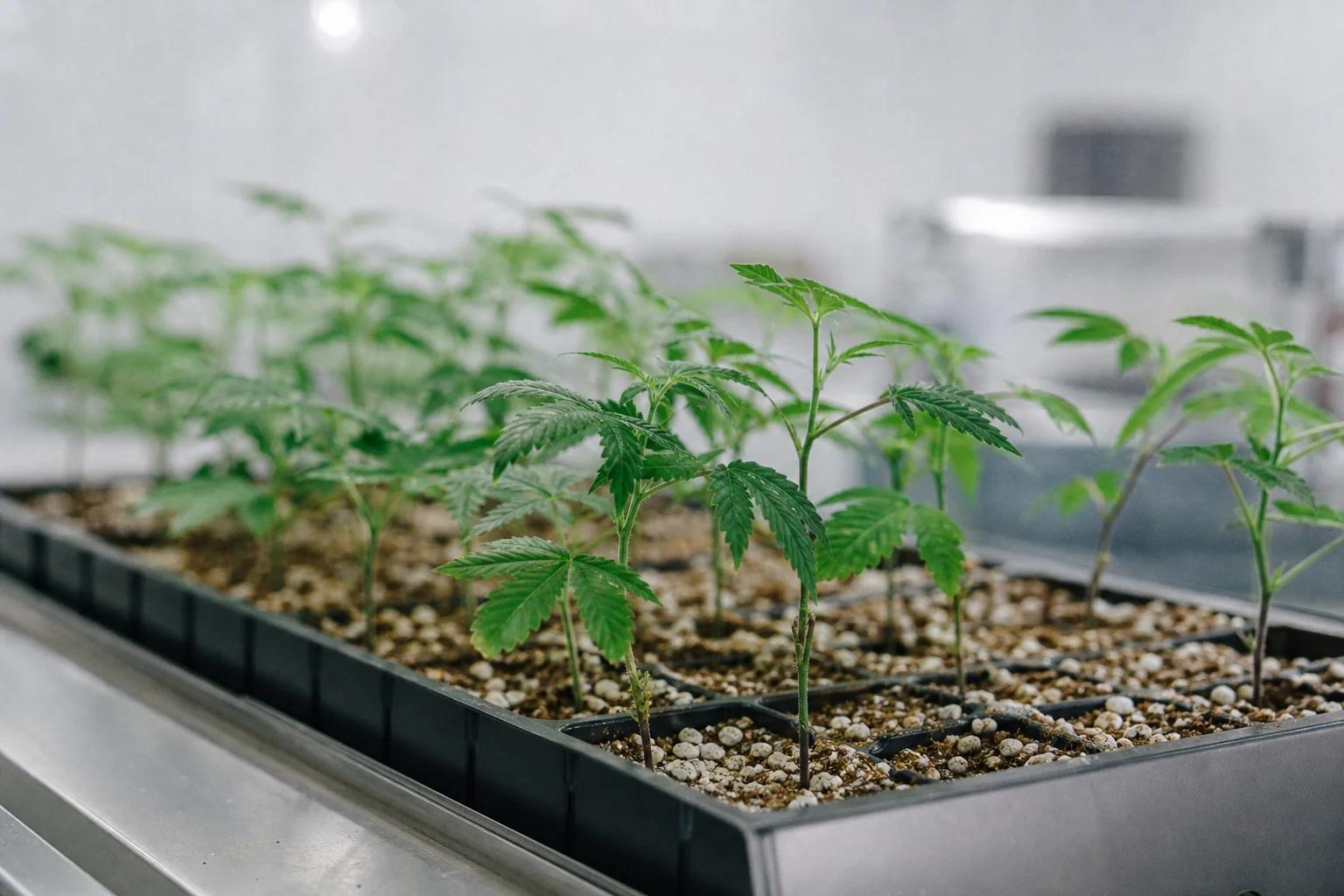
Canada holds an unusual position in global polyploid cannabis research. The University of Guelph has released four verified polyploid cannabis cultivars specifically developed for triploid breeding programs, making it one of the few academic institutions globally to offer commercially licensable polyploid cannabis genetics.
The cultivars are offered under a tiered licensing structure:
Hemp Genetics International is among the early licensees operating within this framework. As more breeding programs license and develop from Guelph's cultivars over the next few years, the consistency and verification quality of commercially available triploid cannabis seeds in Canada should improve materially. The Guelph program also provides a credibility benchmark: a breeder who can reference validated, academically produced tetraploid parent lines is making a meaningfully stronger claim than one who cannot.
The infrastructure for high-quality triploid genetics in Canada is being built — and Canada is building it. The commercial products that follow from that foundation, in two to three years, are likely to be more reliable than much of what's currently on the market.
Should a Canadian Home Grower Buy Triploid Seeds Right Now?
The technology is real. The sterility mechanism is sound. The question — the one that actually matters for your next grow — is whether available commercial triploid seeds are consistently high enough quality to justify the premium in 2026.
Triploid cannabis seeds make sense if:
- You're growing in a shared building or space where complete pollen isolation from neighbours' grows is genuinely difficult
- You've experienced repeated crop contamination from undetected male or hermaphrodite plants in previous seasons
- The supplier can provide flow cytometry ploidy verification for the specific seed lot you're buying
- You understand that the seedlessness benefit is the structural value proposition — not a guaranteed yield multiplier
- You're an experienced grower who has already dialled in your environment and wants to explore verified premium genetics
- You're on your first or second grow — environment, timing, and nutrient management will have ten times more impact on your outcome than chromosome count
- You're buying from a source that cannot provide ploidy verification data
- You're expecting the 15–25% yield figure as a certainty rather than an unverified possibility
- Your budget is limited — a well-bred, proven feminized line will consistently outperform an unstabilised triploid from a rushed breeding program
Questions to ask any triploid seed supplier before buying:
- Do you have flow cytometry ploidy verification data for this specific lot?
- What diploid parent line was used to produce these triploids?
- How many generations has the tetraploid parent been stabilised?
- What is the typical phenotype range and flowering window for this line?
Triploid cannabis genetics are a genuine evolution in how cannabis is bred and grown — particularly for commercial producers running large facilities where pollen contamination is a persistent operational problem. For home growers, the technology is interesting and the biology is sound. The market is still finding its footing. When verified triploid options with strong multi-cycle performance data become widely accessible from breeders working from quality genetic foundations, the calculus for home growers will shift. That point hasn't quite arrived at scale yet — but the groundwork being laid in Canada suggests it's coming.
FAQ
Are triploid cannabis plants seedless?
Triploid cannabis plants are functionally seedless under normal growing conditions. Three chromosome sets cannot complete the meiosis required to produce viable gametes, so plants are unable to set seed when exposed to pollen. In a well-maintained home grow with verified feminized triploid genetics, sinsemilla production is the expected outcome — though sustained extreme pollen pressure remains an edge-case risk. ---
Are triploid cannabis seeds sterile?
The seeds are not sterile — the adult plants that grow from them are. A triploid seed germinates and establishes normally, with comparable vigour to standard feminized genetics from the same line. Sterility is expressed during flowering, when three chromosome sets prevent successful meiosis and gamete production. Store, germinate, and treat a triploid seed like any other feminized seed. ---
Is polyploid cannabis GMO?
No. Polyploidy is a chromosomal multiplication of the plant's own genome — no foreign DNA is inserted, and no gene editing occurs. Triploids arise naturally in cannabis populations at approximately 0.5% frequency. Induced polyploidy using colchicine or oryzalin accelerates this natural process without modifying the plant's genetic sequence. Polyploid cannabis is not transgenic under any Canadian or international regulatory standard. ---
Do triploid cannabis plants yield more?
The biology supports a plausible yield advantage — energy not spent on seed production may redirect toward flower mass and resin development. Commercial sources frequently cite 15–25% yield gains. However, peer-reviewed controlled trials comparing matched triploid and diploid lines under identical conditions remain limited in the published literature as of 2026. Treat claimed yield premiums as biologically plausible but not commercially verified. ---
What's the difference between triploid and tetraploid cannabis?
Triploids (3n) are effectively sterile plants intended for cultivation — they produce sinsemilla because their chromosome count blocks viable seed formation. Tetraploids (4n) are fertile plants maintained by breeders as parent lines — their four chromosome sets divide evenly during meiosis. You grow triploids in your tent. Breeders use tetraploids to make the triploid seeds you purchase. These are tools for different problems. ---
Can I buy triploid cannabis seeds in Canada?
Yes, triploid cannabis seeds are available from select breeders in Canada and internationally. The critical due diligence step is verification: request flow cytometry ploidy data for the specific seed lot you are considering. With the University of Guelph's polyploid cultivar licensing program maturing, the quality and traceability of commercially available triploid genetics in Canada is improving — but unverified claims remain common in the current market.
19+ | Educational horticulture only.