· Platinum Cookies × Granddaddy Purp × Blue Power × Gelatti ·
Apples and Bananas Feminized — Strain Review & Grow Guide
In-depth review of Apples and Bananas Feminized: Platinum Cookies × GDP × Blue Power × Gelatti, 25-30% THC, 8-9 wk flower, indoor + Canadian outdoor grow guide.
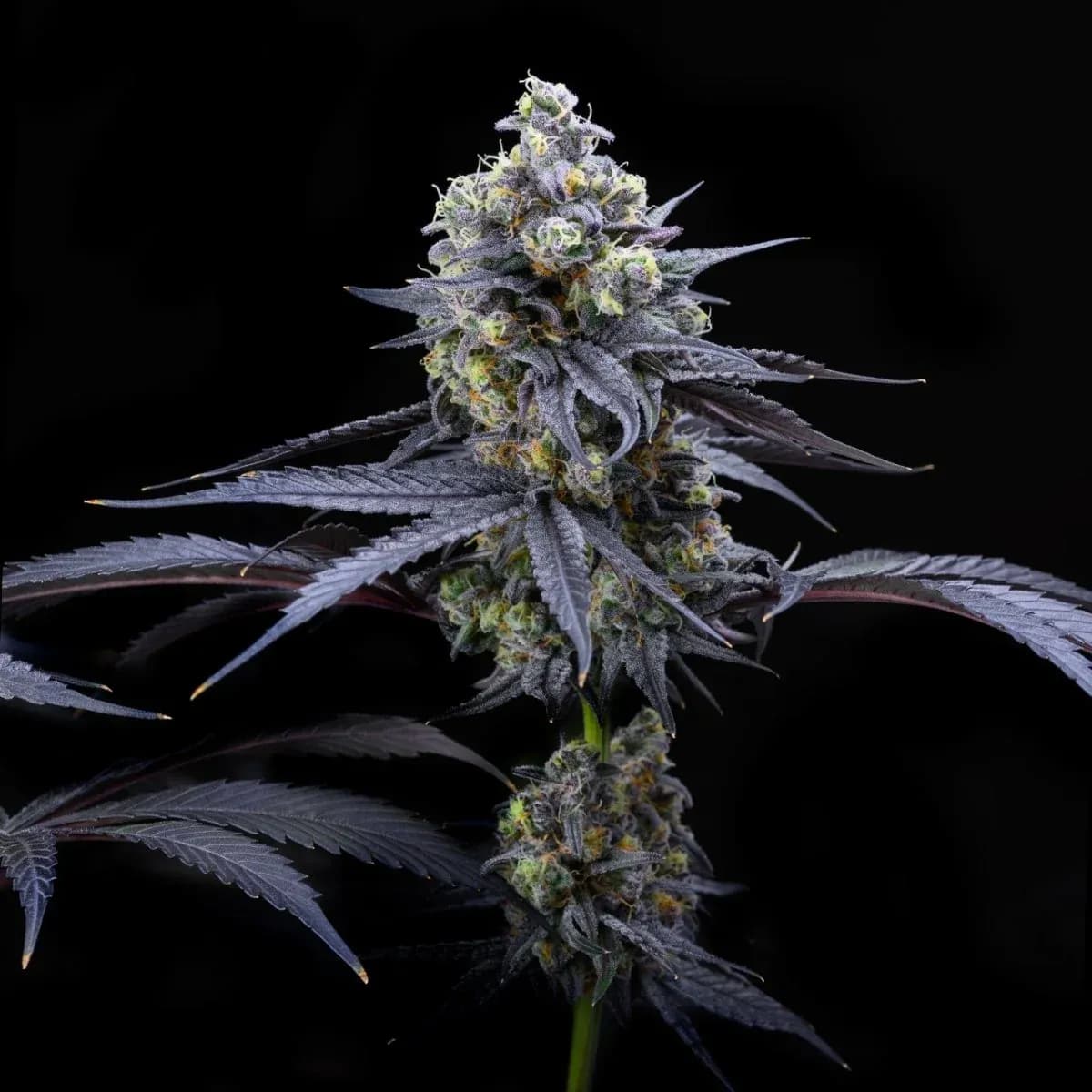
Apples and Bananas is a 60/40 indica-dominant hybrid crossing Platinum Cookies × Granddaddy Purp × Blue Power × Gelatti — a documented quadruple cross — with THC testing consistently in the 25–30 % range and a terpene-rich aroma that genuinely smells like fresh fruit and gas. It flowers in 8–9 weeks indoors, works outdoors in southern Quebec, Ontario, and BC, and delivers 400–500 g/m² indoor. Intermediate growers will get the most out of it.
Understanding Apples & Bananas Feminized's key numbers
Apples & Bananas Feminized flowering time
- Indoor (12/12)
- 8-9 Weeks
- Outdoor harvest
- October
- Climates
- Greenhouse, Grows indoors, Grows outdoors
- Variety
- Indica / Sativa
- THC
- 25 - 30%
- Terpene
- Caryophyllene, Limonene, Myrcene
Apples & Bananas Feminized seed to harvest time
- Germination + seedling
- 1–2 weeks
- Vegetative
- 5–7 weeks
- Flowering
- 8-9 Weeks
- Dry + cure
- 2–3 weeks
- Total
- 16–21 weeks
- Yield indoor
- Indoors: 400-500 gr/m2; Outdoors: 500-700 gr/plant
- Genetics
- Platinum Cookies × Granddaddy Purp × Blue Power × Gelatti
Cannabis seed germination rate & PPS guarantee
- Guarantee floor
- 75%
- Typical performance
- 96%
- Method
- Blue paper towel
- Storage
- 4–8°C · 5+ yr
- Packaging
- Envelope + mylar + vial
- Support reply
- < 24h bilingual
- Shipping
- Discreet across Canada
Apples and bananas. Most strains named after fruit lean hard on marketing hype and deliver something vaguely sweet on the back end if you're lucky. The apples and bananas strain is different. The name actually describes something real — a terpene expression that hits ripe apple on the inhale and shifts to tropical banana and gas on the exhale, driven by a caryophyllene-dominant profile layered with limonene and myrcene. There is a reason this cultivar has generated genuine interest beyond its flashy name.
The genetics behind the strain are worth understanding before anything else. This is a polyhybrid — four parent lines stacked into a single cultivar through deliberate breeding work to produce a stable fruit-forward expression. Understanding where it comes from explains a lot about why it grows the way it does, why the terpene profile lands where it lands, and what to expect in terms of phenotypic variation.
This guide covers everything a grower in Canada needs to know: genetics breakdown, aroma and flavour in detail, cannabinoid and effect profile, indoor and outdoor growing guides specific to Canada's climate, flowering time and yield expectations, and phenotype selection. If you are looking for apples and bananas seeds in Canada, there is a purchasing note at the end too.
What Is the Apples and Bananas Strain?
Apples and bananas is a photoperiod feminized, indica-dominant hybrid — approximately 60 % indica and 40 % sativa — bred through a four-way cross. It sits in the upper tier of modern fruit-forward cultivars in terms of both potency and aromatic complexity, with THC levels documented in the 25–30 % range and a terpene fingerprint that genuinely delivers on the name.
The growth habit is compact to medium — 100–150 cm indoors under 18/6, stretching moderately on the flip to 12/12. Flowering runs 8–9 weeks, which puts it in the comfortable range for indoor grows in Canada where lighting costs are a real operational consideration. The strain does not require extraordinary intervention to produce quality results, but it rewards growers who dial in their feeding schedule and manage humidity in the final two weeks of flower when the buds fill out into dense, resin-coated clusters.
For new growers, the honest assessment is: intermediate difficulty. It is not unforgiving in the way some elite genetics can be, but it responds noticeably to nutritional inconsistencies. Calcium-magnesium demand is on the higher end during flower, and the dense bud structure means airflow management directly affects whether you finish with tight, clean nugs or a mould issue in week 8. If you have run two or three grows and understand the basics of EC management and defoliation timing, the plant will reward the effort.
The apples and bananas strain has become a reference point among hybrid collectors not just because of its flavour profile but because of what it represents genetically — a serious cross from serious breeders, feminized for home growers, accessible without sacrificing the breeding pedigree that produces consistent, high-expression plants.
Genetics: The Quadruple Cross Behind Apples and Bananas
The genetic lineage is a documented four-way cross built by stacking premium West Coast genetics across multiple breeding generations to lock in the fruit-forward terpene expression. The specific cross is:
Platinum Cookies × Granddaddy Purp × Blue Power × Gelatti
Breaking that down:
Platinum Cookies is a phenotype of OG Kush × Durban Poison — via the GSC lineage — selected for heavy resin production and a sweet, doughy aroma. It contributes the dense trichome coverage and the structural backbone of the finished plant.
Granddaddy Purp (GDP) is the iconic Big Bud × Purple Urkle cross from Ken Estes, known for deep indica sedation, grape-purple pigmentation under cold, and elevated myrcene expression. This is where the fruity depth comes from — the berry undertones that show up on the back end of the flavour profile.
Blue Power brings Power Plant genetics into the mix, adding sativa-structure influence that opens up the internodes slightly and contributes the tropical terpene notes that read as banana and pineapple on the finish.
Gelatti is itself a cross of Gelato 45 × Biscotti — two deeply dessert-oriented lines from the Cookie family. Gelatti stacks the sweet, creamy mid-note on top of everything else, which is what rounds the flavour into something that lands as ripe tropical fruit rather than just "sweet."
The result of stacking these four lines is a plant that expresses predominantly indica in structure but carries enough sativa influence in its terpene programme and secondary growth traits to produce an effect profile that runs relaxing without being sedating at lower doses. The breeding program spent multiple generations selecting for the expression that stabilised the fruit-and-gas terpene signature that apples and bananas became known for.
Aroma and Flavour Profile — Why It Smells Like Fresh Fruit
The strain name is not marketing shorthand — it is a direct description of the dominant terpene expression at full maturity. In week 7–8 of flower, the room smells unmistakably of ripe apple and tropical stone fruit with a sharp chemical-gas undertone that builds as the buds cure. There is no better sensory descriptor for a fresh apples and bananas nug in good condition than: fruit shop counter, with a back note of premium fuel.
The terpene architecture driving this expression:
Caryophyllene is the dominant terpene. It is the spicy-gas backbone that keeps the fruit notes from reading as candy-sweet — caryophyllene is what gives this strain its edge and is also responsible for the slightly numbing mouthfeel some users report. As the only terpene known to interact with CB2 receptors, it also contributes to the anti-inflammatory effect profile associated with this cultivar.
Limonene is the second major terpene. Limonene is citrus-adjacent but in this profile reads more as the bright top note of fresh apple skin — that sharpness in the first second of a hit. It is also what makes the aroma in a properly cured jar noticeably elevating and mood-forward.
Myrcene rounds the base. Myrcene is the terpene most associated with tropical fruit aroma in cannabis — mango, banana, ripe melon — and is what creates the banana signature in this profile. It also contributes to the relaxing body element of the effect.
Beyond the big three: experienced tasters have noted hints of berry (from the GDP lineage), a faint creamy undertone (Gelatti), and a light grape finish on exhale that shows up particularly in phenotypes that express some purple colouration. The gas stays with you after exhale — this is not a short finish.
Curing matters significantly with plants grown from this lineage. A 14-day cure in glass jars at 58–62 % humidity opens up the terpene complexity considerably versus fresh-dried flower. The limonene expression especially sharpens over the first two weeks post-cure.
THC, Cannabinoids, and Reported Effects
THC levels sit in the 25–30 % range, which places this cultivar in the upper tier of commercially available feminized photoperiod genetics. CBD is below 1 % — this is not a high-CBD variety, and it should not be approached as one. The cannabinoid profile is THC-dominant and the effects reflect that.
For adults 19+, the reported effect profile runs:
- Euphoric onset — within 5–10 minutes of consumption, a mood elevation that is fast and pronounced, likely the limonene and caryophyllene combination modulating dopaminergic activity alongside THC.
- Social and creative — at moderate doses, this cultivar is frequently described as a social strain. Conversations flow; creative work becomes engaging rather than consuming. This is the sativa-influence component of the 40 % expression showing through.
- Relaxing body — as the initial euphoria settles over 30–45 minutes, the myrcene and indica backbone shifts the experience toward physical relaxation. Not sedating at average doses but progressively heavier with continued use.
- Couch potential — at higher doses or in sensitive individuals, the indica 60 % does assert itself. This is not a light recreational strain. The apples and bananas THC ceiling (25–30 %) means heavier use produces significant sedation.
The combination of high THC, caryophyllene, and the GDP-inherited myrcene base makes it a strain frequently selected for end-of-day use — dinner, creative projects before sleep, social situations in the evening.
Feminized Seeds
Apples & Bananas Feminized
Growing Apples and Bananas Indoors — Tent, Light, Feeding
Growing apples and bananas indoors is well within reach for growers who have completed a couple of successful runs. The main considerations are: feeding consistency, airflow through the canopy, and not cutting the flush short.
Setup and space: The plant reaches 100–150 cm in a standard 18/6 veg cycle. In a 1.2 × 1.2 m tent with a 4-plant setup, a 6-week veg and early LST (low-stress training) will give you a well-managed canopy that does not overwhelm the space. The stretch on flip is moderate — expect 30–50 % height gain in the first three weeks of flower, which is manageable with timely bend-and-tie work.
Light: 600W HPS or 600W equivalent LED (actual draw, not marketed equivalent) produces excellent yield in a 1.2 m tent. LED full-spectrum panels with a red-heavy flowering spectrum push the trichome and terpene expression noticeably compared to bluer-spectrum options.
Feeding: This is the area where the genetics demand the most attention. Calcium and magnesium requirements are elevated during weeks 4–7 of flower. Deficiency shows first as interveinal chlorosis on mid-canopy leaves — minor at first, worsening quickly if uncorrected. Maintain an EC of 1.8–2.2 in flower (in coco) and supplement Cal-Mag at 2–3 mL/L from week 3 of flower onward. In soil, well-amended mixes with added perlite handle the Ca-Mg demand passively if you start with quality medium.
Humidity and airflow: In weeks 6–9 of flower, the bud clusters become genuinely dense. Relative humidity must stay below 45 % during these final weeks to prevent grey mould (Botrytis cinerea) from establishing inside the bud structure. Oscillating fans inside the tent, along with strategic defoliation of bud-adjacent fan leaves at day 21 of flower, address the core risk.
Indoor yield: Expect 400–500 g/m² under optimised conditions. A properly trained 4-plant setup in a 1.2 × 1.2 m tent can hit the high end of that range.
Available at PPS
Apples & Bananas Feminized
Feminized seeds · shipped across Canada
Growing Apples and Bananas Outdoors in Canada (Québec, ON, BC)
Apples and bananas feminized seeds are well-suited to outdoor conditions in Canada when placed correctly in the grow calendar. The 8–9 week flowering time from first light trigger means an outdoor harvest in the late September to early October window — tight but workable in the right regions.
Quebec: Growing apples and bananas in southern Quebec (Montérégie, Estrie, Rive-Sud de Montréal) is viable. Start seedlings indoors in early May, transplant to final containers or ground after May 24 (last frost). Flowering initiates naturally in early to mid-August as daylength drops below 14 hours. Expect harvest in the last week of September or first week of October — ahead of the typical first hard frost in the greater Montreal area (usually early to mid-October). The window is real but not generous. Feminized cannabis seeds Quebec growers use need to be strains that finish before that frost, and apples and bananas, with its 8–9 week clock, fits. North of the 46th parallel, risk of frost before completion increases sharply — growers in Quebec City and north should consider greenhouse cultivation or fast-finishing autoflower alternatives.
Ontario: The eastern Ontario and GTA zone has a longer reliable window. Outdoor plants in the Niagara Peninsula can run into mid-October before hard frost risk becomes serious, which gives the strain more runway. The humid late-summer weather in southern Ontario requires attention to mould prevention — the same principles that apply indoors (airflow, defoliation, humidity monitoring) apply outdoors. Consider using a trellis net and removing interior fan leaves in August to keep the canopy open.
British Columbia: The Okanagan and lower Fraser Valley offer the most favourable outdoor conditions in Canada for this cultivar. Long warm summers and dry September conditions minimize mould pressure and let the terpene profile develop fully in natural light. Growers in coastal BC (Metro Vancouver) face higher autumn humidity and should plan for the same mould-prevention practices as Ontario.
Outdoor yield: 500–700 g per plant under good conditions, with well-established plants in full ground reaching the higher end of that range. It grows into a full-sized outdoor plant in good soil — 100–150 cm is the expected height, though unconstrained plants in rich soil can exceed that.
Using feminized cannabis seeds Canada growers source from a reliable domestic supplier ensures vigour and stability that matters particularly outdoors, where you have one grow season to get it right.
Flowering Time, Yield, and Harvest Window
Indoor flowering time runs a consistent 8–9 weeks (56–63 days) from flip to harvest-ready. This is a reliable window — the strain does not run long. Occasional phenotypes in the more sativa-leaning expression can push to 9.5 weeks, but 8 weeks is the common observation.
Indoor harvest timing signals:
The most reliable harvest timing tool for any high-THC cultivar is trichome observation under a jeweller's loupe or pocket microscope. For this strain specifically:
- At 8 weeks: trichomes are predominantly cloudy white with a small percentage of amber. This is the peak-THC window — maximum potency, still slightly stimulating.
- At 8.5–9 weeks: 20–30 % amber trichomes signal THC-to-CBN degradation beginning. This window shifts the effect toward deeper body relaxation and sedation — preferred for evening use.
- Beyond 9 weeks: excessive amber indicates over-ripeness. Potency declines; the effect becomes heavy and foggy.
Pistil reading as a secondary indicator: At 8 weeks, roughly 70–80 % of pistils will have darkened to orange-red. This is consistent with peak maturity.
Indoor yield: 400–500 g/m² under 600W equivalent, 4-plant setup in 1.2 m tent, with LST and defoliation. Growers who add SCROG (screen of green) training push toward the high end. The apples and bananas yield responds particularly well to SCROG because the moderately open internodal spacing allows good bud site distribution across the screen.
Outdoor yield: 500–700 g/plant in full outdoor conditions (southern Canada, good soil, full sun). The plant stretches into a natural tree form when unconstrained — staking is advisable from mid-August onward as the buds gain weight.
Cure recommendation: Dry at 18–21 °C and 45–55 % RH for 10–14 days (until stems snap cleanly), then cure in sealed glass jars at 58–62 % RH for a minimum of 14 days. The terpene complexity of this cultivar develops measurably during the cure — patience here pays off in flavour.
Common Phenotypes and What to Select For
Apples and bananas seeds produce a recognisable spread of phenotypes within a consistent genetic framework. Because this is a stabilised polyhybrid rather than an F1 first-generation cross, phenotypic variation is moderate — most plants will look similar and smell recognisably of the strain's characteristic profile. That said, growers running multiple plants from the same batch will notice two primary phenotypic expressions:
Phenotype A — The Indica-Leaning Expression
This phenotype runs shorter (closer to 100 cm indoor), bushier, with tighter internode spacing and more compact bud structure. The terpene expression skews toward the myrcene and Granddaddy Purp heritage: banana, tropical berry, faint grape on the back end. Purple colouration in the calyxes is more common in this phenotype, particularly if night temperatures drop below 16 °C in the final two weeks. Flowering time: 8 weeks. This is the phenotype to select if your goal is maximum yield per square metre in a constrained tent.
Phenotype B — The Balanced/Gelatti-Forward Expression
This phenotype runs taller (closer to 150 cm indoor), with slightly more sativa-influence in the internodal spacing. Buds are dense but with more defined structure — not quite as compact as Phenotype A. The aroma skews toward the Gelatti heritage: creamy sweet, ripe apple with more prominent gas. The caryophyllene expression is stronger in this phenotype. Flowering time: 8.5–9 weeks. This phenotype produces the more complex terpene profile and is the one to preserve as a mother if you are looking for the full flavour experience this cultivar is capable of.
What to select for when growing from apples and bananas seeds:
- For home grow maximisation: Phenotype A. Compact, high-yield, easy to manage in standard tent setups.
- For flavour and terpene complexity: Phenotype B. Worth the extra half-week if aroma is the primary goal.
- Purple expression: Select Phenotype A plants and run a cold finish (drop night temp to 14–16 °C in weeks 7–9). The anthocyanin expression from the GDP genetics can produce striking purple calyxes without compromising terpene quality.
Where to Buy Apples and Bananas Feminized Seeds in Canada
Finding feminized cannabis seeds Canada growers can trust — with verified genetics, clean germination rates, and domestic shipping — is the practical question after all the cultivation research.
Apples and bananas feminized seeds are available at PPS in packs of 5 seeds at $76.99, with the full documented quadruple-cross lineage intact. These are genuine apples and bananas seeds — the documented quadruple-cross — not a re-labelled approximation. Feminized photoperiod seeds mean every plant is a flower producer — no males to identify and remove, which matters when you are working within a four-plant household limit under the Cannabis Act.
If you are comparing this cultivar to other fruit-forward or dessert hybrids before committing, the key differentiators are:
- Genetics depth: The Platinum Cookies × GDP × Blue Power × Gelatti quadruple cross is documented and traceable — not a generic "cookies cross."
- Terpene expression: Caryophyllene-dominant with real limonene and myrcene backing — this is not a candy-sweet terpene profile, it is a complex fruit-and-gas expression.
- Flowering time for Canada: The 8–9 week flower window fits indoor grow economics and southern outdoor windows.
- THC ceiling: 25–30 % is a legitimate testing range for elite-tier genetics. Intermediate growers who manage the apples and bananas grow correctly will consistently hit this range.
Feminized Seeds
Apples & Bananas Feminized
For growers working through their first few cultivar selections, it is also worth reading the seed buyer's guide to understand what to look for beyond genetics — germination rate guarantees, seed storage, and what questions to ask before buying feminized cannabis seeds in Canada. Sourcing feminized cannabis seeds Canada growers can count on means checking for stability documentation and proper storage, not just strain names.
FAQ
What is the apples and bananas strain?
Apples and bananas is a photoperiod feminized, indica-dominant hybrid (~60 % indica / 40 % sativa) bred via a quadruple cross: Platinum Cookies × Granddaddy Purp × Blue Power × Gelatti. It is known for THC levels of 25–30 % and a distinctive fresh fruit and gas terpene profile.
What does apples and bananas smell like?
The apples and bananas aroma is sweet ripe apple on the opening, transitioning to tropical banana and stone fruit in the mid-note, with a persistent gas finish. The scent is driven by a caryophyllene-dominant terpene profile layered with limonene (fresh citrus/apple) and myrcene (tropical/banana). It is genuinely fruit-forward — one of the more accurately named cultivars in the current market.
How high is the apples and bananas THC?
Apples and bananas THC levels test in the 25–30 % range. This puts it in the upper tier of commercially available feminized photoperiod genetics. CBD is below 1 %. The effect profile is potent and should be approached with appropriate dosing by adults 19+.
How long does apples and bananas take to flower?
Indoor flowering time is 8–9 weeks (56–63 days) from the flip to 12/12. Most phenotypes express closer to 8 weeks. The sativa-leaning phenotype can push to 9 weeks for maximum terpene development.
Can I grow apples and bananas outdoors in Canada?
Yes. Outdoor harvest in Canada falls in late September to early October, which works well for southern Quebec (Montérégie, Rive-Sud), Ontario (GTA, Niagara), and British Columbia (Okanagan, lower Fraser Valley). Growers north of the 46th parallel in Quebec face increased frost risk and may want to use a greenhouse or fast autoflower alternative.
What is the apples and bananas yield indoors?
Indoor yield is 400–500 g/m² under optimised conditions (600W equivalent, 4-plant 1.2 × 1.2 m tent, LST or SCROG training). Outdoor yield is 500–700 g per plant in full outdoor conditions.
What are the main terpenes in apples and bananas?
The terpene profile is caryophyllene-dominant, with limonene and myrcene as secondary terpenes. Caryophyllene contributes the gas and spice; limonene delivers the bright apple/citrus top note; myrcene is responsible for the tropical and banana character. The combination produces an unusually complex and recognisable aroma.
Is apples and bananas hard to grow?
Intermediate difficulty. It handles standard growing conditions well but shows sensitivity to calcium-magnesium deficiency during flower and requires good airflow to avoid mould in its dense buds. Growers with two or more completed grows should handle it confidently. It is not recommended as a first-ever grow.
Plantation Premium Seeds
Shop Apples & Bananas Feminized
Feminized seeds · premium genetics · discreet shipping across Canada
Buy Seeds — $77 CAD⚠️ Collector's item only · adults 19+
19+ | Educational horticulture only.
Feminized Seeds
Apples & Bananas Feminized