From Decarb to Dosing
Cooking & Edibles
Cannabis Baked Goods: Weed Brownies, Space Cakes & Dosing Basics
Weed brownies and space cakes: how to make cannabis baked goods at home with proper dosing math (19+). Decarb, cannabutter, and 'start low go slow' guide.
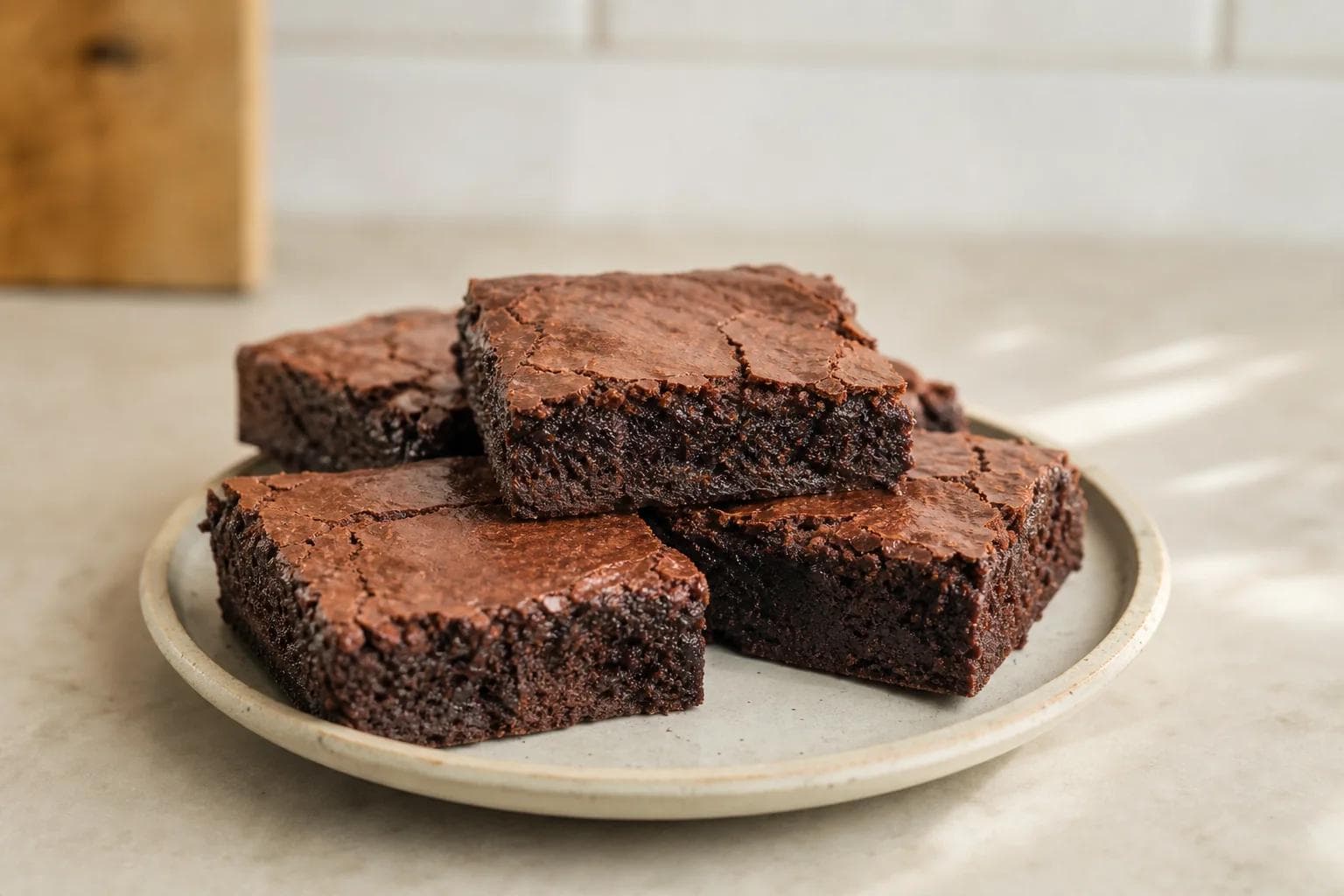
Weed brownies and space cakes hit far harder and last far longer than smoking because your liver converts THC into 11-hydroxy-THC, a more potent metabolite. A beginner dose is 2.5–5 mg THC per serving. Always calculate your batch before baking, and always wait at least 90 minutes before considering a second piece.
Homemade cannabis edibles are one of the most rewarding things you can do with a harvest — and one of the most reliable ways to ruin an evening if you skip the math. A tray of weed brownies gives no immediate feedback. You eat one piece, feel nothing for an hour, and then either have a perfect night or spend six hours on the couch convinced something has gone very wrong.
This guide is for adults 19+ who want to make cannabis-infused baked goods at home — thoughtfully, safely, and with a real understanding of what's happening inside each piece. The dosing science and the calculation come before the recipe, because there is no other order that leads to a consistently good experience. If you jumped straight to "recipe," scroll back up. The math section is the reason this page exists.
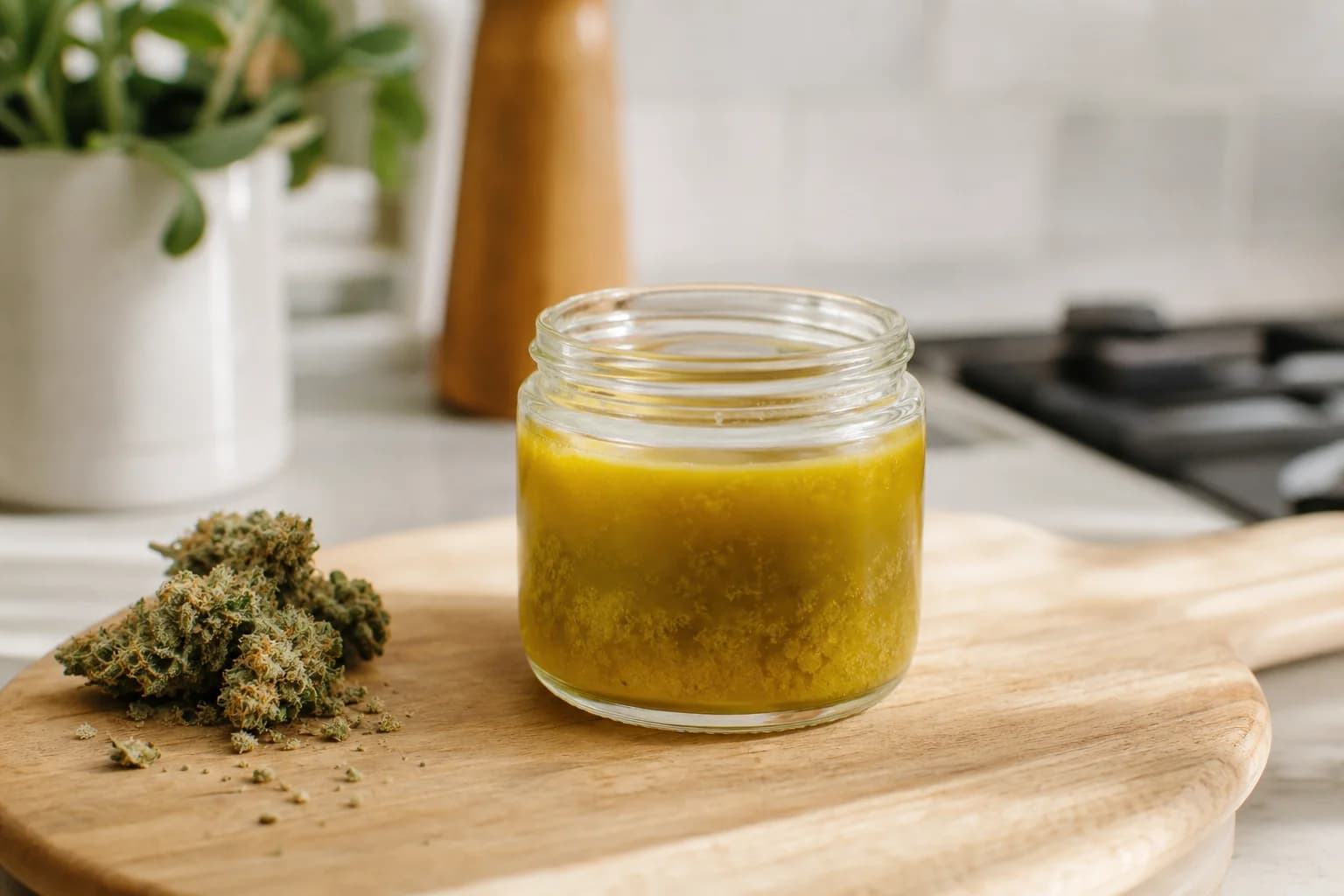
Before any recipe: if your flower hasn't been decarboxylated yet, start with Decarboxylation: The Chemistry Behind Activating Cannabis. If you haven't made your infused fat yet, see Cannabutter: A Science-First Guide for Canadian Home Cooks first. This article picks up at the point where cannabutter is already prepared and ready to bake with.
Why Do Edibles Hit Differently Than Smoking?
When cannabis is eaten rather than inhaled, THC bypasses the lungs and travels through the digestive system to the liver, where it is converted into 11-hydroxy-THC — a metabolite that crosses the blood-brain barrier more readily than inhaled THC and produces a more intense, longer-lasting, and more sedating effect at equivalent doses. This liver-conversion pathway is the fundamental reason edibles feel different from smoking the same strain.
The downstream consequences of this pathway are practical, not just pharmacological. How much food is in your stomach, the fat content of that food, your individual gut transit time, and your liver enzyme activity all influence how efficiently your body produces 11-hydroxy-THC from a given dose. Someone who eats a brownie after a full dinner will have a very different experience than the same person eating the same piece on an empty stomach — potentially twice as slow to onset, but not necessarily half as intense. Same brownie, same body, same day. Different result.
That "I felt nothing at 45 minutes so I ate another one" pattern is where most bad edible experiences begin. The second piece doesn't override the first — it arrives at peak simultaneously. Understanding that edibles have a delayed, liver-mediated mechanism is the entire basis for every dosing recommendation that follows.
How Long Do Weed Brownies Take to Kick In — and How Long Do They Last?
Weed brownies typically take 30–90 minutes to produce noticeable effects, peak at 2–4 hours, and last a total of 4–8 hours depending on dose, metabolism, and whether the edible was consumed with food. Individual variation is significant. Onset on an empty stomach can occur in as little as 30 minutes; after a high-fat meal, onset can push past two hours.
How Many Milligrams of THC Should I Put in Brownies?
For a first-timer, 2.5–5 mg THC per serving is the appropriate starting range. Adults with some prior edible experience typically find 5–10 mg effective. Higher-tolerance individuals may use 15–30 mg, but this range carries real risk for anyone whose tolerance shifts between batches — and it does shift. These are calibration anchors, not targets. Your first batch from any new source flower or new cannabutter is always a test batch.
Tolerance-Tiered Dosing Reference
How Do You Calculate Dosage for Homemade Edibles?
Calculating dosage for homemade cannabis edibles means multiplying the flower's THC percentage by its weight in milligrams, applying an extraction efficiency estimate, and dividing by the number of servings. There is no exact answer — homemade edibles aren't lab-tested and potency is never perfectly uniform across a tray. The goal is a reasonable, conservative estimate that guides your portioning decisions.
The Worked Dosing Example — Step by Step
Scenario: You have 7 grams of decarbed flower at 20% THC. You've made a batch of cannabutter with that flower, and you plan to bake a standard 8×8 brownie tray, cut into 16 portions.
Step 1 — Calculate total THC available in the flower
7 g × 1,000 = 7,000 mg of flower by dry weight 7,000 mg × 20% = 1,400 mg of THC theoretical maximum in the raw flower
Step 2 — Apply extraction efficiency
Home extraction of THC into butter is not 100% efficient. Variables include infusion temperature, infusion duration, fat-to-flower ratio, and cannabutter technique. A realistic range for properly made home cannabutter is 70–80% efficiency. Use 70% for conservative planning.
1,400 mg × 70% = 980 mg of THC transferred into the finished butter
Step 3 — Determine dose per portion
980 mg ÷ 16 brownies = ~61 mg THC per brownie
That is an extremely high dose for any purpose. To bring pieces into a usable range, adjust your portioning:
The honest caveat on potency distribution: The worked example above calculates an average dose per piece. In practice, potency across a homemade tray varies. Corner and edge pieces often differ from centre pieces due to fat migration during baking — individual pieces will typically land within ±20–30% of the average. This is not a reason to abandon homemade edibles. It's the reason to calibrate conservatively on your first batch, track how each portion felt, and adjust your next batch math accordingly.
Scaling for different THC percentages:
The formula is the same regardless of THC%: Total flower weight (mg) × THC% × extraction efficiency ÷ number of servings
Example: Same 7 g of flower at 14% THC × 70% efficiency ÷ 16 pieces = ~43 mg per piece (same portioning adjustments apply)
For home growers who have cured and trimmed their own flower, submitting a small sample to a licensed cannabis testing lab is the most accurate way to confirm your starting THC%. Many provincial health authorities maintain directories of accredited labs. If you grew from verified feminized genetics with a published THC profile, that range is your best working estimate.
How Does Commercial Cannabis Compare to Homemade Edibles in Canada?
Under the federal Cannabis Act, licensed cannabis retailers in Canada are limited to selling edibles with a maximum of 10 mg of THC per package. That limit is a retail packaging regulation — not a personal production limit — but it's a precise calibration reference.
A single store-bought edible package equals 10 mg. The worked example above produces brownies averaging 61 mg per piece before any re-portioning. That's a brownie containing the equivalent of six commercial packages. Home bakers who have eaten two or three commercial units and felt comfortable are not prepared for an unmodified piece from that tray.
The value of the commercial benchmark isn't regulatory — it's mathematical. If you know how a 10 mg purchased edible feels for you personally, you now have an anchor for calibrating your homemade batch.
Which Strains Are Best for Baked Goods?
The best strains for cannabis edibles are those whose terpene and cannabinoid profiles match your intended experience — and whose potency is predictable enough to calculate. Indica-dominant, myrcene-heavy cultivars tend to produce more sedating, body-focused effects when processed through the 11-hydroxy-THC pathway, making them strong candidates for evening baked goods. Balanced hybrids work better for daytime or social micro-dose applications. High-CBD cultivars suit wellness-oriented recipes where strong psychoactive intensity is not the goal.
For a deeper look at how individual terpenes shape the oral cannabis experience, see Cannabis Terpenes Guide.
Evening and Relaxation Edibles
Northern Light is the classic choice for evening cannabutter. Its myrcene-forward indica profile is well documented, resin production is high — which translates directly to efficient cannabutter extraction — and its finished potency is consistent across phenotypes. Growers who run short indoor photoperiods favour Northern Light for its forgiving finish time and reliable cannabinoid output, both of which matter when you're trying to calculate a batch rather than guess at one.
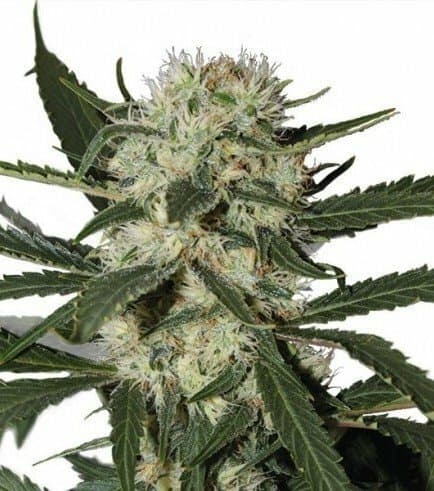
Feminized Seeds
Northern Light Feminized
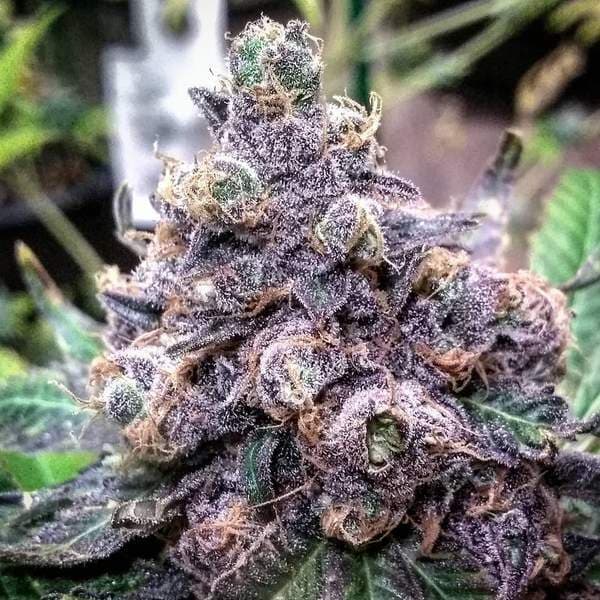
Grand Daddy Purple brings a myrcene and caryophyllene-rich terpene profile with a heavy indica character that pairs naturally with dessert baked goods. The grape and berry phenotype adds an aromatic dimension to both brownies and space cakes, and its potency makes it particularly well-suited to smaller, precision-portioned pieces in large batches.
Feminized Seeds
Grand Daddy Purple (Fast) Feminized
Daytime and Micro-Dose Edibles
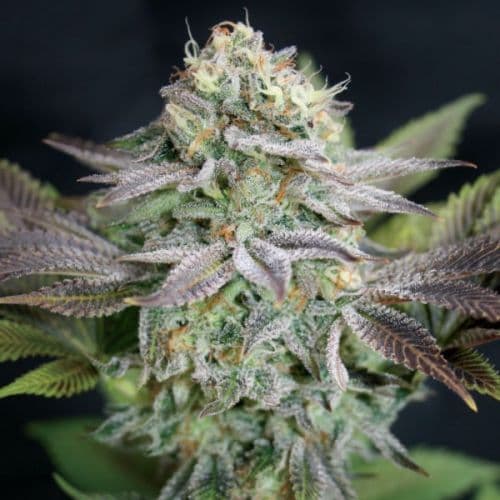
Blue Dream sits in a more functional range for oral consumption. When portioned to 5–8 mg per serving, it produces a noticeably lighter experience than a pure indica at the same dose — still full-body, but less sedating. Outdoor growers often use Blue Dream for its reliable finish before first frost, and those harvests convert efficiently into daytime cannabutter.
Feminized Seeds
Blue Dream Feminized
Wellness and CBD Edibles
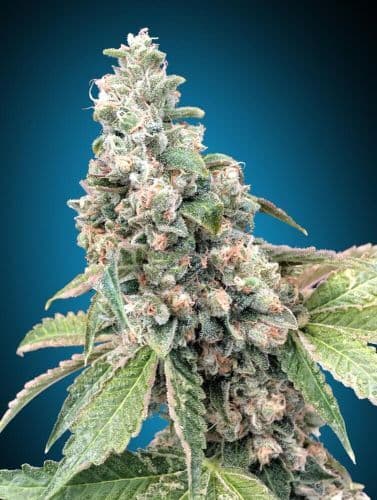
Harlequin CBD 40:1 is a high-CBD, low-THC cultivar suited to edible applications where psychoactive intensity isn't the primary goal. CBD-dominant edibles are relevant for users seeking anti-inflammatory and anxiolytic properties without significant impairment. The 40:1 CBD:THC ratio also makes batch dosing more forgiving — the psychoactive threshold is much harder to inadvertently exceed, even with conservative extraction math.
Feminized Seeds
Harlequin CBD 40:1 Feminized
How to Make Weed Brownies (Recipe)
19+ only. For adults who have completed decarboxylation and prepared cannabutter.
This recipe assumes you have already made prepared cannabutter using the process in Cannabutter: A Science-First Guide for Canadian Home Cooks. Do not substitute raw ground flower — THCA in undecarboxylated flower does not produce psychoactive effects in a baked good. Your Decarboxylation: The Chemistry Behind Activating Cannabis step must be complete before you begin.
Run your batch dosing math from the previous section before the cannabutter goes into the recipe. Know your target portion size before the batter hits the pan.
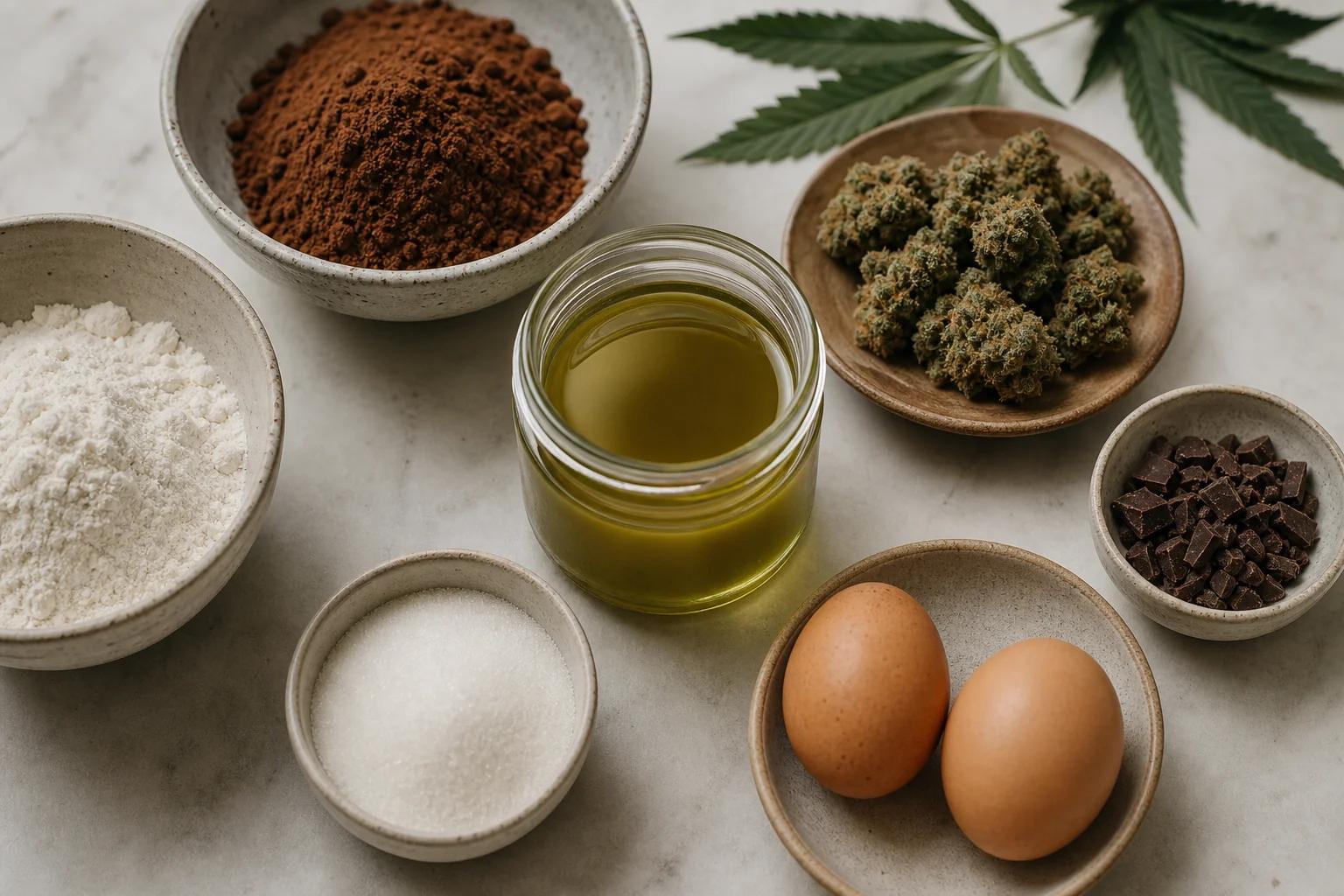
Ingredients (8×8 pan — 16–64 portions depending on cut size)
- 113 g (½ cup) prepared cannabutter
- 200 g (1 cup) granulated sugar
- 2 large eggs
- 1 tsp vanilla extract
- 65 g (½ cup) all-purpose flour
- 45 g (½ cup) unsweetened cocoa powder
- ½ tsp fine salt
- ¼ tsp baking powder
Method
- Preheat oven to 175°C (350°F). Line an 8×8 baking pan with parchment paper, leaving overhang on two sides for easy lifting.
- Melt cannabutter in a small saucepan over low heat. Don't bring it to a boil — sustained high heat degrades THC. Remove from heat and allow to cool for 5 minutes.
- Whisk in sugar, then eggs one at a time, then vanilla. Mix until smooth and fully combined.
- Sift cocoa, flour, salt, and baking powder directly into the wet mixture. Fold with a spatula until just combined — a few streaks of flour are fine. Don't overmix.
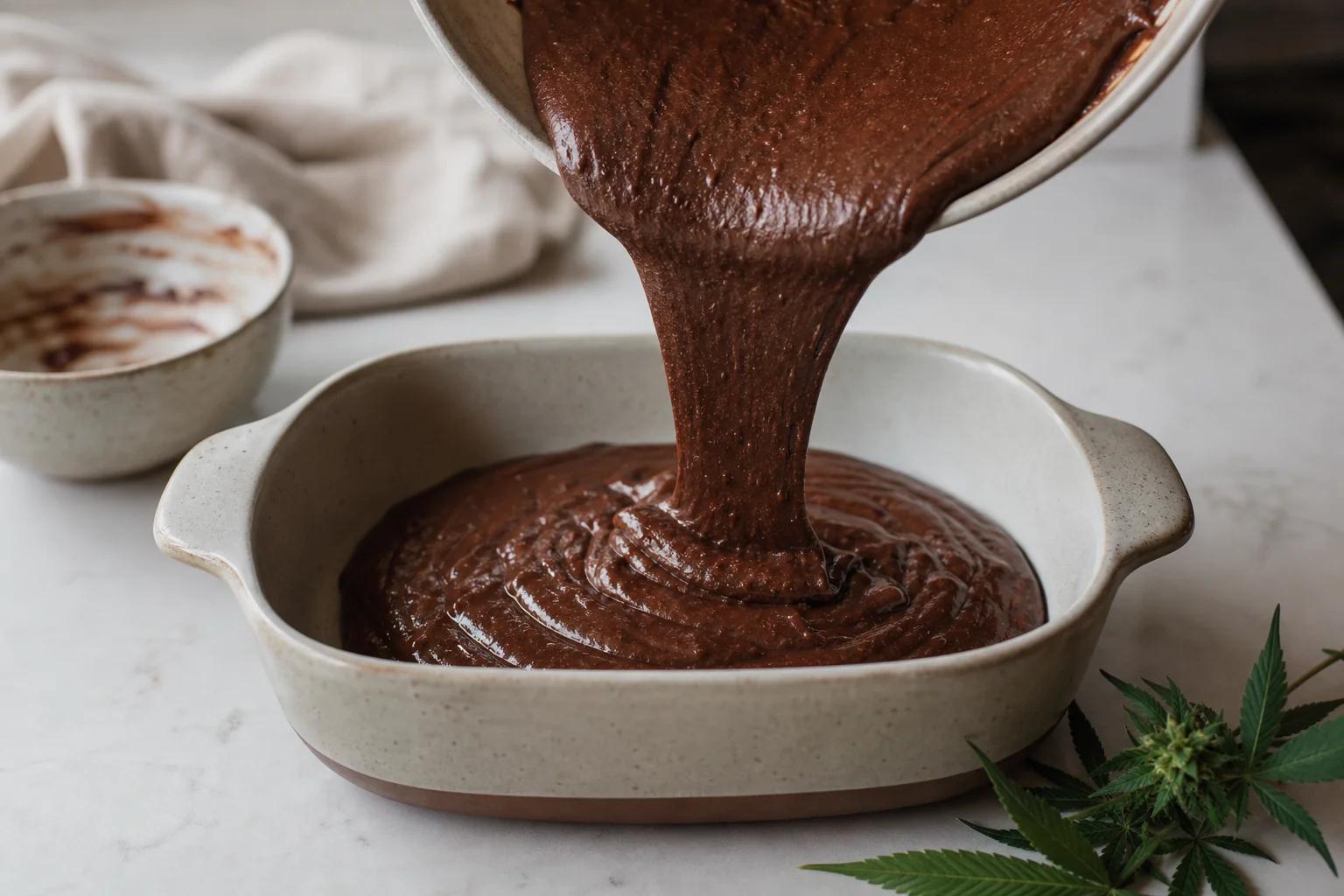
- Pour into the pan and spread to an even, uniform thickness. Uniform batter depth is your most practical tool for consistent dosing per piece.
- Bake 20–25 minutes. Check at 20 minutes. A toothpick inserted in the centre should come out with a few moist crumbs — not wet batter and not completely clean. Overbaked brownies are dry; underbaked brownies are too soft to cut cleanly.
- Cool completely in the pan before cutting. Warm brownies crumble when sliced. Use a ruler and a sharp knife to mark your planned portions before cutting so pieces are as equal as possible — this is your final dosing control step.
- Label each portion with dose if storing separately. Airtight container in the refrigerator for up to 2 weeks.
How Do You Make Space Cakes with Cannabis?
Space cakes are cannabis-infused vanilla sponge cakes — distinct from brownies in structure, texture, and how fat distributes through the crumb. Where a brownie is dense and fudgy with fat dispersed through a nearly continuous matrix, a sponge cake has an aerated crumb with fat trapped in air pockets created during creaming. That lighter structure makes space cakes more socially discreet in flavour and texture, though the aerated crumb can show slightly greater potency variation between pieces than a denser brownie.
The same portioning discipline applies: plan your portions before baking, cut to equal sizes, and label.
Space Cake Recipe (8×8 pan — 16–64 portions depending on cut size)
Ingredients
- 113 g (½ cup) prepared cannabutter, at room temperature
- 200 g (1 cup) granulated sugar
- 2 large eggs
- 120 ml (½ cup) whole milk
- 1 tsp vanilla extract
- 190 g (1½ cups) all-purpose flour
- 2 tsp baking powder
- ¼ tsp fine salt
- Preheat oven to 175°C (350°F). Grease and flour an 8×8 baking pan, or line with parchment.
- Cream cannabutter and sugar with a hand mixer on medium speed until pale and noticeably fluffy, about 2–3 minutes. This step matters more than it might look. Creaming room-temperature fat with sugar emulsifies the cannabutter evenly into the batter — cold or melted butter won't cream properly and can lead to uneven distribution across pieces.
- Beat in eggs one at a time, scraping the bowl between additions. Beat in vanilla.
- Add flour mixture and milk in alternating additions: one-third flour, half the milk, one-third flour, remaining milk, final flour. Fold gently after each addition. Overmixing develops gluten and makes a tough, dense cake.
- Pour into pan and smooth the top to an even surface.
- Bake 28–32 minutes until a toothpick inserted in the centre comes out clean and the top springs back when lightly pressed.
- Cool completely before portioning. Apply the same measurement-and-label process as brownies.
How Much Cannabutter Do I Put in Brownies or Space Cakes?
The standard ratio for both recipes is 113 g (½ cup) of cannabutter per 8×8 pan — this replaces the recipe's full fat component. Adding more cannabutter than the recipe calls for doesn't increase the dose per serving. The THC in your batch is fixed; the butter quantity is already set. Exceeding the fat ratio makes a greasy product and affects binding. Adjust potency per serving by changing portion size or diluting with a second non-infused batch, not by adding extra butter.
Can You Overdose on Cannabis Edibles?
A fatal overdose from cannabis edibles alone is not documented in healthy adults. However, consuming significantly more THC than intended produces an experience commonly described as "greening out" — acute anxiety, paranoia, nausea, rapid heart rate, spatial disorientation, and time distortion that can feel alarming but is not, in itself, life-threatening for otherwise healthy individuals.
The experience can last 6–10 hours at high doses. This is temporary. It will pass.
What Happens If You Eat Too Many Weed Brownies?
Eating too many weed brownies causes the above effects to intensify and extend. The thing that makes edible over-consumption particularly disorienting: because onset takes 60–90 minutes, most people have no idea they've over-consumed until well into the peak. By the time the full dose arrives, taking that second piece is an hour in the past.
What to do if you or someone else has consumed too much:
- Do not panic. The experience is temporary and will end.
- Find a calm, safe, familiar environment. Lie down if that helps. Reduce sensory stimulation — lower lights, lower noise.
- Hydrate slowly with small sips of water. Don't drink alcohol — it significantly amplifies THC effects.
- CBD oil may help. If available, 25–50 mg of CBD isolate or broad-spectrum CBD tincture can compete at CB1 receptors and blunt the psychoactive intensity.
- Have someone present. If you are alone, send a text with your location to someone you trust.
- Call 911 if: breathing becomes laboured or painful, chest pain develops, consciousness is significantly impaired, or the person cannot be roused. These are medical emergencies regardless of the substance involved.
How Many Weed Brownies Should I Eat?
The answer is entirely determined by the dosing math you completed before baking. There is no universal portion number — only a THC mg target, which you calculated in the dosing section above. "One brownie" means nothing without knowing that brownie's THC content. A piece the size of a commercial brownie from a concentrated batch can contain 30–60 mg. A piece the size of a postage stamp from the same batch can contain 5 mg.
If you skipped the batch math: start with a piece approximately the size of your thumbnail and wait 2 hours before any further assessment.
Do Homemade Edibles Lose Potency Over Time?
Yes — cannabis edibles lose potency over time primarily through THC oxidation and heat-accelerated degradation. The baked good itself also degrades from moisture, mould, and bacterial activity independently of cannabinoid content. Refrigerated brownies stored in an airtight container typically maintain potency for 1–2 weeks. Frozen edibles stored in sealed, moisture-proof packaging can remain stable for 3–6 months.
Light, heat, and humidity are the three primary degradation accelerators. A brownie left uncovered in a humid coastal environment will degrade faster — both in texture and potency — than an airtight-sealed portion in a dry inland climate. Moisture promotes mould before THC degradation is even a meaningful factor; safe storage is first a food safety question, then a potency question.
For complete guidance on maximizing edible shelf life, understanding potency degradation curves, and safe storage formats by duration, see How Long Do Edibles Last? Cannabis Edible Storage Guide.
For the effect of cure quality on the potency of your source flower before it enters the cannabutter stage, see Curing and Storing Cannabis Buds.
Safety, Older Adults & Medication Considerations
Cannabis edibles present elevated risk for specific populations. The following groups should approach homemade baked goods with additional caution or consult a healthcare professional before consuming.
Older adults and lower body weight: Liver metabolism changes with age, and lower body weight reduces the volume of distribution for THC. A dose that's routine for a 90 kg adult in their thirties may be overwhelming for a 55 kg adult over 65. For older adults and smaller-framed individuals, 2.5 mg per serving is the starting ceiling — not the floor.
Prescription medication interactions: Cannabis can interact with medications metabolized by the CYP450 hepatic enzyme system, including certain anticoagulants, anticonvulsants, antidepressants, and immunosuppressants. If you take any prescription medication regularly, speak with your pharmacist or physician before incorporating cannabis edibles into your routine. This is not a hypothetical precaution — interaction effects can be clinically significant.
Mental health considerations: Individuals with a personal or family history of psychosis, schizophrenia, or a diagnosed cannabis-use disorder should avoid high-THC edibles. High oral doses of THC can trigger acute anxiety episodes, dissociation, or psychotic symptoms in susceptible individuals at doses that would be unremarkable for someone without these risk factors.
Provincial public health offices across Canada publish harm reduction resources on cannabis edible use. This article does not substitute for professional medical guidance.
FAQ
How many mg of THC should a first-timer eat?
A first-timer should start with 2.5 mg of THC and wait at least 90 minutes — ideally two hours — before assessing whether more is needed. Five milligrams is the widely cited standard single-serving benchmark, but 2.5 mg allows meaningful calibration without the risk of being significantly overwhelmed on a first experience. When in doubt, go lower.
Can I use decarbed flower directly in brownies instead of cannabutter?
Yes, but potency distribution is inconsistent and flavour is significantly affected. Raw decarbed flower ground into batter does not distribute THC as evenly as a fat-extracted cannabutter, because THC binds to lipid molecules — not starch or batter. Cannabutter produces substantially more consistent dosing per piece and a far cleaner taste profile than mixing ground flower directly into a recipe.
Why did my brownies not get me high?
The most common cause is incomplete or skipped decarboxylation — THCA in insufficiently heated flower does not convert to psychoactive THC. [CITATION: decarboxylation efficiency THCA to THC temperature time | PubMed] Other causes include: flower with lower actual THC% than the listed or estimated percentage; cannabutter infused at too high a temperature (which degrades THC); individual metabolism that significantly slows oral absorption; or a genuinely under-dosed batch. Review your decarb process first, then run the batch math from known inputs.
Can I freeze weed brownies?
Yes. Wrap individual portions tightly in plastic wrap, then seal in an airtight freezer bag or rigid container. Frozen cannabis brownies maintain potency and texture quality for up to 3–6 months. Thaw in the refrigerator rather than at room temperature to prevent condensation from introducing moisture. Label each piece with the calculated dose so you don't have to recalculate after thawing.
Is it legal to make edibles at home in Canada?
Adults 19+ in most provinces (verify current age regulations for your specific province — Quebec has historically set a higher minimum age) are permitted to make cannabis edibles for personal use under the Cannabis Act. [CITATION: Cannabis Act personal production home edibles personal use | Government of Canada] Personal possession limits apply to the source flower. Selling homemade cannabis edibles is a criminal offence regardless of provincial regulations. Consult Health Canada or your provincial cannabis authority for current provincial rules.
How do I make my batch less strong if I made it too potent?
Bake a second identical batch using regular unsalted butter in place of cannabutter, then cut both trays into portions of the same size. Alternating one infused piece with one non-infused piece halves your average dose. Alternatively, cut all existing pieces into smaller portions and recalculate dose based on the reduced piece size. THC cannot be removed from a baked good once incorporated — dilution through addition is the only practical option.
Can kids or pets be harmed by leftover weed brownies?
Yes — this is a serious and non-theoretical risk. Cannabis edibles are dangerous for children and pets, both of whom have substantially lower body weight and no tolerance. THC toxicity in dogs and cats causes significant neurological symptoms and is a veterinary emergency requiring immediate care. Store all cannabis baked goods in clearly labelled, child-resistant, opaque containers, secured out of reach and out of sight. Apply the same storage discipline you would to prescription medication.
19+ | Educational horticulture only.