From Decarb to Dosing
Cooking & Edibles
How Long Do Edibles Last? Cannabis Edible Storage Guide
How long do cannabis edibles last? Fridge, freezer, and pantry storage guide for homemade and store-bought edibles. Canadian 19+ guide.
Cannabis edibles run three separate timers — food safety, THC potency, and the Canadian best-before date — and they don't expire together. Gummies stay safe for 6–12 months sealed; baked goods go off in 3–7 days at room temperature. THC degrades at roughly 5–10% per month under poor storage, far less under cool, dark, airtight conditions.
Every cannabis edible runs three clocks simultaneously — and they rarely stop at the same moment.
Clock one is the food-safety clock: will this make you sick? Clock two is the potency clock: will this still work? Clock three is the regulatory clock: what is the Canadian "best before" date on that package actually telling you? Most guides answer only one of these. This one covers all three.
If you're sitting on a commercial gummy pouch that's been in a drawer for four months, a batch of homemade brownies from last week, or a tincture you forgot about at the back of a cupboard — the answer to "is this still good?" depends entirely on which question you're asking and which product you're holding.
Do Edibles Expire?
Yes — but "expire" means different things depending on the product and the question. Cannabis edibles have three separate timelines: a food-safety window, a THC potency window, and a Canadian regulatory quality date. A brownie can be unsafe to eat before its cannabinoids meaningfully degrade. A gummy can be dried out and completely tasteless while still delivering most of its original dose. Which clock is actually running — that's the question worth answering.
Under the Canadian Cannabis Regulations, licensed producers must include a durable life date — printed as "best before" — on every packaged edible. That date reflects food quality under stated storage conditions: texture, flavour, appearance. It is not a pharmaceutical expiry date. It does not mark the moment the product becomes inert or dangerous. Read the three clocks independently.
How Long Do Edibles Last? A Product-by-Product Breakdown
Cannabis edible shelf life varies dramatically by product type because the underlying food chemistry is completely different. The single most important variable is water activity — the amount of free moisture available for microbial growth. High water activity means short shelf life. Low water activity means long shelf life. Gummies sit at one end of that spectrum; fresh baked goods sit at the other. The gap between them has nothing to do with dosing or cannabinoid content — it's pure food chemistry.
How Long Do Weed Gummies Last?
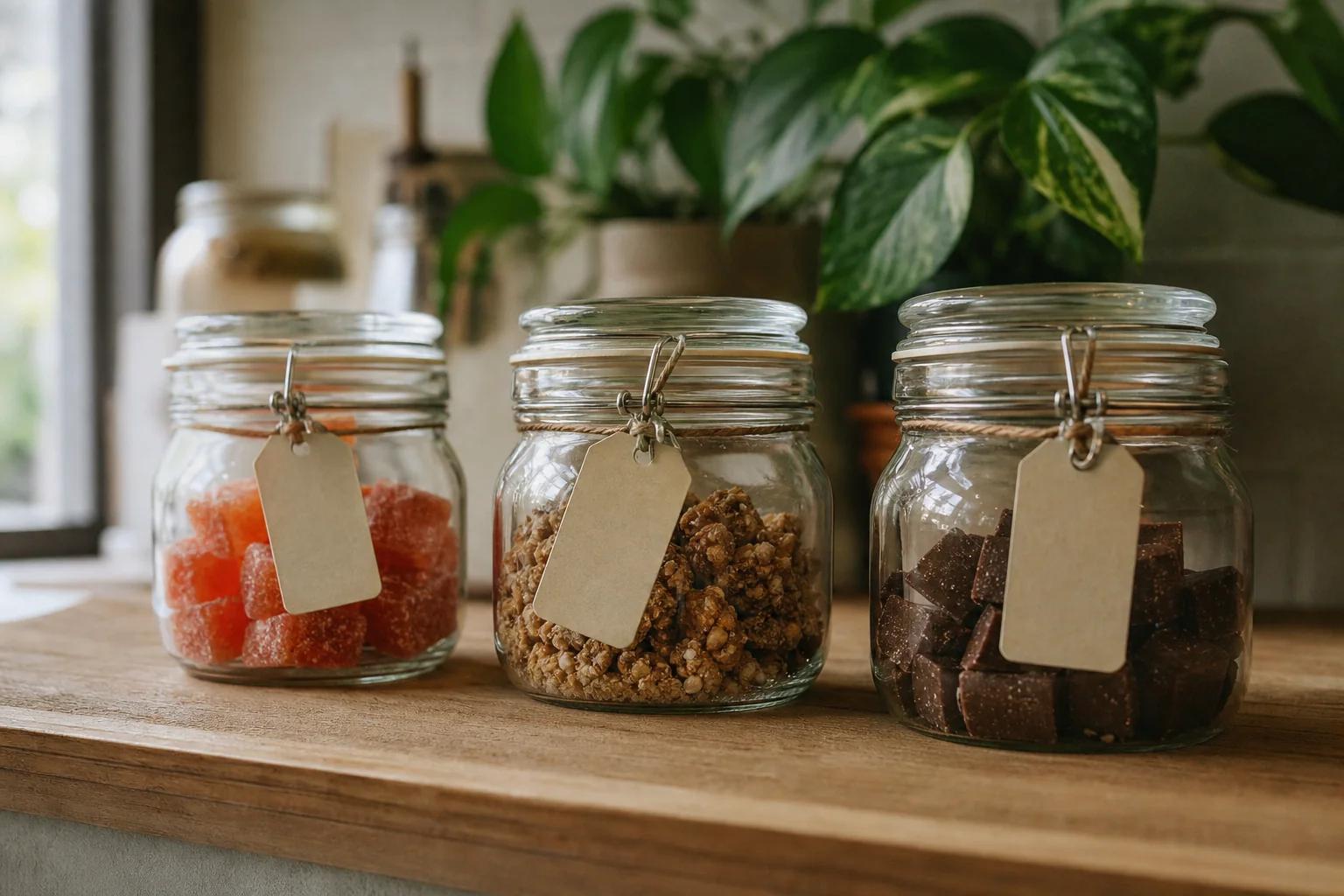
THC-infused gummies are the most shelf-stable common edible, typically lasting 6–12 months sealed and 1–3 months after opening under proper storage. Their low-moisture sugar-gelatin matrix resists microbial growth far longer than baked goods. The main degradation signals are textural — syneresis (surface sweating), sugar crystallization, or hardening — rather than dangerous spoilage. Potency is usually well-preserved within this window.
In Toronto, where dry winter heating causes rapid indoor humidity swings, an unsealed gummy bag left on a shelf can dry out and crystallize within 2–3 weeks — not because the gummy is unsafe, but because low ambient humidity pulls moisture from the gelatin matrix faster than most people expect.
How Long Are Weed Brownies and Baked Edibles Good For?
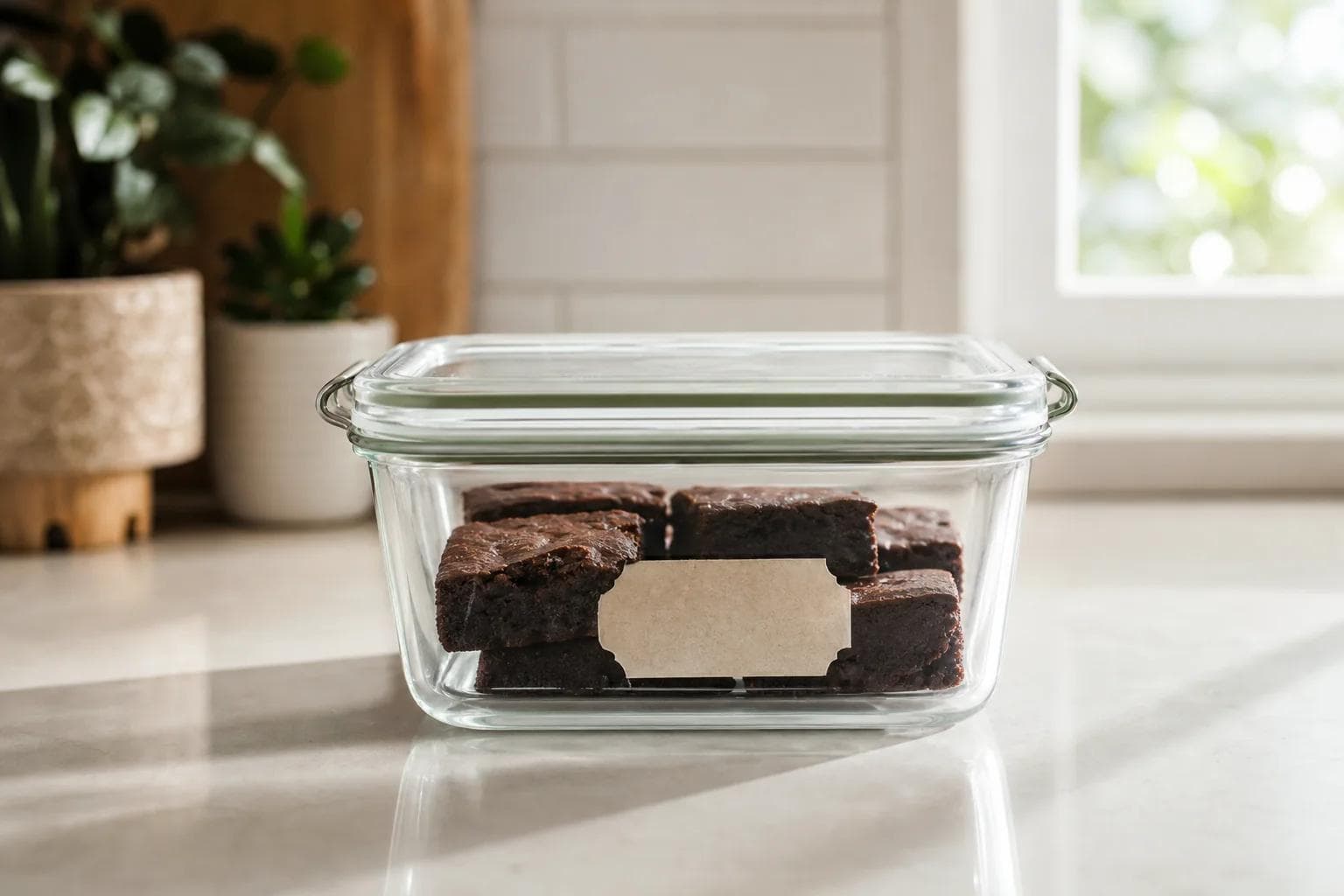
Homemade baked cannabis edibles — brownies, cookies, space cakes — have the shortest shelf life of any edible type: 3–7 days at room temperature, 1–2 weeks refrigerated, and up to 3 months frozen. Their high water activity and perishable ingredients (eggs, dairy, flour) create ideal conditions for mould growth once the Maillard crust is breached. Staling begins immediately post-baking, regardless of THC content. Cannabis Baked Goods: Weed Brownies, Space Cakes & Dosing Basics (19+)
In Montreal, where summer relative humidity regularly exceeds 80%, room-temperature baked edibles can show visible surface mould within four to five days. Refrigeration isn't optional in high-humidity environments — it's the minimum viable storage baseline.
How Long Do Cannabis Chocolates Last?
Cannabis chocolates and infused chocolate bars last 1–2 years sealed under ideal conditions (below 18°C, away from humidity and light) and 6–12 months after opening. Chocolate's low water activity and fat-based matrix protect cannabinoids effectively. The primary degradation signal is fat bloom — a white or grey chalky surface that appears when cocoa butter migrates due to temperature fluctuation. Bloom is cosmetic and not a food-safety concern, but it does indicate compromised storage conditions and possible uneven cannabinoid distribution within the product.
Skip the freezer on chocolate edibles unless you've vacuum-sealed them first. Condensation during thawing causes sugar bloom and moisture infiltration, which accelerates degradation rather than extending shelf life.
How Long Do Cannabis Beverages, Tinctures, and Oils Last?
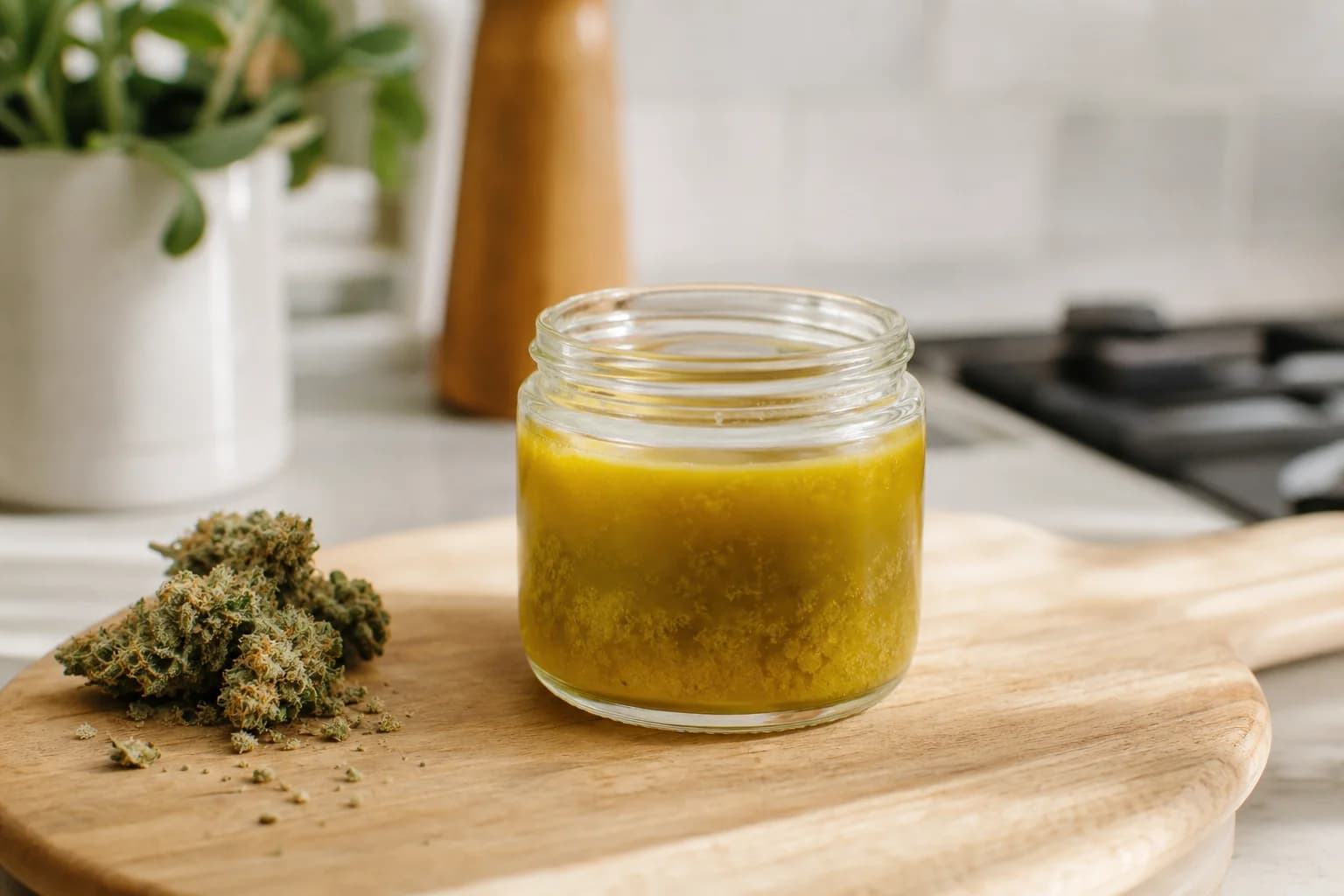
Alcohol-based tinctures are among the most stable cannabis products, lasting 3–5 years stored cool, dark, and sealed — ethanol is inherently antimicrobial. Oil-based tinctures and infused cooking oils last 6–12 months before lipid oxidation degrades both flavour and cannabinoid content, and the process accelerates significantly once opened. Cannabutter: A Science-First Guide for Canadian Home Cooks (19+)
Cannabis beverages (ready-to-drink or powdered formats) typically carry a 6–12 month shelf life sealed, with rapid quality decline within 3–7 days after opening. The emulsified cannabinoid formulations in these products can separate or destabilize once oxygen is introduced.
What Does the "Best Before" Date on Canadian Edibles Actually Mean?
The "best before" date on a licensed Canadian cannabis edible is a durable life date — a manufacturer's guarantee of organoleptic quality (taste, texture, and appearance) under the storage conditions stated on the label. It marks the end of the quality window under ideal conditions. It is not a safety cutoff, and it is not a potency guarantee.
Under the Cannabis Regulations (SOR/2018-144), licensed producers are required to determine durable life through controlled stability testing. The child-resistant packaging mandated by those same regulations has a secondary effect: it protects against oxygen and moisture exposure during shelf life, meaning commercially packaged edibles arrive more shelf-stable than most home-storage situations will maintain them.
Canada's 10 mg THC per package limit means most commercial gummy or chocolate packs contain a single serving. Once you open that pack, the full dose is exposed to oxygen in one event — a fundamentally different oxygen-exposure profile than a larger multi-serving product opened over weeks. Open it, dose, reseal immediately. Treat the opened package as short-term storage, even if the best-before date is eight months away.
The three-date framework worth remembering:
- "Best before" = quality guarantee under stated conditions — not a hard expiry
- "Expiry date" = does not exist on most cannabis edibles as a regulatory category
- "Potency decline date" = not printed anywhere; governed entirely by your storage conditions
Do Edibles Lose Potency Over Time?
Yes, but more slowly than most consumers fear when storage is done correctly. THC degrades primarily through oxidation and UV exposure, converting progressively into CBN (cannabinol) — a mildly sedating but far less psychoactive cannabinoid. Under poor conditions (warm, light-exposed, unsealed), research suggests THC loss of approximately 5–10% per month. Under proper cool, dark, airtight storage, the rate drops to roughly 1–2% per month, preserving meaningful potency for 12 months or more.
The Decarboxylation: The Chemistry Behind Activating Cannabis that converted THCA to active THC during cooking is a one-way chemical reaction — but the slow degradation of THC toward CBN keeps going afterward regardless of edible format. In oil-based products, lipid oxidation and cannabinoid degradation are coupled: as the carrier fat goes rancid, THC stability deteriorates alongside it. Terpenes — which contribute to aroma, flavour, and the entourage effect — are highly volatile and often fade well before any potency change becomes noticeable. Cannabis Terpenes Guide: What They Are and Why They Matter
Can Expired Edibles Still Get You High?
In most cases, yes — an edible past its best-before date will still produce psychoactive effects, often at close to its original potency. The food-safety clock and the potency clock run at genuinely different speeds. A gummy that has dried out and crystallized over 10 months may have lost 10–15% of its original THC content; for most users and most doses, that loss is not practically noticeable.
The caveats matter. First: mould. A visibly mouldy edible may still be psychoactive, but mould toxins are a real food-safety risk with nothing to do with cannabinoid content. Discard it. Second: dose uncertainty. If significant physical degradation has occurred — unusual smell, discolouration beyond cosmetic changes, unusual texture — you can't reliably predict dose. Third: conversion to CBN means that very old, poorly stored edibles may shift the effect profile toward sedation rather than a typical balanced high. For the majority of scenarios — a sealed or properly stored edible a few months past its best-before date — potency loss is real but minor.
How Can You Tell If Edibles Have Gone Bad?
There is no universal test — you read product-type-specific signals. Assessing edible condition requires checking appearance, smell, and texture separately for each format.
Gummies:
- White or grey surface coating (sugar crystallization — cosmetic, not dangerous)
- Extreme hardness or crumbling (moisture loss — reduced enjoyment, not unsafe)
- Sticky or wet surface that persists (syneresis — monitor for mould development)
- Visible mould — fuzzy patches, dark spots (discard immediately)
- Fermented or chemical off-smell (discard)
- Any visible mould — no exceptions, discard immediately Cannabis Baked Goods: Weed Brownies, Space Cakes & Dosing Basics (19+)
- Ammonia or off-protein smell (microbial breakdown — discard)
- Sliminess or surface sheen change (discard)
- Dryness, staling, crumbling — not unsafe, but unpleasant and likely affects dose accuracy
- White or grey surface bloom (fat or sugar migration — cosmetic, not unsafe)
- Sandy or gritty mouthfeel (sugar bloom — texture degraded, not a safety issue)
- Waxy, rancid, or "crayon" smell (fat oxidation — discard, potency likely compromised)
- Mould is rare in properly stored chocolate but possible after any water exposure
- Cloudiness or settling in oil-based products (separation — shake to assess; may still be usable)
- Rancid, chemical, or paint-like smell (lipid oxidation — discard)
- Alcohol-based tinctures rarely spoil; look for unusual sedimentation or colour shift
How Should I Store Cannabis Edibles?
Four principles govern effective edible storage across all product types: cool, dark, dry, and airtight. Together, they minimize all three active degradation pathways — microbial growth, THC oxidation, and terpene loss. No single variable compensates for another; all four matter.
Temperature: Target 15–18°C. Reaction rates roughly double for every 10°C increase in temperature — including cannabinoid degradation and microbial growth. A kitchen counter near a stove, a car interior, or a top cabinet shelf above a heat-generating appliance: all hostile environments. A cool interior pantry shelf or a temperature-stable drawer is the accessible baseline for most Canadians.
Light: UV and visible light are primary drivers of THC oxidation. Store edibles in opaque or dark containers. The child-resistant packaging from licensed producers is typically designed to block light — transfer product to clear glass jars and you've eliminated a meaningful layer of protection.
Humidity: Target 55–62% relative humidity for gummies and baked goods. Below 40% RH drives moisture loss and crystallization; above 65% RH promotes mould. A small food-grade silica gel desiccant packet inside your storage container manages humidity without chemical risk. Particularly relevant in Edmonton and other prairie cities, where winter indoor humidity can drop below 25% RH and accelerate texture degradation in gummies and baked goods faster than most people expect.
Oxygen: Every time you open a container, you introduce oxygen. Reseal immediately. For large homemade batches, divide into portions before storing and seal each portion separately — that way repeated access doesn't expose the full batch to air every time.
For how these same principles apply to raw flower, see Curing and Storing Cannabis Buds: How to Preserve Potency & Flavour.
Do Edibles Need to Be Refrigerated?
Most sealed commercial edibles are stable at room temperature and do not require refrigeration — provided storage is cool, dark, and airtight. Refrigeration is beneficial for gummies and chocolates (extending usable life by 30–50%) and strongly recommended for baked goods after day three. The risk to manage: condensation. Improperly sealed edibles taken in and out of a fridge collect moisture on each retrieval, which accelerates both mould and texture degradation faster than stable room-temperature storage.
Can You Freeze Cannabis Edibles?
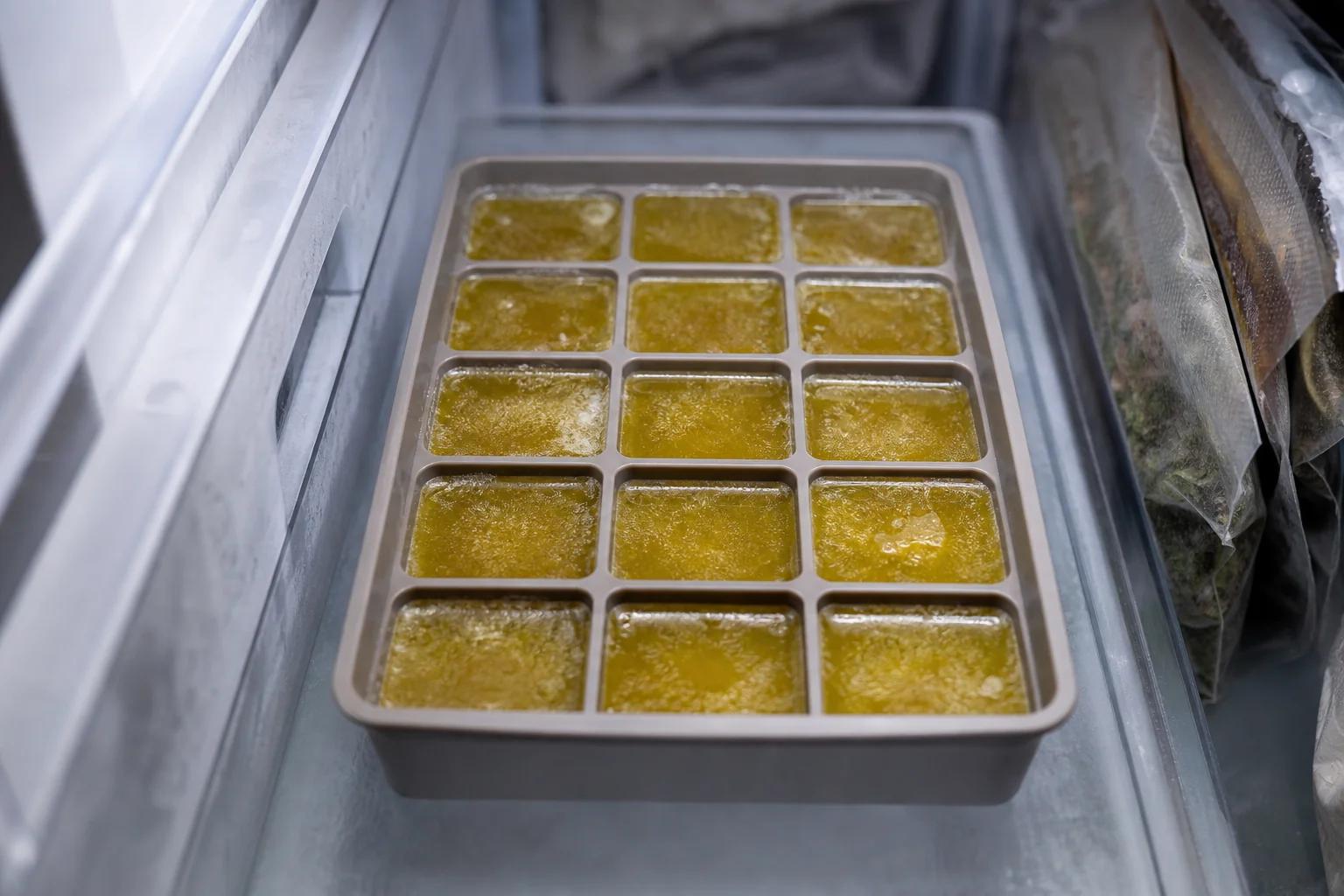
Freezing extends shelf life significantly for gummies (up to 6 months) and baked goods (up to 3 months), but only with proper preparation. Seal in freezer-grade airtight packaging — not the original child-resistant pouch, which is rarely freezer-rated. Thaw in the refrigerator, not at room temperature, to minimize condensation on the product surface.
Do not freeze chocolate edibles unless vacuum-sealed. Condensation on thaw causes both fat bloom and moisture infiltration, accelerating degradation rather than preserving quality. Do not freeze oil-based tinctures — carrier oils can shift in viscosity and consistency in ways that make accurate dosing unreliable after thawing.
Are Homemade Edibles Less Stable Than Commercial Ones?
Yes — significantly so, and the gap is larger than most home cooks expect. Licensed producers have access to tools and testing that are simply not available to a home kitchen.
Preservatives and antimicrobials: Commercial gummies typically contain citric acid, potassium sorbate, or sodium benzoate — standard food-industry antimicrobials that meaningfully suppress microbial growth. Homemade formulations contain none of these unless explicitly added.
Water activity control: Commercial producers measure and adjust water activity (aW) during formulation. A batch-to-batch variation of as little as 0.05 aW can substantially change mould susceptibility. Homemade batches vary with ambient humidity, ingredient hydration, and cooling conditions.
Formal stability testing: Every licensed product's durable life date is backed by controlled stability studies — samples tested at defined intervals under specified conditions. Homemade products operate entirely without this data.
Packaging and oxygen barriers: Commercial products are often nitrogen-flushed or vacuum-sealed in certified oxygen-barrier materials. A resealable bag or a glass mason jar does not match this performance.
Treat homemade baked edibles like standard homemade food — 3–5 days at room temperature, 7–14 days refrigerated, up to 3 months frozen. Homemade gummies or infused chocolates last roughly 4–6 weeks at room temperature with proper sealing, but degrade faster than commercial equivalents at every storage stage. The Cannabutter: A Science-First Guide for Canadian Home Cooks (19+) used in most homemade baked edibles is itself subject to lipid oxidation on a parallel timeline — fat degradation and cannabinoid degradation compound each other in the finished product.
Quick Reference: Cannabis Edible Shelf-Life Table
All timelines assume ideal storage: cool (15–18°C), dark, dry (55–62% RH), airtight. Real-world conditions reduce these figures.
FAQ
Is it safe to eat expired edibles?
An edible past its best-before date is not automatically unsafe. Assess by product type: a crystallized gummy or bloomed chocolate is a quality issue, not a food-safety one. A visibly mouldy brownie, a rancid tincture, or any edible with an off or fermented smell is a food-safety issue — discard without exception. When in doubt, check appearance, texture, and smell before consuming. The cannabinoids may still be present; the food matrix is the variable to evaluate.
How long do THC gummies last after opening?
After opening, THC gummies last 1–3 months under proper storage — cool, dark, and resealed immediately after each use. Canada's 10 mg per package limit means most commercial gummy packs are single-serving or two-serving; once the seal is broken, oxygen exposure begins immediately. In a humid summer kitchen or a dry heated apartment in winter, expect accelerated texture change within 2–4 weeks even when cannabinoid content remains largely intact.
What is the shelf life of CBD edibles?
CBD edibles follow the same food-stability rules as THC edibles — the shelf-life driver is the food matrix, not the cannabinoid type. CBD is generally considered slightly more stable than THC under equivalent storage conditions, degrading somewhat more slowly under oxidative stress. Shelf-life estimates by product type are the same: gummies 6–12 months sealed, baked goods 3–7 days unrefrigerated, oil tinctures 6–12 months, alcohol tinctures up to 5 years. Separate the potency question from the food-safety question the same way. [CITATION: NIH / PubMed — cannabinoid stability over time | peer-reviewed research]
Do edibles need a child-resistant container at home?
Canada's Cannabis Regulations require child-resistant packaging from licensed producers at point of sale. Federal law does not mandate that you maintain child-resistant storage once the product is in your home — but Health Canada strongly recommends it. If you transfer edibles out of original packaging, use a container that is difficult for children to open, clearly labelled as containing cannabis, and stored in a locked or high out-of-reach location. Canada's 10 mg per package cap means even a single commercial gummy pack represents a significant dose risk for a young child. [CITATION: Health Canada — Cannabis Regulations (SOR/2018-144), Part 6 Labelling and Packaging | federal regulation]
19+ | Educational horticulture only.