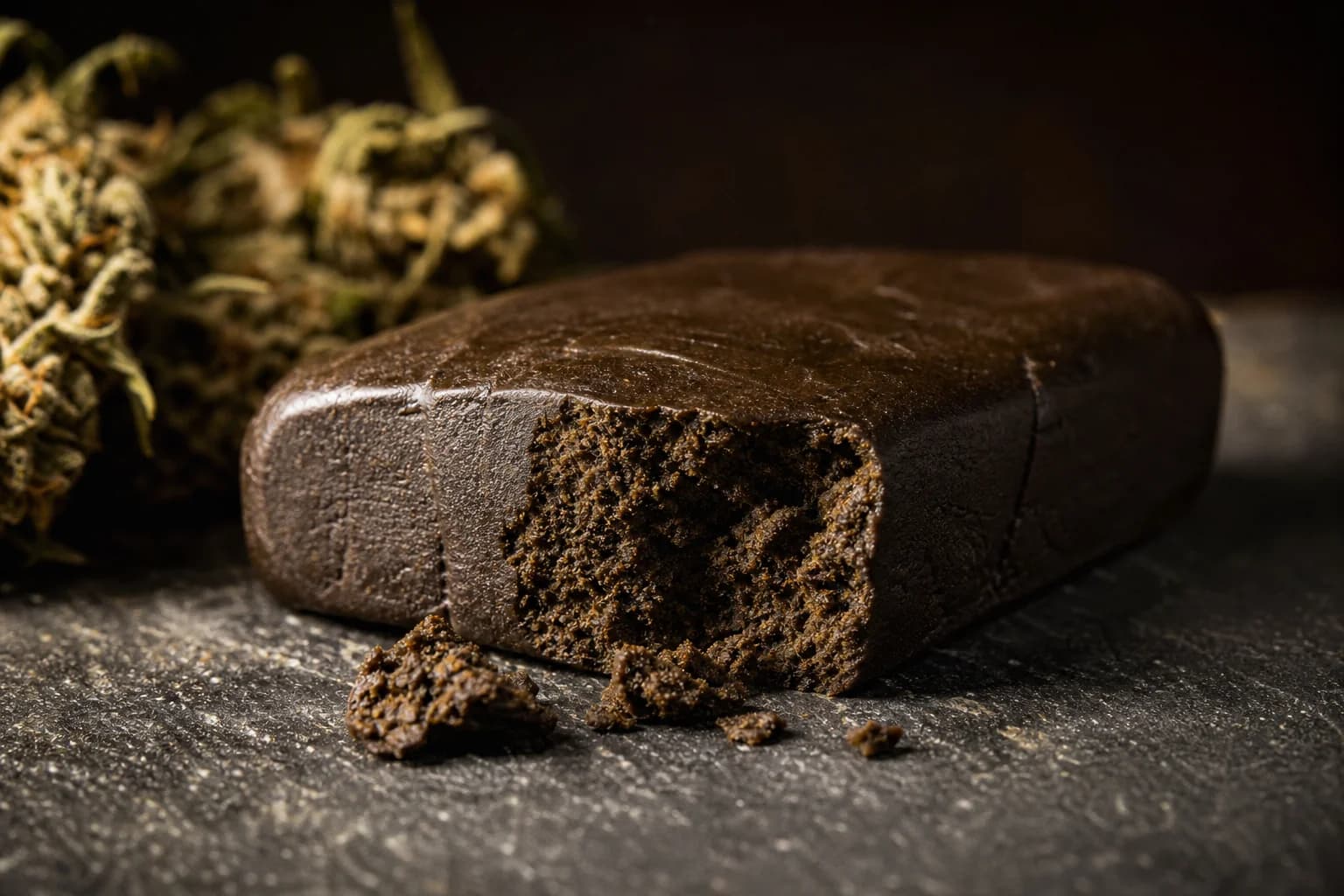
Hash, Rosin, Resin & More
Cannabis Extracts & Concentrates
What Is a Dab Rig? Beginner's Guide to Dabbing Cannabis Concentrates
What is a dab rig? Beginner's guide to dabbing cannabis concentrates: parts, types, materials, and how dabbing differs from smoking flower.
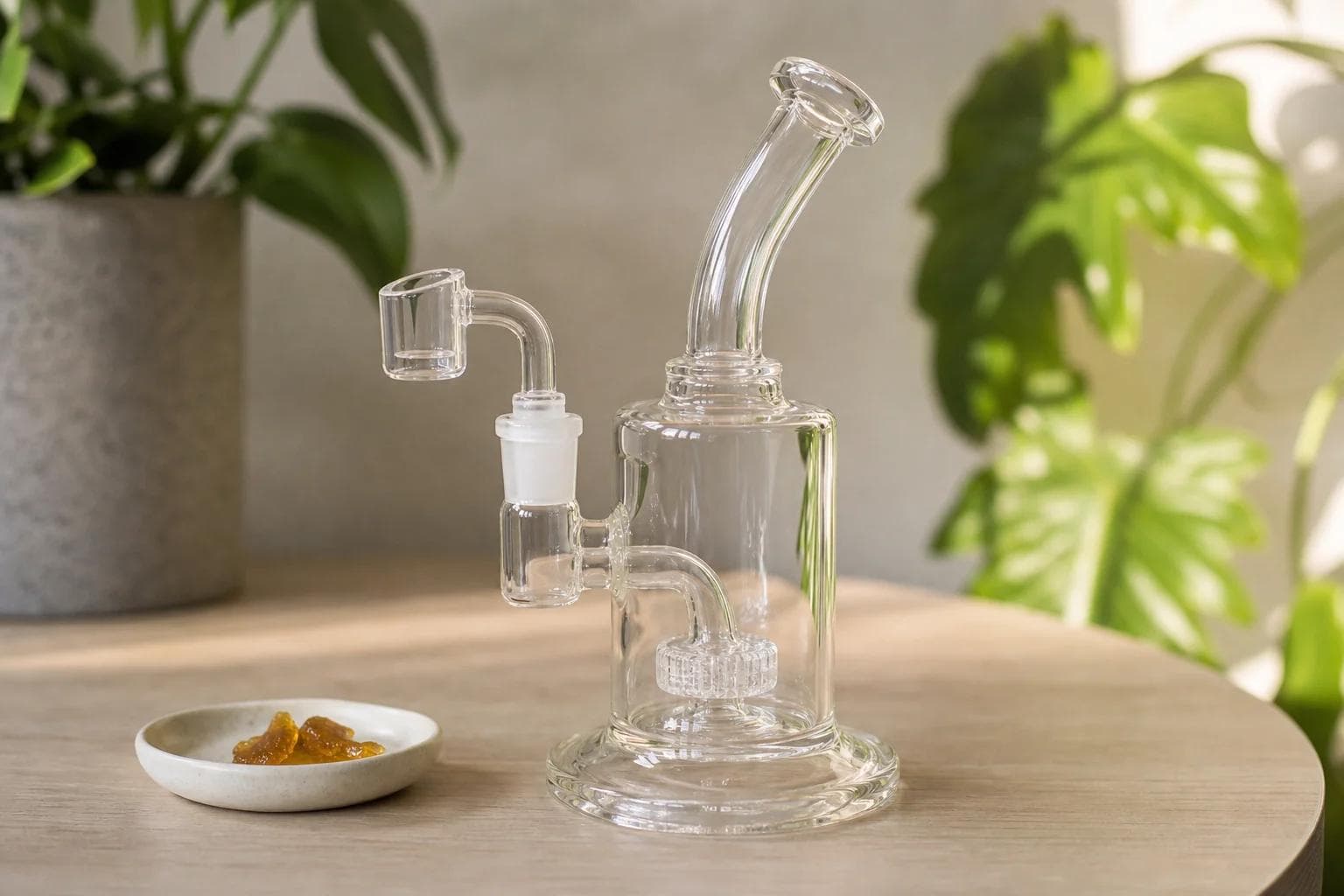
A dab rig is a water pipe purpose-built for vaporizing cannabis concentrates — rosin, shatter, live resin, wax — using a heated quartz banger rather than a combustion bowl. Concentrates vaporize between 157°C and 230°C and deliver far more cannabinoids per hit than dried flower. For a first dab, start at the size of a pinhead: roughly 0.05 g or 10–15 mg of THC.
What Is a Dab Rig and How Does It Work?
A dab rig is a specialized glass water pipe designed specifically to vaporize cannabis concentrates, not combust them. The concentrate — rosin, shatter, live resin, wax, or budder — is applied to a pre-heated quartz banger, where it vaporizes on contact. The vapour passes through water filtration, cools slightly, and travels up through the mouthpiece. The mechanics resemble a bong, but the underlying heat physics are fundamentally different.
That distinction matters more than it sounds. Cannabis concentrates are already cannabinoid-dense and partially decarboxylated — they don't need to be burned, they need to hit vaporization temperature. Flower combusts above 230°C and destroys a significant portion of terpenes and cannabinoids in the process. A dab rig running at 175–200°C converts concentrate directly into vapour without combustion byproducts, preserving the terpene and cannabinoid profile the cultivar was actually bred to express.
The water chamber cools and lightly filters the vapour before inhalation, making each hit smoother than a dry pipe — though the potency is significantly higher than any flower format.
What Are the Parts of a Dab Rig?
A dab rig consists of five core components: a water chamber (the base), a downstem, a joint (the connection point), a banger or quartz nail (the heated surface), and a carb cap (placed over the banger to manage airflow). Most rigs also require a separate dab tool for loading concentrate safely.
Knowing the anatomy before your first session matters — each component affects flavour, efficiency, and temperature consistency.
- Water chamber / base: Holds filtered water. Dab rigs are deliberately compact — a smaller water-to-air ratio preserves vapour density and delivers the terpene profile more efficiently than a large bong chamber would.
- Downstem: Connects the joint to the water. Some rigs use a fixed, built-in percolator instead of a removable downstem, adding a secondary filtration layer.
- Joint: The connection point between the body and the banger. Standard sizes are 10mm, 14mm, or 18mm. Most beginner setups use a 14mm female joint.
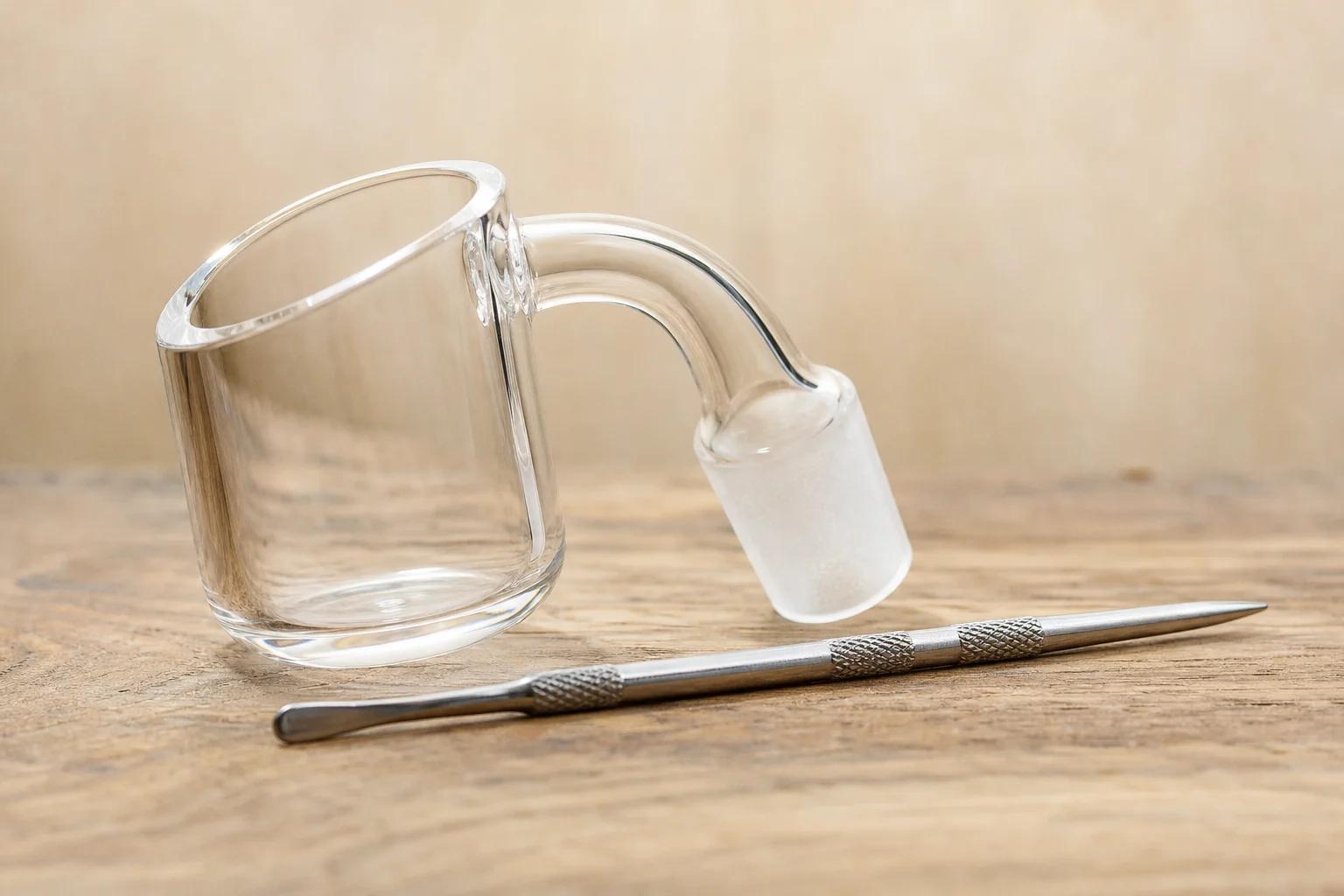
- Banger (quartz nail): The heated bowl where concentrate is vaporized. Flat-bottom quartz bangers are the standard — quartz heats evenly, retains temperature well, and doesn't leach metallic flavour into the vapour the way titanium nails can.
- Carb cap: A dome or directional cap placed over the banger immediately after concentrate is applied. It restricts airflow, lowers the effective vaporization pressure, and enables lower-temperature dabbing without losing material to the ambient air.
- Dab tool: A pick, scoop, or paddle — usually glass, titanium, or ceramic — used to load concentrate without direct hand contact. Skip cheap aluminium tools; they can degrade at temperature.
How Is a Dab Rig Different from a Bong?
A dab rig is engineered for concentrates; a bong is engineered for dried flower. The functional difference is the attachment point — a bong uses a glass bowl for combustion, a dab rig uses a quartz banger for vaporization — and the chamber size, which in a dab rig is deliberately smaller to preserve vapour density.
What Kinds of Cannabis Concentrates Can You Dab?
Virtually all cannabis concentrates are dabbable, but they differ in consistency, potency, terpene richness, and beginner-friendliness. Knowing the difference helps you pick the right starting point and understand what's going into your banger.
Beginner-recommended:
- Rosin — Solventless, made by pressing flower or hash with heat and pressure. Full-spectrum terpene profile, no residual solvents, widely available from licensed provincial retailers. One of the safest and most approachable starting concentrates. What Is Rosin? Solventless Cannabis Concentrate Explained
- Hash — The oldest concentrate format. Pressed or sifted trichomes, typically lower potency than shatter or live resin. A gentler introduction with a long heritage of use. What Is Hash? Complete Guide to Cannabis Hash Types
- Wax / Budder — Soft, opaque, easy to load on a dab tool. Moderate potency, widely available, forgiving texture for beginners.
- Shatter — Glass-like, brittle slab. High THC, clean flavour, but it breaks into shards that require care to load. Shatter vs Hash: What's the Difference?
- Live Resin / Live Rosin — Made from fresh-frozen plant material rather than cured, dried flower. Exceptionally terpene-rich and aromatic. Premium category — typically more expensive, but the flavour difference is real and noticeable. Live Resin vs Live Rosin: What's the Difference?
- Kief — Loose trichome powder. Dabbable but tends to run through standard banger holes before vaporizing; works best with a quartz insert or mesh screen. What Is Kief? Cannabis Trichome Powder Explained
- Distillate — Nearly pure THC isolate, very runny, with the terpene profile stripped out during processing. More commonly used in vape cartridges than dab rigs.
What Do You Need for Your First Dab?
To set up a functional beginner dab station, you need five items: a dab rig, a quartz banger, a butane torch, a dab tool, and concentrate. Everything else is supportive — useful, but not required to start.
The five essentials:
- Dab rig — Any compact water pipe designed for concentrate use. Borosilicate glass with a 14mm female joint is the standard beginner configuration. Smaller is generally better for flavour.
- Quartz banger — Most rigs include one. Flat-bottom bangers distribute heat most evenly and are the easiest to clean. Avoid thin-walled quartz that will crack under repeated torch heating.
- Butane torch — A kitchen or culinary torch works fine. Dedicated concentrate torches give better flame control. Use triple-refined butane — cheap fuel leaves impurities in the banger that you will taste.
- Dab tool — Glass, titanium, or ceramic. A scoop or spade tip works best for softer concentrates like budder and rosin; a pick for harder concentrates like shatter.
- Carb cap — Non-negotiable for good results. A simple dome cap works fine to start; directional carb caps with angled air channels give more control over how concentrate melts across the banger floor.
- Timer — Consistent cool-down timing is the single biggest variable in dab quality. A phone stopwatch costs nothing and eliminates the guesswork that causes most beginner mistakes.
- 99% isopropyl alcohol + cotton swabs — For the Q-tip technique after each dab. Wipe the banger while still warm (not hot) to remove reclaim before it carbonizes into the quartz.
- Silicone storage jar — For storing concentrate. Never use plastic, which can leach at room temperature. Parchment paper works for short-term storage of shatter and rosin.
An e-rig (electronic rig) combines the heating element, temperature controller, and water filtration in a single battery-powered device. E-rigs eliminate the open butane flame and manual cool-down timing entirely — you set a target temperature, wait for the indicator, and dab. They cost more upfront than a torch-and-rig setup, but the consistency is meaningfully better for beginners still learning the timing window.
In Vancouver, Toronto, and Denver, where the legal cannabis retail market is mature and concentrate selection is broad, licensed accessory retailers often stock starter rig kits that bundle everything in one box — a practical entry point before investing in individual components.
How Do You Use a Dab Rig Step by Step?
Using a dab rig comes down to six steps: prepare, heat, cool, load, inhale, and clean. The timing between steps two and three — the cool-down window — is where nearly every beginner error happens. Too hot destroys terpenes and scorches your throat; too cool leaves concentrate pooled at the bottom of the banger, wasted.
Step 1 — Prepare Fill the water chamber until the downstem is submerged by roughly 2–3 cm. Pre-load your concentrate onto the dab tool — for a first session, target a pinhead-to-rice-grain size. Set your isopropyl-dipped cotton swabs nearby before you start; you'll need them immediately after the dab.
Step 2 — Heat the banger Hold your butane torch so the inner blue flame contacts the outside bottom of the quartz banger. Apply heat for 20–40 seconds depending on banger thickness. Standard 4mm flat-bottom quartz bangers reach working temperature in approximately 30 seconds. You don't need the banger glowing red — that's too hot.
Step 3 — Let it cool (critical) Remove the flame and wait. For standard 4mm quartz, wait 45–60 seconds for low-temp dabbing (160–185°C), or 30–40 seconds for mid-temp (185–210°C). This cool-down window is not optional. An overheated banger combusts the concentrate rather than vaporizing it, destroys terpenes, and produces exactly the harsh coughing fit that puts beginners off concentrates entirely.
Step 4 — Load and cap Place the dab tool tip against the inside floor of the banger and apply the concentrate. It will begin to vaporize immediately on contact. Simultaneously place the carb cap over the banger to trap vapour and create a lower-pressure environment that continues to vaporize the concentrate at the correct temperature.
Step 5 — Inhale slowly Draw slowly and steadily through the mouthpiece. If your carb cap is directional, rotate it gently to guide airflow across the concentrate puddle. Take a single, controlled hit rather than pulling as hard as you can. Concentrate vapour doesn't need force — it's not like clearing a packed bong.
Step 6 — Clean immediately While the banger is still warm (not hot — approximately 30 seconds after your hit), use a cotton swab dipped in isopropyl alcohol to wipe the inside of the banger clean. This is the Q-tip technique, and it's the single most important maintenance habit for dab rigs. Reclaim — residual concentrate — carbonizes quickly into a dark, chalky layer called chazzing, which permanently degrades quartz clarity and makes every subsequent dab taste burnt and acrid.
How Hot Should a Dab Rig Be?
The ideal banger temperature for a dab is between 157°C and 230°C, with most experienced users targeting 175–200°C for the best balance of flavour and effect. Temperature directly determines how much of the terpene profile you actually experience and how smooth the hit is. It's one of the most under-explained aspects of dabbing — and one of the most important to get right from the start.
Temperature zones explained:
Terpenes vaporize at lower temperatures than most cannabinoids. Myrcene begins to vaporize around 167°C; limonene around 176°C; linalool around 198°C; caryophyllene around 130°C. Cannabis Terpenes Guide At high-temp, the majority of these aromatic compounds burn off before they reach the mouthpiece — you lose most of the flavour profile the cultivar was developed to express.
Cold start (reverse) dabbing
Cold start dabbing sidesteps the timing problem entirely. Instead of heating the banger first, you load the concentrate into a cool banger, then apply the torch at a low angle while drawing. Watch for the concentrate to start bubbling and producing visible vapour — at that point, place the carb cap and continue drawing while the torch warms the bottom of the banger. Cold start dabs run slightly cooler by default, produce excellent terpene expression, and are significantly gentler on the quartz over time. They require a bit of practice to read the visual cues, but many experienced dabbers prefer them for high-quality concentrates.
In cities like Portland and Calgary — where home growing culture and concentrate craftsmanship have developed alongside legal markets — growers who press their own rosin get serious about temperature control quickly. When you've spent hours cultivating, harvesting, and pressing a batch, torching the flavour out of it isn't an option.
How Big of a Dab Should I Take My First Time?
Start at pinhead size: approximately 0.05 g of concentrate, which at 70% THC concentration translates to roughly 15–20 mg of THC. A rice-grain-sized dab (0.1–0.15 g) at the same potency delivers 70–105 mg of THC — a dose that would overwhelm most first-time concentrate users and many experienced flower smokers.
Dab size reference guide:
Here's the context that makes those numbers meaningful: a standard 0.5 g cannabis cigarette of 20% THC flower contains roughly 100 mg of total THC, but combustion efficiency and inhalation dynamics mean your body absorbs only a portion of that. With concentrates, vaporization efficiency is significantly higher — a larger fraction of the THC you inhale actually absorbs. This is why "start small" isn't a cliché — it reflects a genuine, measurable difference in physiological delivery.
Wait a minimum of 10 minutes between dabs before deciding whether you need more. Concentrate effects come on within 30–90 seconds, but their full intensity can take a few minutes to develop.
Is Dabbing Stronger Than Smoking Weed?
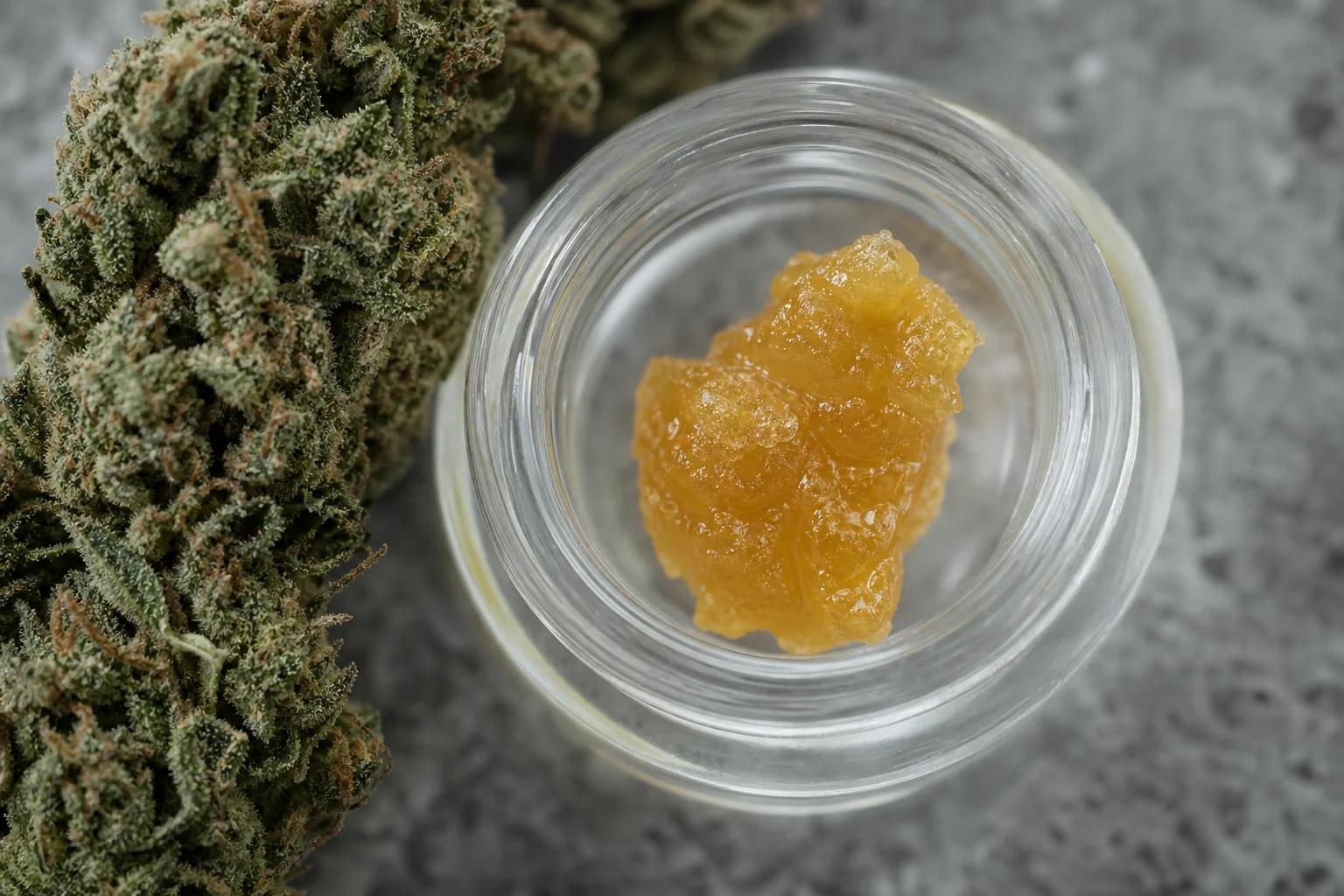
Yes, significantly. Cannabis concentrates typically range from 50% to 90%+ THC by weight, compared to 15–30% THC in well-grown dried flower. A single properly dosed dab delivers more cannabinoids per inhalation than a full bowl of flower — and the onset is faster, usually within 30–90 seconds.
The higher potency isn't inherently a problem. It becomes one when beginners approach dabbing with the same dose mentality they use for flower — loading a rice-grain dab the way they'd pack a bowl, without accounting for the two-to-four-fold increase in cannabinoid concentration. Concentrate tolerance builds differently than flower tolerance, and most flower smokers will find even a small, properly dosed dab noticeably stronger than their typical session.
That said, many consumers switch to concentrates precisely because of this efficiency — lower consumption volume for equivalent effect, with significantly less combustion byproduct and smoke odour.
Is Dabbing Safe for Beginners?
Dabbing is safe for adult cannabis consumers when approached with proper dosing, clean equipment, and legally purchased, lab-tested concentrates. The primary risks for beginners are: exceeding an appropriate starting dose, dabbing at excessive temperatures that produce combustion byproducts rather than vapour, and using concentrates from unlicensed sources that may contain residual solvents from poor extraction processes.
Harm reduction checklist for first-time dabbers:
- Dose conservatively, always. Begin with a pinhead-sized amount and wait before considering a second hit.
- Prioritize low-temperature dabs. If you're coughing aggressively, your banger is too hot. Lower the temperature, not your standards.
- Buy from licensed provincial retailers. Licensed concentrates are tested for residual solvents, heavy metals, microbials, and potency. This isn't optional harm reduction — it's the floor of safety for concentrate consumption.
- Never dab without water in the rig. Dry hits remove the filtration and cooling layer entirely.
- Use the Q-tip technique after every dab. Reclaim left in a hot banger carbonizes into compounds that produce a harsh, unpleasant hit and progressively degrade the quartz.
- Avoid back-to-back dabs in a new session. Give yourself 10–15 minutes between hits to assess the full effect before dosing again.
- Avoid dabbing on an empty stomach. High-dose cannabinoid exposure on an empty stomach increases the likelihood of nausea and dizziness, particularly in new users.
Can You Use a Regular Bong as a Dab Rig?
You can convert most bongs by swapping the flower bowl for a quartz banger of the same joint size. If your bong has a 14mm female joint, a 14mm male quartz banger will fit and function. The conversion is an inexpensive way to try dabbing before committing to a dedicated rig setup.
The performance gap, though, is real. A bong's larger water chamber and longer mouthpiece pathway dilute concentrate vapour, reducing flavour intensity and efficiency. You'll use more concentrate to achieve the same result compared to a compact, purpose-built dab rig. For occasional dabbing or a first experiment, a bong conversion is perfectly workable. For regular concentrate use, the flavour and efficiency difference from a dedicated rig is noticeable enough to justify the investment.
The one situation where bong conversion genuinely excels: a high-quality bong with a solid percolator can produce smoother, better-filtered dab hits than many cheap dedicated rigs. Size is only one variable — build quality matters.
Do Dab Rigs Smell as Much as Smoking Flower?
Dab rigs produce significantly less ambient odour than burned flower. Vapour from concentrates dissipates quickly — within minutes in a ventilated room — and doesn't produce the persistent, fabric-clinging combustion smell associated with joints, pipes, or bongs. During an active dab session, particularly with high-terpene concentrates like live rosin, the smell in the immediate area can be intense and distinctive.
The key difference is duration and material absorption. Combustion smoke bonds to fabrics, hair, paint, and soft furnishings. Vapour doesn't. In apartment-dense cities like Montreal and Toronto, where neighbours share ventilation and building odour management matters, this is a practical advantage that many indoor consumers cite as a primary reason for switching to concentrates.
A carb cap also materially reduces ambient vapour escape during a dab. An uncapped banger releases vapour freely into the room; a properly capped banger channels vapour through the downstem and into the mouthpiece, reducing both ambient smell and wasted concentrate simultaneously.
Is Dabbing Legal in Canada?
Yes. Cannabis concentrates — including rosin, shatter, live resin, wax, budder, hash, and kief — are legal across Canada under the federal Cannabis Act. The Cannabis 2.0 regulations, which came into force in October 2019, legalized edibles, extracts, and topicals for adult consumers (19+ in most provinces, 18+ in Alberta and Quebec). Licensed concentrates are available through provincial and territorial retailers.
Possession equivalency under federal law:
The Cannabis Act uses a dried-cannabis equivalency system for possession limits. For concentrates, 1 g of cannabis extract is equivalent to 0.25 g of dried cannabis for the purposes of the 30 g public possession limit. In practical terms, concentrates carry a much higher raw-gram ceiling than flower under federal possession rules — 120 g of concentrate is the technical equivalent of 30 g of dried cannabis for possession purposes.
Provincial retailer availability:
- Ontario (OCS): Concentrates are available online and in-store; product selection varies significantly by retail location.
- Quebec (SQDC): More limited concentrate selection relative to western provinces; provincial regulations layer on top of federal rules.
- British Columbia (BC Cannabis Stores): One of the strongest concentrate selections in Canada, with solventless options including bubble hash, hash rosin, and live rosin.
- Alberta (AGLC): Private retail model with broad selection across concentrate formats.
The rig, banger, and torch are cannabis accessories, not cannabis products — they are not regulated under the Cannabis Act and can be purchased without age verification in many provinces, though retailers often apply their own policies. Concentrate accessories are sold through licensed cannabis retail stores and specialty accessory retailers in most provinces.
This section provides general information only and does not constitute legal advice. For specific regulatory questions, refer to Health Canada or your provincial cannabis regulator.
Which Strains Produce the Best Concentrate Material?
The best source material for any concentrate — rosin, hash, live resin — is flower with dense trichome coverage, strong resin production, and a complex terpene profile that survives the extraction process. Trichomes are the resin glands on cannabis flowers and sugar leaves where cannabinoids and terpenes are synthesized. More trichomes, more extract. Better terpene genetics, better flavour in the final product.
This is a direct link that most concentrate guides never make: the genetic input determines the concentrate ceiling. A high-yielding but resin-sparse strain produces flat, low-quality extract regardless of how clean the extraction technique is. Pressing rosin from trichome-dense genetics produces concentrate with measurably higher yield, richer terpene expression, and better flavour — at every temperature setting on your banger.
Premium genetics for concentrate production:
Mac 1 Feminized — MAC 1 (Miracle Alien Cookies) has become the trichome standard in modern cannabis breeding. The genetics produce exceptionally dense, crystalline resin coverage with a complex terpene profile dominated by caryophyllene, limonene, and myrcene. Hash rosin pressed from well-grown MAC 1 consistently produces pale amber extract with an aromatic complexity that makes high-temperature dabbing feel like a genuine waste. Low-temp is the only way to run this material.
Gorilla Glue #4 Feminized — GG4 is named for its extraordinary resin output — sticky to the touch at harvest, genuinely challenging to handle without isopropyl. It produces high-THC concentrates with a fuel-and-pine terpene profile and exceptional yield per press. A staple strain for rosin pressers who prioritize output alongside quality.
GMO Cookies Feminized — GMO Cookies (Garlic Mushroom Onion) is among the most distinctive high-terpene genetics available. The savoury, diesel-garlic terpene profile — heavy on myrcene, caryophyllene, and limonene — translates into live resin and hash rosin with a flavour unlike anything from conventional genetics. For concentrate enthusiasts who want something genuinely different in the banger, GMO Cookies is a standout choice.
Original Skunk #1 Feminized — Skunk #1 genetics have underpinned hash production for decades. In British Columbia's Okanagan region and across Quebec's growing community, old-school hash production traditions were built on Skunk-family plants. Original Skunk #1 remains one of the most reliable and consistent resin producers available: predictable yield, known terpene expression, and a track record across cultivation environments from indoor grow tents to outdoor plots in Denver's arid, high-altitude climate.
Growers in Edmonton and Seattle who run year-round indoor operations often find that their first serious batch of concentrate reframes how they think about genetics. The difference between pressing mediocre source material and pressing trichome-dense, aromatic flower isn't incremental — it changes the entire experience of dabbing.
The chain from seed to dab is shorter than most people think: better genetics → denser trichome coverage → higher extract yield → richer terpene profile → better experience at the correct temperature. Every step is interdependent, and the first link is always the seed.
FAQ
Can I dab without a torch?
Yes. Electronic rigs (e-rigs) and e-nail adapters eliminate the need for a butane torch entirely. An e-rig integrates a battery-powered heating coil with a digital temperature controller in a self-contained unit — you set your target temperature (typically 150–300°C), wait for the indicator, and dab without any open flame. E-nail adapters achieve the same result by replacing the quartz banger on a standard dab rig with a coil-heated nail connected to a desktop temperature controller. E-rigs are the most consistent entry point for beginners who are uncomfortable with torch timing, and the absence of butane makes them easier to use in any environment. ---
What's the difference between an e-rig and a dab rig?
A dab rig is a glass water pipe; an e-rig is a self-contained electronic device that combines the water filtration, heating element, and temperature controller in one unit. Traditional dab rigs require a separate butane torch, manual timing for cool-down, and a tactile read of the banger's heat. E-rigs automate the entire heating process — set temperature, wait, dab. The trade-off is cost: e-rigs carry a significantly higher upfront price than a glass rig and torch setup. For beginners who find torch timing stressful or inconsistent, the extra cost often pays back in concentrate saved from over-heated dabs. ---
How often do I need to clean my dab rig?
Clean the banger after every single dab using the Q-tip technique: a cotton swab dipped in 99% isopropyl alcohol, applied to the inside of the banger while it is still warm but no longer hot. This removes reclaim — residual concentrate — before it carbonizes into the quartz surface. Change the water in the rig after every session. Deep-clean the glass body with an isopropyl alcohol soak every one to two weeks depending on frequency of use. A properly maintained quartz banger lasts for months. A neglected banger chazzes — develops a permanent dark, charred coating — within days of heavy use, and once chazzed, the flavour profile of every subsequent dab degrades significantly. ---
Can you dab hash?
Yes, with some adaptation. Traditional pressed hash runs the risk of melting through a standard banger's air hole before it fully vaporizes. A quartz insert (a smaller cup placed inside the banger) or a mesh bucket banger solves this. Hash rosin — produced by washing bubble hash and pressing it — melts cleanly in a standard flat-bottom banger and is considered among the premium dabbing materials available. Full-melt bubble hash (rated 5–6 stars for clean melt quality) is ideal for dabbing without any modification to your setup. If you're curious about hash types and how they're made, the full breakdown is at [LINK: What Is Hash? Complete Guide to Cannabis Hash Types | /en/articles/cannabis-hash-complete-guide]. ---
What's reclaim and is it safe to use?
Reclaim is the residual concentrate that re-condenses inside your dab rig's water chamber, downstem, and neck after multiple sessions. It still contains active cannabinoids — though the terpene profile is largely lost to heat and condensation — and is safe to consume. Most experienced concentrate users collect reclaim for edibles rather than re-dabbing it, since the flavour is noticeably flat compared to fresh concentrate. To collect it: pour warm 99% isopropyl alcohol through the rig, let it dissolve the reclaim, pour the solution into a shallow dish, and allow the alcohol to fully evaporate before use. Never consume reclaim that has been thinned with alcohol — the alcohol must fully evaporate first.
19+ | Educational horticulture only.