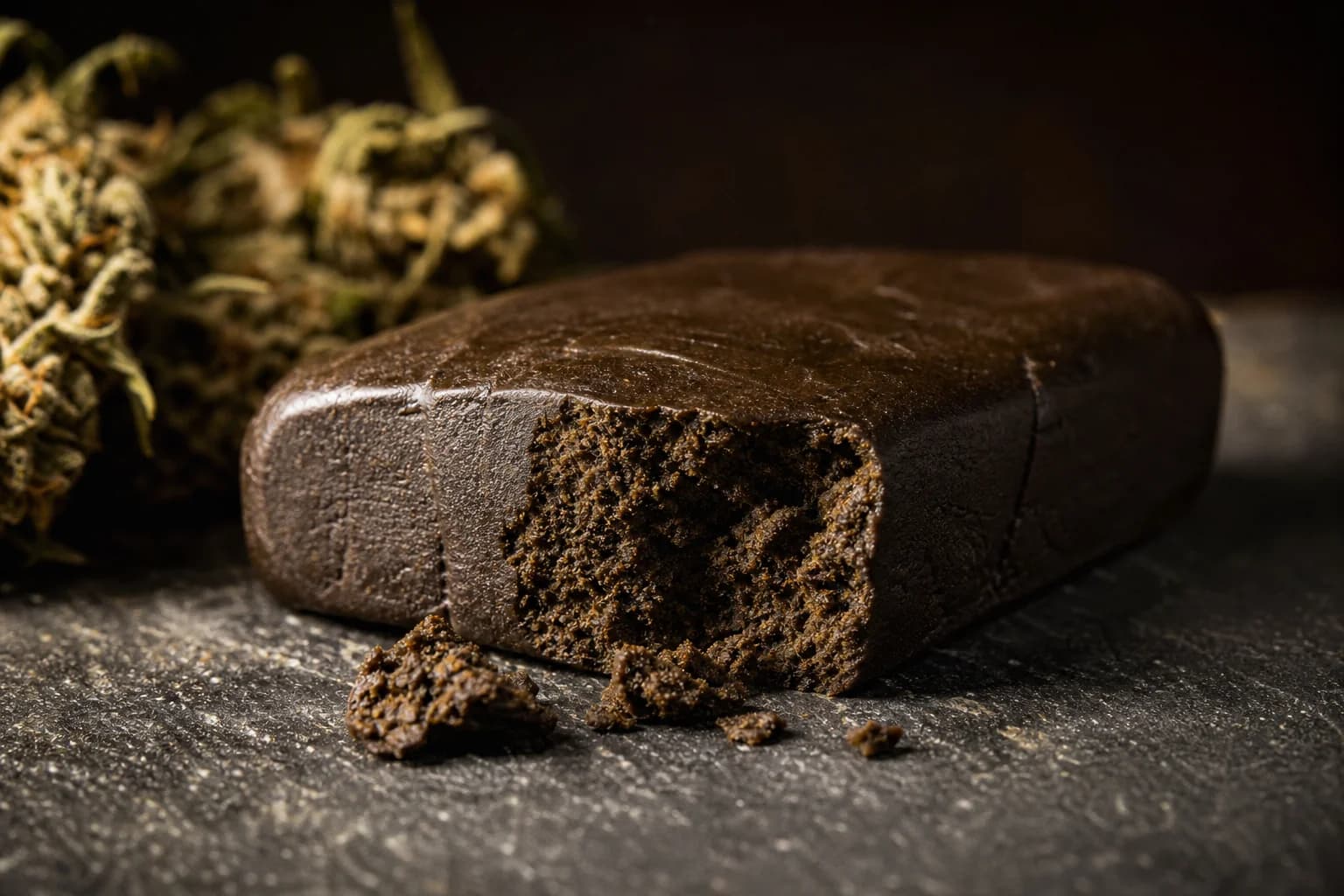
Hash, Rosin, Resin & More
Cannabis Extracts & Concentrates
Shatter vs Hash: What's the Difference?
Shatter vs hash compared: production methods, potency, texture, legality in Canada. Which cannabis concentrate is right for you?
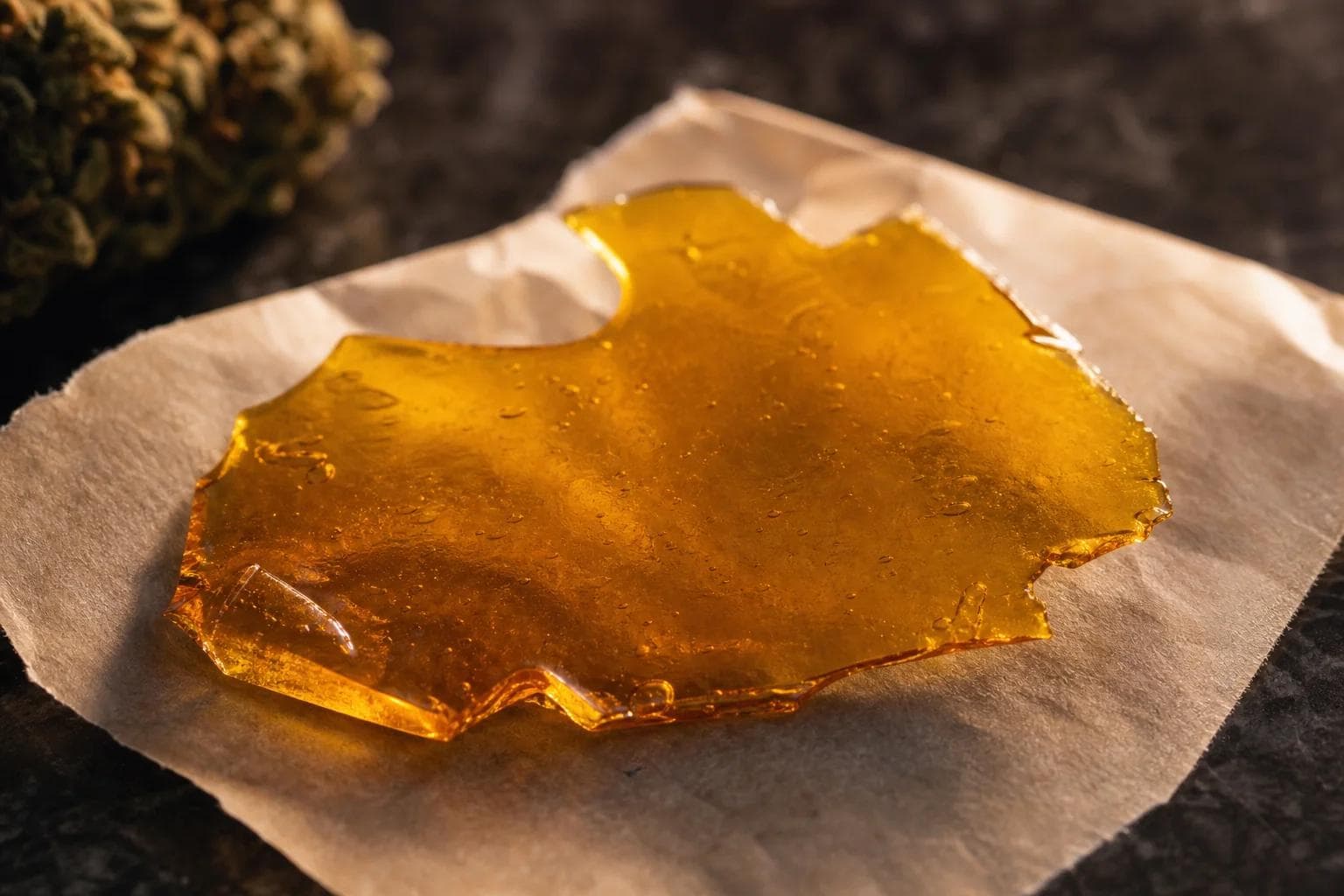
Shatter is a solvent-based BHO concentrate testing 60–90% THC, made by extracting cannabis with butane and purging the solvent under vacuum. Hash is a solventless concentrate — 20–70% THC depending on method — made by mechanically separating trichomes using cold, agitation, or pressure. Hash is safer and easier to produce at home; shatter delivers more potency per dose.
Shatter vs Hash — Concentrate Comparison
Solvent extract versus traditional solventless hash
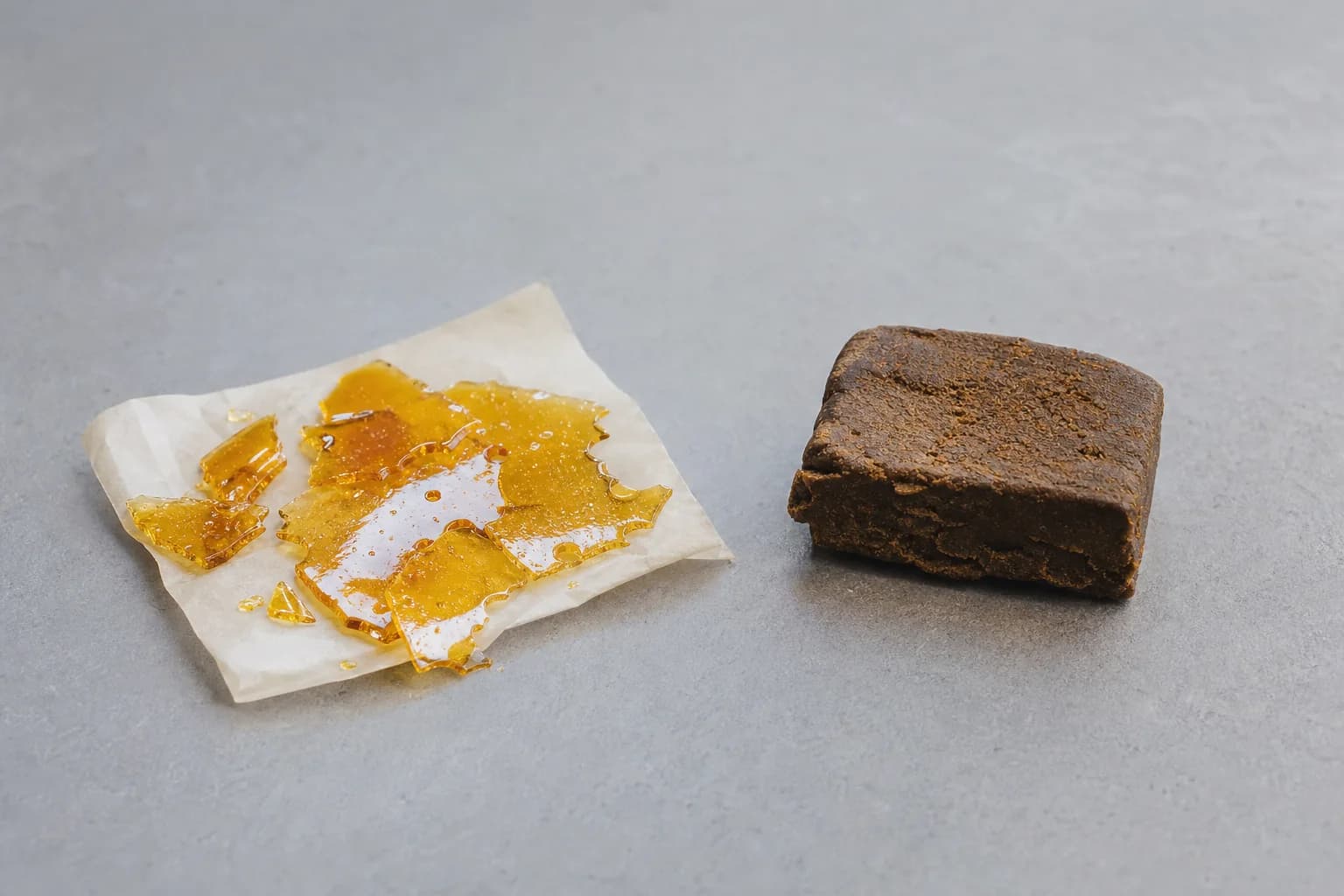
Shatter
- •Solvent extract (BHO)
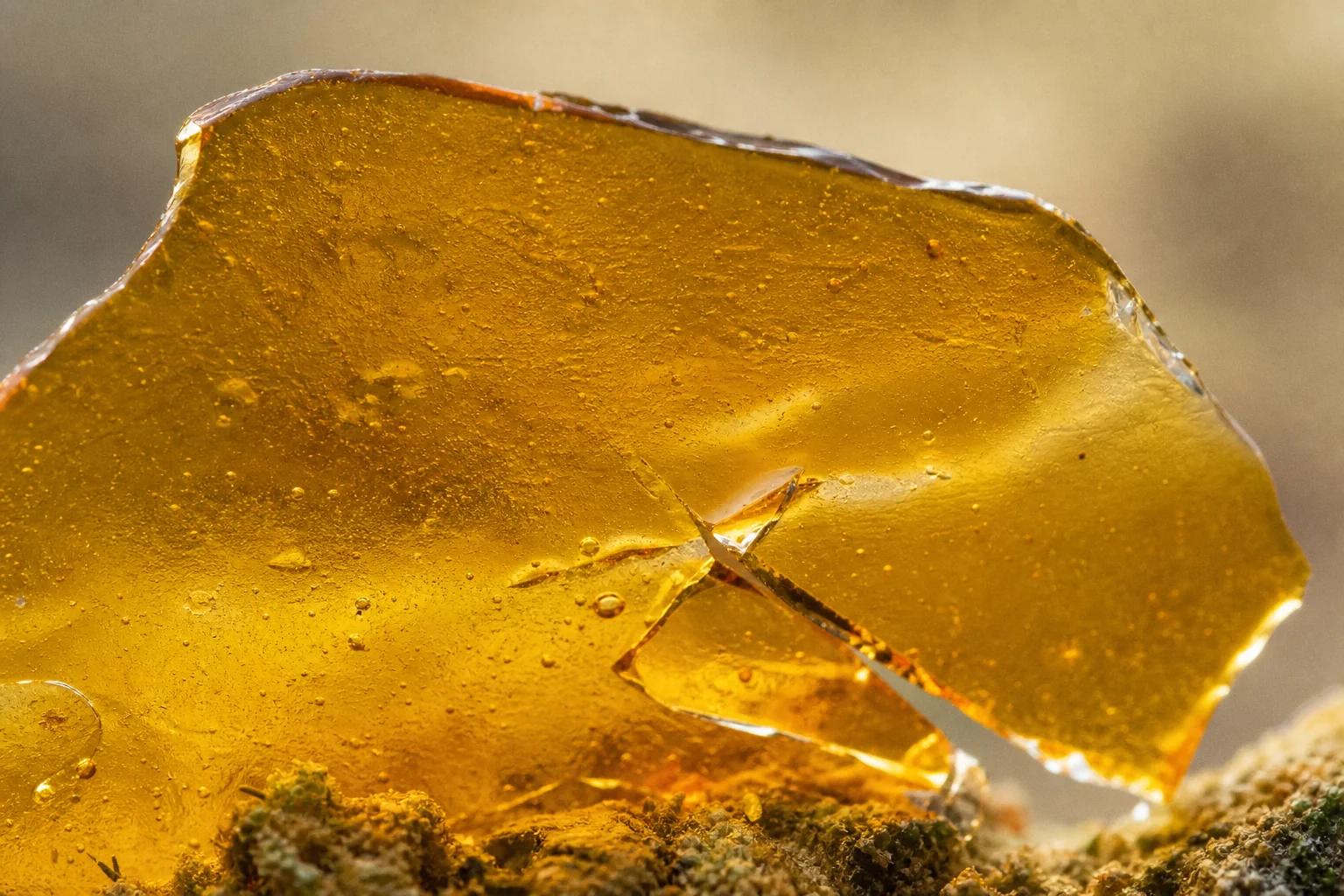
- •Glass-like, translucent amber
- •Very high THC, brittle texture
Hash
- •Traditional, often solventless
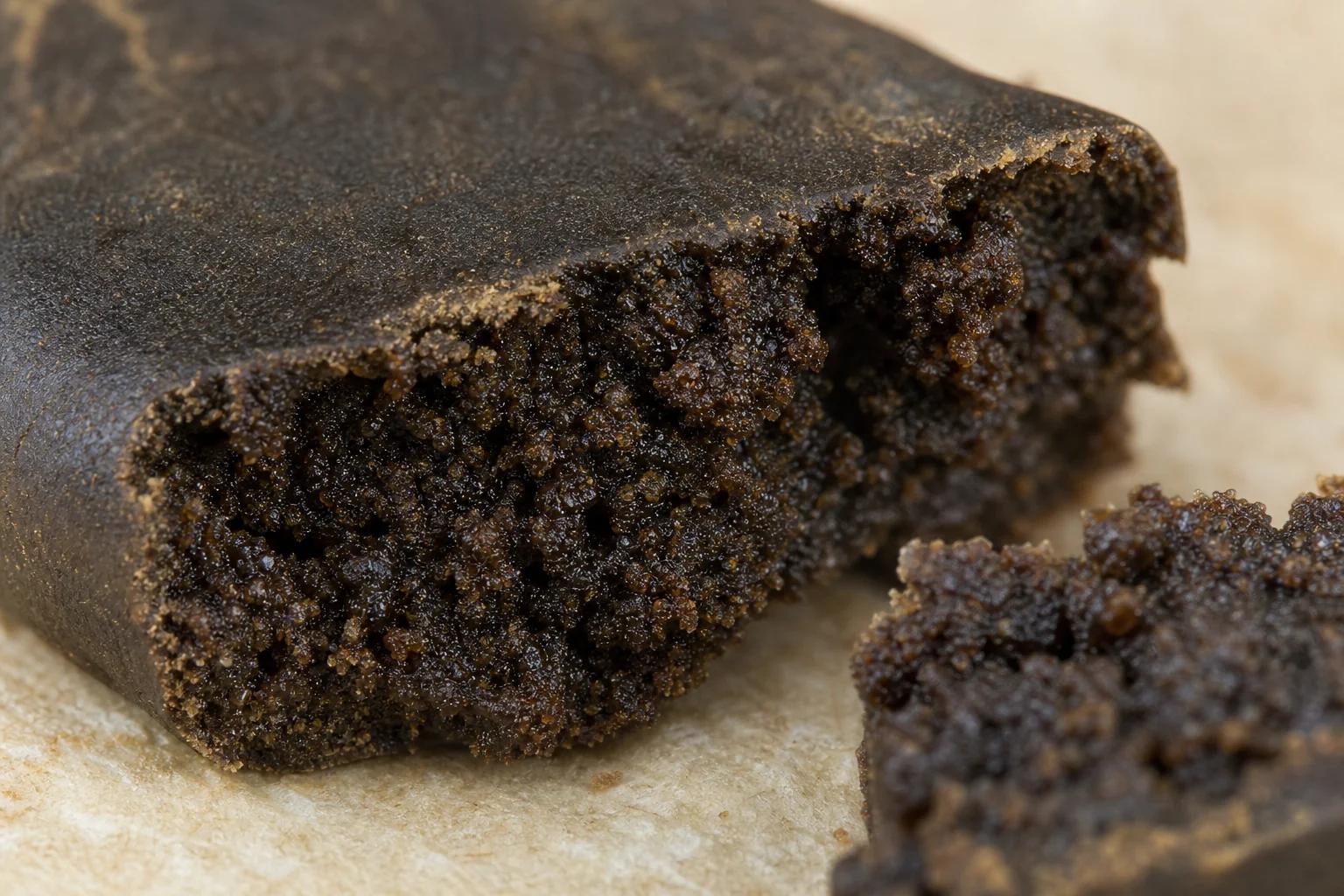
- •Opaque brown, pressed or sifted
- •Dry sift, bubble hash or charas
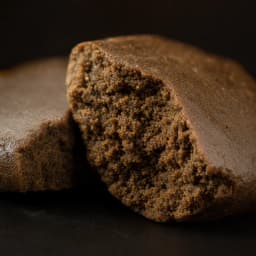
The shatter hash question comes up constantly at the concentrates counter — whether written as "shatter vs hash" or searched as a flat pair — and the one-sentence answer never satisfies anyone. One is a glass-clear amber slab engineered for maximum THC delivery. The other is a pressed or washed disc of resin with centuries of history behind it — long before dispensaries, legalization, or any of the terminology we use today. Understanding the real difference means understanding two fundamentally different philosophies of extraction — and figuring out which one fits your tolerance, your routine, and your plant genetics.
This guide covers everything in the shatter hash comparison: production, potency, safety, flavour, price, home extraction, and which strains produce the best results for each method.
What's the Real Difference Between Shatter and Hash?
Shatter is a solvent-based cannabis concentrate made by extracting cannabinoids and terpenes from flower using butane (BHO — butane hash oil), then purging the solvent under vacuum heat. Hash is a solventless concentrate made by mechanically separating trichome heads from the plant using cold temperatures, agitation, or pressure — no chemicals involved. The core difference is this: one uses chemistry; the other uses physics.
How Is Shatter Made?
Shatter is produced by passing butane — at pressure — through a column packed with cannabis biomass. The solvent strips cannabinoids, terpenes, and waxes from the plant material, producing a crude extract that then gets purged in a vacuum oven at low heat (typically 27–40°C) for 24–72 hours. When enough residual butane is driven off, the extract cools into a glassy, amber slab.
That translucency is a quality marker. A cleaner, more thorough purge produces a clearer, more stable product. Milky or opaque shatter often signals residual solvent or incomplete wax separation.
Shatter gets its distinctive rigid texture from the way cannabinoid molecules stack without agitation during the purge. The moment you apply friction or excess heat — working it between your fingers, stirring it, letting it get too warm in a hot car — the molecules begin to nucleate into a softer structure. That's how shatter becomes "wax" or "budder": same product, different handling.
Why Is Home Shatter Production Dangerous?
Home BHO extraction is genuinely dangerous — not recommended under any circumstances. Butane is heavier than air, accumulates invisibly in enclosed spaces, and ignites at concentrations as low as 1.8% in air. A single spark — a light switch, a running appliance, a phone vibrating on the counter — is enough to trigger an explosion. Burn injuries and property destruction from residential BHO operations are documented in emergency data across North America, including cities where home cultivation is fully legal.
Licensed producers operate under Health Canada-approved protocols inside certified extraction facilities: closed-loop systems, explosion-proof rooms, continuous atmospheric monitoring. That infrastructure cannot be replicated in a home kitchen. Full stop. If you grow your own cannabis and want concentrates from your harvest, hash and rosin are the safe, legal paths.
How Is Hash Made?
Hash is a solventless concentrate made by separating trichome heads from the plant using mechanical force. Three primary production methods exist, each producing a meaningfully distinct product.
Dry sift: Dried cannabis is rubbed or tumbled over fine mesh screens. Trichome heads break free and fall through as a fine powder — this is kief. What Is Kief? Cannabis Trichome Powder Explained That kief is then pressed under heat and pressure into hash. Vancouver's cannabis culture helped popularize refined dry-sift hash domestically in the 1990s, well before most concentrate labs existed anywhere in Canada.
Ice water / bubble hash: Fresh or frozen cannabis is agitated in ice water, which makes trichome heads brittle and causes them to snap free from the plant. The slurry is filtered through a series of bubble bags at progressively finer micron ratings. The collected material is dried and either pressed into hash or cold-cured for rosin pressing. Full-melt bubble hash — rated 5 or 6 stars — leaves virtually no residue in a dab rig and represents the modern gold standard of hash quality.
Traditional pressed hashish: The oldest method by millennia. In South and Central Asian traditions, fresh cannabis is rubbed by hand to collect resin — this is charas. In others, dried plants are beaten over cloth and the collected kief pressed into blocks under heat and humidity. Moroccan, Lebanese, and Afghan styles all fall into this category.
Modern 6-star full-melt bubble hash is a significant upgrade over compressed brick hash in both potency and terpene expression. It has redefined what "hash" means to a generation of concentrate consumers who knew hash only as the pressed blocks from their parents' era.
Is Shatter Stronger Than Hash?
Yes — typically, and significantly so. In the shatter hash potency comparison, shatter consistently wins: it tests between 60–90% THC, making it among the most potent cannabis products in legal retail. Traditional pressed hash ranges from 20–40% THC. Modern ice water bubble hash occupies the middle ground at 50–70%, with premium full-melt batches occasionally reaching higher.
Dosing translation (approximate):
Is Shatter or Hash Safer?
Regulated shatter and regulated hash are both safe products. The safety difference lies in the source and production method — not the product category itself.
Shatter sold through legal provincial retail (OCS in Ontario, SQDC in Quebec, AGLC in Alberta) is tested for residual solvents, pesticides, and microbial contamination before it hits retail shelves. Health Canada requires that legal concentrates not exceed 500 ppm total residual solvents — a standard that ensures legal shatter is chemically safe for inhalation.
The real risk is unregulated BHO — black-market shatter produced without lab testing. Improperly purged concentrate can contain meaningful concentrations of residual butane, which represents a genuine inhalation hazard with repeated exposure. That risk is absent from regulated product.
Hash carries a structural safety floor that shatter doesn't: no solvent means no residual solvent risk, regardless of production quality. A poorly made batch of bubble hash is less potent and less pleasant — it is not chemically hazardous. That advantage matters if you're sourcing from informal channels or producing your own.
The clear recommendation: buy from legal provincial retailers. If you're making your own concentrates at home, use solventless methods. The chemical risk in the concentrate category comes from unregulated solvent extraction — not from the finished product.
Which Is Better for Beginners?
In any shatter hash comparison for beginners, hash is the better starting point for new concentrate users — by a clear margin.
The lower THC ceiling of traditional hash (20–40%) gives beginners a much wider margin for error. Crumbling too large a piece into a joint produces a stronger high than expected, but rarely a genuinely overwhelming experience. A slightly-too-large dab of 80% shatter can trigger anxiety, paranoia, and real physical discomfort in users without established tolerance — especially those coming straight from flower.
Hash also requires no new equipment to get started. Crumble it into the top of a joint or load it into a bowl — tools most cannabis users already own. Shatter requires a dab rig or e-rig, a torch or e-nail, and deliberate temperature management. That's a real skill curve before you even take your first hit. What Is a Dab Rig? Beginner's Guide to Dabbing Cannabis Concentrates
Tolerance Ladder for Concentrates
Can You Use Shatter and Hash the Same Way?
Not always. They share some consumption overlap, but each has primary methods where it performs best.
Shatter works best via:
- Dab rig with a quartz banger — low-temp dabs at 157–176°C preserve residual terpenes and produce the smoothest experience
- E-rig (Puffco Peak, Dr. Dabber Switch) for precise temperature control
- Concentrate-compatible vape pen
- Crumbled into a bowl or joint — less efficient and somewhat wasteful; most experienced users skip this
- Crumbled into a joint or spliff — the original method and still widely used
- Pipe or chillum
- Hot knife
- Dab rig — only with 5- or 6-star full-melt bubble hash rated for vaporization. Standard pressed hash is not designed for a dab rig: it will char, bubble, and clog a quartz banger.
What Does Each One Taste Like?
Shatter: Flavour is almost entirely a function of purge quality and starting material. Standard BHO shatter — particularly mid-grade product — tends toward clean and neutral, occasionally with a faint chemical note if the purge was incomplete. The vacuum heat required to drive off residual butane degrades many of the volatile monoterpenes responsible for bright, complex aromas. This is a known and unavoidable trade-off in BHO production at the standard retail level.
Live resin shatter — produced from fresh-frozen biomass rather than dried flower — is the meaningful exception. Fresh-frozen material locks in a much fuller terpene profile before extraction, and the finished product has significantly more aromatic complexity. Live Resin vs Live Rosin: What's the Difference?
Hash: Typically the more flavourful side of the comparison, particularly ice water bubble hash made from terpene-rich genetics. Expect spice, earth, diesel, pine, and fruit notes depending on the cultivar — the profile reads like a concentrated translation of the flower's aroma. Traditional pressed hash brings a familiar resinous, slightly sweet, and deeply earthy character. Modern bubble hash from a premium Cookies-family or OG Kush cultivar can be remarkably expressive, and often outperforms standard shatter on flavour at the same price point.
If terpene expression and flavour are your priorities, bubble hash and solventless rosin consistently win. Cannabis Terpenes Guide If potency efficiency matters most, shatter wins.
Which Is More Expensive in Canada?
Shatter is generally cheaper per gram than premium bubble hash through legal provincial retail. At regulated retailers like the OCS, SQDC, and AGLC, standard 1g shatter typically sits in a lower price band than comparable-weight artisan bubble hash — a reflection of the significantly higher labour intensity involved in quality hash production, particularly hand-washed, freeze-dried full-melt material.
That said, the raw per-gram price comparison is less useful than it looks. At 75% THC, 0.1g of shatter produces a full dose. At 35% THC, you need closer to 0.3g of pressed hash to reach the same effect. The per-dose cost of each product is more similar than the per-gram sticker price suggests.
Montreal and Toronto's legal concentrate markets have expanded significantly since 2022. Premium artisan bubble hash — 5- and 6-star full-melt — now commands pricing comparable to premium solventless rosin, which puts it well above entry-level shatter. For everyday concentrate users, shatter remains the more economical option per effective dose. For collectors and connoisseurs, top-tier hash justifies the premium.
Can You Make Shatter or Hash at Home?
Hash: Yes, and safely. Bubble hash and dry-sift kief are genuinely accessible home extraction methods that require no solvents, no specialized licensing, and no equipment beyond what you can order online.
To make ice water bubble hash at home, you need:
- Fresh-frozen or dried cannabis flower, trim, or popcorn buds
- A set of bubble bags (5–8 micron-rated mesh bags)
- Ice water and a clean bucket
- A spoon or paint mixer for agitation
- Time to dry the collected material thoroughly — freeze-drying is ideal, but careful air-drying in a cold, dark environment also works
If you grow your own cannabis — federal law allows up to four plants — your trim run and lower-canopy popcorn buds can produce a meaningful yield of bubble hash from material that would otherwise be composted.
Shatter: No. Home BHO production requires butane under pressure and a closed-loop extraction system. Open-blast methods — where butane is passed through a tube and vented into open air — remain documented causes of severe burns, structural fires, and fatalities. Don't attempt this.
If you want a solventless concentrate approaching shatter-level potency from your home grow, What Is Rosin? Solventless Cannabis Concentrate Explained rosin is the realistic path. A rosin press — or even a hair straightener for small test batches — uses only heat and pressure to extract a clean, potent concentrate from hash or flower, with zero chemical risk.
Which Genetics Make Better Shatter vs Better Hash?
This is where growing your own connects directly to what you can extract post-harvest — and where a seed bank's perspective adds something no dispensary article can offer.
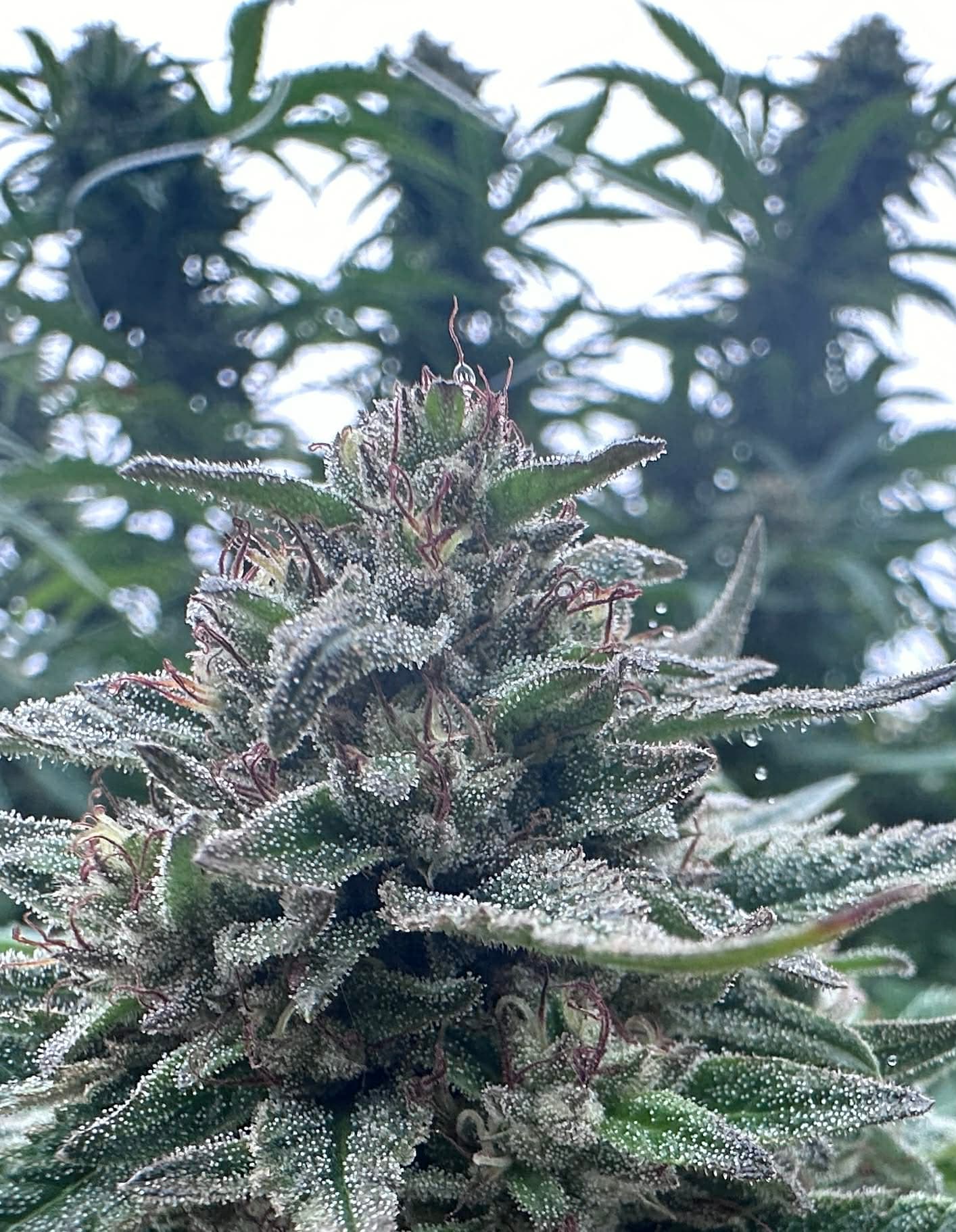
For shatter (BHO-friendly genetics): Prioritize raw resin volume. Dense, heavily-coated buds with thick trichome coverage give extractors more input material per gram of biomass. The ideal BHO cultivar maximizes trichome density even at the cost of some terpene complexity, since the purge will degrade volatile aromatics regardless.
- Gorilla Glue #4 is the benchmark shatter cultivar. Gorilla Glue #4 Feminized It produces extraordinarily dense trichome coverage with very high total THC, making it one of the most efficient BHO inputs available. The cultivar's forgiving phenotype and consistent resin output across room conditions make it a reliable choice whether you're running a 4x4 tent or a full commercial environment.
- High-THC Diesel and Sativa-dominant hybrids with thick, resin-dense flower structure also perform well for BHO, particularly cultivars that push uniform trichome density across the entire bud structure rather than concentrating resin only at the cola tips.
- GMO Cookies is among the most prized hash-washing cultivars available. GMO Cookies Feminized The terpene density — heavy diesel, garlic, funk, and earth — combined with large-headed trichomes produces full-melt bubble hash of exceptional quality. Solventless producers have made GMO Cookies a staple of their hash rosin menus for this reason.
- Girl Scout Cookies brings the Cookies family's signature terpene expression and generous resin production in a more accessible grow profile. Girl Scout Cookies Feminized It produces excellent dry-sift and ice-water hash, with a flavour profile that survives the extraction process and expresses clearly in the finished product.
Feminized Seeds
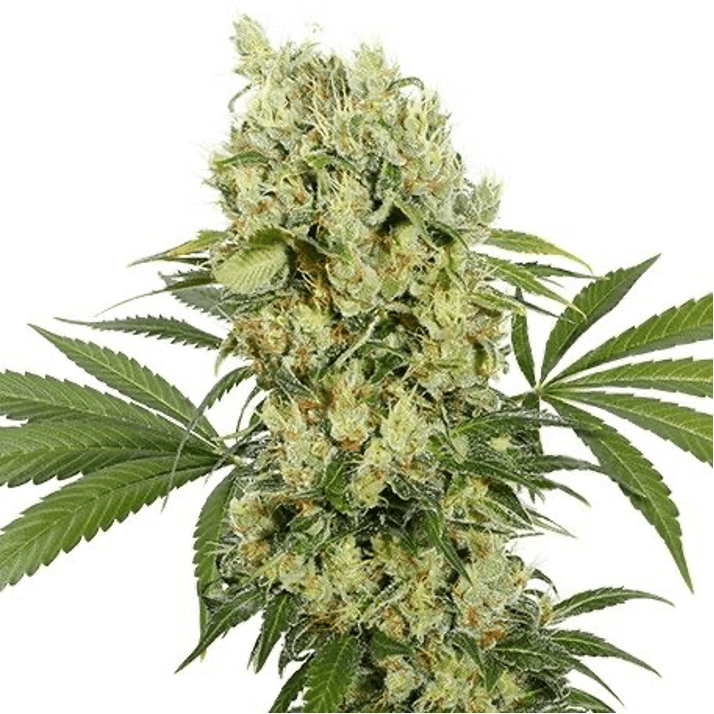
Gorilla Glue #4 Feminized
Feminized Seeds
GMO Cookies Feminized
So Which Should You Choose — Shatter or Hash?
The answer is a direct function of who you are as a consumer. Here is the unambiguous breakdown:
If you grow your own genetics specifically chosen for extraction — resin-dense cultivars harvested at peak trichome maturity — both products improve significantly. Your inputs determine your output ceiling.
FAQ
Is shatter considered hash?
No. When people ask whether shatter hash are the same category, the answer is no — shatter is a BHO concentrate produced with a butane solvent, while hash is a solventless concentrate made by mechanically separating trichomes. Both are cannabis concentrates, but their production methods are fundamentally different. Calling shatter a type of hash is technically inaccurate — the defining characteristic of hash is the absence of solvents.
Is hash a concentrate?
Yes. Hash is a cannabis concentrate — specifically a mechanical, solventless concentrate. It concentrates the trichome fraction of the plant, where THC and terpenes are stored, into a smaller and more potent form. Traditional hash at 20–40% THC is less concentrated than BHO shatter, but it tests significantly higher than standard dried flower at 15–25% THC.
Does shatter or hash get you higher?
In the shatter hash potency debate, shatter delivers a higher peak THC dose per unit volume, so it produces a more intense effect in a comparable amount. That said, premium bubble hash at 60–70% THC approaches shatter territory in potency, and the fuller terpene profile in hash may contribute to a richer, more complex experience even at comparable THC levels. For ceiling potency per dose, shatter. For nuanced whole-plant experience, premium bubble hash.
Is hash healthier than shatter?
Neither is inherently healthier than the other when both are purchased through regulated legal retail, where lab-testing confirms residual solvent levels and contaminants are within Health Canada's approved limits. Hash carries a structural advantage over unregulated shatter: the absence of solvents eliminates any residual solvent risk regardless of production quality. Legal shatter is safe. Unregulated or home-produced BHO shatter carries genuine inhalation risk.
Is shatter dangerous?
Legal shatter from regulated provincial retailers is not dangerous for adult consumers who dose responsibly. Home-produced BHO shatter is dangerous to *make* — not to consume as a finished product — because butane extraction creates serious explosion and fire risk during production. The hazard lies in unlicensed extraction, not in the concentrate itself. Never attempt BHO extraction outside a licensed facility.
How long does shatter last vs hash?
Both store well in cool, dark, airtight conditions. Shatter remains stable for 6–12 months before significant terpene or cannabinoid degradation occurs. Pressed traditional hash stores exceptionally well — quality blocks kept in a cool, dark environment can remain usable for 1–2 years. Bubble hash is more delicate and should be kept frozen if not consumed within a few months, as moisture and ambient heat accelerate degradation. Avoid heat, light, and humidity for either product.
19+ | Educational horticulture only.