Hash, Rosin, Resin & More
Cannabis Extracts & Concentrates
What Is Rosin? Solventless Cannabis Concentrate Explained
What is rosin? The solventless cannabis concentrate explained: how rosin is made with heat and pressure, why it's clean, and how to evaluate quality.
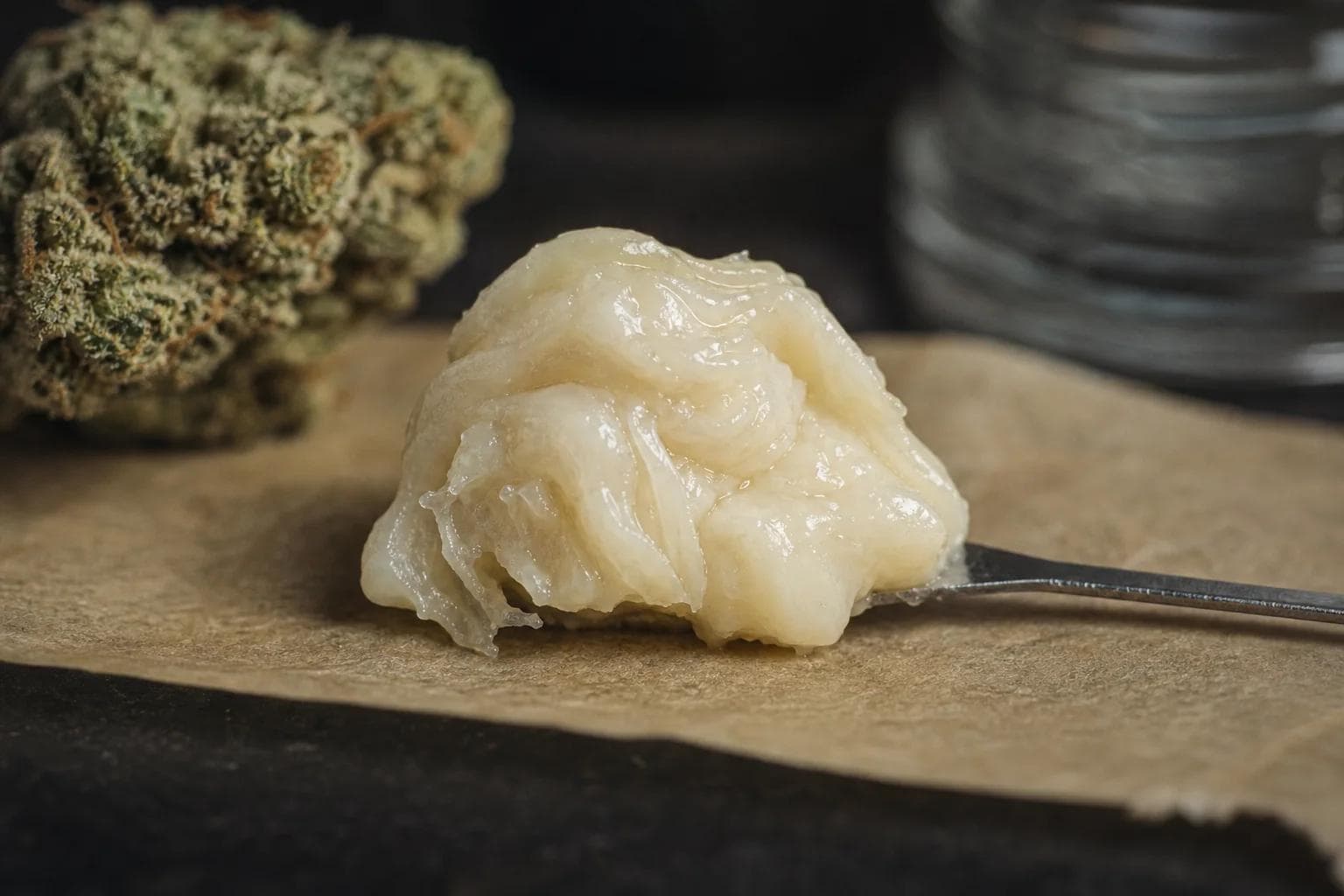
Rosin is a solventless cannabis concentrate made entirely with heat and pressure — no butane, ethanol, or CO₂ involved. Applied to flower, kief, or bubble hash, the process squeezes out a terpene-rich extract that typically tests between 60–85% THC. The result is full-spectrum, residue-free, and ready to dab.
If you've been browsing concentrate menus at a dispensary in Toronto or scrolling through solventless offerings online and wondering what separates rosin from everything else on the shelf — this is the article you need. It's one of the fastest-growing concentrate categories in Canada and in established markets like Portland and Denver, and the reasons come down to a genuinely simple story: no solvents, no residues, and a flavour profile that tracks the source plant more closely than almost any other extraction method. This article defines rosin precisely, explains how it's made, breaks down the different types, and tells you how to evaluate quality the way an informed buyer would.
What is rosin in cannabis?
Rosin is a solventless cannabis concentrate produced by applying controlled heat and pressure to plant material — dried flower, kief, or hash — until the trichomes release a viscous, terpene-rich resin that is collected on parchment or through a micron filter bag. No chemical solvents are used at any stage. The extract is mechanically derived directly from the plant's own resin glands.
The technique became commercially significant around 2015 and has since evolved from a home-pressing curiosity into a premium product category stocked by licensed producers and provincial retailers across Canada.
Is rosin a solventless concentrate?
Yes. Rosin is the clearest example of a genuinely solventless cannabis extract. No butane, propane, ethanol, CO₂, or other hydrocarbon or chemical agents enter the process at any point — only heat, pressure, and starting material. This is what separates it categorically from BHO (butane hash oil), PHO (propane hash oil), and CO₂ oil, all of which require post-extraction solvent purging.
One term worth knowing: "solventless" and "solvent-free" get used interchangeably on retail menus, but they mean different things. Solventless means no solvent was ever introduced. Solvent-free means solvents were used and then removed. This extract is genuinely solventless.
How is rosin made?
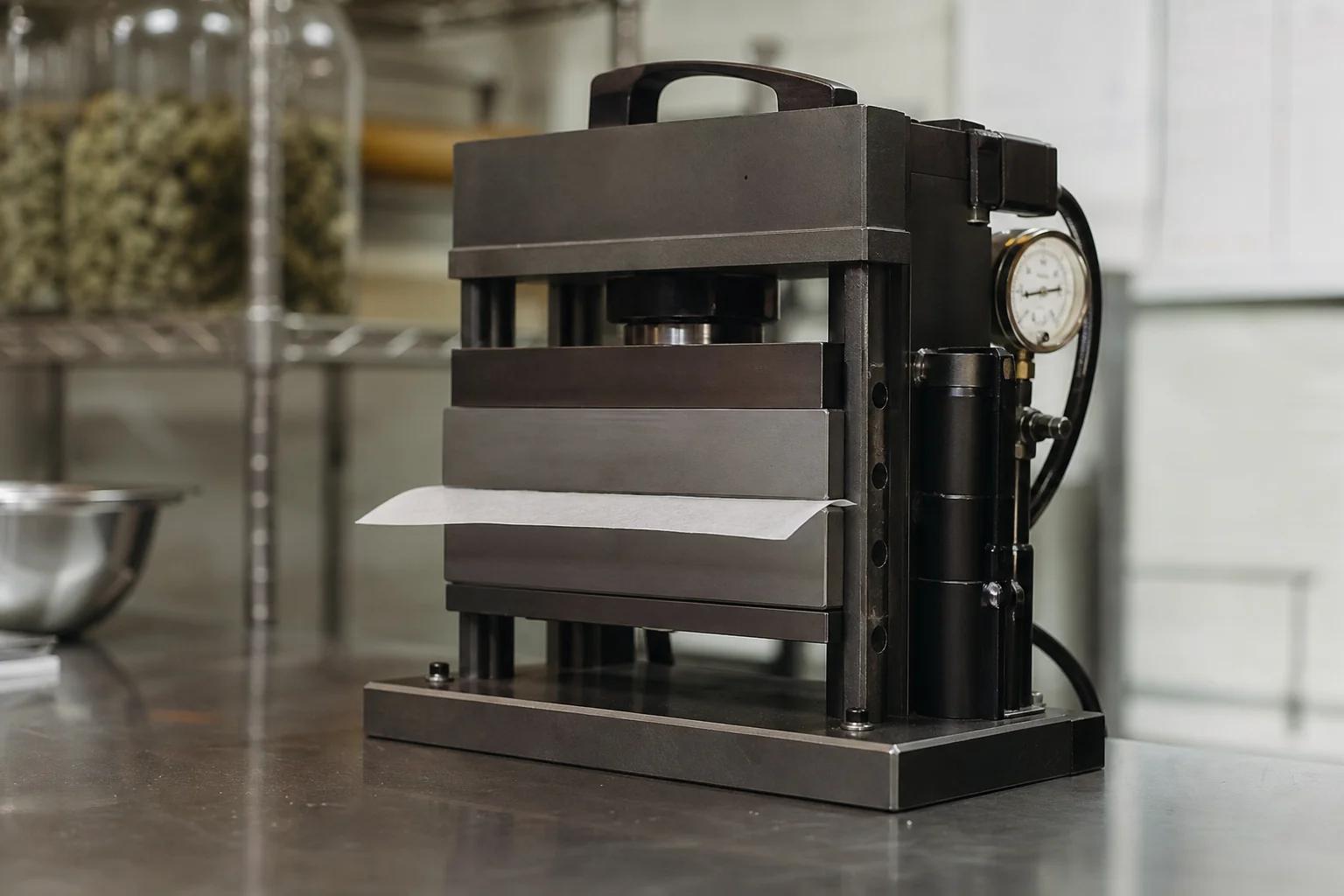
Rosin is made by placing cannabis starting material — flower, dry-sift kief, or bubble hash — between two heated plates and applying controlled, even pressure. The heat softens the trichome heads, the pressure forces the internal resin through the plant material, and what flows out onto the collection parchment — or through a nylon micron filter bag — is the finished extract.
The process looks deceptively simple. The variables are where it gets interesting:
- Starting material: Trichome density, moisture content, and genetics determine output quality more than any equipment setting. A low-resin cultivar pressed at optimal settings will still produce inferior rosin to a terpene-heavy, high-trichome input at the same settings. No press fixes mediocre starting material.
- Micron bags: When pressing hash or kief, nylon filter bags — typically in the 25–90 micron range — contain the plant material while allowing pure rosin to pass through. Tighter micron sizes (25–45) produce cleaner extracts with less plant contamination. Flower rosin is often pressed without bags, with parchment alone.
- Pressure: Too little and you leave yield on the table. Too much and you rupture cell walls, forcing chlorophyll, waxes, and plant lipids into the extract — darkening it and contaminating the final product. Commercial rosin presses use hydraulic or pneumatic systems to deliver precise, consistent force.
- Post-press handling: Fresh-pressed rosin can be collected and used immediately (fresh press), or it can be cold-cured — sealed and rested at room temperature for 24–72 hours — to develop a stable budder or badder texture. Texture is a processing choice, not a quality indicator on its own.
What is the best temperature to press rosin?
The optimal pressing temperature falls between 65°C and 90°C (150°F–195°F). Lower temperatures — 65–75°C — preserve volatile terpenes and produce a more flavour-complete extract, though yields are typically slightly lower. Higher temperatures — 80–90°C — increase yield but degrade delicate terpene compounds and push the colour toward amber-brown. Most quality-focused pressers targeting hash rosin work in the 70–80°C range, treating the yield reduction as an acceptable trade-off for terpene integrity. If you're running your own press, that 70–80°C window is the right place to start.
What's the difference between rosin and resin?
Rosin and resin are not the same product. The naming similarity causes consistent confusion on dispensary menus, especially in markets like Vancouver and Montreal where both appear side by side at significantly different price points.
Live resin is a solvent-based concentrate. It is made by flash-freezing freshly harvested cannabis immediately after cut — preserving the volatile terpene profile that would otherwise degrade during drying — and then extracting it with hydrocarbons such as butane or a butane/propane blend. The result is a terpene-rich extract, but one produced with chemical solvents that must be thoroughly purged from the final product before consumption.
Rosin requires no solvents at any stage. It is a mechanically derived extract — only heat and pressure.
The "live" designation is where the confusion peaks. Live rosin is made from fresh-frozen material using the solventless process. Live resin is made from fresh-frozen material using hydrocarbon solvents. Same input philosophy, entirely different production methods. For a complete side-by-side breakdown, see Live Resin vs Live Rosin: What's the Difference?.
Is rosin stronger than live resin?
Not necessarily. Both can reach comparable potency ranges — commonly 65–85% THC depending on starting material and process. Live resin often preserves a wider volatile terpene spectrum due to the fresh-frozen input and solvent efficiency, which can produce a more complex aroma and flavour. Rosin's defining advantage is the absence of solvent residues and its full-spectrum terpene integrity under lower-temperature pressing, not a blanket potency advantage. Input genetics and starting material quality determine potency more reliably than extraction method.
What are the different types of rosin?
Not all rosin is produced the same way, and starting material is what determines where a product sits on the quality ladder. Understanding the three main types helps you evaluate what you're seeing at retail — whether that's an OCS menu in Ontario or a craft producer listing in British Columbia.
What is live rosin?
Live rosin is the premium tier of solventless extraction. It is made from whole-plant fresh-frozen (WPFF) starting material — cannabis that is harvested and immediately frozen to lock in the live terpene profile — which is then washed into bubble hash and pressed. This preserves volatile aromatic compounds that degrade substantially during conventional drying and curing. The result is the most terpene-complete extract available, with a flavour and aroma profile that closely mirrors the living plant.
What is hash rosin?
Hash rosin is produced by pressing bubble hash — itself a solventless product made by agitating cannabis in ice water and filtering the separated trichomes through micron screens — rather than pressing whole flower. For a detailed explanation of how bubble hash is made, see What Is Hash? Complete Guide to Cannabis Hash Types. Because the input is already concentrated, the product yields a purer extract with fewer plant lipids, waxes, and chlorophyll than flower rosin. The quality of the hash wash directly determines the quality of the rosin — there's no shortcut around that.
What is flower rosin?
Flower rosin is the most straightforward type: dried, cured cannabis flower pressed directly between heated plates without a pre-concentration step. It's the most accessible entry point — lower equipment requirements, no hash-washing stage — but it produces the least refined output. Yields are typically lower (10–20%), and the extract contains more plant-derived contaminants than hash-based inputs. It is a practical option for growers experimenting at home, and quality improves significantly when trichome-dense genetics are used as input.
Terpene density matters a lot here — high-resin cultivars produce flower rosin that is meaningfully better in colour, texture, and aroma than average-genetics flower at identical press settings. For a deeper look at which terpene profiles translate best to solventless extraction, see Cannabis Terpenes Guide.
How can you tell if rosin is high quality?
This is the question that almost no published explainer answers in useful detail — and it's exactly what a buyer standing in front of a concentrate menu actually needs to know. Here's what to look for.
Colour Premium rosin falls in the pale yellow to golden-amber range. Lighter colour typically signals lower pressing temperatures, high-quality input material, and minimal plant contamination. Dark brown or green-tinged rosin indicates overheating, poor starting material, or excess chlorophyll in the extract. Oxidized product — the result of air exposure or improper storage — appears duller and darker than fresh rosin and will have degraded terpenes regardless of its original quality.
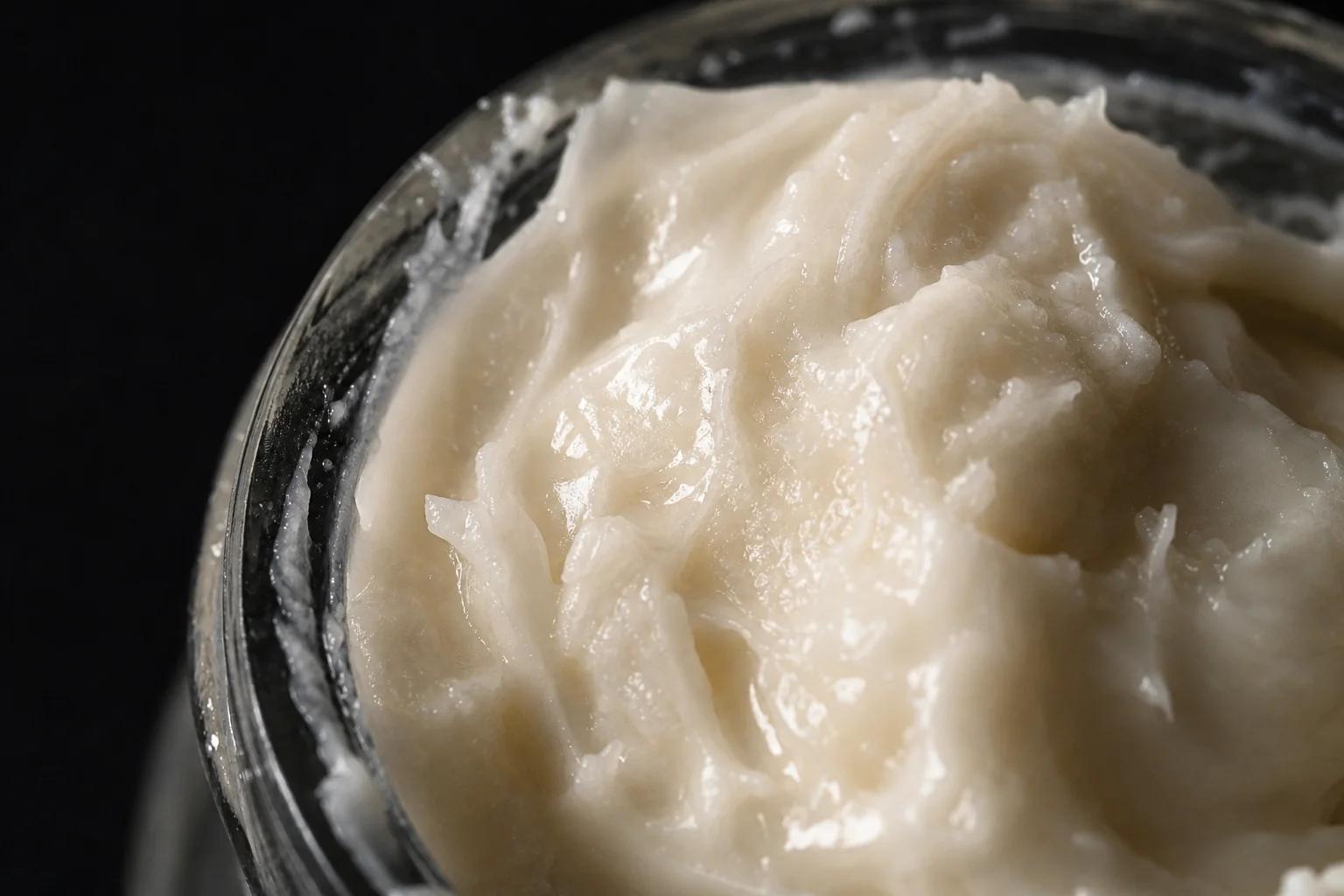
Texture Fresh, well-made rosin displays a range of stable textures depending on post-press handling: budder (whipped and creamy), badder (slightly looser and glossy), jam (wet, sticky, high terpene content), and sauce (liquid-rich with visible terpene separation). Any of these can indicate quality. Brittle, waxy, or crumbly texture at room temperature is the concern — it often means excess heat during pressing, degraded terpenes, or inferior starting material.
Aroma High-quality rosin smells like a concentrated, amplified version of the cultivar it came from. The terpene notes — citrus, pine, fuel, floral, earthy — should be immediate and distinct. A muted, hay-like, grassy, or flat smell signals degraded terpenes from overheating, poor curing of the input, or age. Aroma is one of the most reliable proxies for terpene content, which directly predicts flavour and effect complexity.
Label information On Canadian dispensary menus — whether you're shopping OCS in Toronto or an SQDC menu in Quebec City — look for: starting material type (flower vs. bubble hash vs. live/fresh-frozen), pressing temperature range if disclosed, harvest and production dates, and third-party lab results showing cannabinoid and terpene percentages. Hash rosin and live rosin should be clearly and specifically labelled. A label that simply says "rosin" without further qualification is almost certainly flower rosin at minimum.
Price as a quality signal Flower rosin is priced lower per gram than hash rosin, which is priced lower than live rosin. In established solventless markets like Denver and Seattle, this tiering is consistent and enforced by consumer literacy. The same pattern is emerging in Canadian markets. If a product is priced at flower-rosin levels and claims to be live rosin, examine the label for producer transparency before purchasing.
Is rosin better than shatter?
Rosin and shatter target different priorities. Shatter is a solvent-based concentrate — typically BHO — processed to produce a rigid, glass-like texture with high THC concentration, often in the 70–90% range. It can test higher in THC than rosin made from comparable starting material, but the hydrocarbon extraction and purging process alters the terpene balance and removes some of the minor cannabinoid complexity present in a well-made solventless extract.
Rosin contains no solvent residues by definition and preserves a broader range of terpenes and minor cannabinoids when pressed at lower temperatures. Whether it's "better" depends entirely on what you value: maximum THC concentration on paper (where shatter may win), or full-spectrum flavour, terpene fidelity, and solvent-free production (where rosin wins). For a detailed breakdown of solvent-based concentrate types, see Shatter vs Hash: What's the Difference?.
How do you smoke rosin?
The primary consumption method for rosin is dabbing — placing a small amount on a heated banger or nail attached to a water pipe. For a full explanation of the equipment involved, see What Is a Dab Rig? Beginner's Guide to Dabbing Cannabis Concentrates. For best flavour, low-temperature dabs at approximately 315–450°F (157–232°C) preserve the terpene profile; high-temperature dabs burn volatile compounds and produce harsher, less flavourful vapour.
Beyond traditional dab rigs, rosin works in several other formats:
- Electronic rigs (e-rigs): Battery-powered dab devices with precise digital temperature control. Popular with consumers in Vancouver and Los Angeles who want consistent, repeatable dabs without a torch. Set a temperature, press a button, take the dab — no guesswork.
- Rosin vape cartridges: Some producers fill vape cartridges with lightly diluted rosin for portable use. More convenient, but this format sacrifices some terpene complexity compared to raw concentrate on a banger.
- Joint and bowl topping: A small amount of rosin rolled into a snake and wrapped around a joint, or placed on top of flower in a bowl, adds potency. It is a less efficient delivery method — combustion temperatures destroy much of the terpene value — but it requires no additional equipment.
- Edible preparation: Rosin can be decarboxylated — heated at approximately 110°C (230°F) for 30–45 minutes to convert THCA to THC — and then infused into fats such as butter or coconut oil for cooking. Less common, but a viable route for those avoiding inhalation.
Can you make rosin at home?
Yes, home pressing is feasible. A dedicated rosin press — a hydraulic or pneumatic device with heated plates — is the right tool for it, and entry-level units are available in the $150–$300 range. Pressing dried flower or What Is Kief? Cannabis Trichome Powder Explained at home produces usable rosin with practice and reasonable technique.
The hair-straightener method — using a flat iron as a makeshift press — appears constantly in online guides. Temperature control is unreliable with household flat irons, pressure is uneven and physically demanding to sustain, and yields are typically poor. It works as a proof-of-concept, which is actually how the modern technique was popularized, but it is not worth optimizing or scaling. A purpose-built press is the minimum for consistent results.
Legality note: Home extraction of personal-use cannabis falls within the Cannabis Act's adult personal use provisions in most provinces. Processing cannabis for sale or distribution without a Health Canada licence is prohibited regardless of province. Check provincial regulations for any additional local restrictions.
Is rosin legal in Canada?
Yes. Cannabis rosin is a legal product in Canada under the Cannabis Act (S.C. 2018, c. 16), which explicitly governs the production, sale, distribution, and possession of cannabis extracts and concentrates, including solventless extracts.
Licensed producers may manufacture and sell cannabis concentrates — including solventless extracts like rosin — through authorized provincial and territorial retail channels. In Ontario, authorized sales flow through the Ontario Cannabis Store (OCS) and licensed private retailers. In Quebec, the Société québécoise du cannabis (SQDC) is the authorized retail channel. British Columbia, Alberta, and other provinces operate their own retail systems under the same federal framework.
Public possession limits: Adults may legally possess up to 30 grams of dried cannabis equivalent in public. Health Canada's equivalency conversion for concentrates is 0.25 g of dried cannabis per 1 g of concentrate — meaning 7.5 g of this extract equals the public possession limit.
Legal age: The minimum age is 19 in most provinces, including Ontario, British Columbia, Alberta, and Nova Scotia. In Quebec, the minimum age is 21 under the provincial Loi encadrant le cannabis — higher than the federal baseline — making Quebec one of the more restrictive provincial frameworks.
Home production from legally purchased or personally grown cannabis (adults are permitted to grow up to 4 cannabis plants per household under federal law) is within personal use provisions in most provinces, provided the output is for personal consumption only.
Does premium solventless start with premium genetics?
The honest answer to "how do I get better rosin?" is: start with better genetics. Equipment matters at the margins, but no press compensates for low-trichome, low-terpene input material. Rosin is fundamentally a trichome delivery mechanism — and trichome density, resin chemistry, and terpene profile are determined by genetics and cultivation, not by the press.
Growers pressing their own flower for personal use consistently report the same thing: a resinous, terpene-dense cultivar presses dramatically better than a high-yielding but average-genetics plant at identical moisture content and settings. The same holds at commercial scale — input genetics is the ceiling, and the press either reaches that ceiling or falls short of it.
Cultivars that excel as solventless input share a consistent profile: dense, intact trichome heads; a terpene expression that is both complex and generous; and resin that remains pliable and extractable under moderate heat rather than crystallizing or hardening prematurely. Strong examples with demonstrated track records in solventless production include:
- GMO Cookies — exceptional trichome density and a deep, pungent terpene stack dominated by caryophyllene and myrcene. One of the most sought-after solventless inputs in current North American concentrate markets. GMO Cookies Feminized
- Wedding Cake — produces a creamy, terpy resin with strong consistency across runs; stable genetics that presses reliably for both home users and licensed producers. Wedding Cake Feminized
- Gorilla Glue #4 — named for its famously adhesive resin; high trichome expression and broad terpene complexity make it a reliable solventless candidate at every experience level. Gorilla Glue #4 Feminized
FAQ
What is the difference between rosin and live resin?
Rosin is a solventless concentrate made with heat and pressure only — no chemical solvents at any stage. Live resin is a solvent-based extract, typically made with butane, using fresh-frozen cannabis as the starting material. Both can be made from fresh-frozen input, but only rosin is solventless. For the complete breakdown, see [LINK: Live Resin vs Live Rosin: What's the Difference? | /en/articles/live-resin-vs-live-rosin]. ---
Does rosin contain solvents?
No. This extract is produced entirely without chemical solvents — no butane, propane, ethanol, CO₂, or other agents are introduced at any point. It is mechanically extracted using only heat and pressure, which is the defining characteristic that separates rosin from BHO, PHO, and CO₂ extracts. No purging step is needed because no solvent was ever used. ---
How much THC is in rosin?
Rosin commonly tests between 60–85% THC depending on starting material, genetics, and pressing conditions. Hash rosin and live rosin — made from pre-concentrated inputs — tend to reach the higher end of that range. Flower rosin typically falls lower. THC percentage varies significantly by cultivar and process. [CITATION: https://pmc.ncbi.nlm.nih.gov/articles/PMC5803369/ | PubMed/PMC peer-reviewed paper] ---
Why is rosin more expensive than shatter?
The concentrate commands a price premium for several reasons: high-quality starting material is required, extraction yields are lower than solvent-based methods (10–30% depending on input), no chemical shortcuts exist to increase throughput, and hash rosin and live rosin require a complete hash-washing stage before pressing begins. Each step adds labour and material cost that solvent-based extractions largely bypass. ---
What is the best way to store rosin?
Rosin should be stored in an airtight, non-stick container — silicone or glass — away from light, heat, and air exposure. Refrigeration extends shelf life and preserves terpenes; freezing is appropriate for long-term storage. Exposure to air and elevated temperatures accelerates oxidation, which darkens the product and degrades volatile terpene compounds. Airtight cold storage is the single most effective preservation measure for quality over time. ---
What is cold-cure rosin?
Cold-cure rosin is fresh-pressed rosin that is immediately collected into a sealed container and left to rest at room temperature — or slightly below — for 24–72 hours. During this period, THCA begins to separate from the terpene fraction, causing the extract to solidify into a stable, creamy badder texture. Cold-cure produces a more consistent, palatable dabbing consistency than wet fresh-press, and it is one of the most common post-press finishing techniques used by both home pressers and licensed producers. ---
Can I press rosin from kief?
Yes. Kief — the loose trichome powder accumulated in grinder chambers — can be pressed into rosin using a micron filter bag (typically 25–37 micron) to contain the plant material. Applying moderate heat (70–80°C) produces a cleaner extract than flower pressing, since the kief is already partially separated from plant matter. Results improve significantly with denser, more refined kief. For more on kief and how it is collected, see [LINK: What Is Kief? Cannabis Trichome Powder Explained | /en/articles/what-is-kief-cannabis]. ---
Is rosin the same as cannabis oil?
No. Cannabis oil is a broad term typically applied to liquid products made via solvent extraction (CO₂ oil, ethanol tinctures) or fat infusion, used in capsules, oral drops, or topicals. Rosin is a concentrated extract produced mechanically with heat and pressure, intended primarily for inhalation via dabbing or vaporizing. They are distinct product categories with different production methods, physical consistencies, and typical applications. [CITATION: https://www.canada.ca/en/health-canada/services/drugs-medication/cannabis/industry-licensees-applicants/licensed-cultivators-processors-sellers/processing-cannabis/types-cannabis-concentrates.html | Health Canada]
19+ | Educational horticulture only.