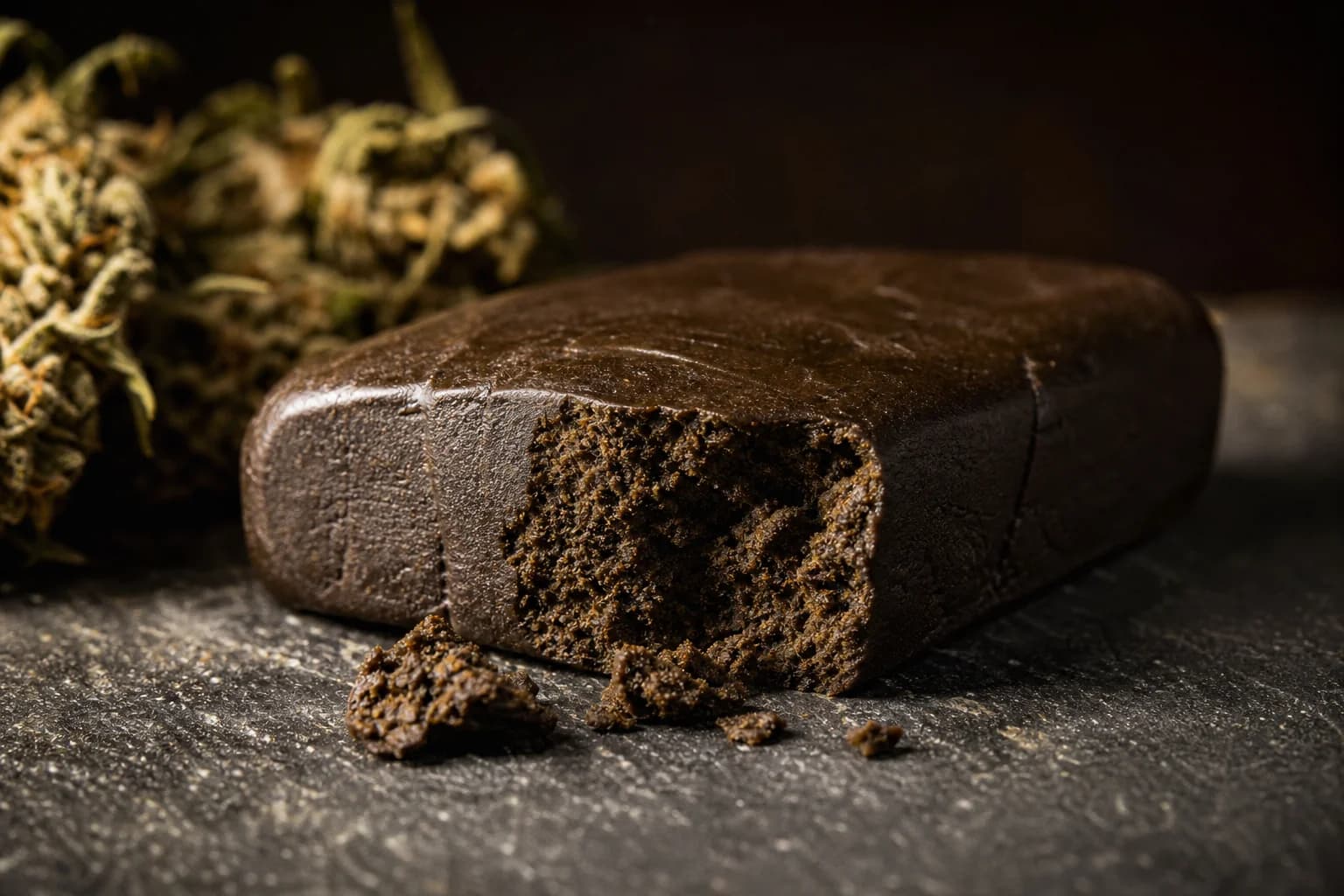
Hash, Rosin, Resin & More
Cannabis Extracts & Concentrates
What Is Hash? Complete Guide to Cannabis Hash Types
What is hash? Complete guide to cannabis hash types: dry sift, bubble hash, charas, pressed Moroccan style — production methods, potency, storage.
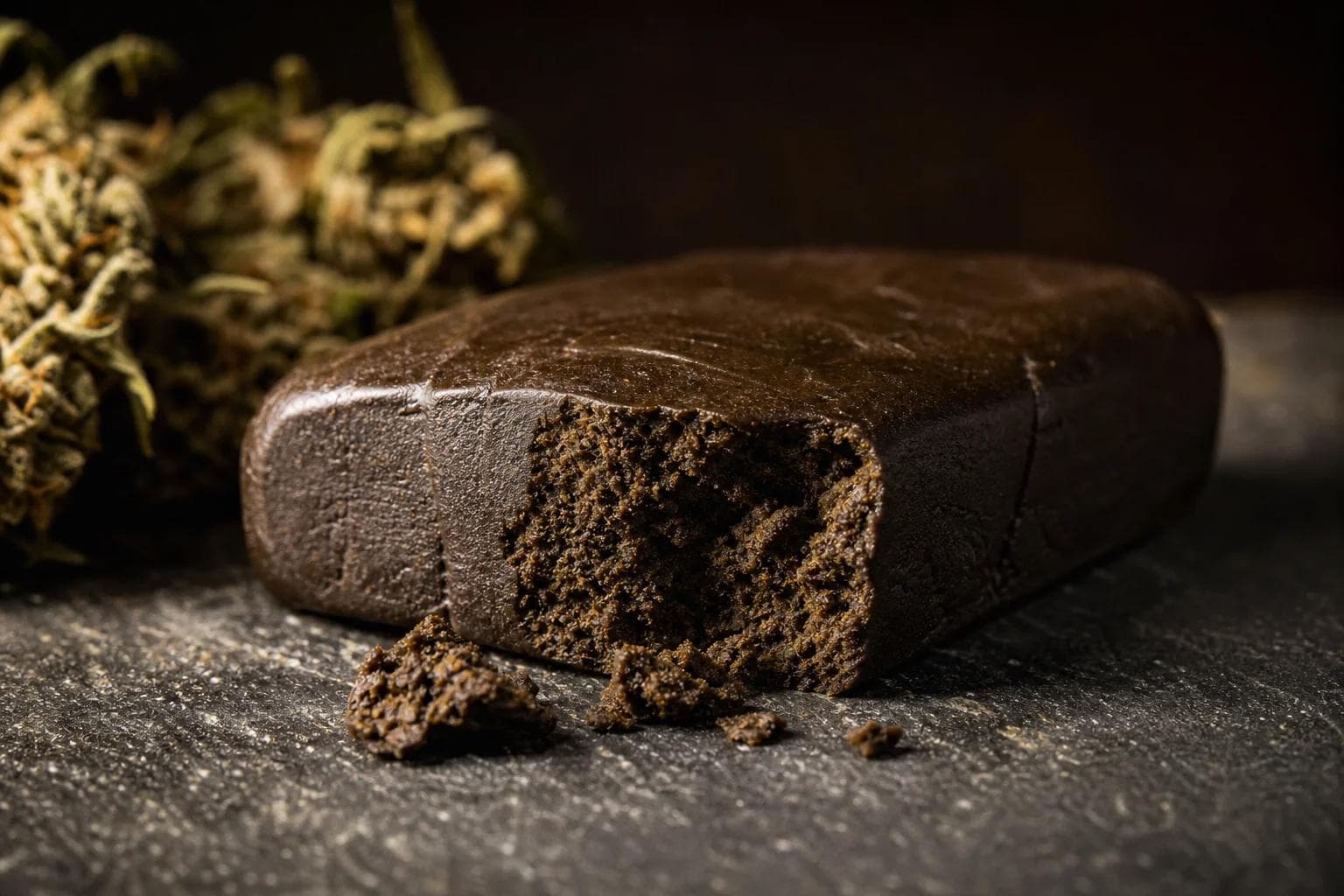
Hash is a cannabis concentrate made by collecting and compressing the resin-rich trichomes from cannabis plants. It's significantly more potent than flower — typically 20% to 60%+ THC — and spans forms from ancient pressed bricks to modern full-melt bubble hash. This guide covers every major type, how each is made, and what adults in Canada need to know.
Hash is the oldest cannabis concentrate on earth. Long before dispensaries, dab rigs, or rosin presses existed, cultivators in Afghanistan, Morocco, and Nepal were collecting cannabis trichomes and pressing them into the dense, fragrant pressed resin still called hash today.
For most of its history in Canada, the concentrate meant something imported, unregulated, and wildly inconsistent — pressed in distant mountains, smuggled across borders, tested by no one. The Cannabis Act changed that in 2018, and the legal concentrate market that followed opened access to lab-tested, properly labelled hash across the country.
Today, it sits on the shelves of provincially licensed retailers from Vancouver to Montreal, and a serious domestic market for premium solventless products has taken root. If you're curious about trying hash for the first time — or you've finished harvest and you're staring at a pile of sugar trim — this guide covers every type, method, and detail you need.
What Is Hash, Exactly?
Hash is a cannabis concentrate produced by separating, collecting, and compressing the resin-secreting trichomes from the cannabis plant. Unlike flower — which includes the entire bud with plant matter, stems, and chlorophyll — the concentrate is almost entirely resin: the sticky matrix where THC, CBD, terpenes, and other cannabinoids are concentrated. The result is a smaller-volume, higher-potency product with an earthier, richer aromatic profile than flower.
The trichome heads that form the raw material of hash are the same glandular structures visible as that frosty white coating on a well-grown bud. In bulk and compressed, that frost becomes the finished concentrate.
Depending on production method and genetics, the finished product ranges from light tan to near-black. It can be firm and brick-like, soft and pliable, or loose and sandy. The common thread is resin — not plant material.
How Is Hash Different from Weed (Flower)?
Hash differs from flower in three fundamental ways: concentration, volume, and character. A typical dried flower contains 15–25% THC by weight; a pressed concentrate will commonly range 30–50%, and premium modern formats can exceed 60%. You need significantly less of it to achieve a comparable effect — often half as much by weight or less.
Because it is stripped of most chlorophyll and plant fibre, hash burns differently. The smoke is denser, and solventless formats tend to taste noticeably richer per volume — the terpenes get to carry their full weight without competing with combusting plant matter.
Per milligram of THC, the concentrate usually wins on value too. A gram of high-quality pressed hash at 50% THC delivers 500 mg of cannabinoids in a smaller, more shelf-stable package than a gram of flower at half that potency.
Where Did Hash Come From? A Short History
Hash is as old as cannabis cultivation itself. The earliest documented references to hashish appear in medieval Islamic medical literature, and the tradition of separating cannabis resin predates written history across Central Asia and the Middle East.
In the mountains of the Hindu Kush — across what is now Afghanistan and Pakistan — cultivators developed the dry-sieving tradition: rubbing dried cannabis plants over fine mesh screens to collect trichomes, then hand-pressing the resulting powder into dense bricks. In the Rif Mountains of Morocco, a parallel sieving tradition produced the blonde pressed resin that became one of the most widely traded concentrates in the world through the twentieth century.
In Nepal and the Himalayan foothills of northern India, a different approach emerged: charas — hand-rubbed resin collected directly from living plants and rolled between the palms into dense, fragrant balls. Temple balls from Nepal and Malana Cream from the Parvati Valley remain among the most storied traditional pressed-resin products in existence.
Ice water extraction came later — developed through the 1980s and 1990s — using cold water and agitation to liberate trichomes mechanically, then collecting them through stacked micron bags at progressively finer grades. This method, the foundation for today's bubble hash, represented a meaningful leap in trichome integrity and extract purity.
Canada's legal concentrate market opened in January 2020 under the second phase of the Cannabis Act. In the years since, licensed producers in Toronto, Vancouver, and Calgary have built a serious domestic solventless category — lab-grade bubble hash and rosin on regulated shelves for the first time, giving domestic consumers access to quality they had never seen before.
How Is Hash Made from Cannabis?
Hash is made by mechanically or chemically separating trichomes from cannabis plant material, then collecting and compressing them into a concentrated, consumable form. The two foundational production paths are solventless (mechanical separation only) and solvent-based (chemical solvents used to strip resin from plant matter).
Solventless methods rely on physical forces — friction, pressure, cold water, and fine screens — with no chemical agents at any stage:
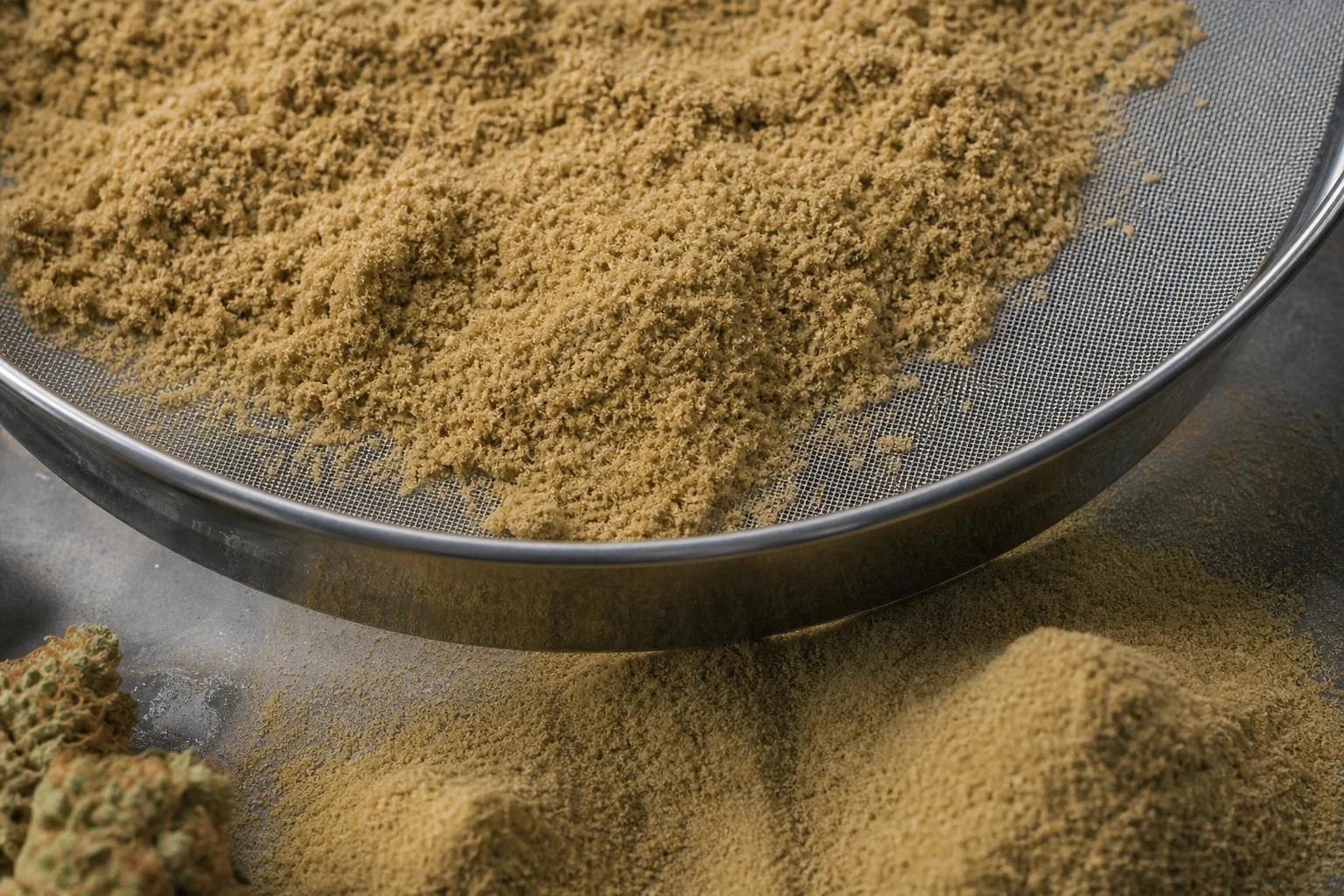
- Dry sifting — dried and cured cannabis is sifted through progressively finer micron screens. Trichome heads fall through; plant material stays behind. The resulting kief powder is pressed under heat and pressure into the finished concentrate.
- Hand rubbing — fresh or lightly dried cannabis is rubbed between the palms; resin builds up on the skin and is periodically scraped off and kneaded into balls. This is how charas is made.
- Ice water extraction (bubble hash) — cannabis is submerged in ice water and agitated. Cold temperatures make trichome stalks brittle and they snap away cleanly from plant matter; the trichome-laden water is then filtered through stacked micron bags from 220 microns down to 25 microns, and the collected material is fully dried. Quality is rated on the six-star scale, with six-star "full-melt" the purest achievable grade.
- Rosin pressing — dry sift or bubble hash is pressed between heated plates and the resulting solventless oil is collected. Rosin is technically a distinct product from hash — see What Is Rosin? Solventless Cannabis Concentrate Explained — but pressing bubble hash into rosin is a common and legitimate production pathway.
What's the Difference Between Solventless and Solvent-Based Hash?
Solventless hash uses only mechanical force — cold, water, pressure, or friction — with no chemical solvents at any point in production. Solvent-based concentrates use butane, CO₂, or ethanol to chemically extract resin, which is then purged before consumption. Solventless is generally considered purer and commands a premium price; solvent-based concentrates can achieve higher THC numbers at lower production cost.
To put it plainly: premium full-melt bubble hash and cold-pressed rosin are solventless. Shatter, wax, and most commercial "hash oil" products are solvent-based. Both are legal in Canada as regulated concentrates, both subject to the same retail maximum of 1,000 mg of THC per package.
The solventless category has earned its premium not just as marketing — it genuinely delivers a higher terpene survival rate during production, and the ceiling on flavour and effect quality is higher as a result. High-trichome genetics grown specifically for solventless extraction have become a recognized niche in the domestic regulated market.
What Are the Main Types of Hash?
Hash is not one product — it is a category spanning millennia of regional tradition and modern extraction science. The table below maps every major type, from traditional pressed formats to modern full-melt grades.
What Is Moroccan Hash?
Moroccan hash is the world's most internationally recognized traditional pressed format. Produced in the Rif Mountains by dry-sieving dried cannabis flower over fine mesh, the resulting trichome powder is pressed under heat into firm, golden-to-brown bricks. The aroma is subtle and floral, the effect profile relatively approachable — making it a natural entry point for consumers transitioning from flower.
THC typically runs 20–40%. It's less intense than Afghan or modern bubble formats, which is exactly why it works well if you're new to concentrates. Among traditional formats, Moroccan-style pressed resin is one of the most consistently stocked at provincially licensed retailers across the country.
What Is Afghan Hash?
Afghan hash originates in the Hindu Kush range across Afghanistan and Pakistan, where cultivators have dry-sieved and pressed cannabis resin for centuries. It presents as a near-black brick that softens quickly under hand heat — a hallmark of the pressing technique used to close the outer oxidized layer while keeping the interior resinous and pliable.
The terpene profile runs deeply earthy, spiced, and herbal — noticeably more forward than the Moroccan style. THC typically ranges 25–45%. Among experienced consumers, this pressed resin has a long-standing reputation for complex aroma and a characteristically heavy, full-body effect — the kind that earns its place in a rotation.
What Is Lebanese Hash — Red and Blonde?
Lebanese hash comes from the Bekaa Valley and represents one of the oldest documented commercial hashish traditions. Blonde Lebanese, made from early-harvest material, is pale gold in colour and known for a clearer, more mentally present effect. Red Lebanese, pressed from later-harvest, more fully matured plant material, is darker, richer, and more resinous. Both are dry-sieved and pressed. The Lebanese variety has become harder to find globally — quality examples are genuinely sought after wherever they surface in specialty markets.
What Is a Nepalese Temple Ball?
A Nepalese temple ball is a traditionally hand-shaped hash format — dense, spherical, with a characteristic glossy exterior created by slow hand-rolling over time. The exterior oxidation layer actually acts as a natural preservative, allowing well-made temple balls to age and develop terpene complexity over months.
Inside, the material is noticeably softer and more aromatic than that dark outer shell suggests. Some of the most storied examples come from Nepal's high-altitude grows, where intense UV exposure and wide temperature swings push plants toward exceptional resin production.
What Is Charas?
Charas is the hand-rubbed hash of the Indian subcontinent — and uniquely, it is made from living, actively flowering plants rather than dried and cured material. Cultivators slowly rub their palms along resin-covered branches; the resin accumulates on the skin and is periodically scraped off and kneaded into small balls.
The aroma is in a different class entirely — the terpenes have never touched a drying rack, a curing jar, or heat. Malana Cream from the Parvati Valley in Himachal Pradesh is the most celebrated style globally, prized for specific landrace genetics and the kind of high-altitude growing conditions you can't replicate in a tent. No extraction method built in the modern era fully matches the fresh, live-plant terpene expression of high-grade charas.
What Is Dry Sift Hash?
Dry sift is mechanically refined trichome powder produced by passing cured cannabis over fine-micron screens in a controlled, cold, low-humidity environment. Each successive pass through finer screens removes more plant matter, raising purity grade.
Edmonton's dry winters and Calgary's low indoor humidity make naturally good conditions for home dry-sift work in the cooler months — the ambient cold keeps trichomes firm and makes them sieve cleanly rather than smearing into the screen.
High-grade dry sift, refined to 90+ micron full-melt quality, can be pressed into hash or consumed directly as a loose powder. It's the modern form of the same sieving tradition that built the Moroccan and Afghan industries, and the starting point for most domestic pressed hash produced in the legal market. For a deeper look at the loose trichome powder stage before pressing, see What Is Kief? Cannabis Trichome Powder Explained.
What Is Bubble Hash?
Bubble hash is the most technically refined form of traditional solventless hashmaking. Cannabis material is submerged in ice water and mechanically agitated; cold temperature makes trichome stalks brittle and they separate cleanly from plant matter. The trichome-laden water is then poured through stacked micron bags — typically from 220 microns down to 25 microns — with the highest-purity trichome heads collecting in the finest bags.
Quality is graded on the six-star scale:
- 1–2 star: Lower purity; elevated plant material content; best suited for edibles or cooking infusions
- 3–4 star: Mid-grade; suitable for vaporizing or pressing into rosin
- 5–6 star (full-melt): Near-pure trichome heads; bubbles and melts completely on a heated surface without leaving residue — the defining quality marker
What's the Difference Between Hash and Kief?
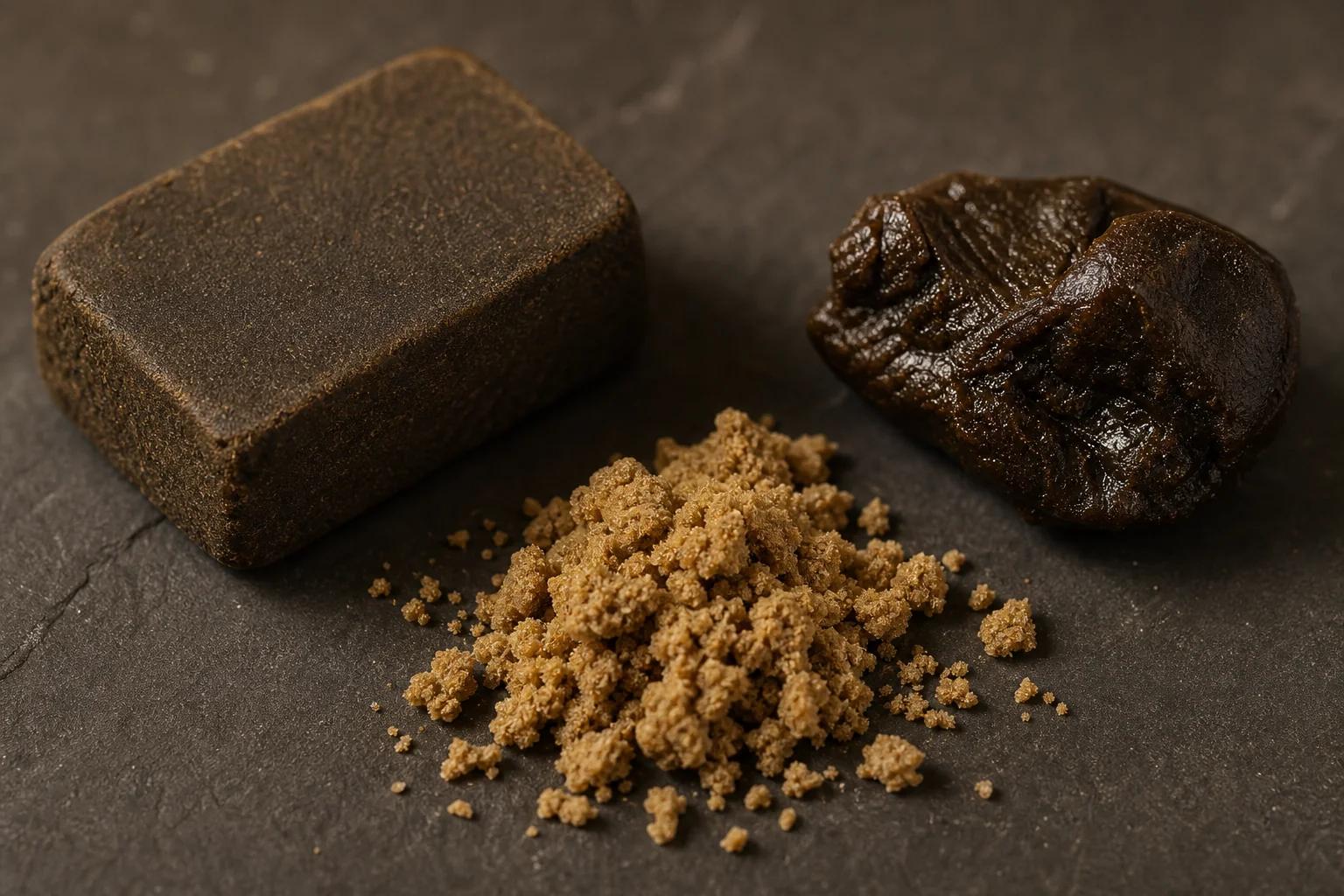
Kief is uncompressed trichome powder — the input material before any pressing has occurred. Hash is what you make from kief by applying pressure, heat, or both to bind the trichomes into a cohesive, stable mass. Kief is the flour; hash is the bread. The distinction matters practically: kief degrades faster through oxygen exposure, is harder to dose and handle, and lacks the structural stability of pressed hash.
Pressing kief into hash also changes the flavour. The pressure and slight heat cause terpene compounds across trichome heads to blend and meld — it's what gives traditional pressed hashish that characteristic layered flavour complexity that loose powder never quite hits.
For the complete guide to the trichome powder stage, see What Is Kief? Cannabis Trichome Powder Explained.
What's the Difference Between Hash and Rosin?
Hash and rosin are related but distinct products. Hash is the compressed trichome concentrate — a solid or semi-solid mass of resin. Rosin is a solventless oil produced by applying controlled heat and pressure to a starting material, which can be dried flower, dry sift, or bubble hash. When bubble hash is pressed, the product is called hash rosin — widely regarded as the highest-expression form of solventless extract.
Think of it this way: hash is the concentrate you make first. Rosin is what you pull from it with heat. All hash rosin started as hash; not all of it becomes rosin. The two sit on the same production continuum, not in separate categories.
See What Is Rosin? Solventless Cannabis Concentrate Explained for the full breakdown.
What's the Difference Between Hash and Hash Oil (BHO, Shatter, Wax)?
Hash and hash oil are fundamentally different at the production level — the name similarity is a legacy of older, less precise cannabis terminology. Traditional and modern solventless hash uses only mechanical separation; no chemical solvents are introduced at any stage.
Hash oil, BHO (butane hash oil), shatter, and wax are all solvent-based extracts — butane or another solvent strips resin from plant material, and is then purged from the final product before consumption.
The industry has largely moved away from calling these products "hash." Today the term means solventless and traditionally pressed resin; BHO, shatter, wax, distillate, and live resin are their own named categories. Both groups are legal in Canada's regulated market — they just don't belong in the same box.
For a direct product-to-product comparison, see Shatter vs Hash: What's the Difference?.
What Is the Strongest Type of Hash?
The strongest commercially available hash is modern full-melt six-star bubble hash and hash rosin — both solventless products made from high-quality, trichome-dense starting material. Premium six-star bubble hash regularly tests at 60–70%+ total cannabinoids in the regulated legal market. Hash rosin pressed from full-melt starting material can exceed 70–80% THC under laboratory analysis.
Traditional pressed formats — Moroccan, Afghan, Lebanese — sit considerably lower, typically 20–45%. That gap is partly the method, partly the starting material. Dry-sieve production captures less pure trichome content than ice water extraction, and some plant matrix always makes it through.
Starting material quality is the ceiling. A six-star bubble hash run from dense, properly grown and cured flower will always outperform a six-star run from low-quality trim. Genetics and cultivation practice determine how high that ceiling rises.
How Much THC Is in Hash?
Hash THC content spans a wide range depending on type, quality, and production method. Traditional pressed hash (Moroccan, Afghan, Lebanese) typically tests between 20–45% THC. High-quality dry sift runs 30–55%. Premium bubble hash (four- to six-star) ranges 40–65%+. Hash rosin occupies the upper band at 50–80%+, with some exceptional solventless extracts pushing higher under laboratory conditions.
For legal context: retail concentrate products in Canada may be sold up to 1,000 mg of THC per package under the Cannabis Act — a cap that covers every hash format you'll find on a legal retailer's shelf.
THC percentage alone doesn't tell the whole story. Terpene content, cannabinoid ratios, and the entourage effect all shape the actual experience — which is why a high-terpene six-star bubble hash often lands differently than a higher-THC distillate with most of its volatiles driven off during processing.
How Do You Smoke or Consume Hash?
Hash is more versatile in consumption format than most concentrates. Because it exists on a spectrum from soft pressed brick to granular sift to refined oil-like rosin, different types suit different consumption methods.
Joint topper: The most common traditional method. A small piece is crumbled or shaved onto the surface of a cannabis flower joint, or worked into the ground flower before rolling. This works best with softer, more crumbly types. It raises the potency and pulls the flavour toward the resinous character of whichever variety you're using — a Moroccan addition tastes noticeably different from an Afghan one.
Pipe or bong bowl topper: A thin slice of pressed hash or a pinch of dry sift placed on top of a flower bowl. The material softens and burns along with the flower, delivering a more concentrated hit without requiring any dedicated equipment. For someone new to concentrates, starting here makes it easy to gauge your response incrementally — you're not committed to a full dab.
Hash pipe: Traditional small hash pipes — typically metal, with a compact bowl — allow the concentrate to be consumed alone without flower as a carrier. Most effective with softer, higher-melt types. More common in European cannabis culture; increasingly relevant in Canada as legal hash quality has improved.
Vaporizer: Hash works well in concentrate-compatible vaporizers. Not all dry-herb vapes handle it efficiently — purpose-built concentrate vaporizers or devices with glass concentrate inserts perform better. Temperature matters: terpenes express best between 160–190°C, with degradation and combustion setting in above 200°C.
Dab rig: For premium full-melt bubble hash and hash rosin, a dab rig — a water pipe with a heated glass or titanium banger — delivers the purest flavour expression and the most efficient cannabinoid delivery you can get. Full-melt six-star is specifically designed for this: it bubbles, melts, and leaves no carbon residue.
See What Is a Dab Rig? Beginner's Guide to Dabbing Cannabis Concentrates for a full walkthrough of the dabbing process, including temperature guidance and equipment selection.
Can You Eat Hash or Use It in Edibles?
Yes — hash can be used in edibles, but it requires decarboxylation first. Raw cannabis resin contains THC primarily in its acidic form (THCA), which does not produce a psychoactive effect when ingested directly.
To activate the THC, the concentrate needs to be heated to approximately 110–120°C for 30–45 minutes before being incorporated into a fat-soluble cooking medium — butter, coconut oil, or cream all work well.
Once decarboxylated, it infuses efficiently and can go into any standard cannabis edible recipe. The one thing worth emphasizing: dosing precision matters more with this concentrate than with flower. A small amount of high-potency concentrate goes considerably further by weight, and the margin for error is narrower.
Is Hash Legal in Canada?
Hash is legal in Canada for adults 19 and older (18 in Alberta; 21 in Quebec) under the Cannabis Act. Cannabis concentrates — including pressed hash, bubble hash, dry sift, and rosin — were legalized in October 2019 under the second phase of the Act, with legal retail sales commencing in January 2020.
Retail packaging limit: Licensed retailers may sell concentrate products up to 1,000 mg of THC per package. This cap applies to all concentrated cannabis products, including every hash format.
Public possession limit: Adults may possess up to 30 grams of dried cannabis equivalent in public. Cannabis concentrates are subject to an equivalency factor under the Cannabis Act regulations — consult Health Canada's current equivalency table for the exact weight conversion that applies to this product class.
Provincial variation: Minimum legal age and retail access structures vary by province. Each province operates its own retail licensing framework; provincially authorized retailers are the only legal commercial source for cannabis concentrates in Canada.
Interprovincial transport: You may legally travel with your personal possession amount within Canada. Transporting cannabis across international borders — including into or out of the United States — remains a federal criminal offence regardless of legal status at the destination.
What About Making Hash at Home from Your Own Trim?
Adults who grow cannabis under the four-plant personal-cultivation provision of the Cannabis Act are legally permitted to produce cannabis products — including hash — from their own homegrown material for personal use. This is a significant and frequently overlooked aspect of the law.
If you grew your own plants this season in Toronto, Vancouver, Montreal, or anywhere else in the country, the sugar trim, fan leaves, and small popcorn buds left after harvest are the raw material for your first batch. You cannot sell or distribute it — homemade concentrate is for personal use only.
The two most accessible home production methods:
Dry sifting: Requires a fine-micron screen (73–120 micron for a first pass), a clean, dry workspace, and ideally cold, low-humidity conditions. Crumbled, well-cured trim is gently rubbed over the screen; trichome heads fall through and collect as kief powder, which is then pressed under heat and pressure into the finished concentrate. Winter in Montreal offers natural ambient cold for both the dry-sift workspace and keeping the pressed material firm during the process.
Bubble bags: A bubble bag kit provides a set of stacked micron bags for ice water extraction. Ice, water, and trim are agitated together, then filtered through the bags in descending micron order. The collected wet material needs to be fully dried before use — in Vancouver's damp autumn climate, a dehumidifier running during the drying phase is worth the effort; moisture left in the concentrate will encourage mould.
Properly dried and cured material makes a dramatic quality difference over fresh or poorly stored trim — see Curing and Storing Cannabis Buds for the full curing guide. If you're planning your grow from seed, How to Grow Cannabis in Canada: Beginner's Guide covers everything from seed selection to harvest timing.
If trichome yield at harvest is a priority, genetics matter considerably — explore the strain library for varieties bred for resin density and extract potential.
FAQ
Is hash stronger than weed (flower)?
Yes, in most cases. Traditional pressed hash typically contains 30–50% THC versus 15–25% for dried flower. Modern formats — six-star bubble hash and hash rosin — can reach 60–80%+ THC under laboratory analysis. The higher concentration means smaller quantities deliver equivalent or greater effects.
Does hash smell different from flower?
The concentrate tends to smell earthier, spicier, and more intense than flower. Because trichomes contain the majority of the plant's aromatic terpenes but lack chlorophyll and vegetative plant matter, the concentrate has a more singular, resinous character. Type matters significantly: Moroccan is subtly floral; Afghan is deeply earthy and spiced; fresh bubble hash carries a vivid, strain-specific terpene expression.
How long does hash stay good for?
Properly stored, hash has excellent shelf stability compared to flower. A well-pressed brick of traditional hashish kept in an airtight container, away from heat and light, remains potent for 12–24 months. Solventless formats like bubble hash and rosin are more sensitive to oxidation and should be stored in the refrigerator for short-term use or the freezer for longer-term preservation to maintain terpene content and prevent degradation.
Can you make hash from your own home-grown trim in Canada?
Yes. Adults growing cannabis under the four-plant personal-cultivation provision of the *Cannabis Act* are legally permitted to produce cannabis products — including hash — from their own homegrown material for personal use. You cannot sell or distribute it. Dry sift and basic ice water extraction (bubble bag) methods are both accessible for home growers working with trim from their legal plants. [CITATION: Government of Canada — Cannabis Act | https://laws-lois.justice.gc.ca/eng/acts/c-24.5/]
What's the best hash for beginners?
A mid-grade traditional pressed hash — Moroccan-style or a quality domestic dry sift — is the recommended starting point. It delivers meaningfully more potency than flower without the intensity of full-melt six-star bubble hash or high-concentration hash rosin. Adding a small crumble to a flower joint is a controlled, incremental way to gauge your response. Start with noticeably less than you think you need — onset and duration differ from flower.
How much hash equals one gram of flower?
There's no single fixed equivalency, but as a practical guide: a gram of flower at 20% THC contains approximately 200 mg of THC. A gram of pressed hash at 40% THC contains approximately 400 mg — meaning roughly half a gram of that concentrate delivers the same cannabinoid load as a full gram of flower. For legal retail equivalency calculations under the *Cannabis Act*, Health Canada publishes a current equivalency factor table for concentrate products. [CITATION: Health Canada — Cannabis legalization & regulation | https://www.canada.ca/en/health-canada/services/cannabis-regulations.html]
19+ | Educational horticulture only.