Hash, Rosin, Resin & More
Cannabis Extracts & Concentrates
What Is Kief? Cannabis Trichome Powder Explained
What is kief? Cannabis trichome powder explained: how to collect it, why it's potent, and how it differs from hash. The complete guide.
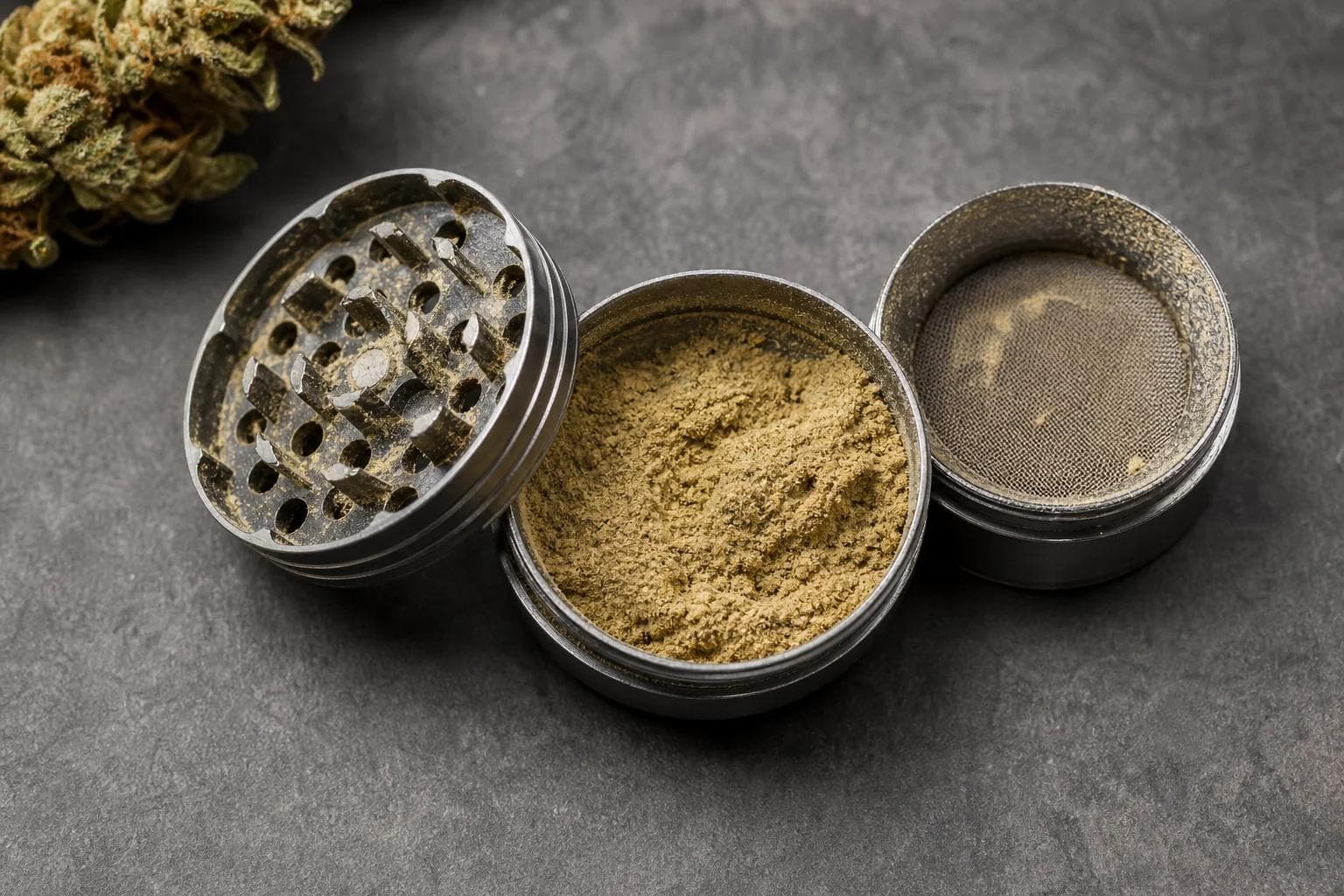
Kief is the concentrated powder of cannabis trichome heads — the resin glands that produce THC, CBD, and terpenes. It collects in the bottom chamber of a four-piece grinder and contains roughly 2–3× the cannabinoid concentration of dried flower, typically ranging from 30 % to 60 %+ THC depending on source genetics and collection method.
Kief sits at the intersection of cultivation and chemistry. Every time you grind cannabis flower, thousands of microscopic trichome heads break free from the plant material and fall through a mesh screen into a dedicated chamber below. That golden-blonde powder is kief — and it is, in the simplest terms, the most potent fraction of the cannabis plant in its most natural form.
Understanding kief means understanding where it comes from: not from a lab or a solvent extraction process, but directly from the trichome architecture of the plant itself. Whether you are a grower selecting genetics for resin density or a consumer who noticed a dusty layer building up in your grinder, kief starts the same place — with the plant.
What is kief made of?
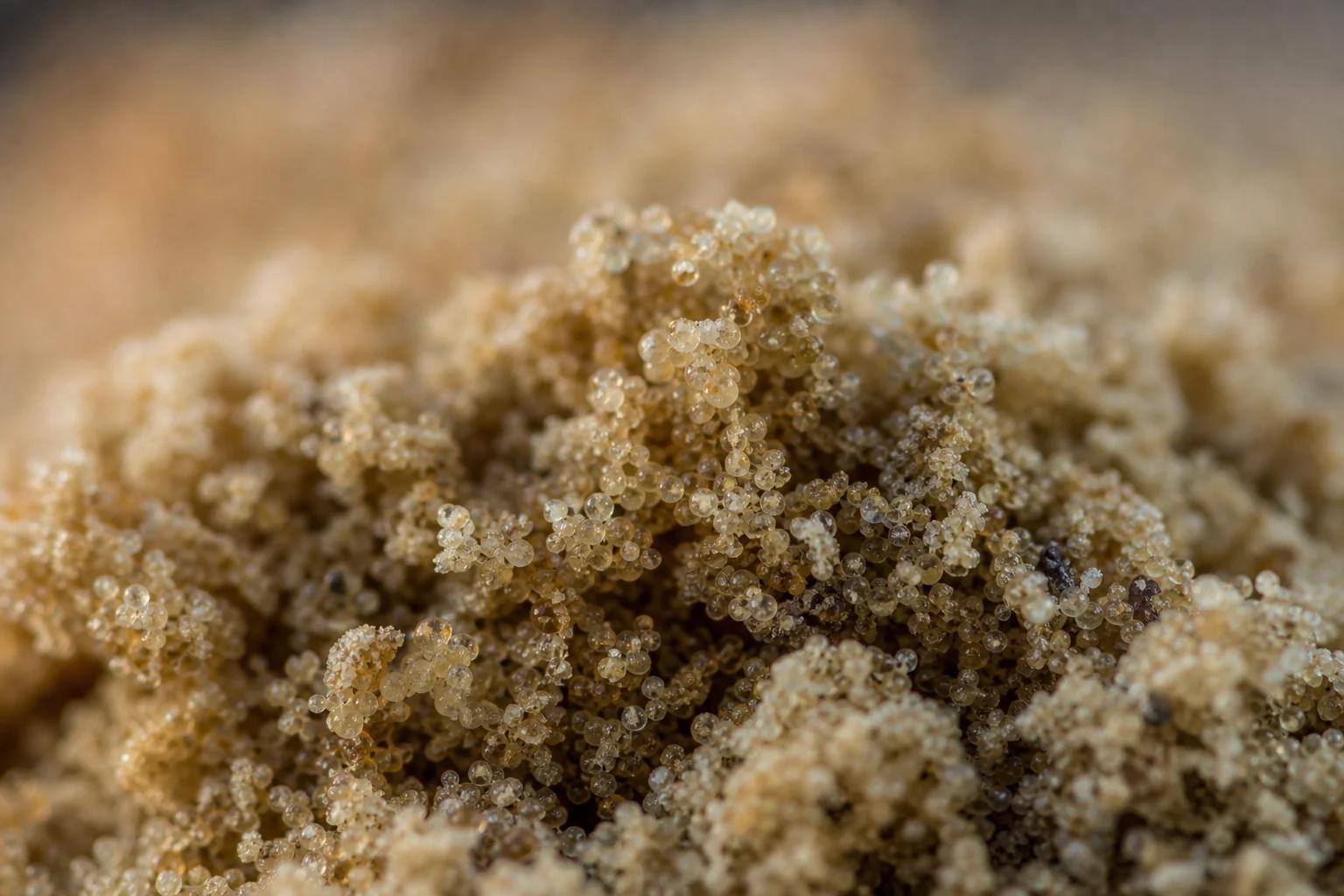
Kief is made of detached cannabis trichome heads — specifically the bulbous tips of capitate-stalked trichomes, which are the primary site of cannabinoid and terpene biosynthesis in the cannabis plant. Each head is a microscopic resin gland containing concentrated THC, CBD, and the full terpene suite responsible for scent, flavour, and the entourage effect.
The cannabis plant produces three trichome morphologies: capitate-stalked (the largest and most resin-rich, standing 150–500 µm tall on a visible stalk), capitate-sessile (smaller, attached flush to the plant epidermis), and bulbous (microscopic, distributed across leaf surfaces). Kief collected from quality cured flower is dominated by capitate-stalked trichome heads — the type that forms the visible crystalline coating on ripe buds and sugar leaves. When those heads detach from plant material through mechanical agitation or screen-sifting, the result is a fine crystalline powder with a dramatically higher cannabinoid-to-mass ratio than the source flower.
The cannabis terpenes guide covers how terpene expression varies across trichome types — relevant for growers who want to understand the aromatic profile of their kief before collection.
Is kief just ground-up weed?
No. Kief is not ground cannabis flower — it is the fraction of trichome heads that separates from plant material during grinding. Ground flower retains stems, cellulose, chlorophyll, and all other plant compounds. Kief is almost exclusively trichome heads, which is why it appears as a fine loose powder rather than the fibrous, herb-like texture of milled bud.
The distinction matters practically. Ground flower typically tests at 15 %–30 % THC. The kief that sifts away from that same flower during grinding can reach 30 %–60 %+ THC. Same plant, very different fractions. Kief is a mechanical separation product — no solvents, no heat processing, no extraction required. What you are separating is the most chemically dense part of the plant from everything else.
Is kief stronger than cannabis flower?
Kief is significantly more potent than the flower it came from. Dried cannabis flower typically contains 15 %–30 % THC; kief derived from the same plant material commonly tests between 30 % and 60 %+ THC, depending on the genetics and the purity of the collection. The potency difference exists because cellulose and other plant material — which dilute cannabinoid concentration in flower — are largely absent in kief.
Potency is not uniform across all kief, though. Two quality signals tell you most of what you need to know: colour and texture. Fresh, high-purity kief ranges from pale gold to off-white. Greener kief means plant material contamination — chlorophyll from leaf fragments sifted through along with the trichome heads. Darker or brown kief may signal oxidation or lower-quality separation.
Mesh size is where a lot of home growers leave quality on the table. Finer collection screens (73 µm vs. 120 µm) yield purer kief at lower volume; larger mesh openings collect more material but with proportionally more plant debris in the mix. If your grinder kief looks more green than gold, the screen mesh is probably too coarse.
Is kief the same as hash?
Kief and hash are closely related but not the same thing. Kief is the raw, unprocessed collection of trichome heads. Hash is kief that has been further processed — compressed under pressure and heat, hand-rolled from live plant material, or water-separated using ice baths and agitation — into a denser, more stable form. The relationship is simple: kief is the input, hash is one of several possible outputs.
Traditional dry-sift hash, associated with Moroccan and Lebanese production traditions, is made by collecting kief through progressively finer micron screens and then compressing the result. Hand-rolled charas differs in that it is collected directly from live plants, but the underlying principle is the same: isolate the trichome fraction, then stabilize it. Modern ice-water hash (bubble hash) uses cold water and agitation to achieve the same mechanical separation before the collected material is dried and pressed.
Is kief considered a concentrate?
Yes. Under Canada's Cannabis Act, kief is classified as a cannabis extract — the same regulatory category as hash, cannabis oil, and rosin. This means kief is subject to the possession and production rules governing cannabis extracts rather than dried flower.
Regulated provincial retailers across Canada sell kief as a graded extract product, typically labelled by THC percentage range and sometimes by screen classification. Growers who collect kief from their own legally grown plants are producing it within the extract category — no separate licensing is required for personal-use home collection.
How do you collect kief from a grinder?
A four-piece grinder collects kief automatically during normal use. The top two chambers grind flower and allow ground material to fall through holes into the middle storage chamber. Beneath the middle chamber sits a fine mesh screen — typically 100–150 µm — through which trichome heads sift during grinding and accumulate in the sealed kief catcher below. Most grinders accumulate enough usable kief after a few weeks of regular use.
For collection, a small scraping tool (usually included with the grinder) removes the powder from the kief catcher. A common grower trick: drop a small coin into the middle chamber before grinding. The extra agitation during use knocks more trichome heads loose and pushes them through the screen — a simple change that makes a noticeable difference in yield over the same grinding session.
What about dry-sift screens and micron bags?
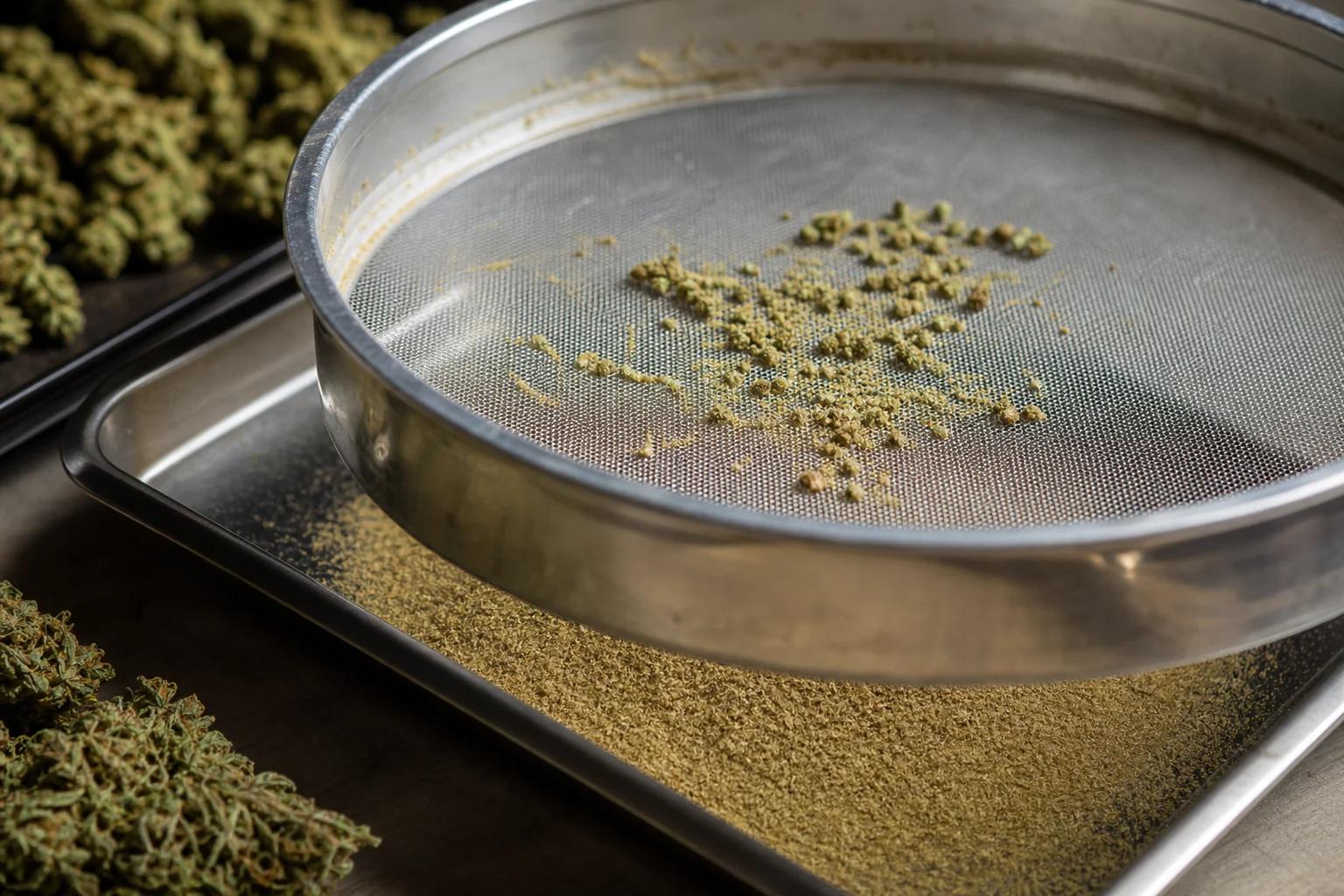
Dry-sift is a scaled-up, higher-precision version of grinder kief collection. Cured cannabis is gently tumbled or rubbed over a series of stackable micron screens — typically ranging from 220 µm at the top (removes large debris) down to 73 µm or finer at the bottom (retains only the purest trichome heads). The result is tiered kief at different purity grades.
- 120 µm and above: General collection — high yield, contains some plant debris and smaller trichome fragments
- 90 µm: Mid-purity — a practical potency-to-volume balance for most home producers
- 73 µm: Highest purity fraction — lighter colour, maximum cannabinoid concentration, lower volume
How do you use kief?
Kief is versatile. It can be added to existing consumption methods to increase potency, pressed into concentrates, or decarboxylated and infused into edibles. Because kief is already composed primarily of trichome heads — with minimal plant material — it integrates cleanly into most formats without significantly altering texture or handling.
Can you smoke kief by itself?
Kief can be used on its own, though it performs better with a little preparation. Loose kief stays lit poorly and is awkward to manage because of its powdery consistency. Pressing a small amount into a tight pellet using a pollen press produces a more hash-like material that burns more evenly and predictably — a simple step that makes a real difference.
Because kief runs roughly 2–3× the potency of source flower, starting with a smaller amount than you would normally use with dried flower is worth doing, particularly if you are working with high-THC genetics.
Can you put kief in a joint?
Yes, and this is one of the most practical applications. Kief is typically added by sprinkling it inside a joint during rolling, or by coating the outside of a finished joint — lightly moistened — in a thin layer of kief powder. Sprinkling inside during rolling burns more evenly and reduces material loss compared to surface coating, which tends to shed before the joint is even lit.
The effect is a measurable increase in cannabinoid content without fundamentally changing how you roll or consume. No special technique or equipment needed beyond the kief your grinder already collected.
How do you use kief in edibles?
Kief is well-suited for edible preparation because its low plant-material content means minimal grassy or bitter flavour in the finished infusion. It can be incorporated into butter or oil using a standard decarboxylation-then-infusion process. The reduced plant mass also makes kief-infused fats noticeably clearer and less strongly aromatic than full-flower infusions — a practical advantage when cooking dishes where the cannabis flavour should stay in the background.
Growers running high-trichome genetics through a full dry-sift setup often accumulate kief faster than they can use it in other formats. Edible infusion is the most efficient way to process accumulated kief before the next grow cycle begins.
Do you have to decarb kief before making edibles?
Yes. Raw kief contains THCa — the non-psychoactive acid precursor to THC — just as raw flower does. Decarboxylation, which converts THCa to active THC through applied heat, is required before kief will produce cannabinoid effects in edibles. Skip this step and the finished product will contain negligible active THC regardless of how much kief went into it.
The standard decarb approach for kief: 110 °C (230 °F) for 30–40 minutes in a sealed oven-safe container. Some growers prefer lower temperatures — 95 °C (200 °F) for 45–60 minutes — to preserve heat-sensitive terpenes while still achieving full decarboxylation. Home oven accuracy varies more than most people expect; an independent thermometer is worth using if precise temperature control matters to you.
How do you store kief?
Kief degrades faster than cured flower if stored carelessly. The trichome heads that give kief its potency are vulnerable to the same four factors that degrade any cannabinoid-rich material: light, heat, oxygen, and humidity. Stored correctly, kief holds its potency and terpene profile for several months.
Best practice for kief storage:
- Container: Airtight glass jar or metal tin. Plastic generates static charge that causes kief to cling to surfaces — messy to handle and wasteful.
- Temperature: Cool and stable — a drawer or cupboard away from heat-generating appliances. Refrigerators are generally unnecessary and can introduce condensation risk if the container is not perfectly sealed.
- Light: Dark or opaque container. UV exposure degrades cannabinoids measurably over weeks to months of repeated exposure.
- Humidity: Keep kief dry. Unlike cured flower, kief does not benefit from humidity management — moisture causes clumping and can promote mould development in dense, compressed material.
Which cannabis strains produce the most kief?
Not all genetics produce kief equally. Trichome density, trichome morphology, and total resin output are heritable traits — which means the cultivar you grow directly determines how much kief accumulates in your grinder or dry-sift setup, and how pure that kief will be.
Growers selecting genetics for kief production should look for consistent indicators: dense capitate-stalked trichome coverage extending well onto sugar leaves and smaller fan leaf bases; genetics with documented extraction lineage (Afghani derivatives, OG Kush family, resin-forward modern hybrids); and phenotypes that maintain trichome integrity through drying and curing rather than shedding heads during handling.
Genetics known for heavy trichome and kief production:
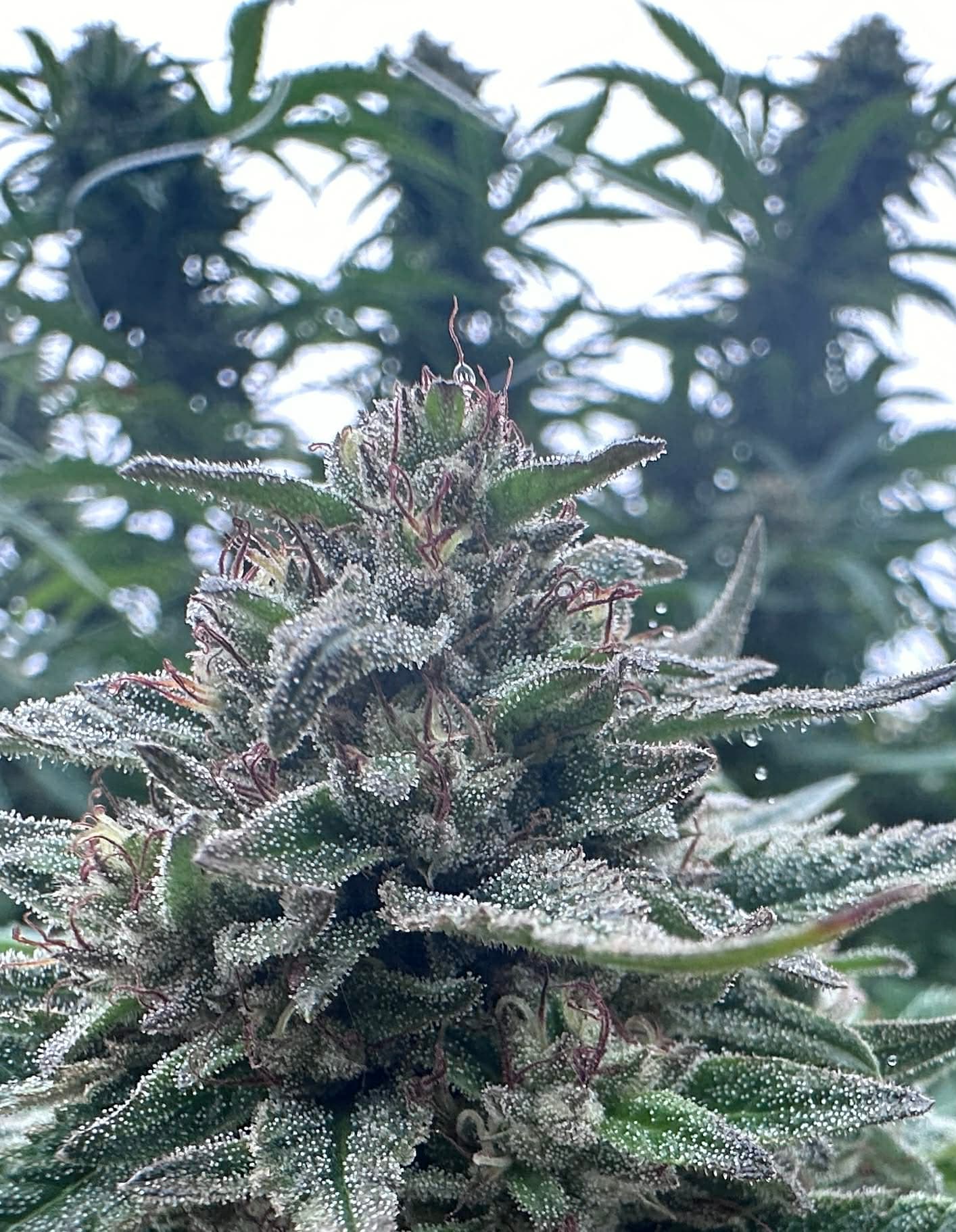
Gorilla Glue #4 (GG4) is among the most trichome-dense photoperiod hybrids in current cultivation. Its resin output is exceptional even by modern hybrid standards. A well-grown GG4 plant in a controlled indoor environment consistently produces enough high-quality kief to justify a dry-sift investment after a single harvest. Trichome heads are large and well-formed, yielding pale gold kief that signals strong separation purity.
Feminized Seeds
Gorilla Glue #4 Feminized
GG4 × Zkittlez combines GG4's resin volume with Zkittlez's terpene complexity — specifically the fruity-earthy profile driven by caryophyllene, myrcene, and linalool expression from the Zkittlez lineage. The resulting kief carries notable aromatic character alongside the high THC percentage you expect from GG4 parentage. Growers in humid indoor environments should allow a thorough dry and cure before collecting — the dense trichome coating on these buds can trap residual moisture.
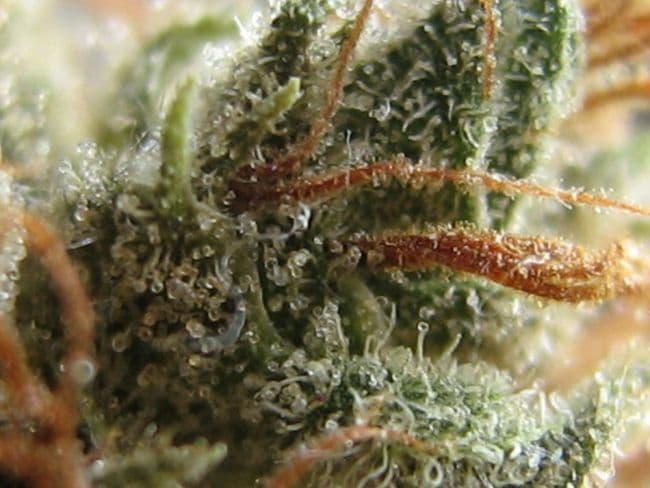
Feminized Seeds
GG4 x Zkittlez Feminized
MAC 1 (Miracle Alien Cookies) has earned a strong reputation among extraction-focused growers for the quality — not just quantity — of its trichome production. MAC 1 kief tends to express elevated concentrations of monoterpenes alongside high THC, making it a preferred source material for rosin pressing as well as standalone dry-sift collection. What is rosin?
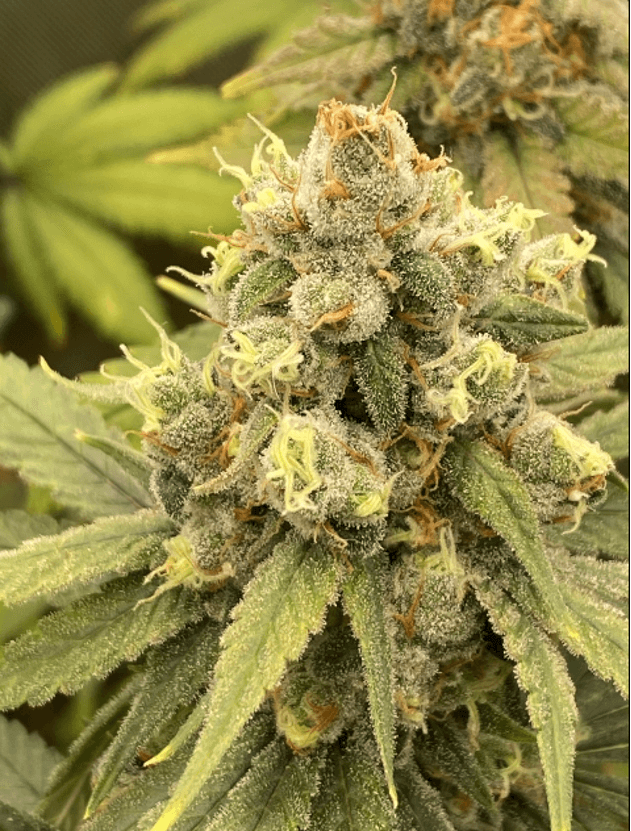
Feminized Seeds
Mac 1 Feminized
Bruce Banner brings OG Kush and Strawberry Diesel lineage together in a plant that delivers both high yields and reliable resin coverage. It is a practical choice for growers prioritising kief volume alongside manageable cultivation demands — trichome output holds up well across a range of indoor conditions, including drier ambient climates where trichome integrity is generally well-preserved through the drying phase.
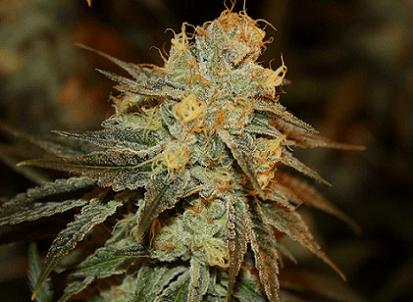
Feminized Seeds
Bruce Banner Feminized
Timing matters as much as genetics. Trichomes harvested while predominantly clear-to-milky yield paler, higher-THC kief; trichomes collected at full amber maturity produce darker kief with more CBN and a more sedative cannabinoid profile. When and how to harvest cannabis covers trichome ripeness assessment in detail — the same visual cues that guide harvest decisions also predict the quality of kief you will collect afterward.
Is kief legal in Canada?
Yes, within defined limits. Under Canada's Cannabis Act, kief is classified as a cannabis extract and is legal to possess, collect, and use for personal purposes by adults (19+ in most provinces). Home growers who collect kief from their legally grown plants are doing so within the extract provisions of the Act — no separate licensing is required for personal-use collection.
Kief is sold commercially as a regulated cannabis extract through provincial retailers across Canada — including the OCS in Ontario and BC Cannabis Stores — typically labelled by THC percentage range and collection method. Possession is subject to the Act's equivalency formula for non-dried cannabis forms; public possession beyond the dried-equivalent personal limit, or any unlicensed commercial production or distribution, falls outside personal use provisions. If you are unsure how the equivalency formula applies to your specific situation, Health Canada's current published guidance is the authoritative reference.
FAQ
Is kief stronger than weed?
Yes. Kief typically contains 30 %–60 %+ THC compared to 15 %–30 % in dried flower, because it consists almost entirely of trichome heads with minimal plant material diluting the cannabinoid concentration. Potency varies based on source genetics and how purely the kief was collected.
Is kief the same as hash?
No. Kief is raw, uncompressed trichome powder. Hash is kief that has been processed — compressed, heated, or water-separated — into a denser, more stable form. Kief is the starting material; hash is one of several products made from it. [LINK: Complete guide to cannabis hash types | /en/articles/cannabis-hash-complete-guide]
Can you smoke kief by itself?
Yes, though pressing it into a small pellet using a pollen press first produces more consistent results. Loose kief burns unevenly and is difficult to handle. Adding kief to flower or lightly pressing it before use are both more practical approaches.
Do you have to decarb kief before making edibles?
Yes. Like raw flower, kief contains THCa rather than active THC. Decarboxylation — heating at approximately 110 °C (230 °F) for 30–40 minutes — converts THCa to THC and is required before kief will produce psychoactive effects in any edible preparation.
How do you collect kief from a grinder?
Use a four-piece grinder with a dedicated kief catcher (the sealed bottom chamber). Kief accumulates naturally as trichome heads sift through the mesh screen during grinding. A coin placed in the middle chamber increases yield through added agitation. Remove accumulated kief with the scraping tool included with most grinders.
Is kief legal in Canada?
Yes. Kief is a cannabis extract under the *Cannabis Act* and is legal to possess and collect within personal possession limits for adults 19+ in most provinces. It is sold through licensed provincial retailers and can be home-collected from legally grown cannabis without additional licensing.
19+ | Educational horticulture only.