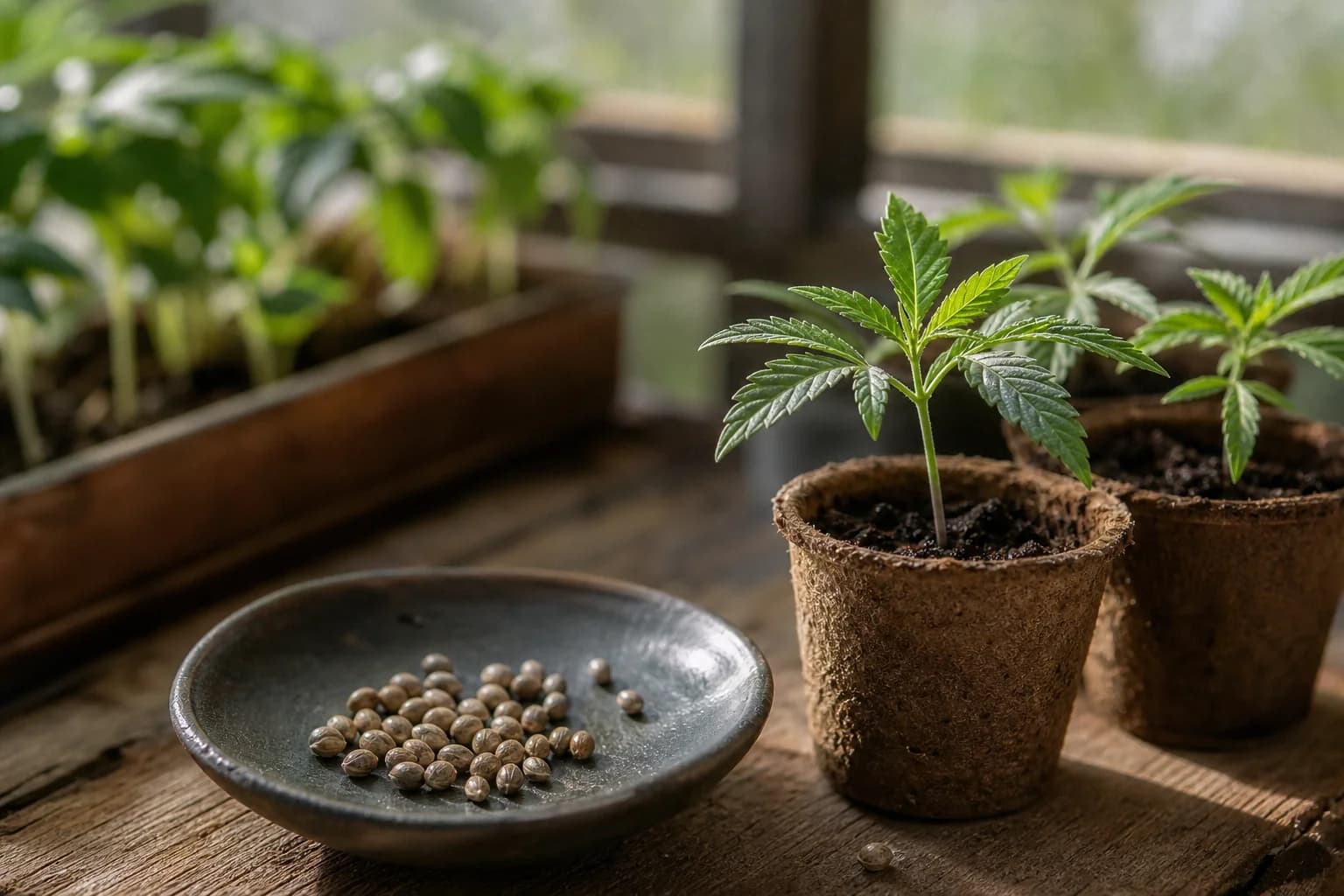
Choose the Right Seeds
Seed Buyer's Guide
MJ Seeds in Canada: A Buyer's Guide to Marijuana Seeds
MJ seeds buyer's guide for Canada: what marijuana seeds are, the types (feminized, autoflower, triploid), how to choose, and where to buy safely.
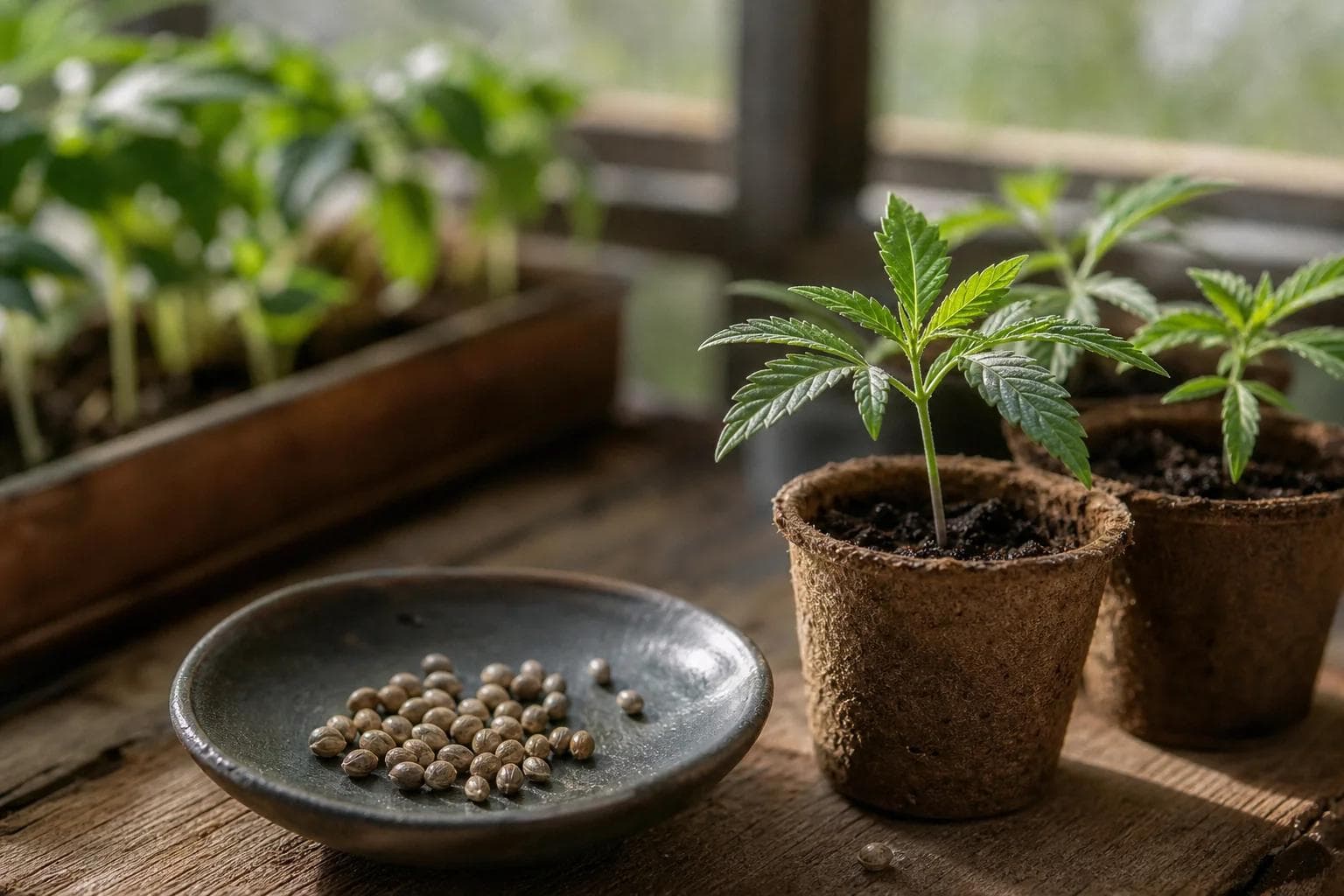
Buying marijuana seeds in Canada is federally legal for adults 19+ under the Cannabis Act, with exceptions in Quebec and Manitoba where home cultivation is banned. The federal limit is four plants per household. Most home growers choose feminized or autoflower seeds — the right type depends on your province, climate zone, and whether you're growing indoors or out.
Canada legalized recreational cannabis in October 2018, and with it, home cultivation for adults. The domestic MJ seeds market is open, well-supplied, and growing fast — but the buying experience still trips up most first-time growers. Provincial rules differ. Seed types multiply. And the internet is full of vendor noise dressed up as advice.
This guide cuts through it. Whether you're in a Toronto condo, a Calgary backyard, or a rural property near Victoria, here's what you actually need to know before you spend a dollar on MJ seeds. For the full cultivation picture once you've made your purchase, see How to grow cannabis in Canada — the complete beginner's guide.
Is It Legal to Buy Marijuana Seeds in Canada?
Yes — purchasing MJ seeds in Canada is federally legal for adults under the Cannabis Act (Bill C-45), which came into force on October 17, 2018. Seeds are classified as a cannabis product, and licensed sellers may distribute them to adults within the personal possession framework established by Health Canada.
The domestic online seed market operates openly. Seeds are sold and shipped within Canada by domestic sellers, and personal cultivation has been a legal right since legalization. The confusion comes from provincial variation — not federal law. Most provinces set the minimum purchase age at 19; Alberta and Quebec use 18.
Provincial home cultivation quick-reference:
Important note for Quebec and Manitoba residents: Possessing seeds as a cannabis product is not itself prohibited under federal law. Germinating and cultivating those seeds at home is what's restricted provincially. A Montreal resident can legally buy seeds and store them — but planting them is a provincial offence. Know your local law before you grow.
How Many Cannabis Plants Can I Legally Grow at Home?
The federal Cannabis Act allows up to four cannabis plants per household — not per person — for adults living in provinces where home cultivation is permitted. A household of multiple adults still shares a single four-plant ceiling.
This number shapes every MJ seeds purchase decision. Four plants is your operational ceiling, and it determines how many seeds to buy, which seed types make sense, and how much margin for error you're working with. The limit applies to plants at any stage of growth — not just flowering. Maximizing those four plants starts with choosing the right genetics for your specific situation.
What Are the Different Types of Cannabis Seeds?
MJ seeds come in three primary categories — regular, feminized, and autoflower — plus a specialized variant called fast version. Each serves a different grower profile, and choosing correctly is the single most impactful decision in a home grow.
What Are Feminized Seeds, and Why Do Most Growers Buy Them?
Feminized seeds are bred to produce exclusively female plants — the only plants that develop the resinous, cannabinoid-rich buds most growers are after. They are photoperiod-dependent, meaning they trigger flowering in response to a shift in light cycle: typically 12 hours of light followed by 12 hours of uninterrupted darkness.
Who they're for: Growers with control over their light environment — indoor setups, greenhouse grows, or outdoor growers in regions with a long and predictable season. BC's south coast and Southern Ontario both support photoperiod outdoor grows. Feminized plants allow extended vegetative time, which means larger plants, higher yields per plant, and more room for training techniques like LST or topping.
The tradeoff: Photoperiod feminized plants require light-cycle management. Outdoors, that means timing your grow around your region's day-length calendar. A Vancouver grower benefits from a long, mild summer. A Calgary grower on the same schedule risks losing the race to frost before the plant finishes.
What Are Autoflower Seeds, and When Do They Make Sense?
Autoflower seeds produce plants that flower based on age rather than light cycle — typically entering the flowering stage automatically three to five weeks after germination, regardless of photoperiod. This trait comes from Cannabis ruderalis genetics crossed into modern high-cannabinoid strains.
Who they're for: Beginners, balcony growers, apartment growers, and outdoor growers in short-season climates. A grower in Winnipeg with a ten-week frost-free window often has no realistic alternative to autoflower if they want a successful outdoor harvest. Autoflowers also suit discreet grows where plant height and light management are constraints — a compact autoflower on a southeast-facing balcony in Montreal can finish its entire cycle without drawing attention, as long as you're on top of watering and basic nutrients.
The tradeoff: Autoflowers generally yield less per plant than photoperiod feminized plants under ideal conditions. They can't be held in a prolonged vegetative state to build size, and early stress is harder to recover from given the compressed timeline.
What Are Fast Version Seeds?
Fast version seeds are feminized photoperiod plants selectively bred to finish flowering two to four weeks earlier than their standard counterparts. They still respond to light cycle changes like any photoperiod plant — they just get there faster.
Who they're for: Outdoor growers in moderate-season regions who want photoperiod-quality plants — better yields, richer terpene development, more genetic expression — without the risk of running out of season. Calgary and southern Alberta growers, where late September frost is a real threat, can run fast version genetics and harvest before the cold arrives while still pulling meaningfully better weight and cannabinoid density than most autoflowers allow.
A note on regular seeds: Regular seeds produce both male and female plants at roughly 50/50 odds. They're primarily used by breeders and experienced growers doing pheno hunting or creating new crosses. For a home grower targeting four finished plants under a legal ceiling, regular seeds are inefficient — you'll germinate more than you can legally keep, spend time sexing plants, and cull half of them before flowering even starts.
Which Seed Type Is Right for Your Situation?
The right seed type is determined by your living situation and climate zone — not by brand recognition or published THC figures.
Condo or apartment, no outdoor access → Autoflower or compact feminized, grown indoors under artificial light. Autoflowers are more forgiving for beginners managing heat, light distance, and limited square footage. Toronto and Montreal have thriving indoor grow communities precisely because the urban rental environment makes compact, fast-cycling plants the practical default. Odour management is a separate conversation — but a single autoflower in a tent with a carbon filter is genuinely manageable.
Balcony or patio with seasonal sun → Autoflower, in almost every case. Photoperiod plants on a balcony face light pollution from urban sources at night, which can interrupt the flowering trigger and cause re-vegging or hermaphroditic stress. Autoflowers sidestep this entirely. A southeast-facing balcony in Ottawa or Halifax can produce a solid autoflower harvest with minimal intervention beyond watering and basic nutrients.
Backyard in a temperate region (Southern Ontario, BC coast, Lower Mainland) → Feminized photoperiod or fast version. Southern Ontario's long, humid summer supports photoperiod plants well — the main challenge is humidity management in August and September, which makes mold-resistant genetics a priority. BC's south coast and the Lower Mainland offer arguably the best outdoor window in Canada: a long, mild season with stable day-length progression and relatively low late-season humidity.
Outdoor grow in a short-season region (Prairies, Atlantic provinces) → Autoflower or fast version, matched to the frost calendar. Calgary and Edmonton typically see reliable warmth from late May through mid-September — just enough window for a 75–80 day autoflower cycle if you start seeds indoors in early May. Halifax and the Maritimes run cool and damp, creating mold pressure late in the season; fast-finishing autoflowers or early-harvest fast version feminized genetics reduce the exposure window.
Outdoor grow in Northern Canada → Fast autoflowers only. The growing window above 60° latitude is genuinely narrow, and photoperiod plants will not reach harvest before first frost in most years without a greenhouse.
What's the Best Cannabis Strain to Grow in Canada?
The best strain for a given grower fits their climate, space, and experience level — not the highest number on a THC label.
For a curated shortlist organized by grower profile, see Best cannabis strains for beginners in Canada.
Climate-zone matching:
If wellness or therapeutic use is your primary goal, CBD cannabis seeds — growing for maximum ratio covers that subset in full.
How Many Seeds Should You Actually Buy?
For a four-plant household, buy six to eight feminized MJ seeds — not four.
Here's the practical math: cannabis seeds from reputable breeders carry high germination rates, but never 100%. Even Premium Genetics from established breeders occasionally produce a non-germinator. First-time growers can also lose a seedling in the first two weeks to overwatering, root stress, damping-off, or heat. Start with exactly four feminized seeds, lose one to any of these causes, and you're at three plants — below your ceiling. Start with six, and you're fine.
Recommended purchase math by seed type:
What Should You Look for in a Quality Cannabis Seed?
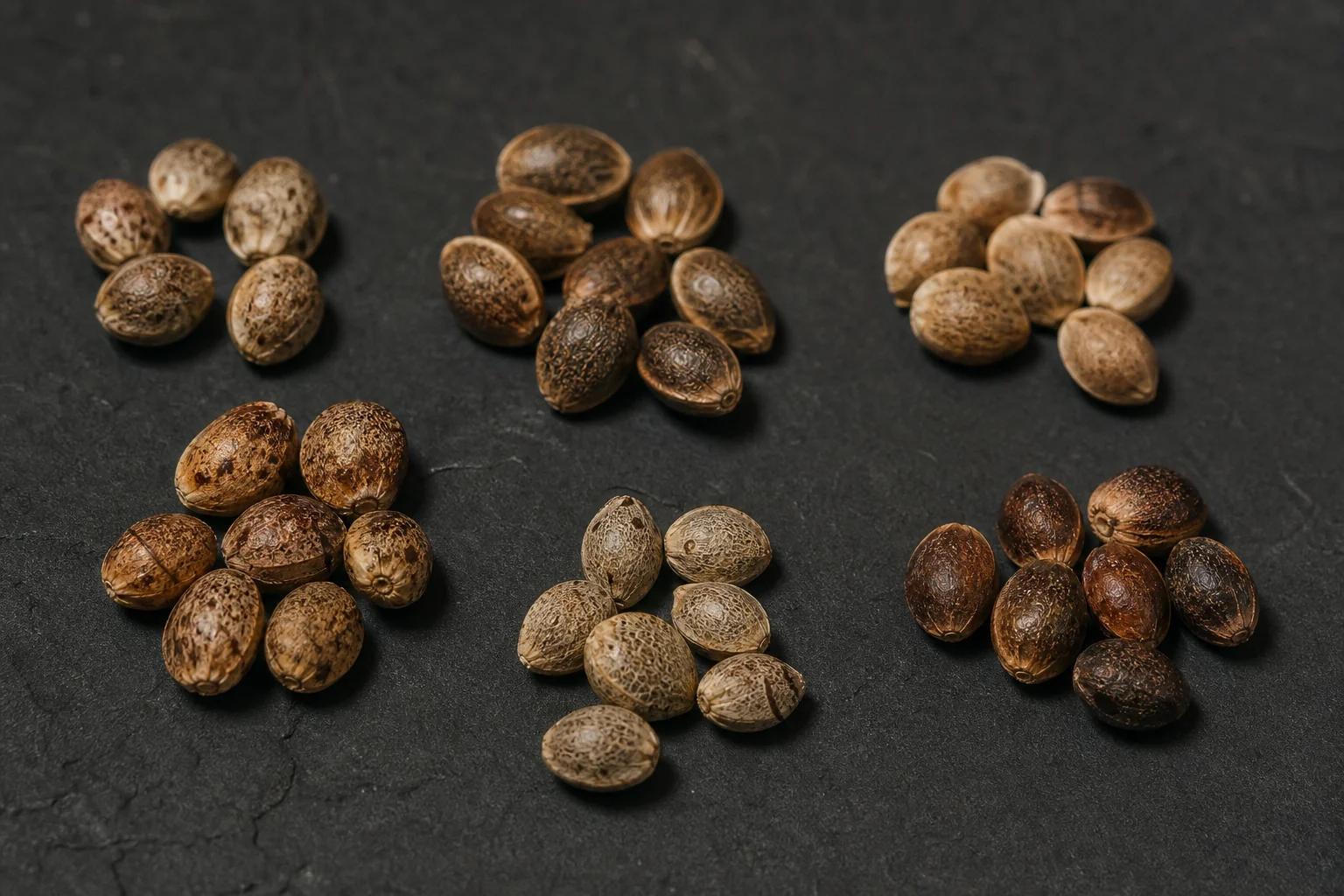
Quality MJ seeds are dark — grey to dark brown — with a hard shell, a visible striped or mottled surface pattern, and a faint waxy sheen under direct light. It should not flex or crumble when gently squeezed between two fingers.
Signs of a quality seed:
- Colour: Dark brown to dark grey, often with tiger-stripe or marble patterning — the darker and more defined, the better
- Shell: Hard and rigid; no deformation under light pressure
- Surface: Slight waxy sheen; free of cracks, white powder, or green hues (green indicates immaturity)
- Size: Consistent with the strain — autoflower seeds are naturally smaller; this is genetics, not a flaw
- Weight: Dense and solid, not hollow
- Pale white or bright green shells (immature, not ready for germination)
- Soft, crushable shells (moisture damage or poor storage)
- Cracked or split casing (compromised viability)
- Powdery or fuzzy residue on the shell (fungal contamination)
Seeds from reputable breeders arrive in sealed breeder packs with the genetics name, batch information, and germination guidance clearly printed on the packaging. Loose seeds delivered in an unmarked plastic bag — regardless of what the vendor claims about the source — are a practical red flag.
How Do You Spot a Legitimate Canadian Seed Bank?
A legitimate domestic seed bank has a traceable identity, clear policies, and payment norms that align with domestic commerce. Most don't look or feel like fly-by-night overseas operations — and the differences are straightforward once you know what to check.
Trust signals to look for:
✅ Contact information that works. A real business provides a functional email address, a provincial registration or business identity, and responds to pre-sale inquiries within a reasonable timeframe. Anonymous sellers with no contact information are a non-starter.
✅ Clear germination guarantee with accessible terms. Reputable seed banks stand behind their genetics with a germination guarantee — typically offering replacements when seeds fail to germinate under normal conditions. Read the actual terms before ordering. A guarantee buried in impossible conditions is not a guarantee.
✅ Pricing in Canadian dollars. A domestic seller prices in CAD. If the site quotes USD only, switches currencies mid-checkout, or asks you to convert funds before paying, you are likely dealing with an offshore operation presenting itself as domestic.
✅ Interac e-Transfer as a payment option. Interac e-Transfer is the standard payment method for domestic seed purchases in Canada. Its presence signals a legitimate operation with a real domestic bank account — a verifiable business identity. Complicated wire instructions, requests for cryptocurrency, or gift card payments are red flags regardless of the seller's explanations.
✅ Realistic domestic shipping timelines. Seeds shipping domestically within Canada arrive within a few business days depending on origin and destination. Vendors advertising "stealth international routes" or vague multi-week delivery estimates for what is a legal domestic transaction warrant skepticism.
✅ Substantive reviews with specifics. Look for reviews that reference specific strains, describe actual germination results, and mention real shipping experiences — not just aggregated star ratings. Generic five-star reviews with no detail are trivially easy to fabricate.
Canada-specific red flags:
🚩 Vendor routes domestic orders through overseas warehouses — seeds are legal to ship domestically; there is no grower-side benefit to international routing for a domestic buyer.
🚩 No germination guarantee, or a guarantee with conditions so restrictive it effectively cannot be triggered.
🚩 Quebec or Manitoba customers are solicited without any mention of provincial home-grow restrictions — a responsible seller acknowledges the legal context.
🚩 Yield or potency claims without any qualification — "guaranteed 1,000g per plant" and "highest THC on the market" are marketing fiction, not agronomics. Legitimate breeders publish ranges, not absolutes.
Can Cannabis Seeds Be Mailed Within Canada?
Yes — domestic MJ seeds shipping is standard in Canada's legal cannabis market. Seeds are a regulated cannabis product under the Cannabis Act, and licensed domestic sellers routinely ship them to adult customers across the country via standard parcel carriers.
What to expect from a domestic seed order:
- Plain, discreet packaging — standard e-commerce practice; no cannabis labelling visible on the exterior
- Shipping timelines comparable to any tracked parcel within Canada — generally a few business days
- Seeds arrive in a sealed breeder pack inside a padded envelope or small box
- Order tracking is typically provided for orders above a minimum value
How Long Do Cannabis Seeds Last, and How Should You Store Them?
Properly stored MJ seeds remain viable for several years — a practical range for home storage is two to five years, with some seeds remaining germinable beyond that under ideal conditions.
Canadian climate swings create specific storage challenges most guides ignore. Calgary and Winnipeg's dry winter air can desiccate seeds over months if they're stored in permeable containers. Toronto and Halifax's humid late summers introduce moisture risk if packaging isn't airtight. These aren't hypothetical concerns — they're the reason storage discipline matters.
Storage essentials:
- Temperature: Cool and stable — ideally between 6°C and 8°C. A dedicated corner of a household refrigerator works well if the seal is tight and the compartment isn't opened frequently
- Humidity: Low and consistent. Store seeds with a silica gel desiccant packet inside the container; aim for 20–30% relative humidity inside the sealed storage unit
- Light: Complete darkness — seeds exposed to light, even indirect, begin metabolic activity that reduces shelf life
- Container: Airtight glass jar or sealed, opaque foil pack. Avoid plastic bags, which are permeable to humidity and gas exchange over time
How Much Should You Expect to Spend?
Individual MJ seeds from reputable domestic breeders in Canada typically range from $10 to $20 CAD per seed for standard feminized and autoflower genetics, with specialty or limited-release genetics running higher.
Practical budget ranges for a first grow:
- Pack of feminized seeds from a domestic seller: $50–$90 CAD
- Pack of autoflower seeds from a domestic seller: $45–$80 CAD
- Specialty genetics — high-CBD, craft breeding, limited releases: $80–$150 CAD per pack
Total seed budget for a typical first grow: Most growers purchasing five or six quality feminized seeds will spend $60–$120 CAD. That's a small fraction of total grow setup costs — and seed quality has disproportionate influence on the outcome.
What Happens After Your Seeds Arrive?
Seeds in hand, the next decision is germination method. The blue paper towel method is the standard approach for home growers — reliable, low-cost, and easy to monitor daily. Do not soak seeds in water for more than 24–32 hours; extended soaking reduces viability.
Once seedlings emerge and show their first set of true leaves, the next two weeks are the most sensitive phase of the entire grow. Overwatering, low humidity, and light distance are the three most common early killers. See cannabis seedling care — first 14 days for what to monitor and how to intervene.
The purchase decision and the grow decision are related but separate skill sets. This guide handles the former. The grow resources above handle the latter.
FAQ
Is it legal to buy marijuana seeds in Canada?
Yes. Buying MJ seeds is federally legal for adults under the *Cannabis Act*. Seeds are classified as a cannabis product within the personal possession framework. Provincial age minimums apply — 19 in most provinces, 18 in Alberta and Quebec. Home cultivation restrictions are a separate, province-level question that does not affect the legality of purchasing seeds.
How many cannabis plants can I grow at home?
The federal limit is four plants per household in provinces where home cultivation is permitted. Quebec and Manitoba have provincial laws that restrict or prohibit home cultivation. The four-plant limit is per household — not per adult resident.
Are feminized seeds better than regular seeds?
For home growers targeting four finished plants, yes. Feminized seeds produce exclusively female plants, meaning every germinated seedling that survives to flowering is a productive plant. Regular seeds require germinating significantly more plants to account for the approximately 50% male rate, making them inefficient for a capped household grow. Regular seeds are better suited to breeders and pheno hunters who require males for genetic work.
How long do cannabis seeds stay viable?
Under proper storage conditions — cool (6–8°C), dark, low humidity (20–30% RH), in an airtight container with a desiccant — cannabis seeds typically remain germinable for two to five years. Refrigerator storage extends viability. Avoid freeze-thaw cycling, which damages seed cellular structure.
Can I grow cannabis outdoors anywhere in Canada?
In most provinces, yes — outdoor cultivation is permitted within the four-plant household limit. Practical success depends heavily on climate zone. BC's south coast and Southern Ontario support photoperiod outdoor grows. Growers in the Prairies, the Atlantic provinces, and Northern Canada are better served by autoflower or fast version genetics to clear the frost calendar.
What payment methods do Canadian seed banks accept?
Domestic seed banks in Canada typically accept Interac e-Transfer as the primary payment method — this is a key trust signal, as Interac is a domestic network tied to real bank accounts. Some sellers also accept major credit cards or e-commerce payment processors. Requests for cryptocurrency, gift cards, or wire transfers to overseas accounts are red flags.
19+ | Educational horticulture only.