Grow Under the Open Sky
Outdoor Growing Guides
Late Cannabis Harvest in a Northern Climate: How Far Can You Push It?
Late cannabis harvest up north: read the trichomes, weigh maturity against frost and bud rot, and know how far into October you can push.
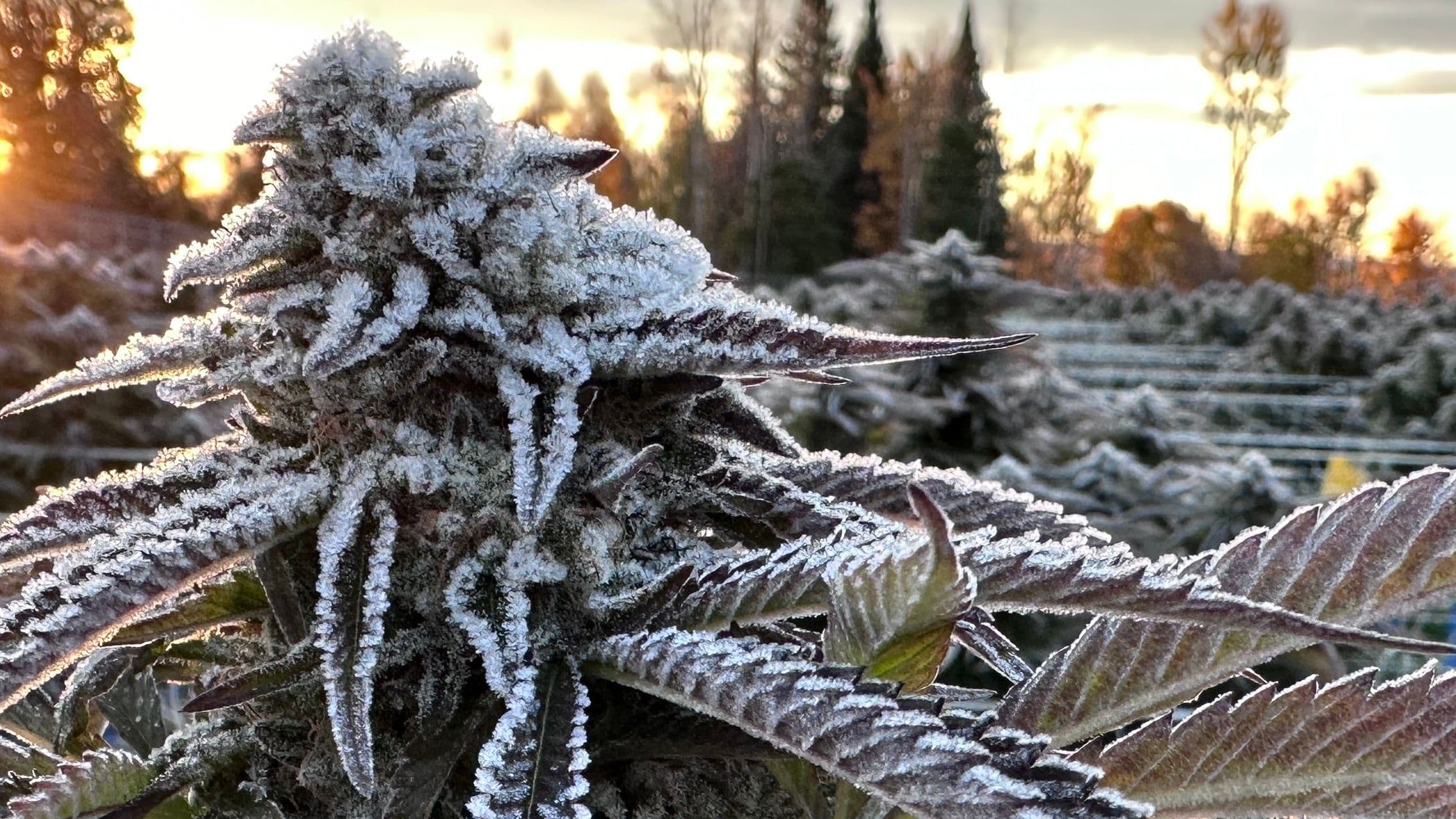
Cannabis maturity is read first on the trichomes under a loupe: mostly cloudy with 5 to 15% amber is the cut point. Pistils give an approximation, but rain browns them without the plant ripening. Up north, a late harvest is a trade-off between a few more days and the risk of bud rot or a hard freeze.
Key takeaways
- Cannabis maturity is read on the trichomes under a loupe; pistils only give an approximation.
- Mostly cloudy with 5 to 15% amber is the cut point to aim for.
- Up north, a late harvest is a trade-off between maturity and risk, not a race to ideal ripeness.
- In our experience, bud rot loses more late harvests than frost does: rain is more dangerous than cold.
- Staged harvesting puts part of the yield out of harm's way without giving up the rest.
- How do you read maturity on the trichomes?
- How far can you push a late harvest into October?
- What does cold change about the harvest?
- What signals mean cut now?
- Late harvest: should you cut all at once or in stages?
- FAQ — Late harvest up north
We live it every fall. In mid-October 2024, our plants went through several nights of heavy frost before the last cut, done at night on October 22.
How do you read maturity on the trichomes?
Under a loupe, on the calyxes of the buds. Mostly cloudy with 5 to 15% amber is the cut point. Pistils give an approximation: for 22 of 25 strains grown indoors, cannabinoids peaked when they were mostly or fully amber (Tran et al., Plants, 2025). But rain browns them without the plant ripening, so the loupe confirms.
Trichomes are the small, mushroom-shaped glandular heads covering the flowers. Our guide to clear, cloudy and amber trichomes covers reading them under the loupe in detail.
- A 30x jeweller's loupe gives you a first read; a 60x LED loupe lets you tell cloudy from amber bud by bud
- Check the calyxes of the buds, not the sugar or fan leaves: trichomes there ripen faster and give you a false read
- Check several buds on several branches: tops ripen before bottoms
How far can you push a late harvest into October?
To mid-October for most strains suited to the north, and rarely past October 20. The real answer depends on three variables, not a date: genetics, the next ten days of weather and the state of the trichomes. Each extra day brings less and less, while the risk of bud rot and a hard freeze keeps climbing.
- Late September: early strains and most autoflowers are ready
- First half of October: the heart of the window for outdoor strains suited to the north
- After October 20: you are racing the clock, with little light, persistent damp and repeated frosts
What does cold change about the harvest?
It brings out colour in strains that carry the genes and probably slows aroma loss. Nothing shows it raises THC. Two effects have been measured in growth chambers: colour, and cannabinoids, which rather dropped in hemp after a cold period. The rest is consistent with the chemistry and with our field experience.
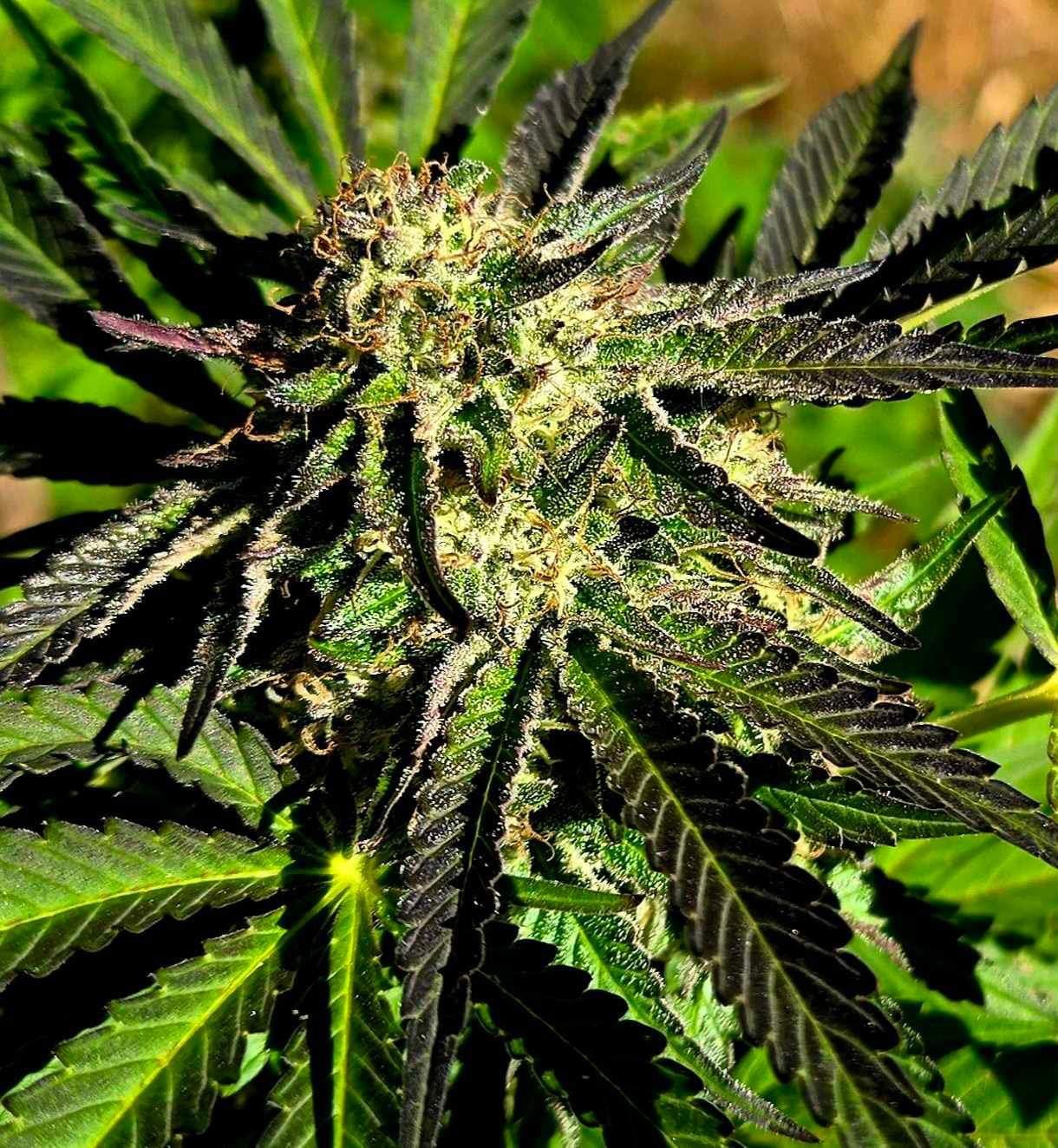
Leaves and bracts turning purple at season's end: anthocyanins, in a strain that carries the genes.
In the anthocyanin study, cold coloured the flowers, but flower weight and CBD were highest at 22°C, a gap the authors attribute mainly to plant maturity.
The cool, damp nights of October are also when botrytis thrives.
What signals mean cut now?
Three signals are not negotiable: bud rot in the colas, water-soaked tissue after a hard frost, and a forecast low of -2°C or colder you cannot cover. Once one of them shows up, the maturity conversation is over. Remove the affected parts right away, then harvest the rest at night, between midnight and dawn.
Emergency signals:
- Bud rot found: a soft, brownish bud that crumbles, or a musty smell. Remove the affected area generously right away, then harvest the rest the very next night, between midnight and dawn
- Water-soaked, mushy buds after a hard frost: that tissue is gone and will rot within days, so remove it
- A forecast low of -2°C or colder with no way to cover: on a clear night the foliage can drop below -4°C, and that damage does not recover
- A week of rain in the forecast, with buds that stay wet: that is when rot moves fastest through dense colas
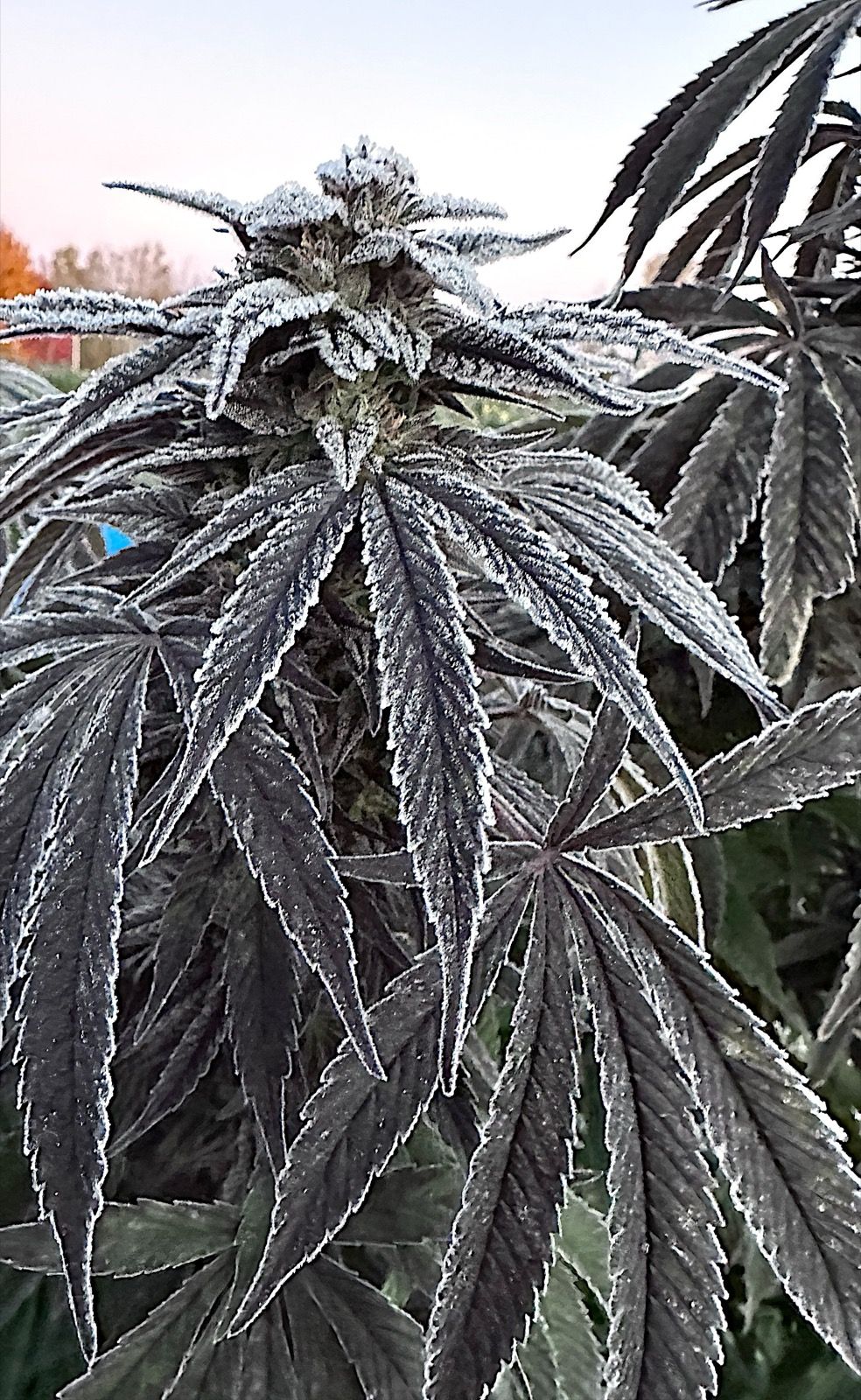
Plant under frost, every leaf serration edged in white. Field photo, October 2024.
Stop signals, when the plant is done:
- Fan leaves yellowing and dropping on their own: the plant has pulled its reserves
- Amber trichomes past 30%: you are beyond peak, by the growers' benchmark
- A new wave of white pistils: stress or genetics, not a sign the plant needs more time. Open the affected buds anyway to rule out rot, then decide on the trichomes
Late harvest: should you cut all at once or in stages?
In stages, when the calendar is tight. Top buds catch more light and ripen ahead of the lower ones, sometimes by one to two weeks on the same plant. Cutting the tops first puts part of the harvest safely indoors if the weather turns, and gives the lower branches time to finish.
How to do it:
- Cut the main colas once their trichomes are cloudy
- Leave the lower branches another week to ten days: they benefit from the light suddenly opening up
- Check again before the second cut
It does mean two trimming sessions and two dries instead of one.
The choice that solves this at the root: a strain that finishes before the repeated frosts removes the trade-off entirely. Our autoflowering seeds run 70 to just over 100 days from seed, depending on the strain, and can be timed to finish in September.
What is this guide based on?
Reading pistils draws on Tran et al. (Plants, 2025), who followed 25 strains. The effect of cold on anthocyanins comes from a 2025 Journal of Cannabis Research study, run in growth chambers at constant and fluctuating temperatures on a CBD-rich autoflowering hemp variety bred for purple colour. The effect of cold on THC and CBD comes from Hahm et al. (2025) and Galic et al. (Cornell University, 2022). Average first-frost dates in Quebec come from MétéoMédia. The maturity markers and harvest windows for Quebec are our field benchmarks.
What should you read next?
When a freezing night is forecast and the harvest is not ready yet, protecting cannabis through a freezing night covers the moves that buy you the missing days.
Cool, damp end-of-season conditions are exactly when rot takes hold: our guide to bud rot and mould in flower and storage covers early detection, which makes all the difference on a late harvest.
FAQ
When should you harvest weed grown outdoors?
When the trichomes say so, not the calendar: mostly cloudy with 5 to 15% amber. In Canada that usually lands between late September and mid-October for photoperiod strains. Up north the forecast shortens the window: a week of cold rain ahead is a reason to cut a few days early rather than lose buds to rot.
When should you harvest cannabis in Ontario or Quebec?
Late September to mid-October for most outdoor photoperiod strains, with autoflowers finishing earlier. In Quebec, the average first fall frost runs from mid-September in Val-d'Or, Sept-Îles and Gaspé to mid-October around Montreal. Past October 20 you are racing the clock: little light, persistent damp, repeated frosts. Genetics, the forecast and the trichomes decide it.
Why are my weed buds turning purple?
Anthocyanins. Cool temperatures push the plant to build these purple pigments, with a peak measured at 8 and 15°C in a 2025 Journal of Cannabis Research study, but only in strains that carry the genes for it. A green strain stays green in the cold. Purple buds are a colour change, not a sign of frost damage or extra potency.
When should you harvest an outdoor autoflower?
By the trichomes, like any plant: mostly cloudy with 5 to 15% amber. Outdoors, autoflowers finish in 70 to just over 100 days from seed, depending on the strain, so a late spring sowing lands the harvest in late summer or September, before the repeated freezing nights. The breeder's timeline is an estimate; the loupe decides.
What is a late harvest?
A late harvest pushes past the usual window, to mid-October or later up north, to gain a few more days of ripening. The bet is that gain against the risk of bud rot and a hard freeze, which climbs every day. In our experience, bud rot loses more late harvests than frost does.
Should you harvest before the first frost?
Not automatically. A light frost does not ruin a ripe plant, and a cold night can be ridden out if the colas are healthy. Harvest before a freeze when the trichomes are ready and several freezing nights are coming, or when a low of -2°C or colder is forecast and you cannot cover: cut the night before, between midnight and dawn.
19+ | Educational horticulture only.