From Seed to Seedling
Germination Guides
How to Germinate Old Cannabis Seeds — Revival Techniques
Revive old cannabis seeds with proven techniques that work. Discover step-by-step methods to test viability and maximize germination success.
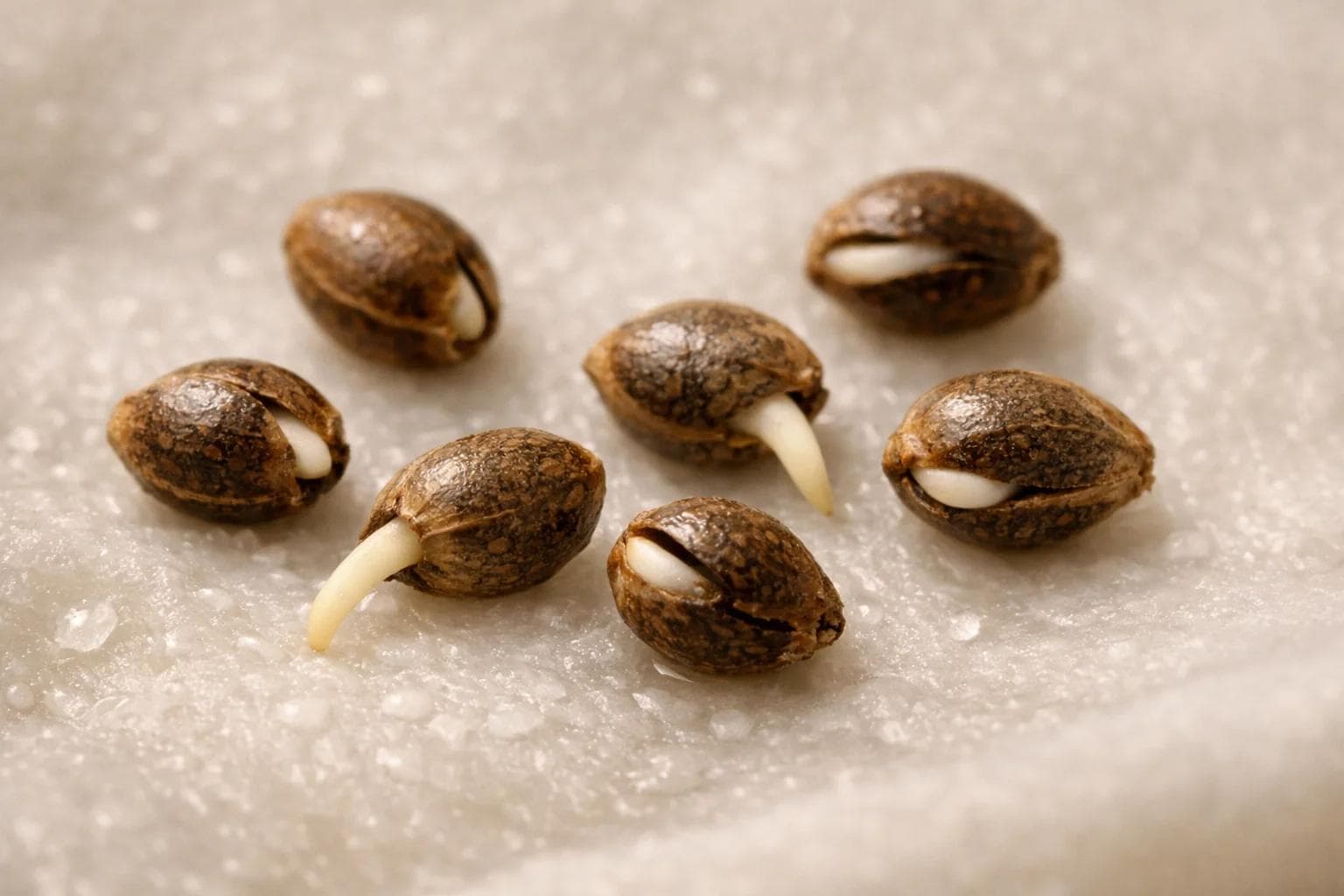
Old cannabis seeds can still germinate with the right revival workflow. Assess viability first, then escalate: 24–48 hour distilled water soak → 0.5% hydrogen peroxide treatment → mechanical scarification if needed → paper towel at 25–28°C. Seeds 2–5 years old can reach 50–80% germination; 5–10 year seeds typically land at 20–50%.
How Can You Tell If Old Cannabis Seeds Are Still Viable?
Viability assessment is the step every competitor skips — and the one that saves you the most time. A compromised embryo cannot be revived by any technique. Before investing in soaking or scarification, run three quick checks.
Visual inspection: Look for firm, dark-brown or grey shells with distinct tiger striping — the mottled, spotted patterning that indicates a mature, dense seed. Pale, chalky-white, or cracked shells are almost always duds. A green or white seed was harvested immature and will not germinate regardless of method.
Float test: Drop seeds into room-temperature distilled water. Seeds that sink after 1–2 hours are denser and generally more viable. Floaters may still germinate — do not discard them based on this test alone. The float test tells you density, not viability — treat it as a first filter, not a final verdict.
Gentle squeeze test: Press a seed lightly between thumb and forefinger. Firm resistance is a good sign. Immediate crumbling or a hollow feeling means the embryo has desiccated beyond recovery — skip it.
Toronto growers who've found seeds tucked in a drawer from two seasons back often discover that seeds stored in dark, cool conditions still pass all three checks cleanly. When in doubt, attempt revival — you have nothing to lose on a seed you were about to throw away. Cannabis Seed Anatomy — How to Tell if Seeds Are Viable
What Is the First Step to Reviving Old Cannabis Seeds?
The extended water soak is your lowest-risk starting point before escalating to chemical or mechanical methods. It works by promoting imbibition — the passive absorption of water through the testa that triggers enzyme activation inside the embryo and signals the seed to break dormancy.
How to run an extended soak:
- Fill a small glass with room-temperature distilled water. Tap water's chlorine content can inhibit germination at this delicate stage.
- Place seeds in the glass and move to a dark location at 20–22°C.
- Soak for 24–48 hours maximum — beyond that, oxygen deprivation becomes a risk.
- Check at 24 hours for swelling or a cracked testa ridge.
- If no movement after 48 hours, escalate to hydrogen peroxide soak.
Portland outdoor growers dealing with seeds stored through cool Pacific Northwest winters often find an extended soak alone is enough to pop 2–3 year old genetics without needing scarification at all. Soaking Cannabis Seeds Before Planting — Water Germination Method
How Long Should You Soak Old Cannabis Seeds in Hydrogen Peroxide?
A diluted hydrogen peroxide soak softens hardened seed coats, delivers supplemental oxygen directly to the embryo, and provides mild antimicrobial protection against surface pathogens. It's the most effective chemical step for seeds that fail a plain water soak.
Concentration is everything — get this right:
Use 0.5% H₂O₂: mix 1 part standard 3% household hydrogen peroxide with 6 parts distilled water. Full-strength 3% solution will oxidize the embryo membrane and kill the seed. Do not guess — measure.
Protocol:
- Prepare the 0.5% solution in a small glass or ceramic cup.
- Submerge seeds and store in a dark location at room temperature (~20–22°C).
- Soak for 12–24 hours — 12 hours for seeds under 5 years old, 24 hours for older stock.
- After soaking, rinse seeds gently with plain distilled water before transferring to paper towel.
Denver's dry, high-altitude climate is notoriously damaging to improperly stored seeds — growers who skipped humidity control often find the H₂O₂ soak is the difference between a successful revival and a dead batch.
How Do You Scarify Cannabis Seeds Without Destroying Them?
Scarification creates micro-abrasions in the testa — the outer seed shell — allowing water to penetrate a coat that has hardened to the point where imbibition is physically blocked. It is a rescue method, not a routine step, and precision matters.
Which Scarification Method Works Best for Aged Cannabis Seeds?
The right method depends on seed age and how badly the coat has hardened. Escalate only as far as needed — more aggression here does not mean better results.
Mechanical scarification — best for seeds 2–5 years old:
- Line the inside of a small container or matchbox with 150-grit sandpaper.
- Place seeds inside and shake gently for 10–15 seconds.
- Inspect: you want a slightly dulled, matte surface — not deep scoring or white powder visible.
- Alternatively, drag a single-edge razor blade lightly across one side of the shell — one pass only.
A 15-minute soak in a dilute sodium hypochlorite solution (4.6% bleach + 0.008% H₂O₂ in distilled water) can break down severely hardened coats. Wear nitrile gloves and eye protection. Rinse thoroughly with distilled water and allow seeds to sit in plain water for 10 minutes before proceeding to paper towel. This method carries real embryo risk if timing is exceeded — set a timer and don't walk away.
How Do You Complete the Revival Using the Paper Towel Method?
The paper towel is the final stage of your revival workflow — it provides the sustained warmth, darkness, and moisture that old seeds need to crack open and extend a radicle. After any soak or scarification treatment, this step is non-negotiable. Paper Towel Germination Method for Cannabis Seeds
Step-by-step:
- Dampen a paper towel with pH-balanced water (6.0–6.5). Water pH & Quality for Cannabis Seed Germination
- Lay treated seeds on one half of the towel; fold the towel over to cover them.
- Place the folded towel on a plate. Cover with a second plate or humidity dome to retain moisture.
- Keep in a warm, dark location — 25–28°C is the target range. A heat mat under the plate stack maintains consistent temperature without spikes. Using a Heat Mat for Cannabis Seed Germination — Setup & Tips
- Check every 12 hours. Mist lightly if the towel is drying out.
Vancouver and Seattle growers running cool basement setups should treat the heat mat as mandatory — ambient temps below 22°C will stall radicle emergence on already-struggling seeds. Once the taproot hits 3–5mm, transfer gently to your growing medium. Using a Humidity Dome for Cannabis Seedlings — Setup & Tips
What Germination Rates Should You Realistically Expect from Old Cannabis Seeds?
Old cannabis seeds do not perform like fresh stock — no revival technique changes the biology of an aged embryo. What you can do is give viable seeds the best possible conditions. Genetics remain fully intact in seeds that do successfully germinate; once established, plants perform normally.
Age-tiered germination rate guidelines (with revival techniques applied):
Seedlings from old seeds often come up slowly, and the first set of cotyledons can look a bit pale. That's normal — it's the embryo waking up, not a sign of bad genetics. Keep conditions warm and humid; a dome makes a real difference at this stage. By day 10–14, they're usually indistinguishable from anything else in your tent. If a seed shows zero movement after 10 days in the paper towel, it's spent — invest in fresh stock rather than keep throwing time at a dead batch. Cannabis Seedling Care After Germination — Week-by-Week Guide Buy seeds
FAQ
Can you germinate 10-year-old cannabis seeds?
Yes — with low but real odds. Seeds stored in ideal conditions (cool, dark, sealed, low humidity) can retain embryo viability for a decade. Expect 5–20% germination at best. Premium genetics with dense, intact shells tend to outlast budget stock. Use the full scarification + H₂O₂ + paper towel protocol for the best possible result.
Does the float test accurately predict seed viability?
The float test measures density, not viability — it's a rough screen, not a definitive answer. Sinking seeds are denser and generally more promising. Floating seeds may still germinate if the shell is intact. Always pair the float test with visual inspection and a gentle squeeze test for a fuller picture. [LINK: Cannabis Seed Anatomy — How to Tell if Seeds Are Viable | /en/articles/cannabis-seed-anatomy-viability]
Can you combine scarification with a hydrogen peroxide soak?
Yes — and for seeds 5+ years old, it's actually the recommended approach. Scarify lightly with 150-grit sandpaper first, rinse with distilled water, then follow with a 12-hour 0.5% H₂O₂ soak. Don't combine chemical scarification (sodium hypochlorite) with an H₂O₂ soak in the same workflow without thorough rinsing between — that level of treatment risks embryo damage.
Will plants grown from old seeds be weaker than those from fresh seeds?
Seedlings may emerge slowly and look pale in the first week — that's the embryo shaking off dormancy, not a sign of defective genetics. Once established, typically around day 10–14, old-seed plants are indistinguishable from fresh-seed plants in growth rate, structure, terpene expression, and yield potential.
Is gibberellic acid (GA3) safe for cannabis seed revival?
GA3 can stimulate germination in dormant seeds and is used in professional propagation. The problem is dosing — excess GA3 causes abnormal elongation and seedling deformity, and the margin for error is narrow. For home growers, hydrogen peroxide soaking and mechanical scarification get you most of the way there with far less downside. GA3 is worth exploring if you're running a serious preservation project on rare genetics, but it's not a first-call tool. [LINK: Cannabis Seed Germination Problems — Troubleshooting Guide | /en/articles/cannabis-seed-germination-problems] ---
19+ | Educational horticulture only.