From Seed to Seedling
Germination Guides
How to Harden Off Cannabis Seedlings Before Transplanting
Harden off cannabis seedlings in 7-14 days to prevent transplant shock, sunburn, and stunted growth when moving plants outdoors safely.
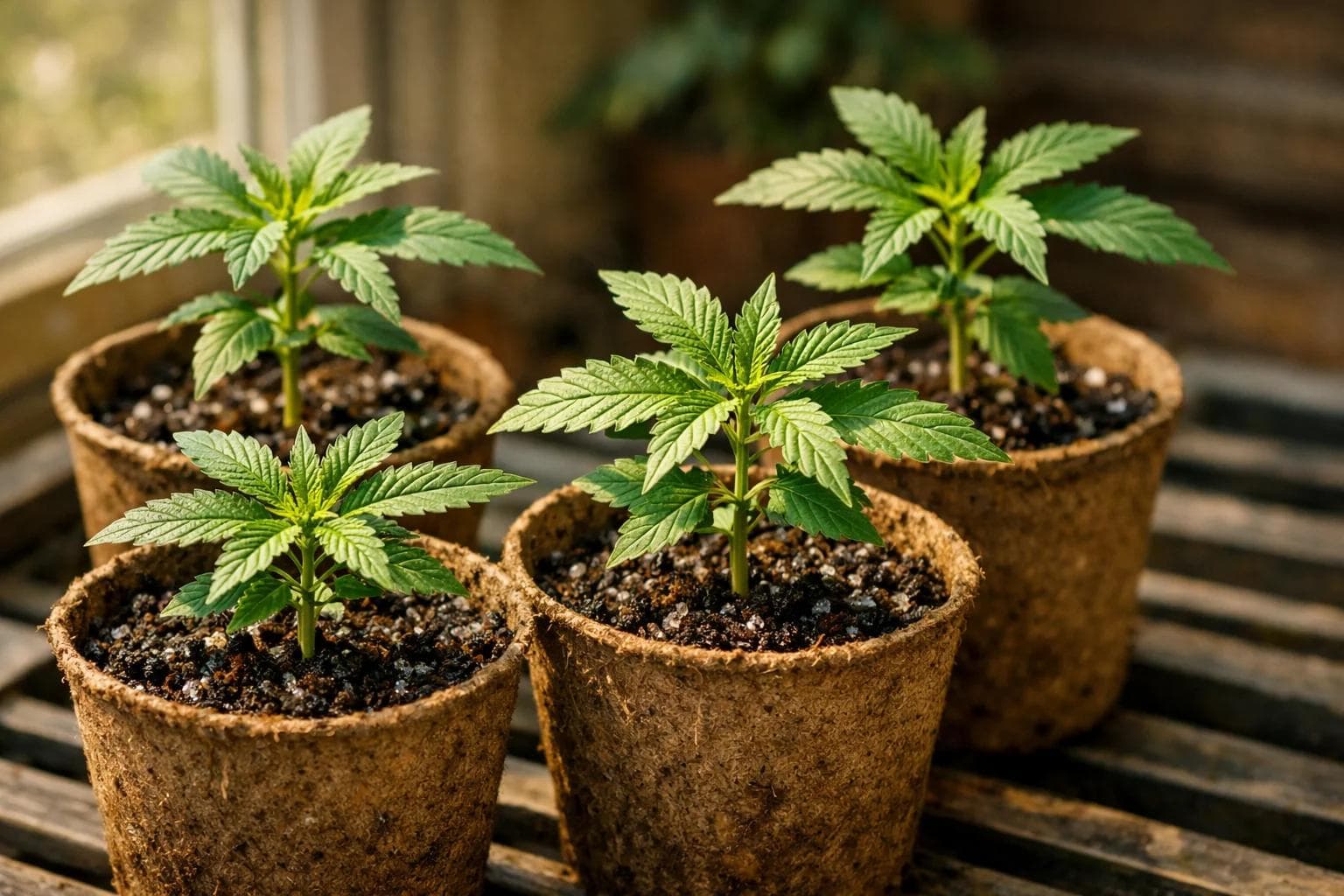
Hardening off cannabis seedlings is a 7–14 day gradual acclimation process that prepares indoor-raised plants for outdoor sun, wind, and temperature swings before transplanting. Start when seedlings have 3–5 nodes and overnight temps hold above 10°C. Skipping it causes transplant shock, sunburn, and stunted growth that can set your season back by weeks.
What Is Hardening Off and Why Do Cannabis Seedlings Need It?
Hardening off is the systematic acclimation of indoor-raised cannabis seedlings to outdoor conditions — progressively increasing exposure to direct sun, ambient wind, and temperature fluctuations over 7–14 days before transplanting. Indoor plants develop thin cuticles, weak stems, and no UV tolerance under grow lights. Moving them outside without preparation triggers transplant shock, photobleaching, and sometimes irreversible damage.
Why Can't You Just Move Seedlings Outside Directly?
Indoor-raised seedlings have thin, undeveloped cuticles, unregulated stomata, and stems built for still air under artificial light. Placing them in direct outdoor sun is the plant equivalent of stepping from a dark room into noon sunshine — the leaves burn before they can adapt. Even two hours of unfiltered midday sun on day one can bleach leaves white and stall growth for a week.
Why Should You Use a Fan Indoors Before Hardening Off?
Running an oscillating fan near seedlings from week two onward is a form of pre-hardening. Gentle airflow triggers thigmomorphogenesis — the stem-thickening response to mechanical stress — and trains stomata to respond faster to humidity shifts. The payoff: shorter outdoor acclimation time and meaningfully less wind damage risk once plants go outside. Drop the dome before you add the fan — Using a Humidity Dome for Cannabis Seedlings — Setup & Tips — the two don't work together.
When Should You Start Hardening Off Cannabis Seedlings in Canada?
Start hardening off when seedlings have 3–5 true nodes, stand 10–15 cm tall, and roots are visible at drainage holes. Time it 10–14 days before your planned transplant date — and never before your region's last frost date has reliably passed.
Do Autoflowers Need Hardening Off Differently Than Photoperiods?
Both need hardening off — but autoflowers run on a fixed genetic lifecycle clock, and every day of stress costs vegetative time that cannot be recovered. With autos, aim for 7 days max: start earlier than you would with photos, keep sessions on the shorter end, and treat any stress sign as a hard stop. Photoperiods are more forgiving — they tolerate the full 10–14 day schedule and can bounce back from a rough outdoor day without it costing the whole season.
What Does a Day-by-Day Hardening Off Schedule Look Like?
The schedule runs in four progressive phases. Each phase increases sun exposure, wind tolerance, and outdoor time — always monitoring for stress signs before advancing to the next phase.
Phase 1 — Days 1–3: Sheltered Introduction
Take seedlings outdoors for 1–3 hours in deep shade — a north-facing porch, under a tree canopy, or the sheltered side of a fence or building. No direct sun. No wind exposure. Water before each session and bring plants in before evening temperatures start falling. Montreal growers in early May often find overcast mornings ideal for these first shade sessions — that grey maritime light is about as gentle as outdoor conditions get.
Phase 2 — Days 4–7: Increasing Exposure
Extend outdoor time to 3–5 hours. Introduce 1–2 hours of morning sun before 10 AM — UV intensity is lowest then, and cooler air gives stomata time to adjust before heat builds. Remove wind shelter gradually over these days, allowing gentle breeze through. Leaf droop or curl is your signal to bring plants in immediately; don't wait to see if they recover on their own. Light rain is fine to leave them in — move inside for anything heavy or cold.
Phase 3 — Days 8–10: Near-Full Outdoor Conditions
Seedlings now spend 6–8 hours outdoors, including midday sun. Introduce full wind exposure — no shelter. Leave plants out into early evening; only bring them in when overnight temps are forecast below 10°C. If you're seeing early bleaching at this stage, pull back on midday direct sun by one session before pushing through. High-altitude grows are worth noting here — elevated UV in May hits harder than it looks, so watch the upper leaves closely on bright days.
Phase 4 — Days 11–14: Overnight Transition
If overnight temps are holding consistently above 10°C, leave plants outside for a full 24-hour cycle. Watch the first overnight closely — bring them in at any frost warning, full stop. After 2–3 clean overnights with no stress signs, you're done. These plants are ready to go in the ground.
Can You Harden Off Cannabis Seedlings Faster?
A compressed 5–7 day schedule is possible for vigorous seedlings in mild weather — but the stress risk rises fast when you cut corners. Watch for leaf curl, bleaching, and stem lean every single day. Skip this entirely for autoflowers; their fixed lifecycle means stress compounds directly into yield loss.
What Temperature Is Safe for Hardening Off Cannabis?
Daytime ideal is 15–25°C. Overnight minimum is 10°C — bring plants inside if temps are forecast below that. Brief dips into the 7–10°C range will slow growth noticeably but rarely kill healthy seedlings. Frost is a different story. A frost event is fatal at any point in the hardening process, regardless of how many days you've logged on the schedule.
How Do You Transition Cannabis Seedlings to Full Outdoor Sunlight?
How Much Direct Sun Should Seedlings Get Each Day?
Scale direct sun progressively: zero on days 1–3 (shade only); 1–2 hours morning sun on days 4–7; 4–6 hours including midday on days 8–10; full sun from day 11 onward. Morning sun before 10 AM is the safest introduction point — UV intensity is lower and temperatures are cooler, giving stomata time to regulate before peak stress.
Should You Use Shade Cloth During Hardening Off?
A 50–70% shade cloth is one of the most practical tools in your hardening kit. It cuts UV intensity while still giving plants full wind exposure, temperature swings, and ambient light — everything except the burn risk. Strip it off gradually over days 7–10 as seedlings build UV tolerance. Vancouver growers often keep it on longer than this schedule suggests — those high-UV spring days that break after weeks of marine overcast can surprise even experienced outdoor growers.
Should You Water Differently During Hardening Off?
Yes — outdoor wind and direct sun accelerate transpiration significantly, and seedlings dry out much faster than they do under grow lights. Water in the morning before each outdoor session. Check soil moisture when you bring plants back in; if the top 2 cm is dry, water lightly. Don't overwater to compensate — root adaptation to outdoor soil conditions happens when the root zone cycles between moist and slightly dry. Let it breathe.
What Should You Do When It Rains During Hardening Off?
Light rain is genuinely useful — it introduces humidity shifts and temperature drops at an intensity seedlings can handle. Move plants under an overhang or inside for anything heavy or cold. Don't skip sessions on overcast days, though. Diffuse cloud light is low-stress UV exposure that still moves the acclimation forward. Those grey days are doing more than they look like.
How Do You Know If Your Seedlings Are Stressed During Hardening Off?
Stress during hardening shows up fast — usually within the first outdoor session if exposure is too aggressive. Knowing the difference between sunburn, wind damage, and cold stress lets you respond correctly instead of overcorrecting.
What Does Sunburn Look Like on Cannabis Seedlings?
Sunburn appears as white or pale yellow patches on the upper leaf surface — the side facing the sun. Leaf edges go crispy and leaves curl upward. Unlike nutrient deficiency, which yellows from the leaf tips inward on all surfaces, sunburn hits the sun-facing side only. When you see it, move plants to shade for 1–2 days before resuming at a reduced exposure level.
What Does Wind Stress Look Like?
Wind stress shows as excessive stem bending, a persistent lean to one side, or brown drying along leaf edges. Seedlings hit by sustained strong wind before their stems have built up can snap at the base — not just bend. Shelter the plant, stake it if needed, then reintroduce wind gradually over additional days before pushing to full exposure again. Seattle's spring winds and Winnipeg's open prairie gusts catch more growers off guard than almost any other stress factor in this process.
What Does Temperature Stress Look Like?
Cold stress produces purple or blue tinting on stems and leaf undersides — that's anthocyanin production, the plant's stress response to cold. Drooping that doesn't recover after watering typically signals root zone cold shock rather than drought. You'll see growth visibly slow over 2–3 days. Bring plants inside overnight and don't return to outdoor sessions until temps are reliably holding above 10°C.
When Should You Bring Seedlings Back Inside?
Pull plants inside immediately when you see any of these: visible sunburn during early sessions; temps dropping below 10°C; heavy rain or hail incoming; sustained wind above 30 km/h; or pest activity on leaves or stems during any outdoor session.
What Is Transplant Shock and How Does Hardening Off Prevent It?
Transplant shock is the wilting, yellowing, and stunted growth that happens when plants move abruptly to conditions their physiology hasn't adapted to. Hardening off prepares the cuticle, stomata, root zone, and stem tissue systematically — so by transplant day, the move to the ground is a small adjustment rather than a crisis. Well-hardened seedlings resume active growth within 2–3 days of transplanting. Un-hardened ones can stall for 1–2 weeks or fail entirely. The difference is that significant.
FAQ
How do I know if my seedlings are ready to start hardening off?
Look for 3–5 nodes and ensure overnight outdoor temperatures consistently stay above 10°C. Your seedlings should have developed their first true leaves and a sturdy stem thick enough to handle gentle wind without drooping. If they're still leggy or temperatures are dipping below 10°C at night, wait a few more days.
What's the safest sequence for hardening off — shade first or partial sun?
Start in complete shade with wind exposure (a sheltered patio or corner away from direct sun) for the first 2–3 days. Then gradually move seedlings into dappled shade or 2–3 hours of morning sun, increasing by an hour or two every few days until they can handle full sun for 8+ hours by day 7–10. This prevents sudden light shock and gives leaves time to thicken their cuticles.
What does sunburn look like on cannabis seedlings, and can the plant recover?
Sunburned leaves turn white, papery, and bleached within hours of harsh exposure—the damage is usually irreversible on affected tissue. However, the plant can recover if you immediately move it back to shade and maintain consistent watering; new growth will emerge healthy. Prevention is far easier than recovery, so follow a gradual exposure schedule closely.
Can I skip outdoor hardening off and just run a fan indoors instead?
A fan indoors helps build stem strength and train stomata for humidity stress, but it's not a complete substitute for outdoor acclimation—it doesn't expose plants to real temperature swings, actual wind intensity, or UV radiation. Use the fan as a pre-hardening step starting in week two indoors, then still transition seedlings outside gradually to fully prepare them for transplanting.
19+ | Educational horticulture only.